Will Donald Trump’s tariffs stunt Dallas-Fort Worth’s growth? Here’s what we know
Analysts and pundits often exhaust themselves debating the potential virtues and drawbacks of a policy change.
But there has been little disagreement among economists about the possibly disastrous consequences of President Donald Trump’s sweeping tariffs.
“It’s a pretty universal consensus that they’re detrimental,” said David Quigley, an economics professor at the University of Texas at Arlington.
Trump this week unveiled a baseline 10% tax on all imports to the United States and a roster of harsher levies on major American trading partners. The administration had already imposed a 25% tariff on imported steel and aluminum, and it plans to impose a 25% import tax on finished cars and car parts.
The move has perplexed experts, frightened markets, and triggered retaliation abroad. J.P. Morgan, the United States’ largest bank, predicted Friday that there’s a 60% chance the global economy will tip into a recession by year’s end, in large part because of the tariffs.
How will tariffs impact Texas consumers?
Texas, the Federal Reserve Bank of Dallas points out, trades more than any other state in the nation, predominantly with Mexico.
“Roughly one-third of the goods and services consumed in Texas are produced outside of Texas, with a majority of that coming from outside of the U.S.,” according to Michael Sposi, a professor at SMU and a former economist at the Dallas Fed. “So, these tariffs will hit the prices for a sizable chunk of the basket of goods and services that Texans consume.”
The tariffs could strain budgets in countless ways, with low-income families bearing the brunt of the price spikes.
Trump has placed tariffs on some of the country’s biggest textile suppliers, potentially driving up the cost of clothing.
Analysts expect the sticker price of foreign vehicles to soar between $5,000 and $15,000 because of the tariffs. Costlier parts and raw materials could also increase the price of new U.S.-built cars by at least $3,000 a piece, according to the Bank of America. Fixing up used ones reliant on foreign parts may also get pricier.
Reduced spending has knock-on effects.
“If consumers, seeing the higher prices, need to cut back on spending, and obviously if some people lose their jobs, that’s going to hurt sales for businesses,” Quigley noted.
How will tariffs impact North Texas industries?
Some North Texas sectors will feel the burn more than others, experts say.
“The most vulnerable sectors include heavy equipment, chemicals, and tech industries, particularly those involved with manufacturing,” said Sposi, the SMU professor. “These are export-intensive industries and rely on imports critical intermediate inputs. They are likely to see higher costs and reduced demand for their output.”
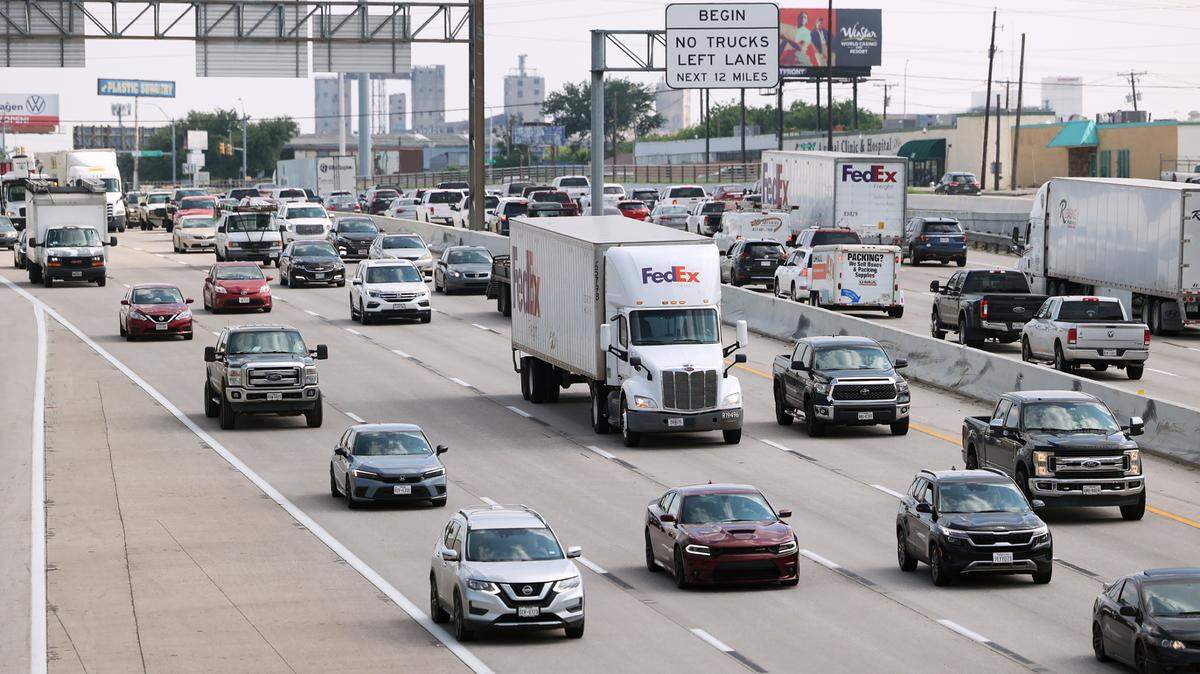
Dallas-Fort Worth has also positioned itself as an important link in Texas’ logistics network, itself a key node in the national supply chain. A reduced appetite for traded goods across the country could dampen the industry, according to TCU economist Rishav Bista.
“DFW also relies heavily on transportation and logistics companies (UPS, FedEx to name a few), which would be affected by these tariffs in the form of supply chain disruptions and higher operating costs,” Bista wrote to the Star-Telegram.
Tariffs could also exacerbate already sky-high construction costs. The U.S. imports roughly half of its aluminum and about a quarter of its steel; Texas consumes the bulk of both, according to the Texas A&M’s Texas Real Estate Research Center.
“As a result, developers here could see overall increases in the cost of materials such as steel beams, roofing, and HVAC systems,” the center noted in a March 2025 report. “This could particularly impact consumers (for example, first-time homebuyers) as any rise in construction costs is likely to be passed on to consumers, further straining affordability.”
Potential taxes on wood and copper imports, under investigation by the Department of Commerce, could compound the strain. The National Association of Home Builders estimates that the country imports roughly 30% of its softwood lumber (largely from Canada), an essential ingredient in homebuilding.
Texas is also the country’s largest exporter, shipping hundreds of billions of goods and services abroad annually. Last year, according to Bista, exports accounted for almost 20% of the state’s GDP. Texas businesses sending products abroad could suffer if foreign countries retaliate with tariffs of their own, he noted.
Will Metroplex growth stall?
Though experts agree North Texas won’t survive the new tariffs unscathed, they seem less convinced that the region’s growth will grind to a halt.
The Metroplex’s comparative economic strength and home affordability could continue to attract newcomers in droves.
“Recent growth in Texas has been driven by relocation of companies from other parts of the country, and by in-migration of households and workers from the rest of the U.S. and abroad,” Sposi, the SMU economist, said. “These patterns reflect Texas’ relative position, so if Texas weathers the storm better than the rest of the country, then it is quite unlikely for these trends to reverse, especially in the longer-term.”
Trump could also, as he has in the past, quickly reverse course on the taxes, or carve out exemptions for certain goods and industries.
“It really comes down to how much of them are sustained,” said Jorge Barro, an economist at the Texas Real Estate Research Center.
Mortgage rates have also tumbled in recent days, Barro noted, potentially offsetting increased homebuying costs.
“It’ll take a long time for the economy to soften as the result of tariffs, but we’re kind of seeing the impact on capital markets right away,” he said. “We may see some significant decline in mortgage rates and that would stimulate real estate activity.”
This story was originally published April 4, 2025 at 3:22 PM.