Jail death autopsy report said family should be warned. Tarrant County blocked it from them
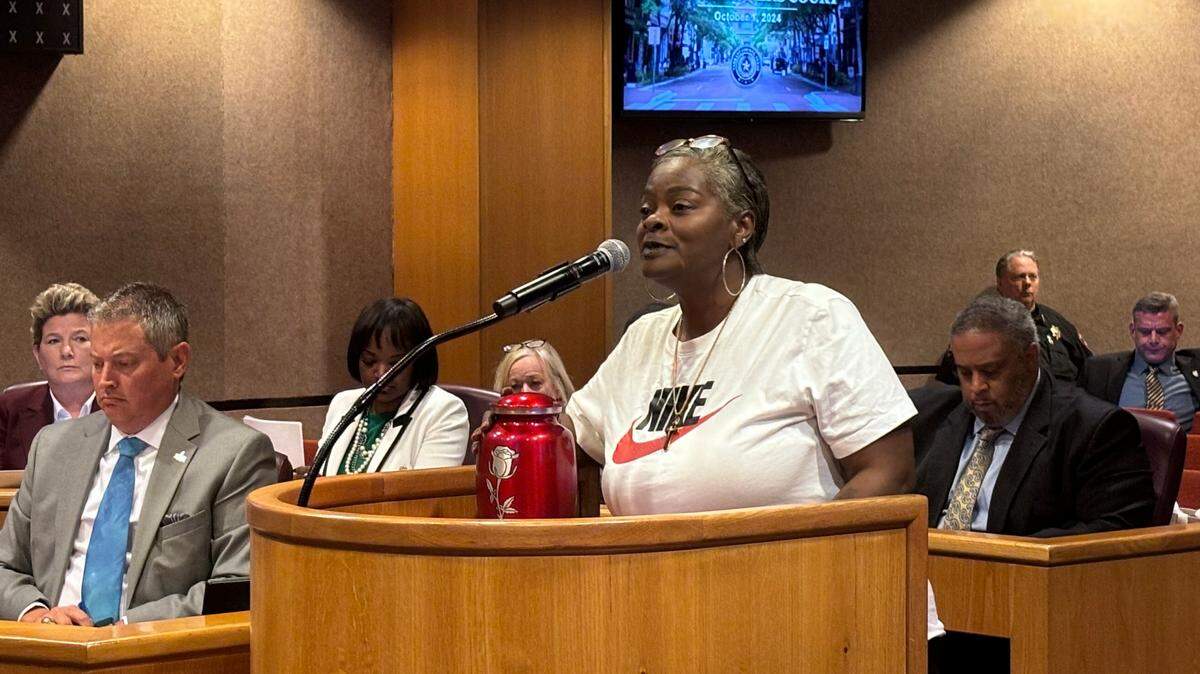
The autopsy report of a woman who died in the Tarrant County Jail last year recommended her immediate family consult their doctors about a possible hereditary disorder, but the District Attorney’s Office didn’t let them see that report.
Chasity Bonner, 35, died in custody of the Tarrant County Sheriff’s Office on May 27, 2024. The Medical Examiner ruled that her death was due to natural causes from atherosclerotic cardiovascular disease, or hardened arteries.
The Star-Telegram recently received the autopsy report through an open records request to the Texas Commission on Jail Standards. In it, the pathologist noted it is uncommon for a woman of Bonner’s age to die of heart disease. Her death could have been due to a hereditary disorder, she wrote, and recommended her immediate family consult their doctors about the possibility.
“First-degree family members should seriously consider discussing this with their primary care physician, and if appropriate, undergo testing,” the report states.
Bonner’s aunt Pamela Taylor, the Star-Telegram and other media outlets requested a copy of her full autopsy report after the cause of death was released in September.
The DA asked Taylor to withdraw her request, citing the Sheriff’s Office’s investigation into Bonner’s death. The DA’s Office also asked the Star-Telegram to withdraw its request following an inquiry into the email sent to Taylor. The requests were not withdrawn, and the DA appealed to the Texas Attorney General’s Office, which ruled it could withhold the report.
The DA’s Office reiterated its reason for appealing to the AG’S Office to withhold it.
“At the time of our office’s request to the Attorney General to prohibit release of any information into Ms. Bonner’s death, there was an ongoing investigation,” a spokesperson said. “Once the investigation was completed and closed on February 18, 2025, which showed no indication of criminal misconduct, our office had no further involvement.”
Taylor said in a statement texted to the Star-Telegram that she wants answers from the county as to why this information was kept from Bonner’s relatives.
“There is a recommendation for our family to be aware of said condition, as it might be hereditary,” she said. “If that is the recommendation, I would like to know why the county made it so difficult to obtain the records.”
LaMonica Bratton, Bonner’s mother, was not surprised at the news.
“What haven’t they blocked from us?” she said in an interview. “They’ve been blocking us ever since my baby passed.”
Sheriff’s Office Spokesperson Robbie Hoy said he could not speak for the DA’s Office and referred the Star-Telegram to that office for comment.
Blocking such records due to an ongoing criminal investigation is not required by law, and law enforcement agencies can release them at their own discretion.
Bonner’s family said the Medical Examiner’s Office told them it could not release the report to them without the permission of the Sheriff’s Office.
The Medical Examiner’s Office referred the Star-Telegram to a county spokesperson. That office did not immediately respond.
The Attorney General’s Office did not respond to requests for comment.
Taylor said she believes the goal of all of the governmental agencies involved was to make the process of obtaining her niece’s autopsy report as difficult as possible. She and others in Bonner’s family, as well as their legal representation, have accused the Sheriff’s Office of stalling the case in order to draw out releasing records until after the state’s two-year statute of limitations for wrongful death lawsuit runs out.
“Grieving a loved one is difficult and heartbreaking, but grieving a loved one with no answers and having barriers placed in front of you is torture,” she said. “We finally have the autopsy report stating that she passed away from a condition that usually affects people between 60 and 80 years old.”
Bratton said she does not believe the official cause of death found on the autopsy report, maintaining that her daughter never had heart issues. Bratton herself was tested for atherosclerotic cardiovascular disease after a stroke in 2015. She was not diagnosed with the disorder, nor has anyone else in her family been diagnosed with it.
“Those haven’t been any of the biggest issues of cause or death in my family,” she said. “If there was any type of diagnosis like that with my immediate family — we share our health issues, we would know.”
This story was originally published March 26, 2025 at 11:11 AM.