
Fort Worth unanimously denies Airbnb-style short-term rental in Lake Como
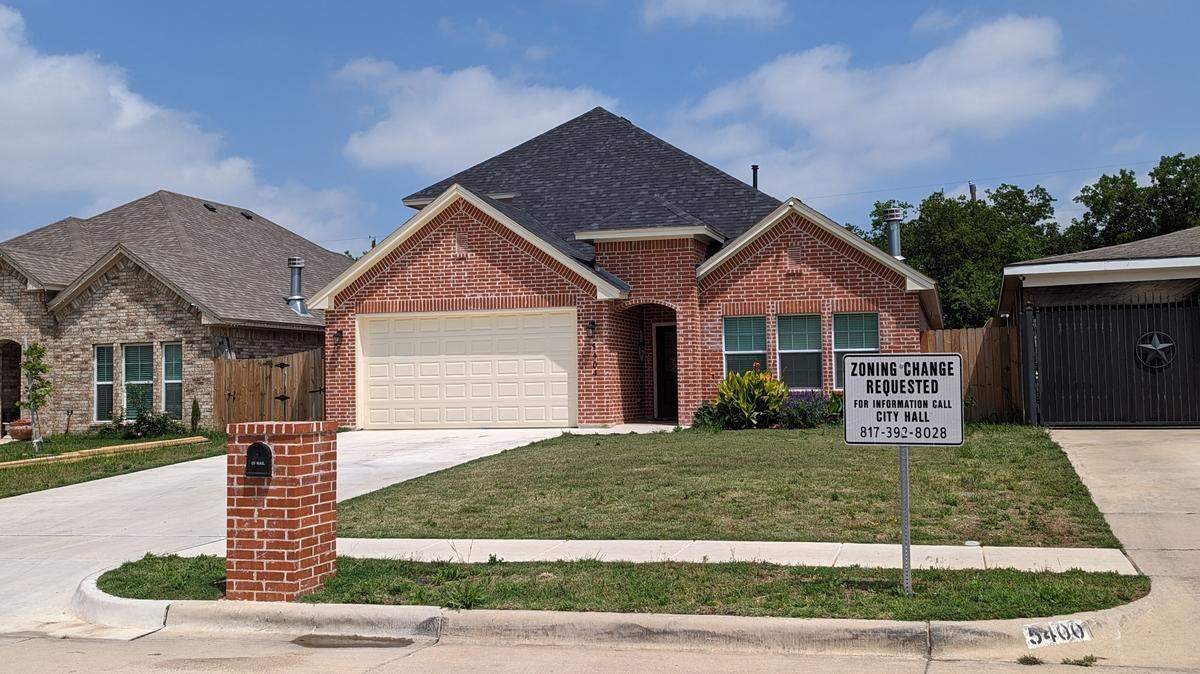
The Fort Worth City Council unanimously denied a zoning change that would have allowed a Lake Como property owner to use her home as a short-term rental.
Home owner Laura Tucker asked for the change to be in compliance with Fort Worth’s 2018 ordinance banning short-term rentals, like those listed on Airbnb and Vrbo, from residential neighborhoods.
But neighbors worried about how the change would affect their historic community.
They also accused Tucker of not doing enough to engage residents before applying for the zoning change.
Tucker, who purchased the home in March 2022 before she moved to Frisco for a career opportunity 10 months later, said scheduling conflicts had prevented her from attending community meetings. She also accused residents of not being welcoming to change, speaking at the city’s zoning commission hearing in April.
People in Como like to know their neighbors, longtime resident Dorothy DeBose said during Tuesday’s council meeting.
She said a short-term rental where people come in and out on the weekends would hurt the community’s goal of having people know their neighbors and collectively work to improve the neighborhood.
This is the first time a property owner has asked the city for a zoning change to be in compliance with the 2018 ordinance.
The city council passed new rules in January banning property owners from advertising their homes as short-term rentals if they didn’t first register with the city, pay hotel taxes, and comply with all city zoning rules.
This was meant to make it easier for the city to enforce its 2018 rules, which required code compliance officers to do exhaustive investigative work to prove violations.
A lot of illegal short-term rentals switched to long-term rentals after the city passed its registration ordinance, said assistant code compliance director Shannon Elder.
So far 15 short-term rental operators have applied and paid the $150 annual fee to register with the city, said assistant finance director John Samford in an email to the Star-Telegram. Fourteen other properties have applied, but haven’t paid the $150 fee to register, he said.
The city enforces its short-term rental rules based on address-specific complaints, according to code compliance’s Elder.
Some residents have pushed the city to be more proactive, but Elder said her department’s 39 neighborhood investigations officers don’t have the resources to seek out and shut down every short-term rental.
She compared it to speeding, noting Fort Worth’s police department can’t ticket every single incident of speeding. Code compliance focuses on the most egregious violations to protect safety and neighborhoods, she said.
This story was originally published May 9, 2023 at 7:40 PM.
.jpg)