Texas ‘trigger’ law banning most abortions will go into effect in August
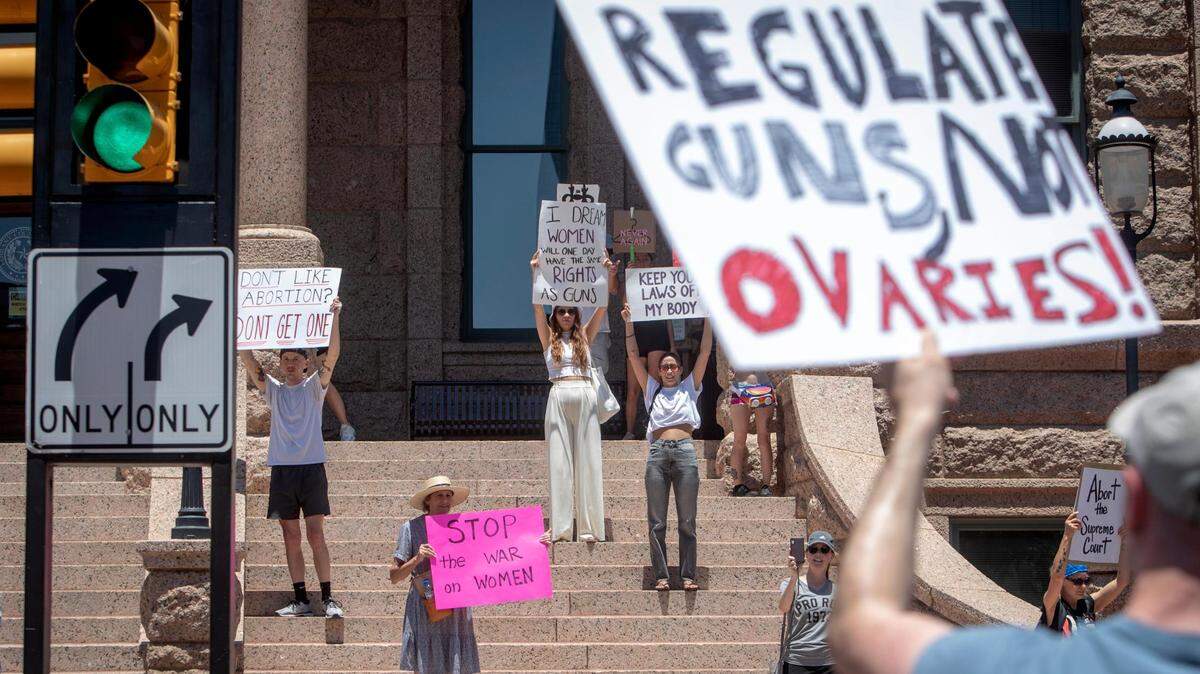
The U.S. Supreme Court on Tuesday issued its judgment in the Mississippi case overturning Roe v. Wade, starting the clock on a Texas “trigger” law that will ban most abortions in 30 days.
The high court on June 24 announced its opinion in Dobbs v. Jackson Women’s Health Organization, ending the decades-long constitutional right to an abortion and allowing states to decide abortion policy. Shortly after, Texas Attorney General Ken Paxton said the state’s “trigger” law would go into effect 30 days after a judgment is issued in the case. A judgment is distinct from the opinion.
Under the state law, a person who performs, induces or attempts an abortion could face up to life in person if successful, and up to 20 years in prison if the abortion is unsuccessful. The law includes a fine of at least $100,000 for each violation.
The law does not include exceptions for rape and incest. It provides exceptions for medical emergencies. The bill also states that penalties do not apply to a “pregnant female on whom abortion is performed, induced, or attempted.”
Paxton’s office said Tuesday afternoon that it plans to issue an advisory on the law within the next 24 hours.
The Texas Women’s Health Caucus of state lawmakers tweeted that the trigger law will put women’s lives at risk.
“The ban does NOT include an exception for survivors of rape or incest,” the tweet read. “Its vague language will force TX docs to wait until women are DYING before they can take act.”
The law comes as abortion providers across the state have shuttered their operations following the court’s ruling and amid debate over whether the state’s pre-Roe abortion ban is in effect in the interim, before the “trigger” law is implemented.
Whole Woman’s Health, which had North Texas clinics in Fort Worth and McKinney, announced it was closing its four Texas clinics and working to move operations to New Mexico where abortion laws are less restrictive. The abortion provider and others sued to block enforcement of the pre-Roe law. They were temporarily able to provide services after a District Court victory, but the order was blocked by the Texas Supreme Court. Planned Parenthood clinics in the state have also stopped abortion services.
Texas also has a law that effectively bans abortion after six weeks of pregnancy through civil enforcement.
The overturning of Roe came a little more than four months before the Nov. 8 elections for governor, Congress and state offices. Democrats are rallying their base in hopes that the court’s decision drives voters to the polls, while anti-abortion advocates and many Republicans believe their base, too, will be energized.
Texas is one of 13 states with a “trigger” law, according to the Guttmacher Institute.
This story was originally published July 26, 2022 at 3:52 PM.