
Fort Worth is considering new rules for Airbnbs and Vrbos. Here are four options
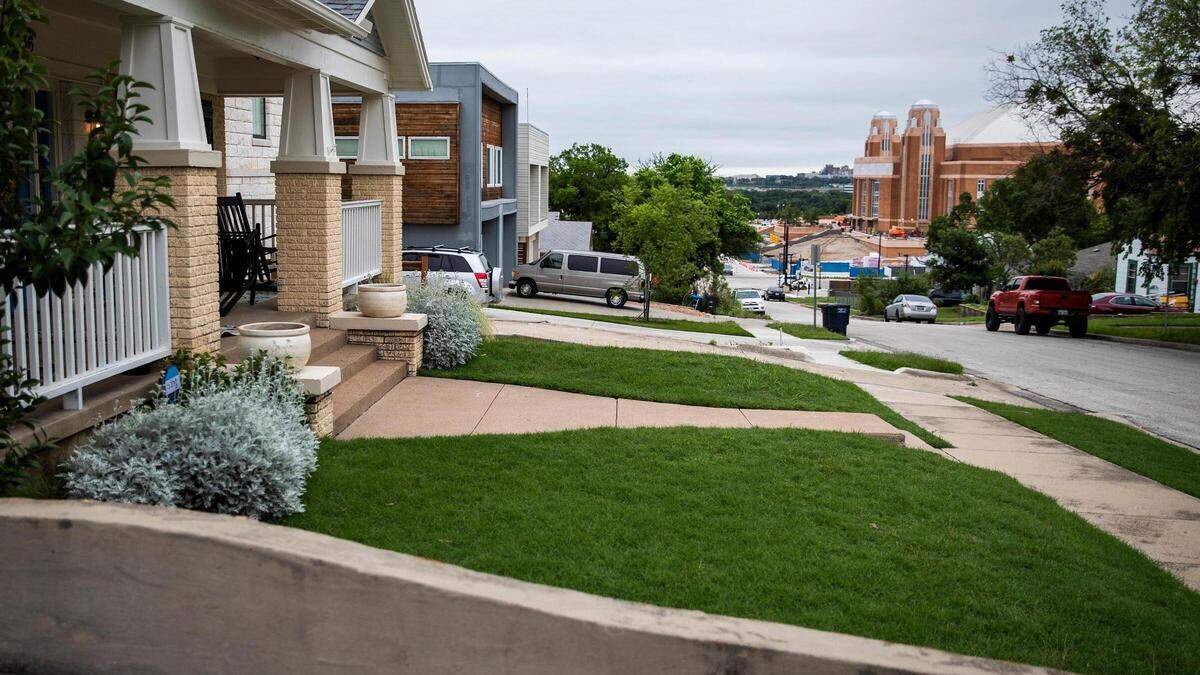
Fort Worth is considering four options to update its zoning laws to account for short-term rentals.
They range from staying pat to allowing free-range operation with some strings attached.
Lauren Brady, a short-term rental host and president of the advocacy group Fort Worth Short-Term Rental Alliance, called the options over-burdensome regulations on residents looking to earn income from their properties.
Others, like Rozanna and Michael Francis from White Lake Hills, said the city’s current ordinance protects neighborhood stability by discouraging transitory housing.

These aren’t the only options the city is considering, said assistant city manager Dana Burghdoff. Any changes to the regulation will be based on the feedback from the public and the City Council, she said.
Option 1: Keep it the same
Other than the new registration requirements, this option maintains the status quo that bans short-term rentals in residential neighborhoods and limits them to commercial or mixed-use zoning districts.
They would be allowed in parts of the central city, an area near Loop 820 and Interstate 35W and southeast of I-20 and I-35W.
Owners looking to operate a short-term rental in residential neighborhoods like Arlington Heights or North Hi Mount near Dickies Arena and the Cultural District would be required to apply for a zoning change, which could take up to 60 days. Burghdoff said approval isn’t guaranteed.
Both the Zoning Commission and the City Council would need to approve a zoning change, which can sometimes drag out the process if there’s a lot of public opposition.
Option 2: High density
Short-term rentals in this option would not be allowed in areas zoned for single-family homes, but those with onsite owners would be allowed in two-family or multi-family zoned lots like duplexes, condos or apartment buildings.
This option also makes a distinction between investor-owned and owner-occupied homes. It is not clear how the city would make that distinction, but Burghdoff said the city could look at homestead exemptions as a way to verify the person operating the short-term rental lives at the property.
Investor owned properties would only be allowed in high density districts like those zoned for apartment buildings.
Operators would be required to get a conditional use permit, which is a type of zoning change that allows for a discrete set of uses for the specific property beyond what would normally be allowed by the underlying zoning.
These permits are used a lot for car washes and require them to meet certain standards in order to get approval from the Zoning Commission and the City Council.
The conditional use permit would also have a five-year time limit, meaning operators would have to re-apply when those permits expire.
Option 3: Density caps
This option would allow short-term rentals in residential neighborhoods, but limit them to 5% to 10% of a city block, or roughly two houses per block.
Again, the city makes a distinction between owner-occupied and investor-owned properties.
Those owned by investors would be barred from residential neighborhoods, but allowed in multi-family districts like the Near Southside, downtown Fort Worth and Panther Island.
This option also requires short-term rental hosts to get a conditional use permit. There’s no five-year time limit.
Option 4: 30-day limit
This option allows owner-occupied, short-term rentals by right (meaning they don’t require a zoning change) either in certain neighborhoods or citywide with the same 5% to 10% limit on city blocks and apartment buildings.
This is similar to Arlington’s approach, which limits permitted short-term rentals to an entertainment district near Six Flags, Globe Life and AT&T Stadium.
It’s not clear how those neighborhoods would be determined, but Burghdoff said city staff would rely on guidance from the City Council about how to establish specific short-term rental districts.
It doesn’t ban operators from renting out their properties for more than 30 nights in a year, but they would have to get a zoning change or conditional use permit to do so.
.jpg)