
What Fort Worth’s changing Vrbo and Airbnb rules mean for your neighborhood
Lauren Brady started short-term renting as a way to take care of her nana.
The extra income covered her nana’s property taxes and helped Brady make improvements to the home that helped her move around more easily.
“When short-term rentals are banned, so is my family’s ability to keep her in a home that is safe,” Brady told the Fort Worth City Council in June.
Lisa Moore was forced to deal with trash, traffic and noise from a neighbor’s short-term rental in her far north Fort Worth neighborhood.
“I understand it’s her house and she could do what she wants with her house, but it also affects your neighbors. Not just you,” she said.
Their experiences illustrate the divide on short-term rentals like Airbnbs and Vrbos.
Fort Worth has faced difficulties enforcing its 2018 ordinance that bans short-term rentals from residential neighborhoods, but new regulations and a registration requirement could make it easier.
What’s less clear is where the city will allow short-term rentals to operate.
The city is considering four options.
Operators want to be in residential neighborhoods
Short-term rental advocates have insisted that any new regulation allows such rentals to operate in residential neighborhoods.
They said some have used income from short-term rentals to stay in their homes after losing a job or to pay ever-increasing property taxes.
Cassie Warren owns six properties in the north side. Before the pandemic, Warren and her husband had rented out their properties with traditional leases.
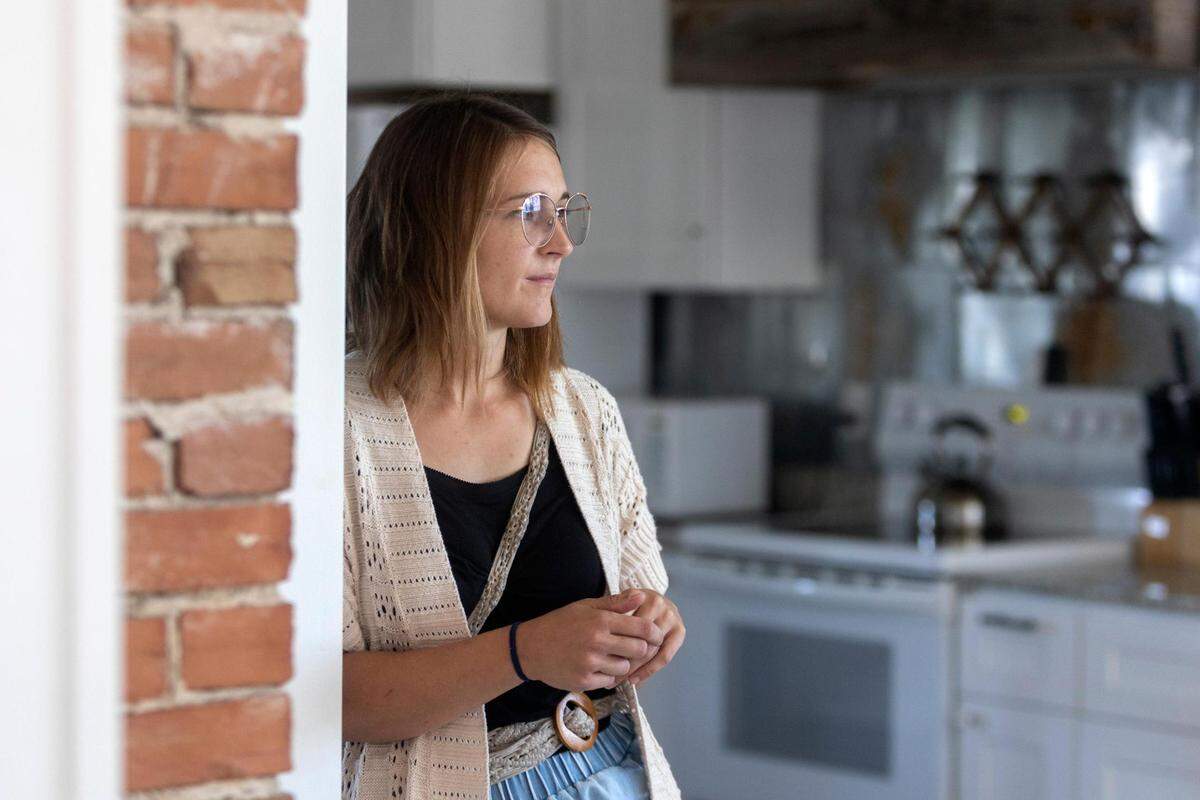
“We were just barely breaking even and then during COVID we had a few tenants who wanted out of their lease or who just left altogether, and we really weren’t going to make it,” Warren said.
The Warrens turned to Airbnb and were eventually making more money.
Fort Worth short-term rentals listed on Airbnb netted operators $18 million in 2021, according to a press release from a platform spokesperson.
The tech giant estimated its hosts earned $8,500 on average in supplemental income.
Advocates have also said some people prefer to stay in short-term rental homes instead of hotels.
Families working with the Gladney Center for Adoption choose to stay in short-term rentals to meet the 10-day requirement while the adoption in finalized. Large groups or families visiting the Fort Worth Stock Show and Rodeo will use them instead of paying for two hotel rooms.
The Fort Worth Short-Term Rental Alliance, an advocacy group representing local operators, conducted a survey of 78 guests who stayed in short-term rentals between December 2021 and June 2022.
It showed many would not choose to vacation in Fort Worth were it not for the availability of short-term rentals.
The survey included testimonials from guests with one saying a short-term rental helped them survive heat exhaustion after losing air conditioning, while others said it enabled them to get a deeper local appreciation of the city compared to their experience staying in hotels.
Concerns over safety
The last straw for Moore, the far north Fort Worth resident, came on the night of June 6, 2020, when she and her husband were awakened by the sound of gun shots resulting from a fight that broke out during a party her neighbor’s Airbnb.
“People were jumping fences, running across the backyard. Shots were flying. It was insane,” Moore said. “My child was scared to death.”
Moore said her neighbor told her she’d rented the house to a “nice old couple” for the weekend and wasn’t aware that it was being used for a party.
Airbnb says it conducts a background check of its guests within 10 days of a booking, provided they have an accurate name and data of birth.
However, in a November 2020 filing with the Securities and Exchange Commission, the company stated it doesn’t verify all of its hosts, guests or “third parties who may be present.”
Moore’s experience convinced her that the city shouldn’t allow short-term rentals.
“If you want to come to Fort Worth and check out the sites, rent a hotel room. That’s what they’re there for,” she said.
Brady acknowledged the horrors of Moore’s experience, but insisted that regulation and host education could prevent these kinds of incidents from happening.
“Those of us that have been doing this a long time can usually spot a bad guest a mile away and know what questions to ask and what best practices to apply,” she wrote in a text.
Her group has offered to partner with the city to develop a required host training course that would teach best practices around guest and neighborhood safety.
It’s not clear how many crimes have been linked to short-term rental hosting, but in addition to Moore’s experience there was another shooting at an Airbnb in January.
A 2021 Northeastern University study found a correlation between increased short-term rental density and rising crime rates in Boston between 2011 and 2018.
The researchers weren’t able to definitively say short-term rental were the cause of the rise in crime, but theorized it may have something to do with the lack of consistent neighbors eroding social cohesion.
Both Brady and Airbnb criticized the study’s methodology, saying it doesn’t give an accurate picture of when the number of short-term rentals increased in a given neighborhood and whether that increase corresponded to an increase in crime.
“Boston is a very different city than Fort Worth, so using anecdotal non-controlled data as evidence to eradicate a modern practice that provides significant economic development in the city of Fort Worth seems irresponsible,” Brady said.
Fears of investor takeover
Michael Moore, an east Fort Worth resident, told the city council in June he gets calls from investors all the time to buy his house in Historic Stop 6.
Moore joined other residents who expressed their fears that investors from outside Fort Worth would buy properties and turn them into short-term rentals.
Real-estate investment firm ReAlpha announced in June 2021 it would invest $1.5 billion to buy, fix up and list properties for short-term rentals.
The largest short-term rental operator in Fort Worth appears to be Houston-based Preferred Corporate Housing, according to Inside Airbnb, a crowd-sourced data mining website that looks at the impact of Airbnbs on residential neighborhoods.
A profile with 82 listings and the name “Laronna,” features a picture of Preferred Corporate Housing employees and matches the LinkedIn profile of a Preferred Corporate Housing account manager.
The company offers extended-stay housing and corporate relocation services in over 75,000 markets across the United States, according to its website.
Representatives from Preferred Corporate Housing did not immediately respond to a request for comment from the Star-Telegram.
There have been 1,707 Airbnb listings in or just outside the borders of Fort Worth since 2016 with 56.2% of hosts having more than one listing, according to data from Inside Airbnb.

The largest group with multiple listings had two properties followed by those with 10 or more.
Roughly 74% of Fort Worth Airbnb hosts only have one listing, but those listings make up 43.8% of the overall market.
Fears of outside investors are largely overblown, said Heath Olinger, a Dallas-based Realtor and owner of the short-term rental management company Square House Property Management.
Olinger manages around 260 Airbnb listings in North Texas and Oklahoma with 43 in Fort Worth, according to Inside Airbnb’s data.
It’s not economical for investors to come in and buy whole neighborhoods, Oliger said.
He pointed to the majority of hosts who own only one property, which is most of his clients.
He acknowledged that some companies will engage in a practice called rental arbitrage. That’s when a company or individual rents a property in order to list it as a short-term rental.
However, concerns about investors can be solved through regulations that cap the number of investor-owned properties that can operate in a given area, Brady said.
She pointed to San Antonio, which puts a 12.5% cap on short-term rentals for those that don’t have an owner or operator on site.
Problems with the current ordinance
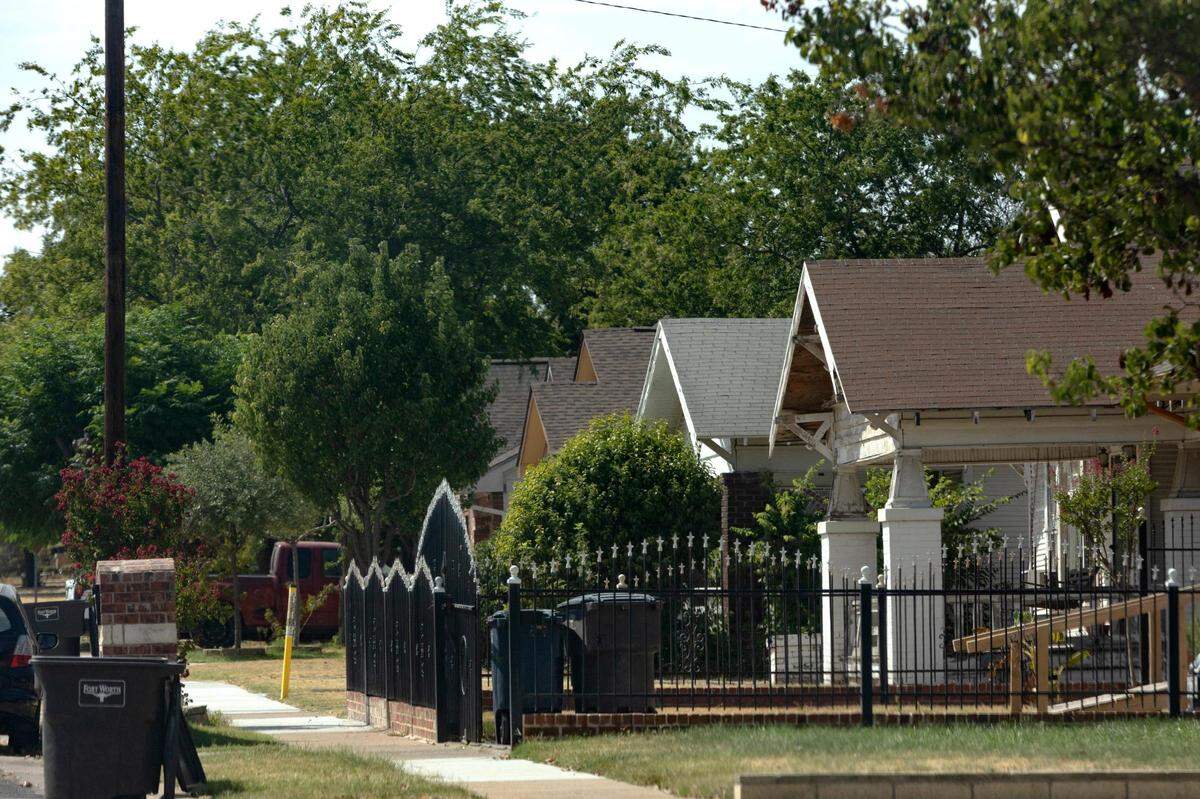
Fort Worth’s 2018 ordinance defined short-term rentals (leases less than 30 days) and banned them from residential neighborhoods.
The ordinance allows short-term rentals to operate in mixed-use, commercial or industrially zoned districts so as long as the owner has the appropriate certificate of occupancy from the city’s development service department.
However, proving someone has violated the ordinance can be difficult, said Brandon Bennett, head of the city’s code compliance department.
If the property is only rented out once in a 30-day period, it’s very difficult for code compliance to prove if that rental was for a night, a weekend, a week or the whole month, Bennett said.
The violation comes in when a host rents out their property to two or more parties during a 30-day period.
At that point the host can’t make the argument in court that they are renting out their property for more than 30-days, Bennett explained.
This requires code compliance officers to knock on doors, track license plates, talk with neighbors, and go back to a suspected house multiple times a week at different times of day to collect enough evidence of a violation, he said.
Code compliance has around 20 officers that deal specifically with neighborhood violations. Those officers handled 71 short-term rental cases in 2021 with 278 inspections.
Given the limited resources, the city’s policy has been to go after the most egregious short-term rental operators that are creating a nuisance in neighborhoods.
Bennett compared it to traffic enforcement.
“If someone’s doing 60 in a 55, when you have limited resources those aren’t the people you want to go after,” he explained. “You want to spend your limited resources on people who are going 90 and 100 miles an hour.”
Registration solution
The city wants to require owners of short-term rentals to register with the city in order to advertise.
Both short-term rental hosts and platforms would face fines for violating the requirement, and officers could enforce the rule by comparing online listings to the city’s database of registrations, said assistant city manager Dana Burghdoff.
This solution has worked well in markets like Denver, where the threat of a $1,000 per day fine caused short-term rental platforms to crack down on illegal listings, said Jessica Black, a member of the Texas Neighborhood Coalition.
Airbnb sued Santa Monica, California, over a similar ordinance in 2018, however, the 9th U.S. Circuit Court of Appeals ruled federal law doesn’t shield platforms like Airbnb and Vrbo from local zoning laws.
The four zoning options
City staff put out four zoning options in July that would either expand or greatly contract the number of short-term rentals in operation.
The city’s first option is to keep the current ordinance in place. This would ban short-term rentals from residential zoned neighborhoods, unless the property owner goes through the 60-day process of getting a zoning change.
Several residence expressed their support for this option saying no changes should be made until the city proves it can enforce the rules already on the books.
The second option bans short-term rentals from single-family zoned neighborhoods, but allows owner-occupied short-term rentals in two- and multifamily zoned districts provided they get a special zoning permit.
The third option allows short-term rentals in residential neighborhoods, but puts limits on how many. It also requires operators to get a special zoning permit.
The fourth option allows short-term rentals to operate either in specific residential neighborhoods or citywide without owners getting a special zoning permit, but only for 30 days a year. Operators looking to go over that 30 day limit need to get a special zoning permit or complete zoning change to operate legally.
Where we go from here
Burghdoff stressed the four proposals are not the only options the city is considering, and could change based on feedback from the public and city council.
“We want to hear from folks to see if there are other options or variations on the options that folks would like to see,” she said.
It’s not clear when the council would vote on any changes, but Burghdoff said it would take roughly 30 to 60 days for the city to set up its registration platform once the council approves a vendor contract.
Contract proposals are due by the end of the month followed by a council vote, which could take place sometime in September or October, Burghdoff said.
However, she stressed it’s hard to predict when any changes will go into effect.
Both the public and the city council need to give feedback on how they want the city to handle this issue, and that will determine what and when the city does next, Burghdoff said.
The city got in-person public feedback Tuesday with residents making arguments in support and against short-term rentals.
Residents like Daniella Judge argued owner-occupied short-term rentals ensure the hosts are invested in communities.
Judge runs a short-term rental in Meadowbrook on property she shares with her mother, and said owners like her want to be able to quietly and professionally keep running their short-term rentals without doing damage to the neighborhood.
However, others like Amanda Pittman, a Realtor and president of the Wedgewood East Neighborhood Association, argued short-term rentals rob residents of places to live in Fort Worth’s already tight housing market.
“I care about my single mom client that could not buy a home last year, cause the property that she lost out on, several of them ended up on Airbnb,” Pittman said.
She urged the city not to promote the expansion of short-term rentals at a time when affordable housing is so hard to come by.
This story was originally published July 29, 2022 at 5:00 AM.
.jpg)