What did Plyler v. Doe ruling do and why does Texas Gov. Abbott want to challenge it?
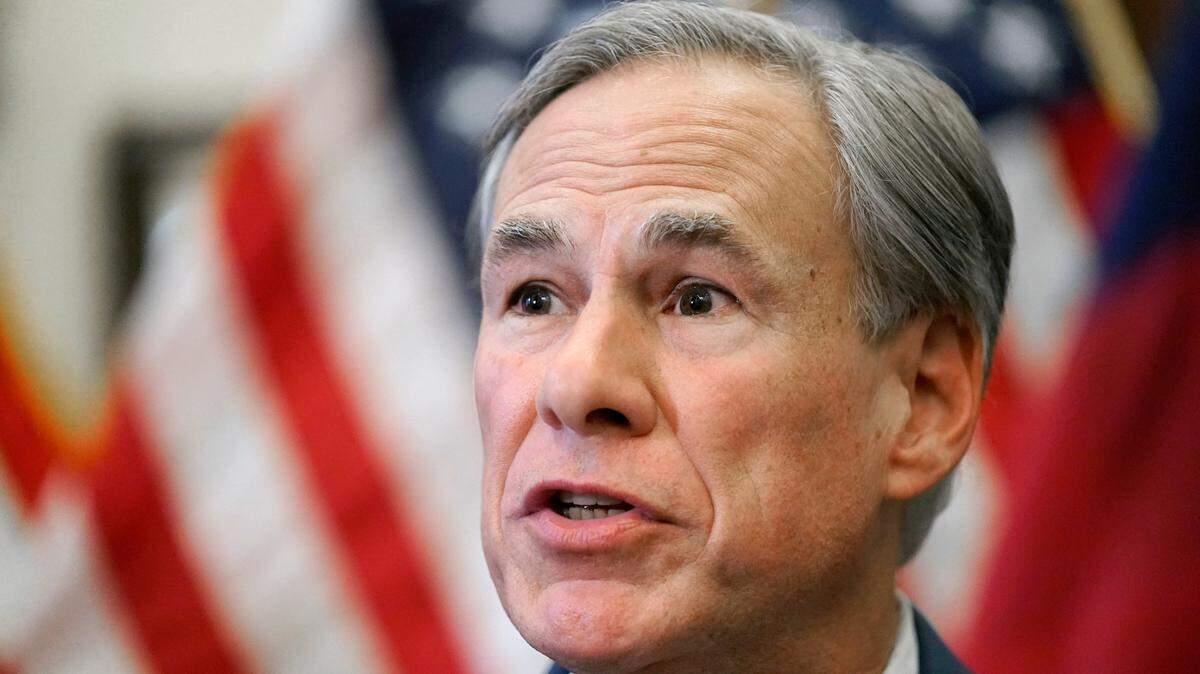
On Wednesday, Texas Gov. Greg Abbott said he would “resurrect” and challenge the landmark 1982 U.S. Supreme Court ruling on Plyler v. Doe, which decided states are required to provide education to all children, including undocumented immigrants.
Speaking on the Joe Pags Show, a San Antonio conservative radio program, Abbott said that times were different now than when the ruling was handed down in 1982.
“I think we will resurrect that case and challenge this issue again, because the expenses are extraordinary,” he said.
Abbott continued his comments Thursday night, saying the federal government should cover the cost of educating undocumented children in public schools or let states decide their own immigration policies, according to the Texas Tribune.
“Well, that’s ultra-MAGA right there,” White House press secretary Jen Psaki said in response to Abbott’s comments, referencing the abbreviation for former President Donald Trump’s “Make America Great Again” slogan.
Here’s what we know about the Plyler vs. Doe case and what it means for immigrant students:
History of the case
In 1975, the Texas Legislature revised its education laws surrounding immigrant students.
The changes denied enrollment into Texas public schools and withheld any state funds for children who were not “legally admitted” to the U.S.
Two years later in Tyler, Texas, the school district adopted a policy requiring undocumented children and their families to pay a tuition fee for the 1977-78 school year of $1,000 per student. Tyler ISD offered this clarification on what it spelled out as a “legally admitted alien”:
“A legally admitted alien is one who has documentation that he or she is legally in the United States, or a person who is in the process of securing documentation from the United States Immigration Service, and the Service will state that the person is being processed and will be admitted with proper documentation.”
After the move from Tyler ISD, a class action lawsuit was filed by the Mexican American Legal Defense and Educational Fund on behalf of four immigrant families, who couldn’t establish that they had been legally admitted to the U.S.
The lawsuit asked the district court to prevent the students from being denied free public education.
When it came to deciding the motion, the district court found that the 1975 revised Texas law and its implementation had neither the purpose or effect of keeping undocumented immigrants outside the state.
An increase in enrollment at Texas public schools was attributed to children who were legal residents, not immigrant students, the district court stated. The court continued that while barring undocumented children would save money, it wouldn’t improve the quality of education.
The court held that “illegal aliens” were entitled to protection under the Equal Protection Clause of the Fourteenth Amendment, and the Texas law violated the clause.
In response, several suits were filed to appeal the court’s ruling, but every time the court held that the Texas law violated the constitutional clause. Texas and Tyler ISD filed a petition for the U.S. Supreme Court to hear the case.
The U.S. Supreme Court heard arguments for the Plyler V. Doe case in 1981, considering if the revised Texas law violated the constitution.
In June 1982, the U.S. Supreme Court voted 5-4 concluding that the Texas legislation violated the Equal Protection Clause of the Fourteenth Amendment.
“Education has a fundamental role in maintaining the fabric of our society,” the court stated.
What is ensured under Plyler v. Doe?
Simply, it means that any child, regardless of immigration status, has a constitutional right to free public education.
The case is one of several that ensures students from all backgrounds are eligible for free public education, such as Brown v. Board of Education, which states that racial segregation of schools is unconstitutional.
The Mexican American Legal Defense and Education Fund, who filed the class action lawsuit back in 1977, had this to say about Abbott’s comments:
“Greg Abbott has once more distinguished himself as one of our most irresponsible and desperate politicians,” said Thomas A. Saenz, president and general counsel of the organization. “His woefully ill-informed comment on Plyler v. Doe reported yesterday epitomizes the dangers of dog-whistle populism in the style of Donald Trump.”
Saenz continued that Plyler v. Doe is well-established law and distinct from Roe v. Wade, which has also “unfortunately been subject to congressional undermining for many years.”
What happens next?
It’s unclear where Abbott will go next with his comments about reviewing Plyler v. Doe.
Abbott has been a staunch supporter of border security since the Biden administration took office in 2021, even sending migrants by bus to Washington D.C. right to the president’s doorstep.
The governor has also voiced his opposition of Title 42 being lifted, a border policy that was established in March 2020 that requires the expulsion of unauthorized single adults and family units arriving at U.S. border.