Early voting in Fort Worth: What to know about the Republican, Democratic primaries
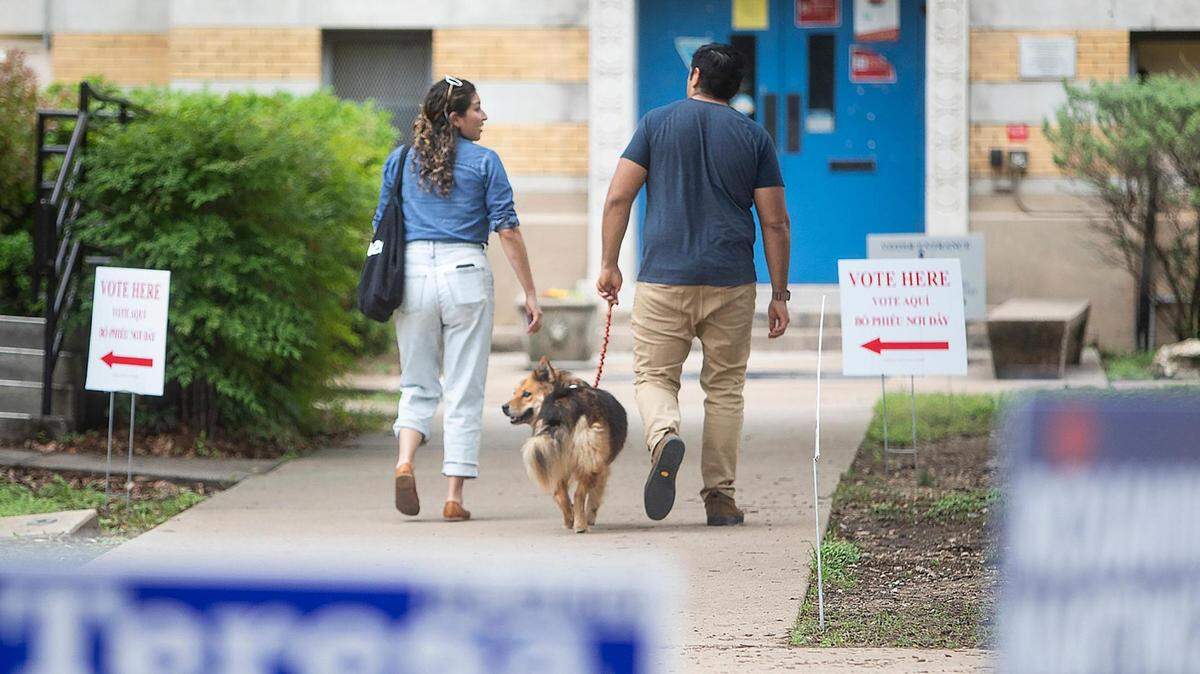
Early voting begins Monday in Texas, with races for top county and state officials on the Republican and Democratic primary tickets.
Voters can expect to see several new faces in office, and the March 1 primary marks the first round of voting.
In Tarrant County, three lawmakers are not seeking reelection to the Texas Legislature, and there are open seats for Tarrant County judge and criminal district attorney. Heated statewide races, including for governor, round out the ballot in a midterm year.
This is the first statewide voting subject to a new election law that drew national attention.
Texas Secretary of State John Scott encourages people to vote during the early voting period, which runs through Feb. 25.
“I urge everyone who can to take advantage of the convenience of the early voting period to avoid crowds on Election Day,” he said in a statement. “It’s also easy to remember — you can get out and vote early starting on Valentine’s Day!”
Texas has open primaries, which means you don’t need to register with a particular political party to participate. Voters can cast ballots in the Republican or Democratic primary, but not both.
In Texas, primaries are often where elections are decided, said Grace Chimene, president of President of the League of Women Voters of Texas, a nonpartisan organization. She encouraged as many people as possible to get out and vote.
“They have somebody running against them in the primary but not in the general election, or whatever district they have been put in is skewed toward one party or the other,” Chimene said.

Texas, Tarrant County races to watch
Statewide, the most-closely watched races are perhaps for governor and attorney general.
Gov. Greg Abbott, a Republican, is seeking a third term, but faces opposition from the left and right. In his party’s primary, Abbott has drawn seven challengers, including former Texas GOP Chairman Allen West, who previously represented Flordia in Congress, and former Texas Sen. Don Huffines, who represented the Dallas area from 2015-2019.
Former El Paso Congressman Beto O’Rourke is the front-runner in the Democratic primary. Voters will choose between him and three other candidates on March 1.
In Tarrant County, a number of legislators and county officials aren’t seeking reelection.
There are three open legislative districts. Sen. Jane Nelson, a Republican who’s been in office for nearly three decades, is not seeking reelection, creating an open seat in Senate District 12. Incumbents Matt Krause and Jeff Cason are also not seeking reelection — Krause is running for Tarrant County district attorney.
The race for House District 91 will be all but decided in the primary. Republican Rep. Stephanie Klick drew four opponents in her party’s primary, and there isn’t a Democrat running for the seat.
District Attorney Sharon Wilson announced in November she wasn’t running, and six candidates have filed to replace her. County Judge Glen Whitley is also retiring. Republican candidates vying to serve as the county’s top-ranking elected official include former Fort Worth mayor Betsy Price and Tim O’Hare, former mayor of Farmers Branch and a former Tarrant County GOP chair. Running on the Democratic side are Deborah Peoples, former Fort Worth mayoral candidate and former chair of the Tarrant County Democratic Party, and Marvin Sutton, a former Arlington city council member.
What’s different about this election?
The Republican and Democratic primaries are the first statewide elections since Texas’ new voter law, Senate Bill 1, went into effect on Dec. 1. The law had the support of most Republicans as it made its way through the Legislature, with proponents saying it was needed to promote election integrity. Opponents, including Democrats who broke quorum multiple times to block versions of the bill, said it would disenfranchise voters and limit access to the polls.
The law makes a number of changes to the state’s election law, including prohibiting drive-thru voting, rules on when polls can be open and added protections for partisan poll watchers. Curbside voting is still an option for eligible voters.
One result of the law that’s already made headlines is the rejection of ballots because driver license numbers or the last four digits of a voter’s Social Security number do not match the number on their voter registration record. Tarrant County at one point reported that 53% of absentee ballot applications had been rejected, primarily over missing driver’s license numbers and Social Security number digits. That number was down to 14% a couple days later. The county asks those who don’t know which number is listed in your voter registration record, both be included.
Chimene with the League of Women Voters encouraged people voting by mail to get applications and ballots in as soon as possible to allow time to fix problems that may arise. Applicants and voters should also be sure to include their contact information so they can be reached if there’s an issue, she said.
The new law also establishes new rules for those assisting voters, including taking an oath under the penalty of perjury that they’ll limit their help to reading and marking the ballot.
The law offers poll watchers protections and requires them to be trained and to take an oath to “not disrupt the voting process or harass voters.”
“For most voters who show up and go to the polls, the changes of the election laws wont be obvious,” Chimene said. The non-partisan organization opposed the law.
The primaries are also the first under newly drawn congressional, legislative and State Board of Education districts. This means voters may no longer live in the districts they have for past elections.
Not sure which districts you’re in? Personalized sample ballots can be found on the Tarrant County Election website. The Texas Legislative Council also has a tool where voter find who represents them.
Are you registered to vote in the Texas primary election?
The deadline to register to vote for the Democratic and Republican primaries was Jan. 31. Not sure if you’re registered? Registration status can be checked online through the Texas Secretary of State’s office.
Texans are eligible to register if they’re:
- A U.S. citizen
- A resident of the county where their registration application was submitted
- 18 years old or older on election day
- Not convicted of a felony (unless the sentence, including probation and parole, is complete)
- Not declared mentally incapacitated without the right to vote by a court
Texas does not have online voter registration, unless you’re renewing, replacing or updating contact the contact information for your driver license or state ID card.
Where to vote in Tarrant, surrounding counties
What voter ID is needed at the polls?
Texans voting in person should be ready to present one of seven types of photo identification:
- A Texas driver license
- A Texas election identification certificate
- A Texas personal identification card
- A handgun license
- A U.S. military ID card that includes your photo
- A U.S. citizen certificate with your photo on it
- A U.S. passport
Those without any of the above forms of identification can also submit a supporting form of ID paired with a Reasonable Impediment Declaration. Supporting forms (a copy or the original) of ID include:
- A government document that includes the voter’s name and address (This includes a voter registration certificate.)
- A current utility bill
- A bank statement
- A government check
- A paycheck
- A birth certificate
How to vote by mail in the Texas primaries
Feb. 18 is the last day to apply for an application to vote by mail. The application must be received by then, not postmarked.
Voters can submit their ballots by mail if they’re:
- 65 or older
- Disabled or sick
- Expected to give birth within three weeks before or after Election Day
- Expect to be gone from the county during early voting and on Election Day
- Are in jail but still eligible to vote
Applications to vote by mail (also called absentee voting) are available on the Tarrant County election website and should be submitted to the county’s early voting clerk. They can be returned by mail (Tarrant County Elections PO Box 961011 Fort Worth, Texas 76161-0011) or hand delivered.
The application can also be emailed (votebymail@tarrantcounty.com) or faxed (817-850-2344), but voters returning applications that way must also send a hard copy by mail that’s received within four days of submitting by email or fax.
A new law established an online tool for tracking ballots. By visiting or teamrv-mvp.sos.texas.gov/BallotTrackerApp or votetexas.gov (click “Track My Ballot), you’ll be able to see the status of your application to vote by mail and ballot.
Useful resources for voters
Tarrant County Election Office
- Website: tarrantcounty.com/en/elections.html
- Phone: 817-831-8683
Texas Secretary of State
- Website: sos.state.tx.us or VoteTexas.gov
- Phone: 800-252-8683
- Email: elections@sos.texas.gov
League of Women Voters
- Texas Chapter: lwvtexas.org
- Tarrant County Chapter: lwvtarrantcounty.org
Tarrant County Republican Party
- Website: tarrantgop.org
- Phone: 817-595-0303
- Email: info@tarrantgop.org
Tarrant County Democratic Party
- Website: tarrantdemocrats.org
- Phone: 817-335-8683
- Email: executivedirector@tarrantdemocrats.org