2 Fort Worth council members lost. How it happened and why it matters for city politics
A pair of political freshmen who unseated incumbent Fort Worth council members in Saturday’s runoff are eager to bring change to the City Council and their election marks a slight shift in city politics, experts said.
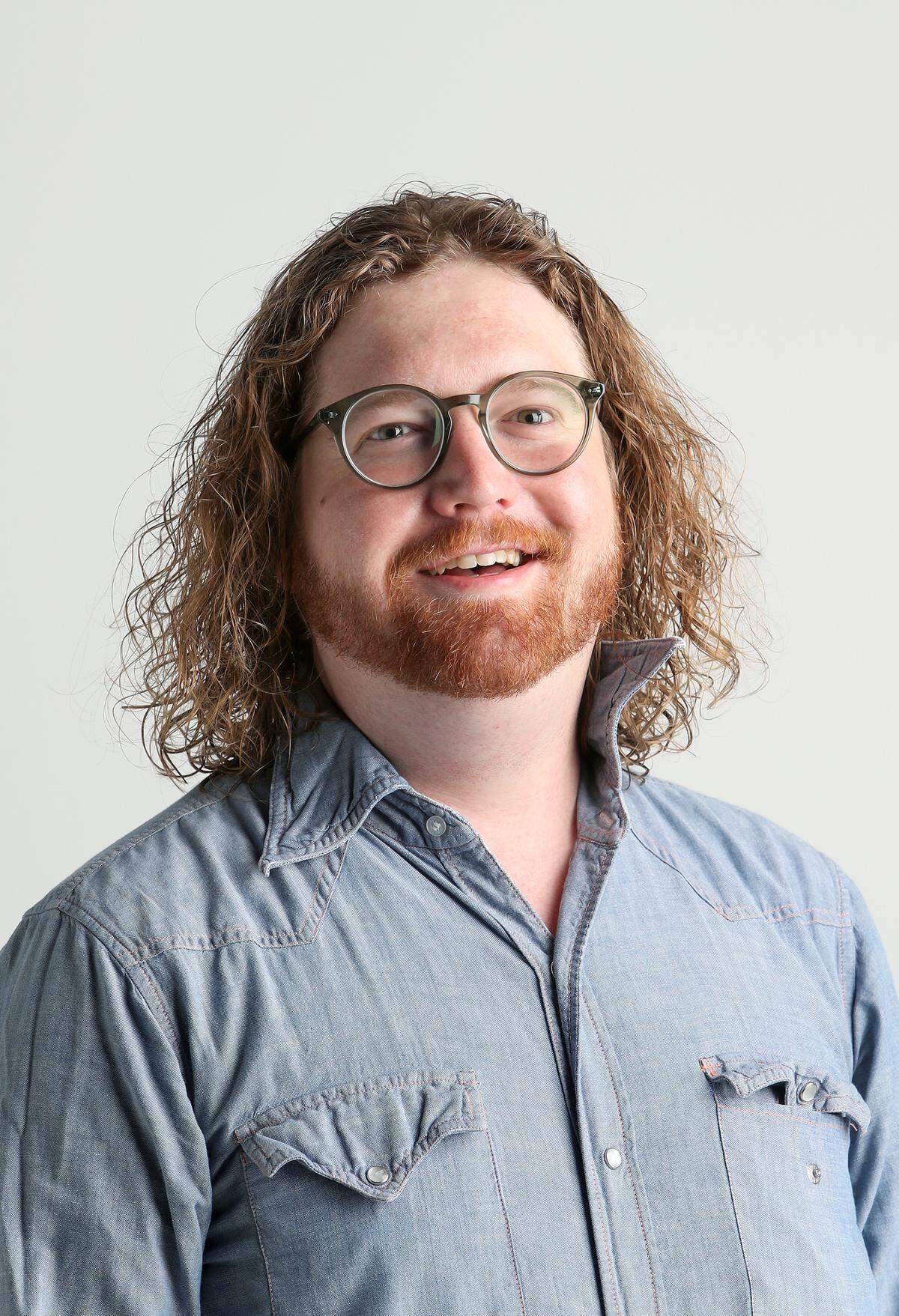
In Fort Worth’s southwest District 6, Jared Williams, 31, an educator with a doctorate in environmental science and science education, bested Jungus Jordan, 72, a retired Air Force lieutenant colonel, by 273 votes or roughly 1 percentage point. Jordan, a stalwart conservative, had been in the District 6 seat since 2005. On the east side in District 8, Chris Nettles, 33, a pastor and owner of Haven of Purpose Child Care Center, beat Kelly Allen Gray, 50, by 5 points.
Leonard Firestone, District 7, and Elizabeth Beck, District 9, also won runoff races. They’ll replace retiring council members Dennis Shingleton and Ann Zadeh. Mattie Parker, 37, a nonprofit CEO and former chief of staff for Mayor Betsy Price, will be the city’s next mayor after beating Deborah Peoples, 68, a retired AT&T vice president.
For the most part those three seats did not dramatically shift after the runoff. Price endorsed Parker as the best choice to replace her in the mayor’s office. Shingleton and every living former District 7 council member endorsed Firestone. Zadeh and Beck are Democrats with urban planning backgrounds.
In District 6 and District 8, the incumbents were significantly better funded, but outsiders won with a combination of grassroots work and social media skills, political experts told the Star-Telegram.
The Fort Worth Police Officers’ Association PAC donated $25,000 to Jordan, who took in a total of $137,350 in donations during the last campaign finance reporting period. Williams meanwhile had just $25,000 in the same period.
Gray was similarly well-funded with about $62,700 in donations during the period compared to $20,600 for Nettles.
Jordan and Gray did not return calls for comment.
Nettles, whose platform included bringing more grocery stores and clinics to parts of east Fort Worth with poor life expectancy, said he had no doubt he and Williams would shift attitudes on the council. The pair are North Crowley High School graduates of similar mindsets, he said. Both ran on messages of improving access to City Hall.
“I think momentum has been there, but there was no one willing to push as the progressive,” Nettles said. “I’ll be that voice on council.”
Williams did not return a call requesting comment for this story, but previously told the Star-Telegram he believed representation in his district had not kept up with the needs of neighborhoods.
Shift in voter sympathies
In a Facebook post celebrating his win Saturday night, Williams said voters made it clear they want new leadership.
“Tonight’s victory sends a message — one of love over fear, faith in the goodness of our neighbors and hope for a future where no neighborhood is left behind,” he wrote in the post.
The runoff wins over incumbents show a shift in voter sympathies that began at the national level, said Carlos Rovelo, who teaches government at the Tarrant County College South campus.
At the macro level, voters shifted toward Democratic candidates in the 2018 midterm election when Beto O’Rourke won in Tarrant County over U.S. Sen. Ted Cruz and again when Joe Biden carried the county in last year’s presidential election.
A number of factors are fueling the shift, he said, including an increase in engagement from young voters, higher voter turnout and an influx of residents from places like California with more progressive views.
“We have more progressive ideas coming in, challenging the establishment,” Rovelo said. “That’s what I see the future looking like.”
The Texas Democratic Party quickly celebrated Fort Worth wins in a statement Sunday, saying the Democrats had essentially flipped the council. Democrats hold five of the nine seats, state party chair Gilberto Hinojosa said while thanking the party for mobilizing in Fort Worth.
“By turning their city council blue, Fort Worth residents have shown what we already know to be true: a Democratic groundswell is rising up all around Texas,” He said. “Our communities are demanding change and ready to take back our state.”
The party was likely referring to Williams and Nettles as well as Carlos Flores, District 2, Gyna Bivens, District 5, and Elizabeth Beck, District 9.
Shift to the left?
Emily Farris, a TCU associate political science professor, was skeptical that the election truly pushed the City Council to the left.
“This is a nonpartisan election, and it’s not as clear where political affiliations of some people lie,” she said. “Local politics does not map on as easily as national politics to a Republican or Democrat divide.”
“It’s sort of a wait and see,” she added later.
Assumptions about how council members will vote may not pan out, she said. That’s particularly true for Williams and Nettles, where the state party spent little effort attempting to get either candidate elected, she said. They may feel more connected to constituents than party politics. Potholes, after all, are nonpartisan.
Rick Barnes, Tarrant County Republican chair, did not return a call and text seeking comment.
The council will face three opportunities to demonstrate how much new members will shift policies, Faris said.
Over the coming year, residents and the city will draw new district maps that include two additional seats. The Race and Culture Task Force, created to improve equity in the city following a viral arrest in 2016, recommended an independent commission to design the maps, but the City Council voted earlier this year to move forward without the commission opting to design the maps themselves after taking public comment. The resolution passed in April leaves open the possibility that the council could decide later to create an independent commission.
Whether the council creates a commission and how those maps are drawn may offer a small test along with the upcoming budget process, Farris said. That’s when council members will be able to hash out priorities.
Another significant moment for the council will be the upcoming murder trials of former police officer Aaron Dean, who fatally shot Atatiana Jefferson in her home in 2019, she said.
Other cities that have had highly publicized police shootings and trials have moved to make changes to policing. The council approved a Police Monitor office and a Diversity and Inclusion director, but has stalled on establishing a civilian oversight board for the police department, a key Race and Culture Task Force recommendation.
“Is this going to be the moment where city leaders say ‘We’re listening and we’re going to take action?’” Farris wondered.
Nettles pitched a civilian police board when he ran for mayor in 2017, and supports moving forward with it now. He said he’s also in favor of independent redistricting, but thinks the council should have the final say in district maps.
United Fort Worth’s influence
United Fort Worth, a progressive grassroots coalition, made good on its promise to elect more progressive candidates, Farris said. The group backed Williams and Nettles, saying in a statement on Facebook they engaged with 8,100 Black and Hispanic voters in District 6 and 6,000 Black and Hispanic voters in District 8. Besides Peoples for mayor, the group also supported Jen Sarduy in District 2 and Tara Wilson in District 4.
Farris said United Fort Worth’s block walking and door knocking showed the coalition’s power was growing. It and similar groups are remaining engaged and monitoring the City Council even when it’s not election season.
Though only two United Fort Worth-backed candidates will be seated June 15, Pamela Young, a community organizer, said Peoples’ victory by 3 points on May 1 was also a big win. She blamed the runoff system for “stealing the election,” arguing that Peoples was the overall winner.
The runoff system, used in 10 states mostly in the south, faced scrutiny in January surrounding Georgia congressional elections. The system was designed to help white candidates maintain office as Black voter influence grew, Cal Jillson, a political science professor at Southern Methodist University, told NBC News earlier this year. Young said that’s basically what happened in Fort Worth — Peoples gained the most support in the general election but white voters coalesced against her. A comparison of the Tarrant County votes by precinct with Census data from 2010 shows Peoples carried Black and Hispanic neighborhoods while Parker won predominantly white areas.
Peoples’ performance on May 1 and the ouster of two incumbents is “a mandate” to city officials that voters expect change, Young said.
“That is a war cry,” she said. “You can’t get any more clear than that, that the people want something better for this city.”
Along with a strong ground game from grassroots groups, Rovelo, the TCC South professor, said Nettles and Williams were more social media savvy. Both frequently posted on Facebook throughout the campaign season and Nettles had remained active even after losing previous elections.
“I think the traditional establishment is still a bit behind on where voters get their information,” Rovelo said.
If there is change, it may be slow at first, Farris said.
Fort Worth, like every Texas city except Houston, has a council-manager form of government. City staff run day-to-day business and craft policies, not elected officials, though they may use bully pulpits to influence the process. The majority of council members are new to the job. Besides the five elected Saturday, Michael Crain replaced Brian Byrd, who ran for mayor, in May.
With so many newcomers, the reliance on city staff will be greater, Farris said.
“I think probably, we’re not going to see that much change when it comes to the budget or maybe even redistricting, because everyone’s new and still learning how to even be on the city council,” she said.
This story was originally published June 8, 2021 at 5:30 AM.