Transgender bills likely dead in Texas, but parents fear damage is already done
Their daughter is only 11, but they are already well acquainted with the legislative process. Four years ago, Libby Gonzales and her family traveled from Dallas to Austin to speak out against failed legislation that would have dictated where transgender Texans may use the bathroom.
“I love my school and my friends, and they love me, too,” she testified in 2017 during a special session. “I don’t want to be scared to go to the restroom... in anywhere public. And I never ever want to use the boys’ restroom. It would be so weird. Please keep me safe.”
Now a pre-teen, the family has again visited Austin to speak out against bills targeting transgender kids. Lawmakers are pushing legislation that would bar transgender student athletes from participating on a sports team based on their gender identity and restrict access to gender-affirming medical care, such as puberty blockers.
With just days left in the session, the transgender student athlete bill’s chances of becoming law are dwindling. The regular session ends Monday. The bills related to health care for transgender kids are effectively dead, but that doesn’t mean they haven’t already done harm, parents of transgender children say.
“Damage is being done no matter what happens with these bills,” Rachel Gonzales said. “This isn’t the battle that’s going to stop, and unfortunately it’s going to be a really big uphill battle.”
The mother of three shared her experience advocating for her daughter time and time again at a recent news conference held outside the Texas Capitol building.
“Just like parents across the state, my greatest commitment to my children is to love them without condition and protect them fiercely from harm,” Gonzales said. “Unfortunately this has meant protecting my daughter from the Texas Legislature repeatedly.”
Where do the bills stand in the Texas Legislature’s final days?
The bill that’s gained the most traction in the legislature is Senate Bill 29, which would prohibit the University Interscholastic League from allowing “a student to compete in an interscholastic athletic competition sponsored or authorized by the district or school that is designated for the sex opposite to the student’s sex as correctly stated on … the student’s official birth certificate.”
UIL, which oversees sports in Texas public schools, bases gender on a student’s birth certificate.
The bill was placed on the House calendar for Tuesday for consideration by lawmakers, and has to get initial approval that day in order to move forward.
The bill’s author, Sen. Charles Perry, R-Lubbock, has said the policy is needed to provide a “fair and safe environment for women competitive athletes” as they participate in school sports.
Other bills would restrict access to gender affirming medical care for trans children. Senate Bill 1311 would have prohibited a doctor from providing a wide range of gender affirming health care services. Under Senate Bill 1646, providing a child gender-affirming health care would have been considered child abuse. Both bills were not set on the House calendar in time for a key deadline on Sunday.
“We’re relieved that the medical care bills, which would have done great harm to trans children, are dead, but we’re still extremely concerned that SB 29 has been placed on the calendar for Tuesday,” said Equality Texas senior adviser Angela Hale. “We’re going to do everything we can to fight it and to defeat it, because I don’t want to have to look in the face of these parents and have to tell them that their state leaders have failed them and haven’t protected their children.”
Rep. Matt Krause, a Fort Worth Republican, had filed a bill similar to Senate Bill 1311, but it wasn’t taken up by lawmakers in the House in time for a key deadline, effectively killing the bill. He acknowledged in a Thursday Facebook post that the Senate bill faced long odds of making it to the House floor. Krause did not return calls seeking comment.
In the post, he maintained that “those under 18 years of age are not in a position to understand the immediate or long term effects of these procedures and treatments.” He also suggested the legislation be brought up in a special session if not passed by the regular session’s end.
Lawmakers are expected to be called back to Austin in the fall for redistricting and for the allocation of federal COVID-19 relief dollars.
“Not getting a gender modification bill on the floor and off to the Senate or Governor would be one of the biggest missed opportunities of the session,” Krause said. “This legislation would ensure that life altering procedures and treatments are not used on children in Texas.”
Parents speak out against legislation
Rachel Gonzales’ days are filled with school drop off and pick up, chats about Pokémon and building Legos. She’s part of a tight-knit community who are happy to help with dinner and walk the dogs when they have to hit pause on everything to travel to Austin.
“We have just a basic, normal life, except that we have to go to the Capitol every other year to defend the existence of our family and the fact that we can love and support our kid,” she said.
Gonzales and other parents of transgender children told the Star-Telegram they were considering leaving the state because of the transgender legislation.
“We can’t risk my husband and I being criminalized for loving and supporting our daughter,” the native Texan told the Star-Telegram earlier this month.
Hillary Moore-Embry, who lives in the Houston area, is in a similar position. Her 16-year-old son who is transgender wouldn’t be able to continue the medical care that has been successful for him had the bills passed, she said on Thursday.
“It really impacts his mental health to even think about, you know, removing any piece of that care, because it all works together,” Moore-Embry said. “Therapists work together with his doctors. They’re so conscientious. That’s what I keep trying to explain to the legislature.”
Her son is homeschooled and doesn’t play sports, so he isn’t directly affected by Senate Bill 29, but the debate on it and other bills impacting transgender kids is hurtful, she said.
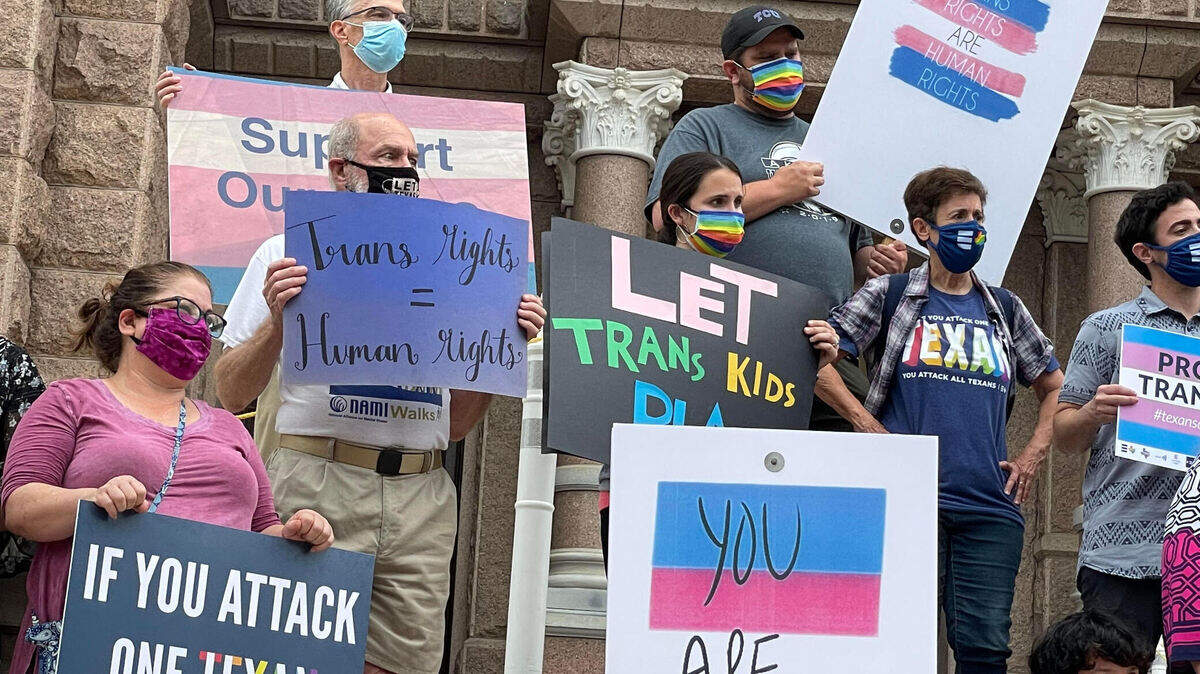
As she recounted the impact of the past several months, behind her opponents of the legislation including fellow parents of transgender kids waived blue, pink and white striped flags outside the Capitol and held signs rebuking the transgender bills.
The crowd of a few dozen cycled through chants.
“They are kids. Let them play. Stop the drama and go away,” they shouted.
Cassie Villela of San Antonio was at the Capitol for the fifth time in two weeks on Thursday for the rally outside the Capitol. The mother of a 6-year-old transgender daughter has been trying to talk with legislative staffers to answer questions and help them the bills’ impact.
“It’s very emotionally draining,” she said. “Especially, a lot of the bills this year are fueled by misinformation.”
In the days leading up to Sunday, the moms agreed the bills — even if not passed — have done harm. Villiela is thankful her daughter is too young to know what’s going on in the news with the legislation. She doesn’t tell the 6-year-old where she’s going when traveling to Austin.
Reflecting on the legislation’s impact, Villela recalled a man at the Capitol yelling at her that she was a child abuser and that nobody would love her kid.
“This is dog whistling to people that, ‘hey, it’s OK to treat people badly,” she said.
What could the bills mean for North Texas business, sporting events?
The bills have received pushback from many members of the business community, who say the legislation is bad for business. Earlier this year, the North Texas LGBT Chamber of Commerce signed onto a letter opposing the bills with other large employers, including American Airlines, Amazon, Apple, Dell Technologies, Facebook and Microsoft.
Transgender youth are the most “vulnerable of vulnerable” community in the state, said Gary Sanchez, the chamber’s chair. He also pointed out that transgender kids make up just a small portion of the population.
It’s disappointing “for state leaders to focus on these kids and their families when there are such bigger issues to deal with, as it relates to health care, as it relates to COVID relief, as it relates to education, passing a state budget, infrastructure,” Sanchez said.
“And it does have an impact on the state’s economy and how Texas is viewed as a state to do business in and a state to live in,” Sanchez said.
The bill barring transgender student athletes from participating on a team consistent with their gender identity will affect North Texas, he predicted. The National Collegiate Athletic Association has said that when determining where championships are held, it only selects locations where “hosts can commit to providing an environment that is safe, healthy and free of discrimination.”
“North Texas, we’re big sports people here,” Sanchez said. “We love hosting large sporting events, whether that be high school sports, whether that be collegiate sports, whether that be professional sports.”
This story was originally published May 24, 2021 at 2:02 PM.