Arlington needs more housing. Here’s how council candidates plan to meet the challenge
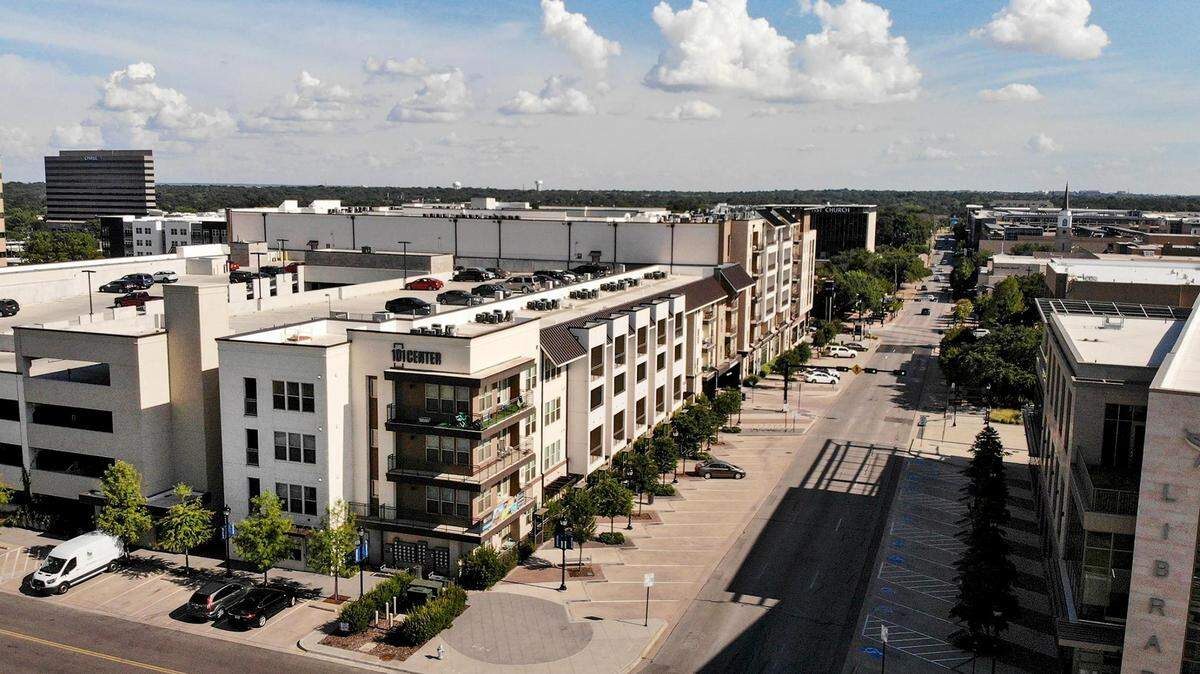
A lack of undeveloped land and a growing population are likely to challenge Arlington’s new council members and mayor when they work to attract affordable housing while pleasing older residents wary of increasing the city’s density.
Leaders have encouraged redevelopment of outdated apartments built during the city’s housing boom in the 1980s, but the majority of recent housing projects have been planned for green space or fall outside of the city’s preferred places for high-density development.
The city is also running short on quality affordable homes for working class families and the elderly.
The discussion is hardly unique to Arlington, said Hannah Lebovits, assistant public affairs and planning professor at UT Arlington. City leaders should prioritize housing that is both affordable to an array of residents and conducive to economic development in order to attract and maintain residents.
“Because of human mobility patterns, if you don’t make a reason for people to want to stay in your city, they just won’t,” Lebovits said.
Density, overbuilding fears
The Unity Council’s 132-page report on housing inequity found that 53% of Arlington tenants spent over 30% of their income on rent in 2017. The rate is higher for tenants of color: nearly 60% of Latino renters spent more than 30% of their income on rent, as did over 55% of all renters of color.
The study recommends revising zoning policies that discourage redevelopment in older neighborhoods or place barriers to building affordable housing. The report also recommends examining reasons behind the city’s segregation, especially in east and west-central Arlington.
Rebecca Boxall, an architect and District 5 council candidate, said she’s trying to dismantle the misconception that affordable housing must be high-density high rises.
“They don’t always have to go together,” she said. “There are other ways to create affordable housing.”
Rising density rates are inevitable, Boxall said, as the city’s population growth continues. The city’s density of 4,180 people per square mile places it above Dallas and Fort Worth, according to World Population Review. The city’s population is expected to increase from 392,692 in 2018 to 441,259 by 2025.
Arlington must figure out how much housing density is too much, said Dr. Barbara Odom-Wesley, a retired health care professor running for another term representing District 8 on the City Council. The city also must consider trends in housing.
“People nowadays going forward want to live, work play and learn within walking distance 10 to 15 minutes,” Odom-Wesley said.
Jim Ross, an attorney and businessman running for mayor, moved to Arlington in 1983. That decade, Arlington gained 47,428 homes, the majority of them apartments.
Officials are considering methods to draw new development to once pristine complexes that have declined to eyesores over the decades.
“It’s going to take a multi-tiered approach to deal with some of the multifamily housing issues that this city has suffered from for years,” Ross said.
Mayoral candidate Michael Glaspie, a minister who served six years on council, said the city should consider only projects that fit city plans for the area.
Lebovits said getting rid of certain zoning classifications could pave the way for more accommodating neighborhoods that allow for greater ranges of density. Additionally, programs that allow renters to eventually buy property could encourage younger residents and families to stay.
“It actually adds to the vitality of your area,” Lebovits said.
Mayoral candidate Dewayne Washington, a programmer,. said mixing housing types could help foster better relationships among residents.
“Separation sometimes breeds misinformation toward others when people don’t share space,” he said.
District 3 council member Marvin Sutton, who is running for mayor, said the city should focus on building up city services and streets to support new, affordable units.
“The problem that we’re facing is infrastructure challenging public safety service delivery,” Sutton said. “As you put people in, the demand for services increase.”
Meanwhile, mayoral candidate Doni Anthony said the residents she’s spoken with do not want more apartment complexes.
“The residents I’ve been hearing ... said that we already have enough,” she said.
Neighborhood needs
Both Dora Tovar, a District 3 candidate, and Billy McClendon, District 4, would like to see housing need studies conducted in each district.
“Each district is different, and they need to find out what fits that district better or particular area. You need to have housing,” McClendon, a teacher and minister, said.
Neighborhoods that do not have homeowner associations or representative groups are often left out of the process, Tovar said, which can exclude lower-income residents from development conversations.
“We have so many people who are new in the area, whether they’re Nigerian and it’s their first home in the United States or they’ve moved from another state entirely,” Tovar said.
Alixis Lupien, District 3 council candidate, agreed.
“What tends to happen, those areas tend to become very dense and segregated. I think we need to focus on not pushing more segregation than we already have,” Lupien said.
Both said they would advocate for zoning changes that the Unity Council report suggested would create more equitable building practices.