Texans lose if Trump excludes undocumented immigrants from reapportionment, critics say
President Donald Trump’s directive to exclude undocumented immigrants from reapportionment would have a magnified effect on Texas and Tarrant County and could jeopardize a seat in Congress.
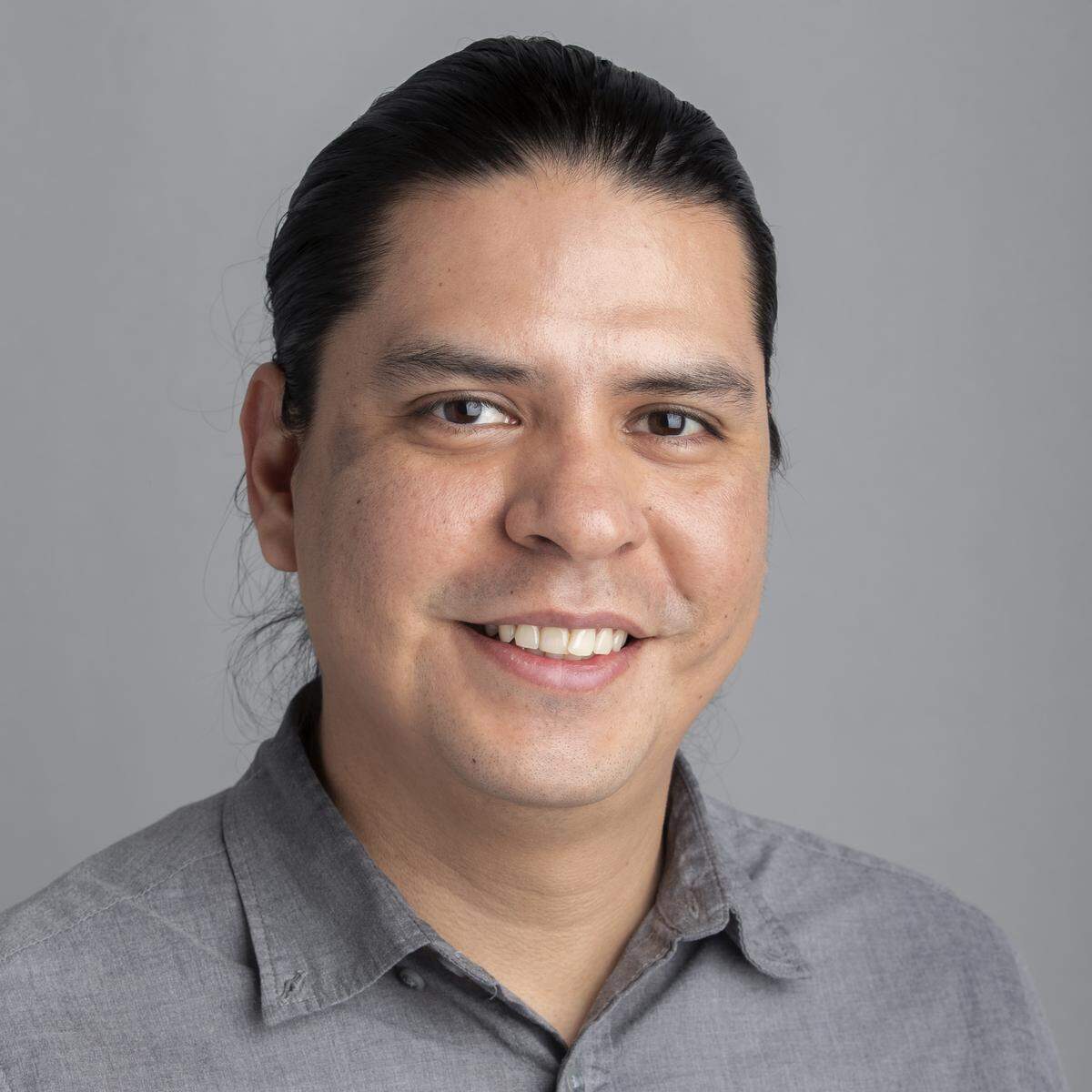
But Rep. Chris Turner, a Democrat from Grand Prairie and chairman of the House Democratic Caucus, is calling on Attorney General Ken Paxton to prevent that from happening.
In a letter sent Thursday, Turner urged Paxton to take legal action to block what he called an unconstitutional and misguided move. A spokeswoman for the Attorney General’s office said they could not comment.
“The only reason a large state’s legal officer would not take immediate action to protect his state from the President’s effort to dilute the state’s power in Congress would be to place greater allegiance to political party than country or state,” wrote Turner, the vice chairman of the House Redistricting Committee.
For the next decade, the Census will determine where billions in federal funds are allocated and be the basis for redrawing congressional and statehouse districts. Texas’ rapid growth means the state could add up to three more seats in Congress, and in Fort Worth it will help craft two new city council districts.
The majority of Tarrant County’s growth is due to a rapid increase in minority populations, especially the Hispanic community.
In a memorandum signed Tuesday, Trump directed U.S. Secretary of Commerce Wilbur Ross to exclude undocumented immigrants from being counted toward Congressional apportionment.
“Excluding these illegal aliens from the apportionment base is more consonant with the principles of representative democracy underpinning our system of Government,” the memo read. “Affording congressional representation, and therefore formal political influence, to States on account of the presence within their borders of aliens who have not followed the steps to secure a lawful immigration status under our laws undermines those principles.”
In 2019, the Center for Immigration Studies, a Washington, DC, based think-tank often cited by President Trump and anti-immigrant groups, conducted a report examining the cumulative impact of immigration, both legal and illegal, on the apportionment of House seats.
The report found that if undocumented immigrants are counted in the 2020 Census will redistribute three seats, with Ohio, Alabama and Minnesota losing one seat while California, New York and Texas gain one.
“Apportionment is a zero-sum system; by adding more population to some states rather than others, immigration will continue to significantly redistribute political power in Washington,” reads the report.
If Texas experienced an under-count of around 210,000 people in the 2020 enumeration, the state could end up missing out on a third seat that would go to Alabama instead, according to a 2019 study co-authored by University of Houston sociology professor Amanda Baumle and Texas A&M demographer Dudley Poston.
In their report, the authors write that if apportionment should be limited to citizens eligible to vote, many states will end up having large portions of their population unrepresented, including children, legal non-citizen immigrants, undocumented immigrants, and disenfranchised felons.
“If the goal is representational equality, then each elected official should represent an equal number of people, regardless of whether those individuals are eligible to vote,” the authors write.
Rep. Phil King, a Republican from Weatherford and chairman of the Texas House Redistricting Committee, said in an emailed statement that it’s in the state’s best interest for everyone to be counted for the purposes of apportionment.
“My job as Chair of Redistricting is to make sure that Texas strictly follows the law whatever that may be,” he added.
The American Civil Liberties Union has announced its intent to file a lawsuit to block Trump’s order.
Texans Lose
The ramifications of Trump’s directive would be acutely felt in Texas, where about 10.8% of residents were non-citizens between 2013 and 2017, much higher than the national average, census figures show.
In Tarrant County 191,767 or about 7% of the population was made up of foreign born non-citizens in 2018, according to the latest Census data. In the entire Dallas, Fort Worth area, there are more than 475,000, according to a 2016 study by the PEW Research Center.
Foreign born non-citizens were counted in the 2010 Census.
“North Texas and Tarrant County would bear the brunt of this within the state of Texas,” Turner said. “Because our population growth in this region has been so torrid over the last decade, it is our region that stands to gain from additional congressional districts that would be apportioned to Texas.”
Each seat in the U.S. House represents about 710,000 people, meaning growth of the Hispanic population alone in Texas could account for at least two seats after the 2020 Census.
Between 2010 and 2019 the Hispanic population in Texas grew by 2 million. Tarrant County led the state with a 28% growth rate, according to the latest Census data.
After the 2010 Census, Texas gained four congressional seats. Out of the four one — the 33rd Congressional District — was won by Democrats. Stephen Nuñez-Perez, a political analyst with the research and polling firm Latino Decisions, said this is because the Republican party was in control of redrawing the maps despite most of the state’s growth being among the Hispanic community.
Advocates had previously feared that the Trump administration’s attempt to add a question on U.S. citizenship to the Census would make households with non-citizens less likely to participate — a point the U.S. Census Bureau’s own research found. The Supreme Court blocked the question’s addition in June 2019.
After Monday’s executive order, Dale Ho, director of the ACLU’s Voting Rights Project, wrote in a news release that this was Trump’s latest attempt to intimidate immigrant communities from participating in the 2020 Census.
“The Constitution requires that everyone in the U.S. be counted in the census. President Trump can’t pick and choose,” Ho said. “He tried to add a citizenship question to the census and lost in the Supreme Court. His latest attempt to weaponize the census for an attack on immigrant communities will be found unconstitutional. We’ll see him in court, and win, again.”
This story was originally published July 23, 2020 at 6:29 PM.