Fort Worth’s peaceful protests deserve action. Here’s where to start on police reform.
Fort Worth grew up a little last week, and we have further to go.
The voters and leaders of the 21st century came to the courthouse and City Hall by the hundreds, enough to turn elections in a city mocked nationally for our pitiful 6% turnout and average voter age of 66.
In a city where civic activism is rare and some leaders even discourage it, a new generation presented a to-do list to move Fort Worth forward as a modern American city with a strong sense of justice.
It was a somber week in Fort Worth history. And one of our greatest.
A young, multicultural generation of city residents stood face-to-face with the mostly older, mostly white current leaders and police force.
Police held a firm line on the West Seventh Street bridge Monday night. Some protesters wouldn’t go home even when leaders did.
But by Monday night, both protesters and officers were kneeling together on the same side.
Everybody agrees that nothing like the sadistic death of Texan George Floyd on May 25 in Minneapolis should ever happen to anyone in America.
Now if they can just get the rest of Fort Worth to go along.
Last week’s conflict in America was about a second-degree murder charge in Minnesota and racial injustice nationwide, but it also played out along generational lines.
Older officials — particularly in the Texas Legislature — seemed more concerned about spray paint and broken stuff than about excessive force by police or justice reform.
(Let me break it to you. The same people who have not fixed things for 30 years in Texas are not going to fix them now.)
Protesters came out of grief and anger for Floyd’s death.
But they also came for change. And there is much that needs changing:
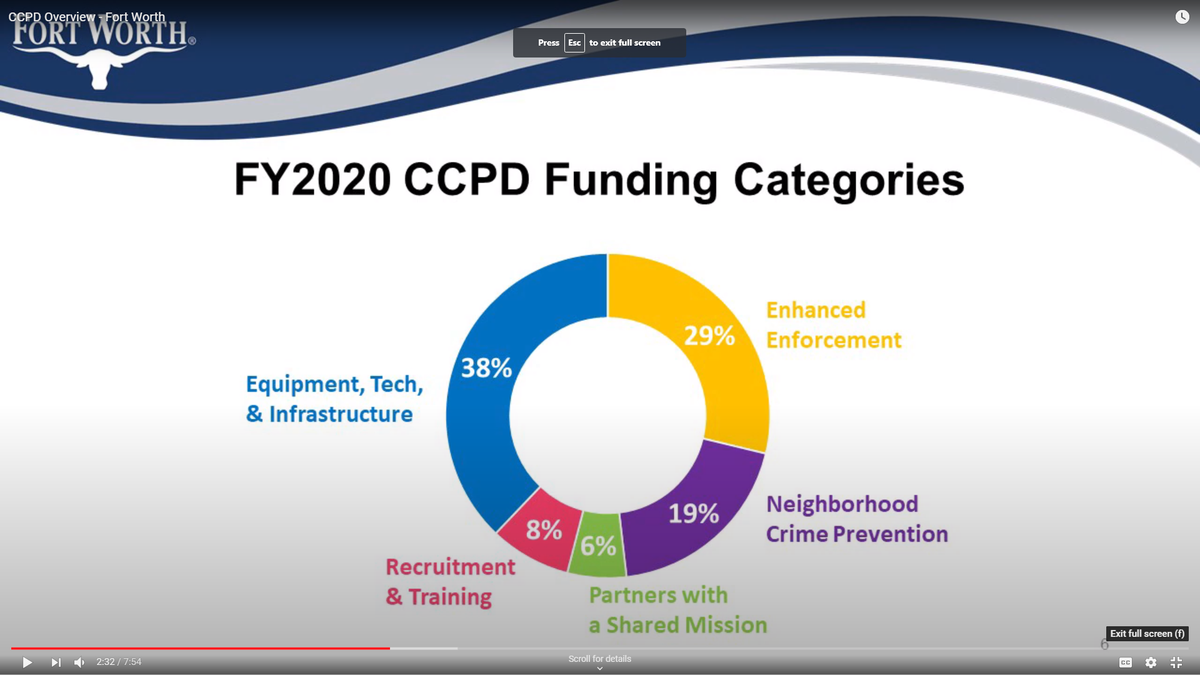
Spend the crime tax in a smarter way.
▪ The $78 million city Crime Control and Prevention District half-cent sales tax up for renewal July 14 should mostly be spent on crime prevention, not gear or overtime.
I have always said the money should fund pre-K education across Fort Worth. That’s how San Antonio uses a $47 million sales tax, and that city is edging ahead of Fort Worth in education measures.
The more we improve pre-K and primary education, the fewer police we need. It’s that simple.
Protesters suggest mental health or youth programs.
Anything would be better. If we are going to collect a half-cent sales tax, let’s put it to work the best way.
Don’t make police into campus monitors.
▪ Police should be in public schools with one assignment only: to protect the campus from threats.
Ticketing students or handling minor discipline distracts officers from that job.
It’s bad for the kids — they wind up suspended or tagged as offenders over something petty. And it’s also demeaning to officers.
Fort Worth funds school police through the city crime tax instead of through school taxes. It’s convenient, but roles must be clear.
There’s a conservative plan. Follow it.
▪ County and state leaders already have their to-do list: the conservative plan for criminal justice reform.
The basics are simple: Minimize arrests. Maximize transparency and accountability. Keep the criminal justice system small, and ensure it responds to the public and voters.
For starters, the Legislature ought to go back and fix the flaws in Texas’ Sandra Bland Act, passed in 2017 after an African American woman was jailed over failing to use her turn blinker and died of suicide in her jail cell.
Powerful police unions opposed a 2019 bill to end arrests on Class C misdemeanors when they could write tickets instead. The House was close to passing it, but botched it.
At the city level, San Marcos now requires police to write tickets instead of making arrests for minor offenses such as marijuana possession or graffiti. Austin and San Antonio urge police to do the same. So could Tarrant County cities.
Police reform is now a priority at every level.
The council needs to reflect our diversity.
▪ Change starts at the top. The next City Council election map should be drawn to achieve fair representation.
It doesn’t cut it when districts are drawn so that white voters are the majority in five districts, African American voters in two and Hispanic voters in only one.
Move the Confederate marker.
▪ An obscure 1953 marker for Confederate war veterans still stands on the courthouse lawn.
Nobody in my lifetime has paid it much attention. If Judge Glen Whitley had ordered it stored for security purposes, nobody would have ever noticed.
Dallas responded quickly last week when groups raised questions about the “Texas Ranger of 1960” statue of Ranger Jay Banks at Love Field, and about Banks’ role in the 1956 violent white race riot at Mansfield High School.
Banks helped quell the mob and rescued a white Episcopal priest who was roughed up. But an African American student was hanged in effigy as whites defied desegregation.
The Tarrant County marker was put up in that same era. Tarrant County Judge Gus Brown willingly accepted a memorial to the Confederacy.
.JPG "PHi_j0170(13).JPG")
It’s 1993 redux
In March 1993, 27 years ago, 10,000 protesters marched to the steps of that courthouse in what remains the largest protest in county history.
It was the only other time men and women of all colors have united to raise their voices in such outrage.
An all-white Tarrant County jury had given probation to a white Dallas skinhead in the race killing of an Arlington man, Donald Thomas. (The skinhead was retried and served 16 years in prison on a related charge.)
The Tarrant County District Attorney’s office, county judge, mayor and local leaders promised reforms to end racism, discrimination and prejudice in the justice system and local government.
There is more to do.
This story was originally published June 5, 2020 at 11:41 AM.