Not just Trump, 15 years of fed inaction led to shortage, North Texas mask maker says
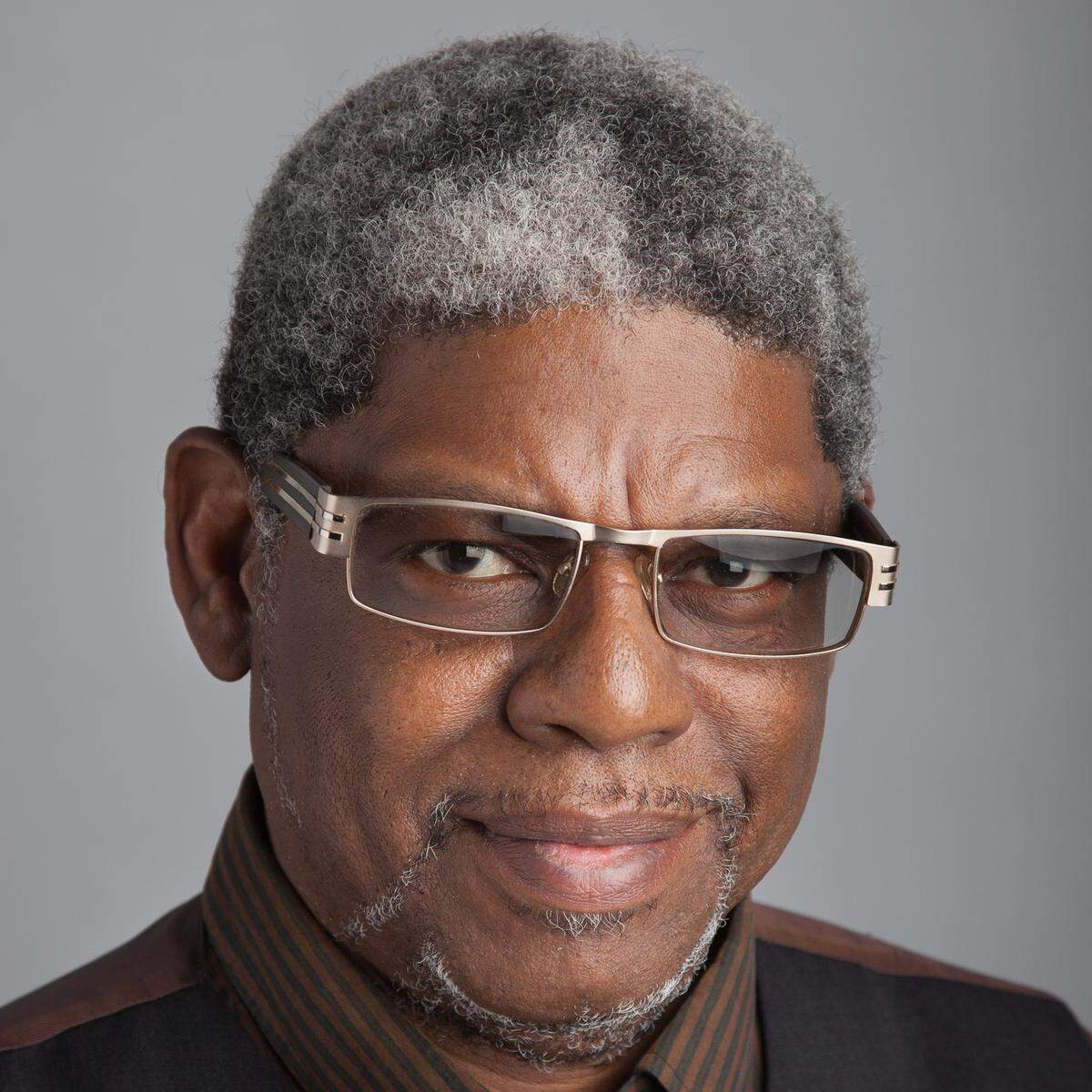
Much has changed since Michael Bowen helped start the largest surgical mask maker in the United States with company president Dan Reese.
The United States used to produce as much as 90% of the surgical masks used here, but now most of those masks are produced in China and Mexico, Bowen said.
The turn started in 2004, a year before the company he helped found in North Richland Hills was born, Bowen said to members of the U.S. House Energy and Commerce Health Subcommittee on Thursday.
The other thing that has changed over time is that he did not use to curse, Bowen said. Almost 15 years of strongly encouraging different federal officials to buy American-made surgical masks and being ignored have caused him to use more swear words, he said.
In his testimony Thursday, Bowen apologized to members of the congressional committee for sometimes coming across as an angry man and for using an occasional curse word, but later acknowledged that the 15 years of federal inaction on this issue “has cost lives” during the coronavirus pandemic.
“By the way forgive me for being angry,” Bowen said. “I’m angry because I’ve done this for so long and I’ve been ignored for so long. And I apologize.”
The U.S government has only purchased surgical masks from his North Texas company, Prestige Ameritech, during a pandemic, Bowen testified. A company goal has been to obtain long-term contracts that are lucrative enough to sustain the business yet give the company the ability to ramp up sufficient production in order to provide America’s frontline first responders with medical protective gear in the event the country has to respond to a pandemic.
Bowen said if he could have gotten the country’s peacetime business from the U.S. Veterans Administration and the Department of Defense, three other machines could have been placed on standby in case of an emergency. As it stands now, it would take three to four months for Prestige Ameritech to ramp up to peak production, he said.
“We’ve gone from 75,000 a month, to 2 million and in another 40 days we can go to 4 million,” Bowen said.
Currently, Prestige Ameritech has four manufacturing lines that are dormant. But to use those machines the company would have to hire and train another 100 workers and get government approval, Bowen said. Those machines were made in China and came as part of an acquisition, he said.
Bowen said had the federal government taken him up on the offer he made at the beginning of the year, not for a contract at that point because he was just trying to be helpful, Prestige Ameritech could have put 7 million more N95 masks on the market a month.
It’s not just what happened in January — it is what has been happening since 2004, Bowen said.
Suicide mission
At the end of January, Bowen said, his phone stared exploding. It was Chinese Americans wanting to buy masks who were in turn sending masks to China. Now he gets emails from Americans seemingly near tears. There are American mothers asking for masks for their children and he cannot help them, he said.
Bowen said at the time he offered to begin mass producing N95 masks for the federal government, he was selling them for 79 cents each. Congressional members told Bowen that they understand the Trump administration has been scrambling to buy masks and paying as much as $5.50 per mask.
“America has a weakness for low prices,” Bowen testified. “Chinese prices are so low. I decided to buy 12 things from America no matter how much it cost. That decision was taken away from me. I could only find one thing, a toilet plunger, from the U.S.”
During the H1N1 flu epidemic, the company flourished, but after the disease diminished, medical protective gear consumers sought overseas contracts because they were cheaper, North Richland Hills Mayor Oscar Trevino has said.
“During the (flu) epidemic he ramped up and hired 100 people,” Trevino said of Prestige Ameritech. “But as soon as that scare was over, they (consumers) went back to foreign producers. He had to lay everyone off and pay the workers comp.”
Bowen testified that he could not believe it when that happened. After the H1N1 flu epidemic, the market became glutted and China did not stop selling masks, he told the committee.
“My biggest customer didn’t order for seven months,” Bowen said.
Bowen told the committee the company is not going to take the risks it took during the flu epidemic when it almost went bankrupt and had to fire 150 people.
The company would require a customer, perhaps it could be the federal government, that could guarantee purchases that would sustain that level of production, Bowen explained.
“I’m not going on a suicide mission,” Bowen said. “... I had to watch my business partner cry when we had to lay those people off. We’re not doing that again. I can’t hire 100 people based on a maybe. .. I’m not going to flip them on and have you have me flip them off and have everyone leave me hanging like they did the last time.”
What happened to those masks that were purchased by the federal government during the flu epidemic? The government stored them for 10 years and then auctioned them off, Bowen said. The people who bought them re-sold them for 10 times what they were worth. The people who purchased those masks called and yelled at him because they got a 10-year-old mask, Bowen said.
And now, things are worse than they were then, he said.
The prescription
Bowen said that stockpiling masks is a mistake. Also, the silos between government agencies that were said to be torn down after 9-11 still exist, Bowen said.
If the hospitals would pay a few cents extra per mask and a smaller stockpile was recycled through the Department of Defense and the Veterans Administration, that could help alleviate shortages that come during epidemics, Bowen suggested.
There also needs to be a way to produce a better mask more rapidly, he said. A private-public partnership that brings the purchasing power of the VA and the DOD, together with the hospitals, the equipment distributors and the lawmakers need to address the problem with the producers, he said.
This type of product needs to be produced in America and cannot only be produced in foreign countries, according to Bowen.
U.S. Rep Debbie Dingell, D-Michigan, said she believes there will be a larger market for medical personnel protective gear going forward. As the United States reopens, more people will want to wear masks, Dingell said during the committee hearing.
But Bowen countered that already in the middle of this pandemic, he is hearing hospital officials say that they will purchase a greater percentage of American product, but the larger part of their purchases continue to come from overseas.
“I’ve said for years, we can’t wait until the pandemic happens before we do something about it. And it’s time to fix it. We had 13 freaking years to fix it. And that’s the travesty,” Bowen said. “Here’s the thing I can’t figure out. Nobody listened. It was universal.”
Whistleblower complaint
Bowen’s overtures to the Trump administration are outlined in an 89-page whistleblower complaint filed this week by Rick Bright, former director of the Biomedical Advanced Research and Development Authority.
Bright’s complaint alleges that he was retaliated against by federal government officials and was reassigned to a lesser post because he tried to advance scientific and safety concerns during the coronavirus crisis instead of opting for what was politically expedient. Health and Human Services officials have characterized the allegations as without merit, according to a story from The Intercept.
Bright, who testified Thursday before the House Energy and Commerce committee, said that he recalled getting emails in late January from Bowen suggesting that the U.S. N95 mask supply was “completely decimated,” according to reporting by the Associated Press.
“And he said, ‘We’re in deep shit. The world is. And we need to act,’” Bright said. “And I pushed that forward to the highest levels I could in HHS and got no response. From that moment I knew that we were going to have a crisis for our health care workers because we were not taking action.”
Following Bright to the witness table, Bowen told lawmakers that he’s a Republican who voted for Trump. He paused then, and added that he admires Bright.
As part of his whistleblower complaint, Bright is seeking to be reinstated in his old job. A federal watchdog agency has found “reasonable grounds” that he was removed as a reprisal, the Associated Press story said.
HHS, Bright’s employer, says it strongly disagrees with his allegations and that it reassigned him to a high-profile position helping to lead the development of new coronavirus tests at the National Institutes of Health.
Nearly 85,000 people have died from COVID-19 in the U.S., representing more than one-fourth of global deaths and the world’s highest toll, according to figures compiled by Johns Hopkins University. Worldwide more than 4.4 million have been infected and about 300,000 have died, the Associated Press story said.
This story includes information from Star-Telegram archives and the Associated Press.
This story was originally published May 14, 2020 at 6:22 PM.