‘Barking’ desert creature — the topic of warnings — turns out to be new species
As the late afternoon sun of southern Namibia faded into the early evening light, a “stout” creature emerged from its burrow and began “barking” in hopes of attracting a mate. The distinctive sound caught the attention of nearby scientists — and for good reason.
The calling animal turned out to be a new species.
A team of researchers visited dozens of sites across Namibia and neighboring South Africa over several years to study a unique group of lizards known as barking geckos, according to a study published Aug. 28 in the peer-reviewed journal Vertebrate Zoology.
Barking geckos are named for their “unique vocal abilities, with males producing loud advertisement calls to attract females,” researchers said. These calls can be heard from a distance, especially when hundreds or thousands of males call at the same time. The lizards also “dig complex burrows within which most of their lives are spent.”
Although easy to detect, barking geckos are “shy, exceptionally well-camouflaged,” and “have excellent hearing compared to other lizards and are hyper-alert at their burrow entrances — a feature that makes capturing them extremely difficult,” the study said.
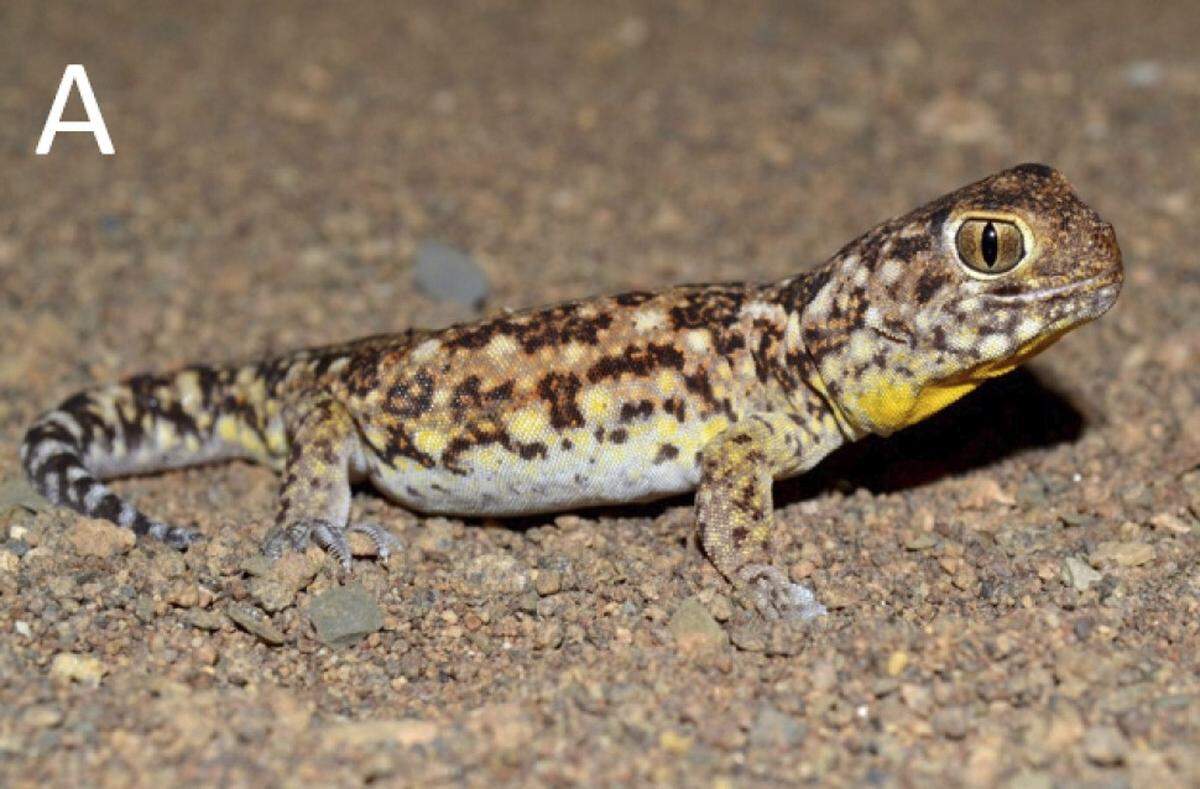
Researchers suspected the diversity of these lizards was being underestimated. So they tracked down hundreds of geckos from across the country, examined their appearances, compared their calls and analyzed their DNA. The results confirmed their initial suspicions.
They’d discovered a new species: Ptenopus kenkenses, or the Nama barking gecko.
Nama barking geckos are considered “stout” and “medium-sized,” reaching about 3.5 inches in length, the study said. Their fingers and toes have “fringed scales” and “strong nails.”
Photos show the varied coloring of the new species, which “usually” matches the local ground. Their overall hues varied from brown to orange to gray but “some amount of orange speckling is usually present,” researchers said. All males had “bright yellow” patches on their throats.
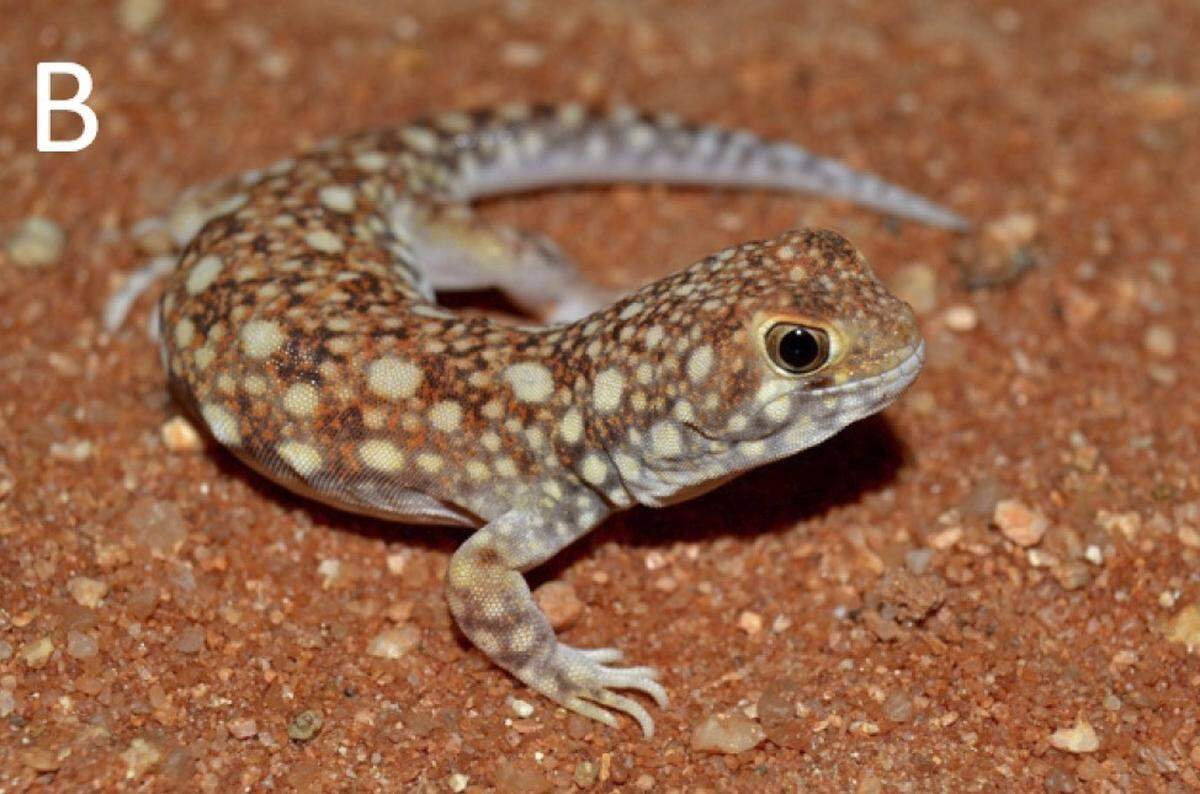
During the day, Nama barking geckos live in gravel burrows “sealed from the inside,” the study said. Their entrances are “so neatly disguised as to be almost entirely indistinguishable from the surrounding soil surface.”
In the evenings, the new species emerges from its burrow and begins calling with a “clicking sound” that can last over a minute, researchers said. The pitch of each click varies and is “slightly reminiscent of dripping water.”
The Nama people who live near the new species are “highly familiar with its call, and believe the bite of this gecko to be extremely venomous,” the study said. “Nama children are taught to treat it with caution. However, the authors have been bitten by this species, and have survived.”
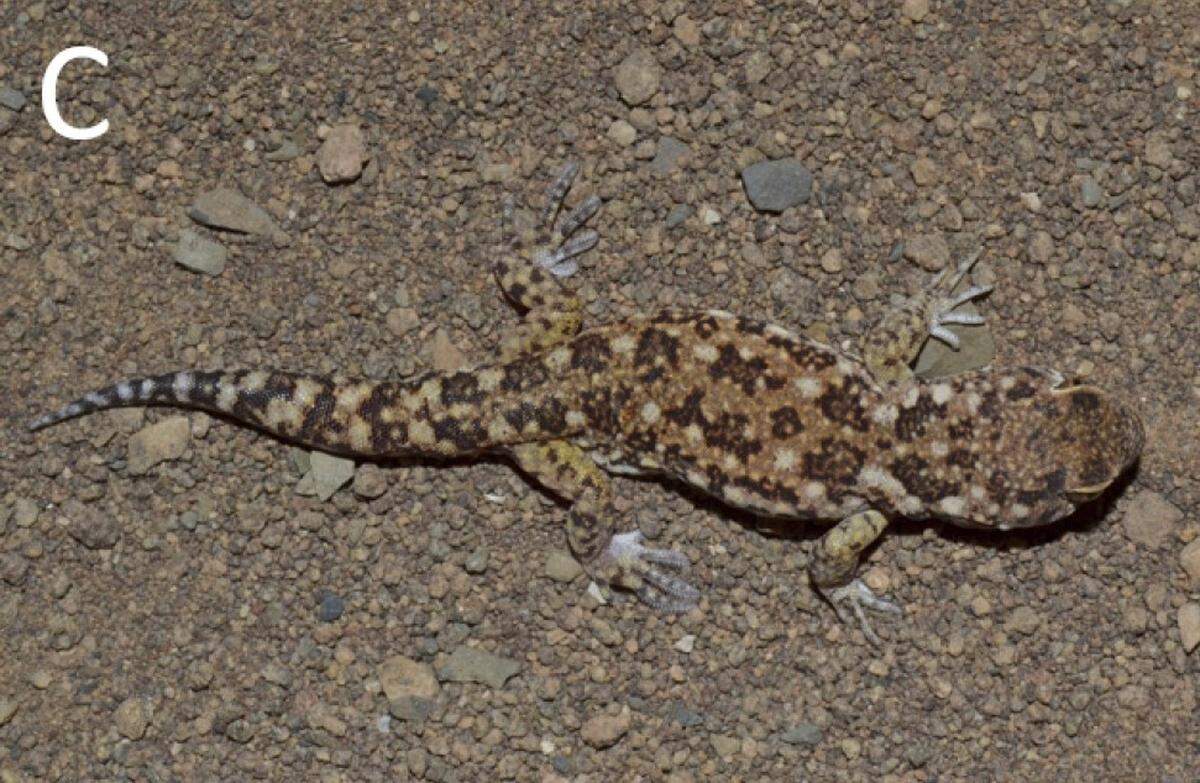
Researchers said they named the new species “after the Nama name for the gecko, ‘||en||enses,’” which has two tongue clicks “similar to the typical command given for a horse to speed up.” In the English alphabet, these clicks are written with the “phonetically similar letter ‘k,’” resulting in the name “kenkenses.”
“Aggregations of this species are sometimes observed on tarred roads late at night, numbering in the hundreds on a few kilometres of road,” the study said. “The reason for this behaviour is unknown.”
Nama barking geckos have been found at many desert sites across southern Namibia and one site in South Africa but are likely more widely distributed there, the study said.
The new species was identified by its call, DNA, body size, fingers and toes, coloring, scale pattern and other subtle physical features.
The research team included François Becker, Graham Alexander and Krystal Tolley.
The team also discovered four more new species: the southern barking gecko, Diamond Coast barking gecko, interdune barking gecko and Skeleton Coast barking gecko.
This story was originally published September 1, 2025 at 10:12 AM with the headline "‘Barking’ desert creature — the topic of warnings — turns out to be new species."