Lines on medieval cell wall aren’t ‘graffiti’ — it’s a game board, experts say. See it
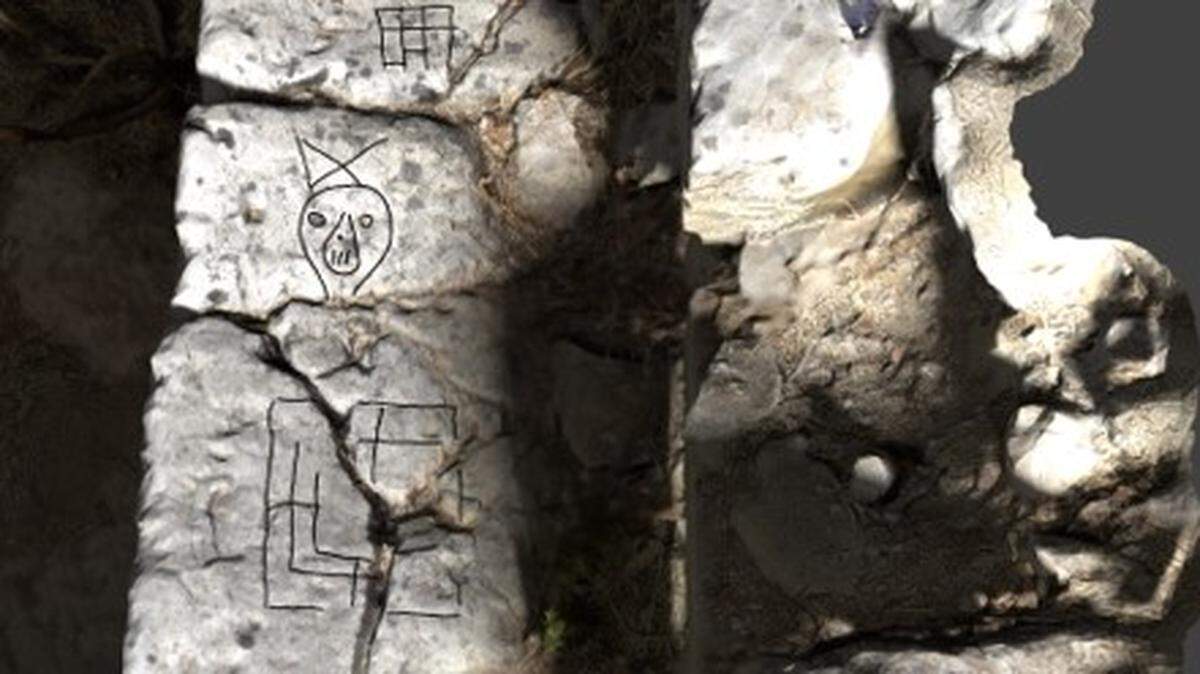
In 1693 in the city of Noto Antica of Sicily, a massive earthquake brought the ancient settlement to the ground, leaving nothing but piles of rubble.
About 26,000 people called the city home when the “Sicilian Pompeii” struck at the site occupied since at least the ninth century B.C., researchers said in a Dec. 16 study published in the peer-reviewed journal Antiquity.
The site was abandoned, and a new city named Noto was built just 6 miles away, researchers said.
Noto Antica was transformed into an archaeological park, and today, visitors can walk through the ancient remains and get a closer look at the lives of residents centuries ago — including their prisoners, according to the study.
“The graffiti at the castle prison is well known to locals who walk the trails of this medieval city turned archaeological park,” researchers said. “(Another study notes) that some masonry from the prison has been reused elsewhere in the city, as evidenced by ship graffiti found at the church of the Madonna dei Miracoli.”
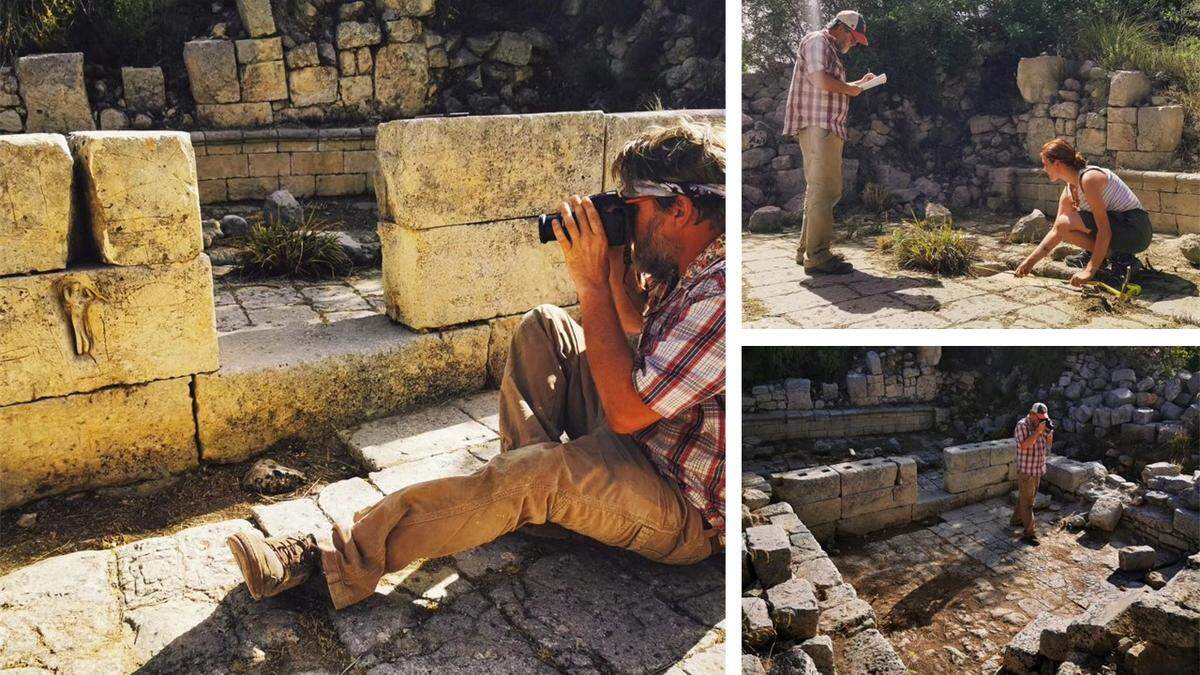
On the surface, the series of lines and carved marks on the stones may seem like nothing more than confined prisoners etching away at the stone.
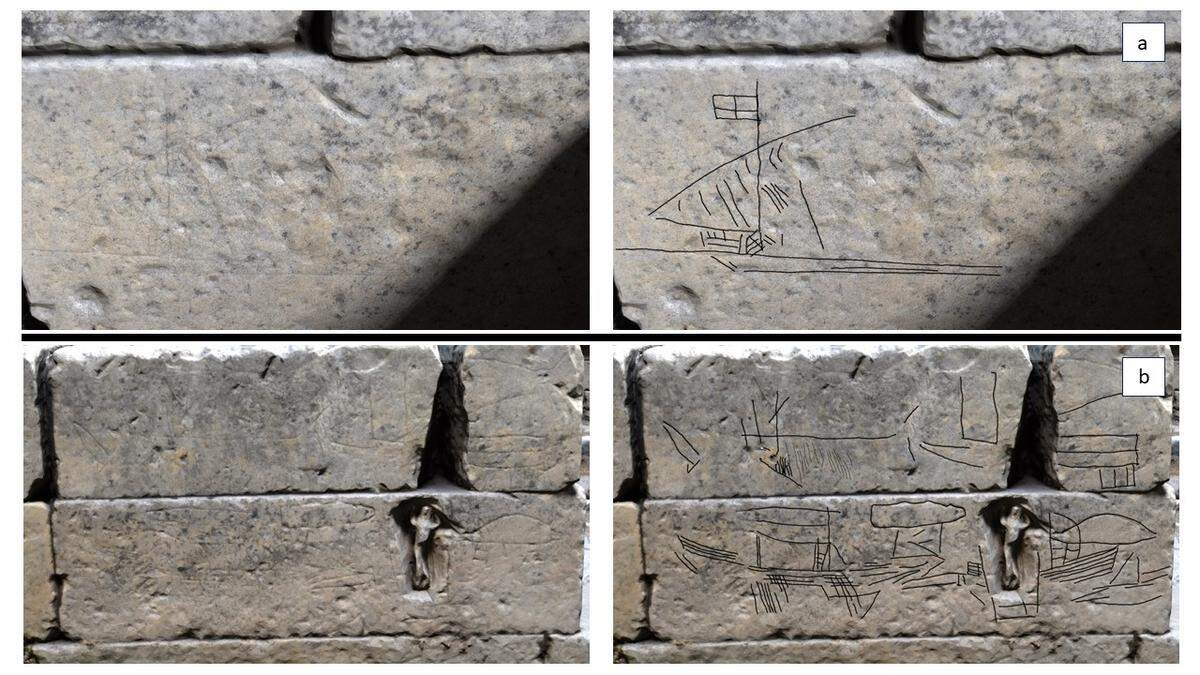
The shapes and symbols overlap, crisscross and blend together, but new analysis and reconstructions of the images show that they were more than just “graffiti,” but actual art and games that were likely used to pass the time.
Researchers with the Central Mediterranean Penal Heritage Project through Syracuse University took hundreds of photographs of the etchings and then uploaded them into software where researchers could trace the images digitally, creating drawings of the “graffiti” for the first time, according to the study.
The drawings could then be used to identify the images.
“Analysis of the full catalogue of graffiti at the castle prison in Noto Antica is still underway, but seven pieces of nautical graffiti, five rectangular, target-like carvings and a humanoid head have so far been identified,” researchers said. “Consistent placement of the target-like graffiti on the horizontal surfaces suggests that they were gameboards for a game known as Nine Men’s Morris, while the nautical graffiti can be linked to vessels used by the Knights of Malta in the sixteenth century.”
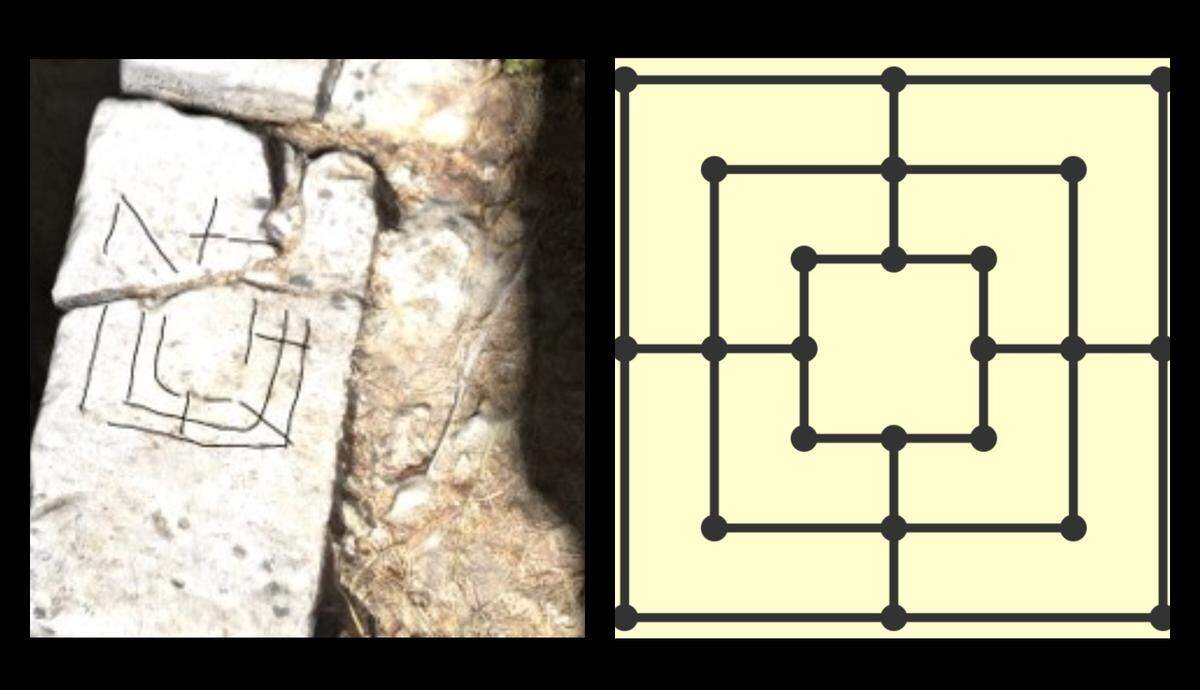
Nine Men’s Morris is similar to tic-tac-toe in that players are trying to get three pieces on the board in a row. However, the pieces are placed at points of a grid instead of in the open spaces and the board is more intricate.
The game was played across the Mediterranean and Europe for centuries, researchers said, potentially going as far back as 1400 B.C.
Because of where the board was located and the fact that the game board was carved and not simply drawn, researchers believe prison guards likely knew prisoners were playing the game, but may have let it go.
“Play is meaningful, perhaps even more so for people in confinement, and the presence of carved gameboards suggests that the guards at Noto Antica allowed the prisoners this leniency,” researchers said. “Thus, while it may not have been an active form of resistance, play can be more usefully framed as ‘opposition’ — a term broad enough to include both resistance and ‘defiance’ at the erasure of humanity.”
Based on the number of game boards found in the 43-square-foot cell, researchers estimate there could have been 10 or more people held together.
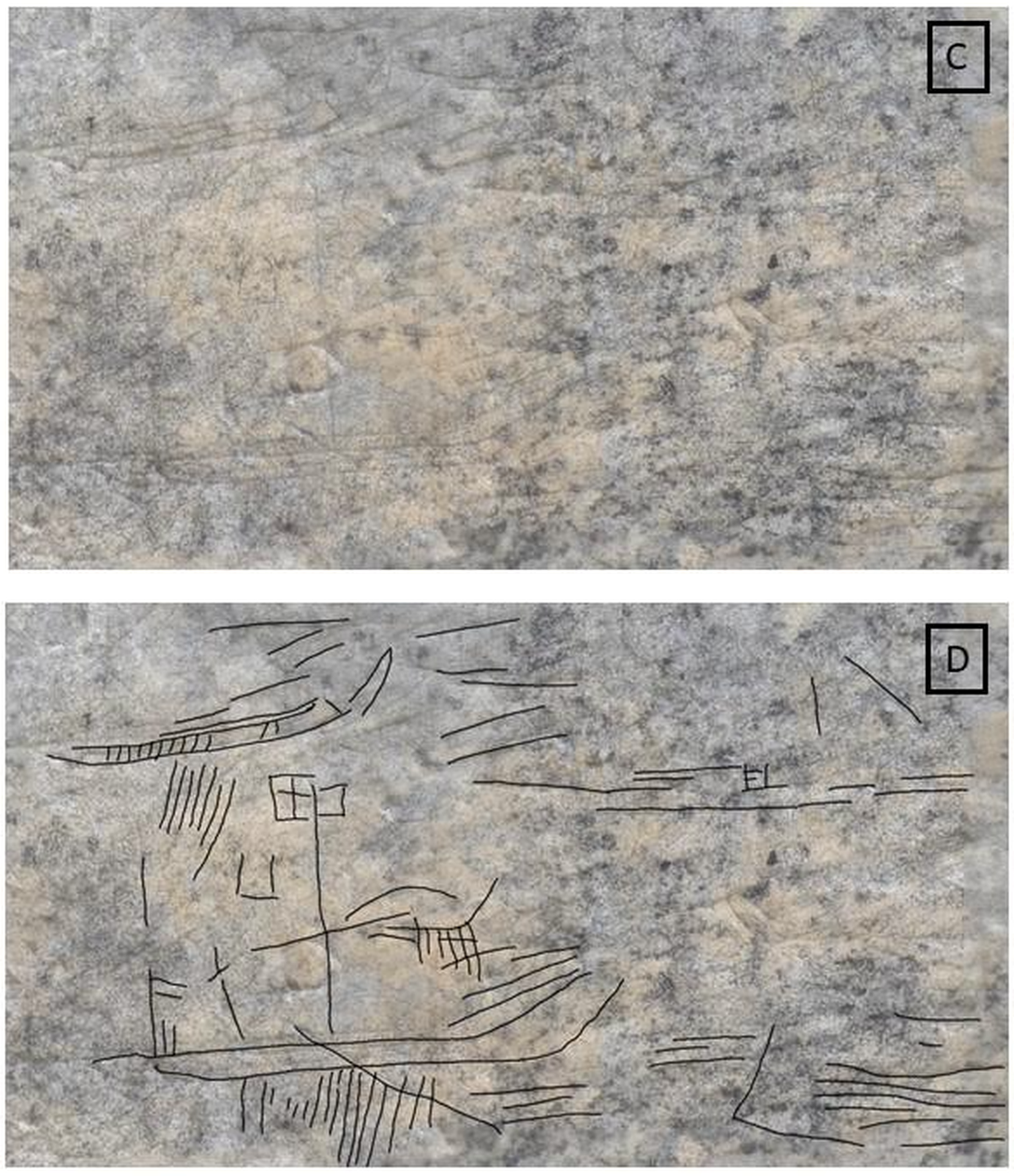
“The nautical graffiti were identified using the online resource of the Malta Ship Graffiti Project,” according to the study. “Three ships are identified as galleys based on the depiction of a low-lying hull, triangular lanteen sails or a series of parallel lines representing oars on the sides of the ships.”
Two of the ships have cross-adorned flags matching the style of the Order of St. John, or the Knights Hospitaller. They ruled in the Maltese archipelago from 1530 to the Napoleonic period, and members of the order were “equal part crusader and corsair,” or pirate, researchers said.
People who lived in the central Mediterranean would have been no strangers to these kinds of ships, and as many as 280 rowers could sit on each galley, according to the study. The rowers were mostly made up of enslaved people, both Muslims and debtors, and they were forced into labor even in times of peace.
Despite full prison cells, confinement was not actually the typical form of punishment in 17th-century Sicily, according to the study. Forced labor, like that on the galley ships, was used more often for punishing wrongdoing.
“While the carvings may foretell the destiny of prisoners as galley rowers, they may also mark the retelling of tales of privateering in the Mediterranean,” researchers said. “The captives’ engagement in play and storytelling through the creation of art could be interpreted as ‘opposition’ at the Prigione del Castello and it provides us with a novel means to engage with the ways in which the prisoners confined there held onto their humanity.”
The analysis of more carvings and images is ongoing, according to researchers, and other insights into the prisoners’ lives have yet to be discovered.
Noto Antica is located in southeastern Sicily, an island off the southern coast of Italy in the Mediterranean Sea.
The research team includes Alexander W. Anthony and Stephan Hassam.
This story was originally published December 19, 2024 at 12:35 PM with the headline "Lines on medieval cell wall aren’t ‘graffiti’ — it’s a game board, experts say. See it."