
Legend of ancient Roman Baths says they have healing powers. It may be true, study says
Thousands of years ago in southwest England, the ancient Romans found a series of hot springs.
The water, which flows through the earth’s crust and is heated by the energy from the planet’s core before returning to the surface, maintains a high temperature year-round and acts as nature’s hot tub.
The Romans built Temple Sulis-Minerva around two springs, the King’s Spring which stays around 100 degrees Fahrenheit, and the Great Bath, which maintains a temperature of 86 degrees Fahrenheit.
“These waters were famed for their medicinal properties and were sites for socialization and leisure,” researchers said in a study published May 17 in the journal The Microbe.
Now, researchers believe the legends may be a bit more fact than fiction.
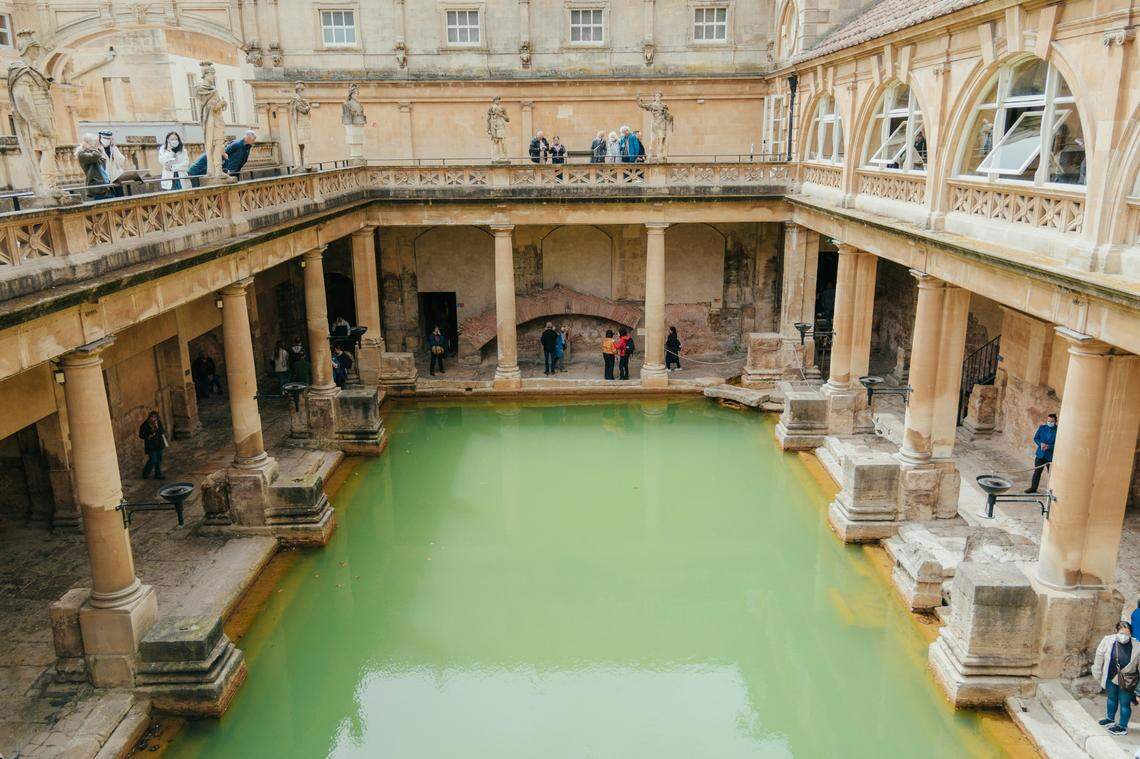
Located in Bath, England, the springs have turned from cultural center to tourist attraction as visitors flock to the greenish water. More than 1 million people toured the springs in 2023, according to a May 31 news release from the University of Plymouth.
No one has been allowed in the water for years, according to the study, but people once made their way to the site for a chance at healing.
“People have visited the springs in Bath for thousands of years, worshiping at, bathing in and drinking the waters over the centuries,” study co-author Zofia Matyjaszkiewicz said in the release. “Even in the Victorian period, the Spa Treatment Center in Bath used the natural spring waters for their perceived curative properties in all sorts of showers, baths and treatments.”
Prince Bladud, the legendary father of King Lear, is said to have contracted leprosy on his travels leading to his isolation from society. Then, he saw some of his pigs roll in the mud of the spring and decided to give it a try himself, according to the City of Bath. He was cured of the skin disease, legend says, and went on to become the ninth king of the Britons. A statue of Bladud now sits at the Roman Baths, according to the city.
Could the legends be true? Does the water have magical properties or was it all an elaborate ancient ruse to sell spa memberships?
To answer these questions, researchers collected water and sediment from both major springs, the King’s Spring and the Great Bath, and analyzed them for microbes.
Microbes include all microscopic single-celled organisms such as bacteria, fungi, viruses and microscopic animals.
“Around 300 distinct types of bacteria were isolated across the Roman Baths site — among them the key candidate groups, Actinobacteria and Myxococcota, known for antibiotic production — with different examples being more prominent within the varying water temperatures,” researchers said in the release.
Additional testing found 15 of these had “inhibition against human pathogens,” like E. coli, staph infections and Shigella flexneri, a bacteria that causes severe diarrhea in humans which could have been fatal in ancient times, according to the release.
This means that some of the microbes found in the water of the springs can fight common infections and may have “healed” the people of the past.
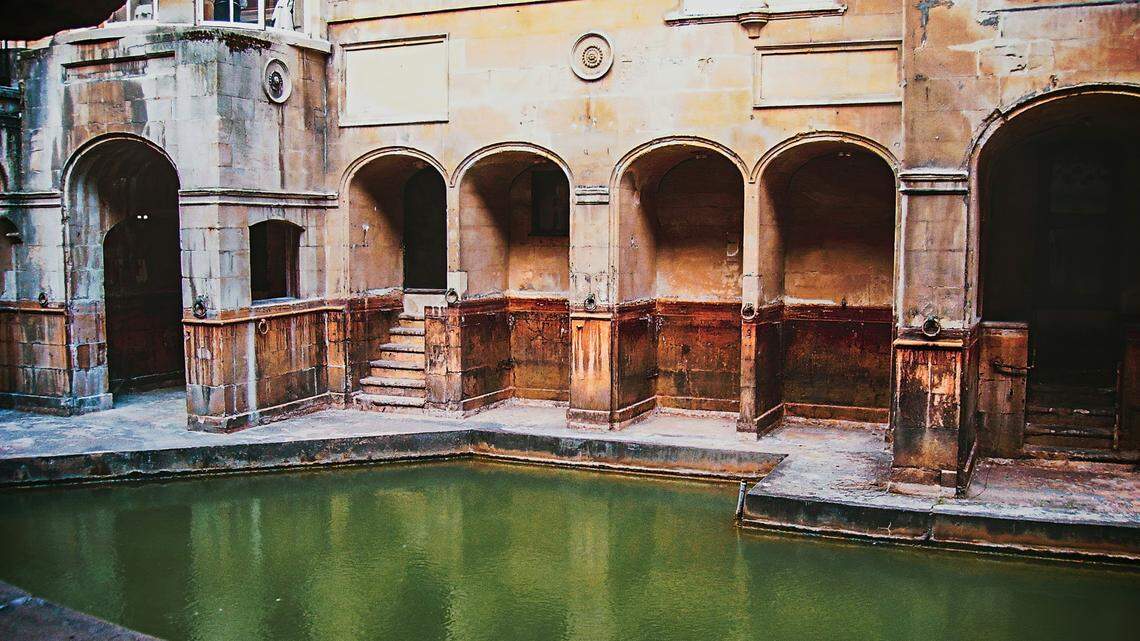
“This is a really important and very exciting piece of research. Antimicrobial resistance is recognised as one of the most significant threats to global health, and the hunt for novel antimicrobial natural products is gathering pace,” lead author Lee Hutt said in the release. “This study has for the first time demonstrated some of the microorganisms present within the Roman Baths, revealing them as a potential source of novel antimicrobial discovery.”
Antibiotic resistance is a growing concern in the medical community as people globally are dying of infections that used to be able to be treated. Now, as the bacteria evolves and develops resistance, those drugs are no longer working, according to the study.
In 2019 alone, 1.27 million people died from infections that used to be treatable, researchers said.
But some microbes, like those found in the Roman Baths, have naturally occurring infection-fighting properties, which could in theory be harnessed for new treatment options against antibiotic-resistant infections, according to the study.
There are many steps between discovering the microbes exist in the water and transforming them into treatment, but researchers are optimistic.
“There is no small irony in the fact that the waters of the Roman Baths have long been regarded for their medicinal properties and now, thanks to advances in modern science, we might be on the verge of discovering the Romans and others since were right,” Hutt said.
Bath is in southwest England, about a 115-mile drive west from London.
This story was originally published June 11, 2024 at 11:51 AM with the headline "Legend of ancient Roman Baths says they have healing powers. It may be true, study says."
