
How Fort Worth families priced out of homes can qualify for Habitat builds
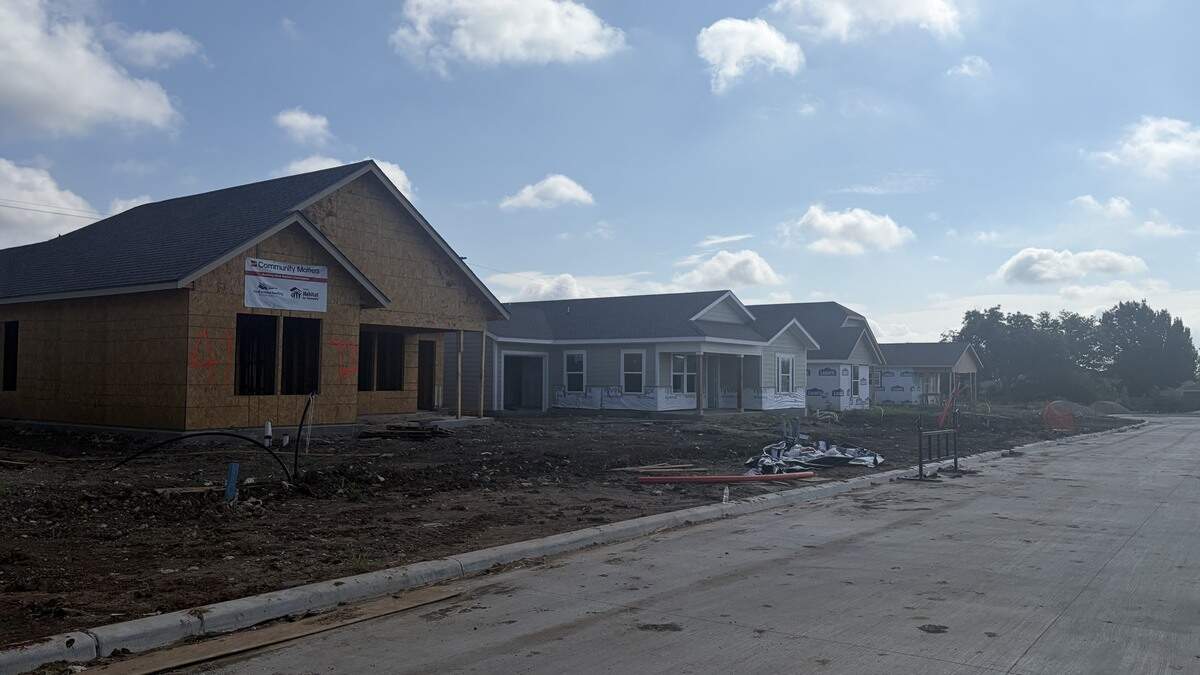
If a $330,000 home price and a mortgage that would swallow 40% of your paycheck have pushed you out of the Fort Worth market, there’s a path back in — and it’s expanding across four counties.
Trinity Habitat for Humanity plans to build more than 500 affordable homes across the Fort Worth area, with new subdivisions rising in south Fort Worth, Cleburne and Mansfield. For working families who earn close to the area’s median income but can’t compete with current home prices, the nonprofit offers below-market interest rate loans, down payment assistance and a clear set of requirements to qualify.
Here’s what you need to know if you’re trying to become a homeowner.
The gap Habitat is trying to close
The U.S. Census Bureau estimates the median household income in Fort Worth is $79,507, while the median home price hovers around $330,000. A household earning the median would need to commit roughly 40% or more of its monthly gross income to a mortgage to buy in Fort Worth — a threshold most lenders and financial planners consider unsustainable.
Trinity Habitat is trying to bridge that gap by building homes priced for families who earn too much for traditional low-income assistance but too little to afford the open market.
Gage Yeager, CEO of Trinity Habitat for Humanity, says homeownership is an agent of change for families. The ability of a family to stay in one place helps with children’s educational attainment, wealth accumulation and safer neighborhoods.
“What they need is stability,” Yeager said. “This is stability.”
Do you qualify? The eligibility checklist
To be considered for a Trinity Habitat home, applicants must meet several requirements:
- You cannot currently own a home. The program is designed for first-time or returning buyers shut out of the market.
- Your household must earn at least $42,000 a year. This minimum ensures families can sustain a mortgage payment, even at below-market rates.
- Your income must fall under HUD limits. For a family of four, the maximum household income is $88,250 under HUD requirements.
- You must commit 200 hours of sweat equity. That can include volunteering on construction sites or other Habitat work.
- You must complete 20 hours of training. Required classes cover home maintenance and personal finance.
Most of the new neighborhoods are designed as mixed-income communities. About 25% of families in each will earn 80% to 120% of the area’s median income, while the rest will earn below 80% of it. That mix is intended to keep neighborhoods economically diverse and stable.
Where the homes are being built
Trinity Habitat has purchased land across its service area — which covers Tarrant, Johnson, Parker and Wise counties — to develop full subdivisions rather than scattered single lots. According to a fact sheet from the nonprofit, Habitat has 572 lots in development.
Three projects anchor the current pipeline:
- Garden Springs in south Fort Worth will have 88 single-family homes. It is the largest of the three communities and is expected to deliver its final homes in 2029.
- Fox Meadows in Cleburne will have 76 homes, opening options for families who work in Fort Worth but are willing to look south into Johnson County.
- Sayers Landing in Mansfield will have 22 homes, a smaller community on the eastern edge of the metroplex.
For aspiring buyers, the geographic spread matters. If a Fort Worth lot doesn’t come open in your favor, a home in Cleburne or Mansfield could still put you in a Habitat-built neighborhood within commuting distance of work.
The timeline through 2029
Trinity Habitat is targeting more than 60 homes built this year, with plans to scale to between 100 and 150 new homes annually in coming years across its four-county service area. With Garden Springs finishing in 2029 and additional lots still in development, families who start the qualification process now could see homes become available over a multi-year window.
That timing is important to understand. Sweat equity, financial classes and the application process take time. Families who begin volunteering, taking the required training and saving for closing costs now are positioning themselves for homes that may not come online for a year or more.
What the program asks of you in return
The 200 hours of sweat equity is the part of the program that surprises some applicants. It’s not just symbolic — Habitat treats it as a core piece of how families build ownership of their home before they ever hold the keys. Volunteer hours on a construction site, time helping at Habitat ReStore locations or other approved work all count.
The 20 hours of financial and maintenance training are designed to make sure new homeowners can handle the long-term costs of ownership — property taxes, repairs, insurance — that often catch first-time buyers off guard.
How to take the next step
If you meet the basic criteria — no current homeownership, household income of at least $42,000 and under HUD’s limits for your family size — the next move is reaching out to Trinity Habitat for Humanity to start the qualification process. From there, expect to begin tracking sweat equity hours and enrolling in the required classes.
For families who have watched Fort Worth’s housing market climb out of reach, the program offers something the open market doesn’t: a price you can actually afford, a mortgage built around your income and a neighborhood designed to keep you there.
This report was produced with the assistance of a proprietary tool powered by artificial intelligence and using our own originally reported, written and published content. It was reviewed and edited by our journalists.
This story was originally published June 16, 2026 at 11:10 AM.