Food-insecure families in Fort Worth face summer obstacles. How are kids impacted?
Although children look forward to the summer break away from school, some no longer have access to the meals provided to them during the school year. This means students are more likely to face food insecurity or hunger from late May through early August.
More than 2.4 million Texas public school students, or 44% of the statewide student population, qualified for free or reduced-price meals in the 2025-26 school year, according to Texas Education Agency data. Fort Worth ISD slightly surpassed this percentage with almost 46% of students qualifying for free or reduced-price meals in the same school year.
School-aged children in food-insecure households can face negative consequences for both their nutrition and academic performance. Research shows increasing episodes of food insecurity across the early childhood years are linked to poorer kindergarten outcomes, which can then influence later academic and life success.
“If you look at ... studies (and) research on the impact of food insecurity on kids, it’s very well documented that kids who are food insecure face greater challenges learning, they have more health problems… more absenteeism in schools, harder time concentrating (and) lower test scores,” said Celia Cole, CEO of the state association of food banks known as Feeding Texas.
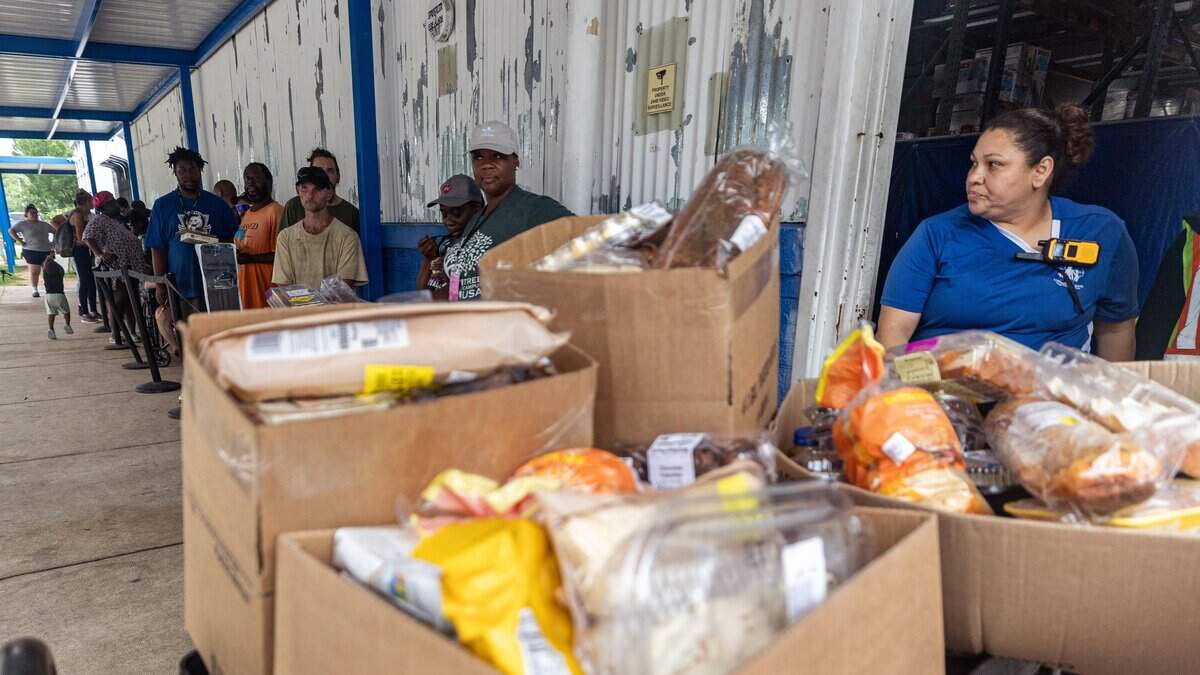
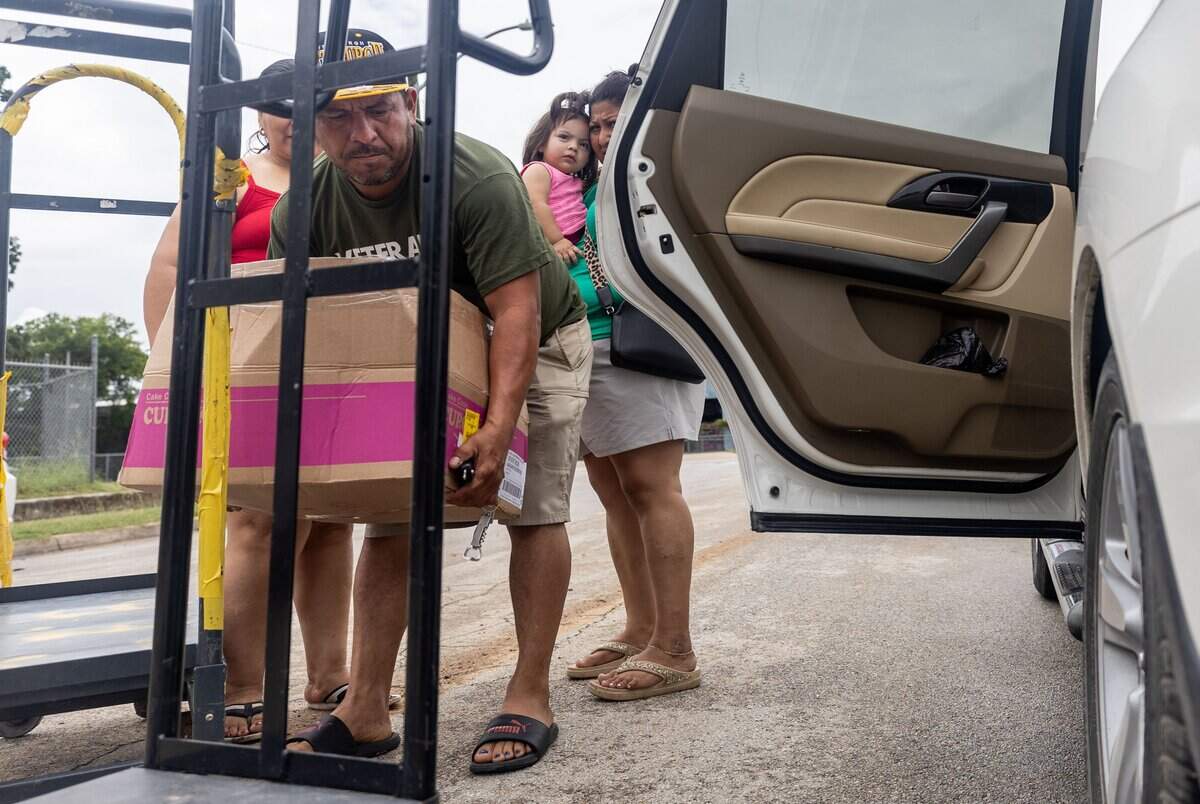
On Monday morning, people lined up in their cars and on foot to receive food assistance through the Community Food Bank of Fort Worth in the city’s Riverside neighborhood. Those who spoke to the Star-Telegram said their families have felt the strain of inflation when it comes to groceries.
Carmen Murillo, a Fort Worth parent of four children who are ages 3, 7, 9 and 16, said a year ago she was able to buy a full meal at the grocery store. Now, she’s only able to purchase two items at the same cost, such as a package of meat and chips. During summertime, Murillo also has to worry about providing three meals a day compared to just dinner during the school year.
“(It’s) more than three (meals). It’s all day they’re snacking and eating,” she said through a Spanish translator. “The kids are getting older, and they eat more.”
Tania, who asked that her last name not be included, said she has a similar experience during the summer with having to buy more food for her children when they’re out of school. She has two children who are 11 years old and 14 years old.
“It’s just stressful, very stressful,” Tania said. “Everything’s more costly. Bills are higher, food costs are higher.”
Operations Director Rudy Taylor said families make up the majority of people who receive assistance through the food bank. More than 2,000 are served on a weekly basis.
“You can look at the kids when they’re standing in line with the mom or the dad, and they see the box of food they’re getting. They’re happy, they’re happy,” Taylor repeated. “You can just see the look on their face.”
Taylor noted that inflation has impacted the operations of the food bank itself, too. The cost of fuel has gone up about 10-15%, but their philanthropic funding has allowed them to sustain those financial headwinds.
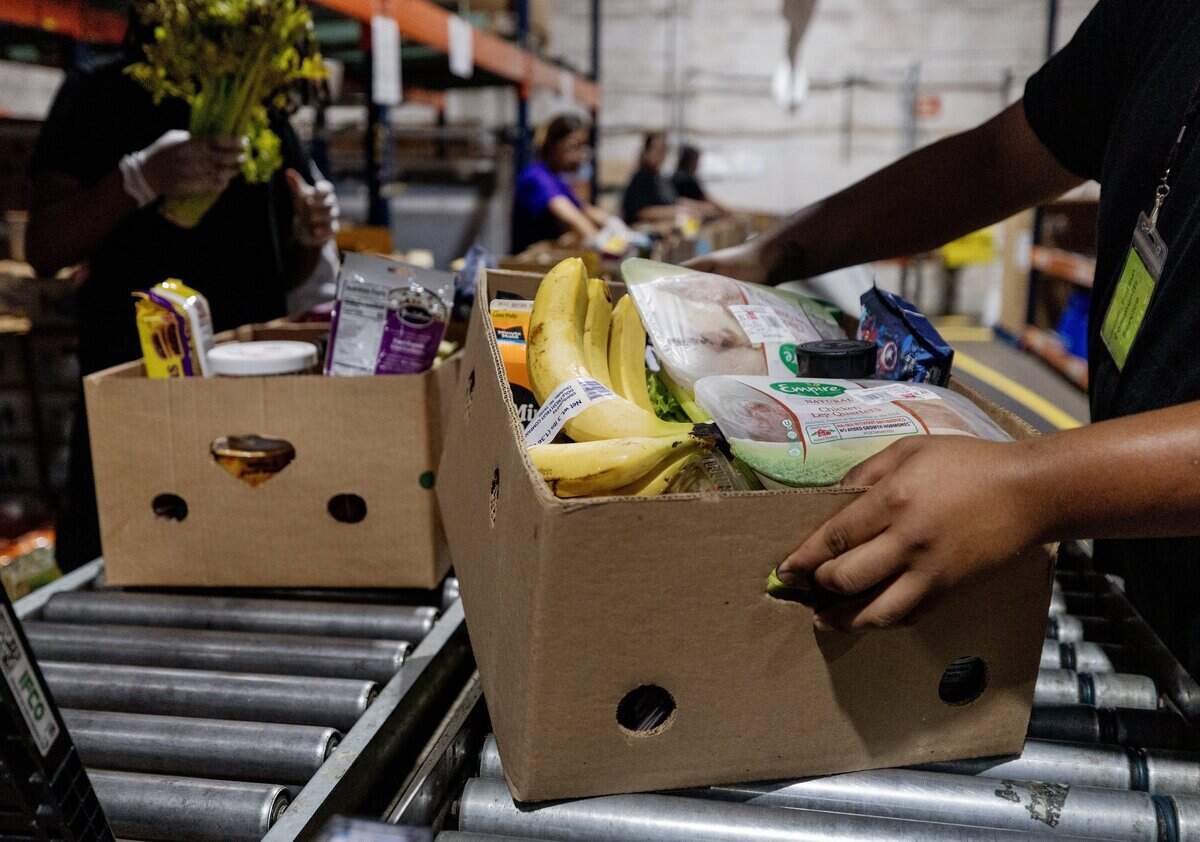
The cost of the box of groceries provided to each family has also risen from $50 to $75, said the Rev. Karen Harris, executive coordinator of the food bank. Each family can receive a box with items such as meat, bread and fruit every two weeks.
“A couple of years in the past, I could say that, ‘Yes, the summer was busier.’ But with the way the economy is going now, we see between 30 and 50 new clients every day,” she said.
National report, state expert emphasize uptick of food insecurity
A recent national report released by early childhood development nonprofit Zero to Three found that an average of 15% of families with infants or toddlers experienced “low or very low food security” with difficulties affording food or balanced meals, or eating smaller portions because of financial constraints in 2025.
“Adults in food-insecure households often shield young children from the direct experiences of food insecurity, meaning that child food insecurity rates are typically lower than caregiver- or household-level rates. However, household food insecurity is consistently linked with parental depression, anxiety and stress, which in turn impacts child behavior and development. In extreme cases, food insecurity also elevates risk for child welfare system involvement,” according to the report.
Cole, CEO of Feeding Texas, emphasized how much the increased prices of food and fuel have strained family budgets. She compared the balancing of these budgets to a juggling act.
“You’ve got the food ball, and the rent ball, and the gas ball, and the healthcare (ball), the childcare ball. Food is often the easiest ball to drop when resources are strained because you can buy less food, you can buy cheaper food, whereas, you can’t pay part of your rent,” Cole said.
Cole noted that enrollment in the federal Supplemental Nutrition Assistance Program, or SNAP, has declined while need remains high. The One Big Beautiful Bill Act, or H.R. 1, is projected to cut SNAP funding by about $186 billion through 2034 while also implementing stricter work requirements and shifting costs to states.
Due to the scale of SNAP, which is almost 10 times larger in scale compared to food banks, the cutting of SNAP benefits can’t be made up through food banks, Cole said.
“That’s why it’s so important for us to keep the SNAP program whole, and do what we can to mitigate the cuts in H.R. 1,” Cole said.
Where to find food assistance in Tarrant County
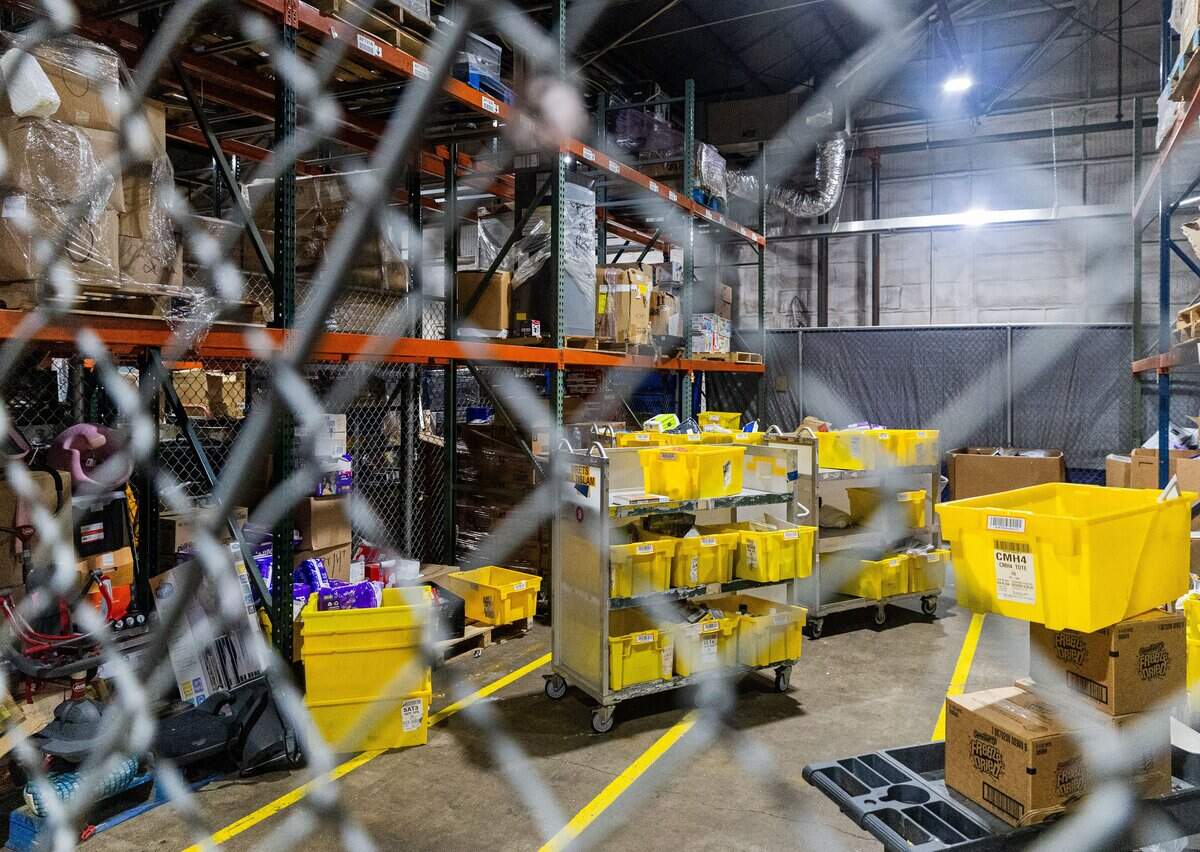
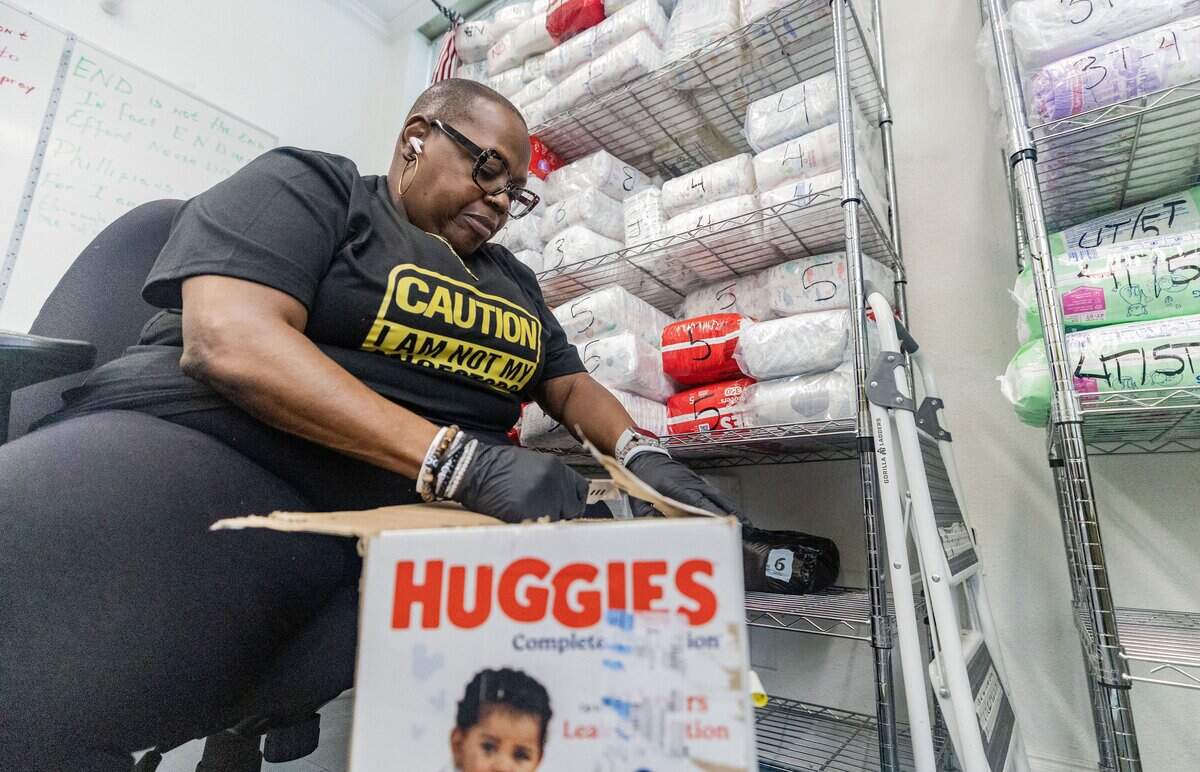
The Community Food Bank of Fort Worth is located at 3000 Galvez Ave. The food pantry is open Monday through Thursday from 9 a.m. to 1 p.m. Families can also get essential baby supplies such as diapers Monday through Friday from 9 a.m. to 5 p.m. A photo ID must be provided to receive assistance, but there are no ZIP code restrictions. Parents or guardians receiving baby supplies for the first time must provide the child’s birth certificate or other paperwork showing that they are their legal guardian.
The Tarrant Area Food Bank has several food pantries throughout the region. Locations and contract information of local pantries can be found at tafb.org/find-food-main/.
Children who are 17 years old and younger can receive free meals through July 2 at several Fort Worth ISD campuses every Monday through Thursday. Enrollment in the district isn’t required to receive a meal.
Elementary campuses serve breakfast from 7:40-8 a.m., and middle school campuses serve breakfast from 7:50-8:15 a.m. Elementary campuses serve lunch from 12:05-12:35 p.m., and middle school campuses serve lunch from 12:40-1:10 p.m. High school campuses serve breakfast from 8:30-9 a.m. and lunch from 11:30 a.m. to noon.
The campuses are:
- Carter-Riverside High School: 3301 Yucca Ave.
- Arlington Heights High School: 4501 West Freeway
- Eastern Hills High School: 5701 Shelton St.
- Polytechnic High School: 1300 Conner Ave.
- Paschal High School: 3001 Forest Park Blvd.
- O.D. Wyatt High School: 2400 E Seminary Drive
- J.P. Elder Middle School: 709 NW 21st St.
- Benbrook Middle-High School: 201 Overcrest Drive
- Carter Park Elementary School: 1204 E. Broadus Ave.
- Manuel Jara Elementary School: 2100 Lincoln Ave.
- Meadowbrook Elementary School: 4330 Meadowbrook Drive
- M.H. Moore Elementary School: 1809 NE 36th St.
- Luelle Merrett Elementary School: 7325 Kermit Ave.
- Bruce Shulkey Elementary School: 5533 Whitman Ave.
- Richard J. Wilson Elementary School: 900 W. Fogg St.
- South Hi Mount Elementary School: 4101 Burchman Ave.
- Springdale Elementary School: 3207 Hollis St.
- Sunrise-McMillan Elementary School: 3409 Stalcup Road
- T.A. Sims Elementary School: 3500 Crenshaw Ave.
- Alice D. Contreras Elementary School: 4100 Lubbock Ave.