Tarrant County medical examiner identifies homicide victims from 1980s
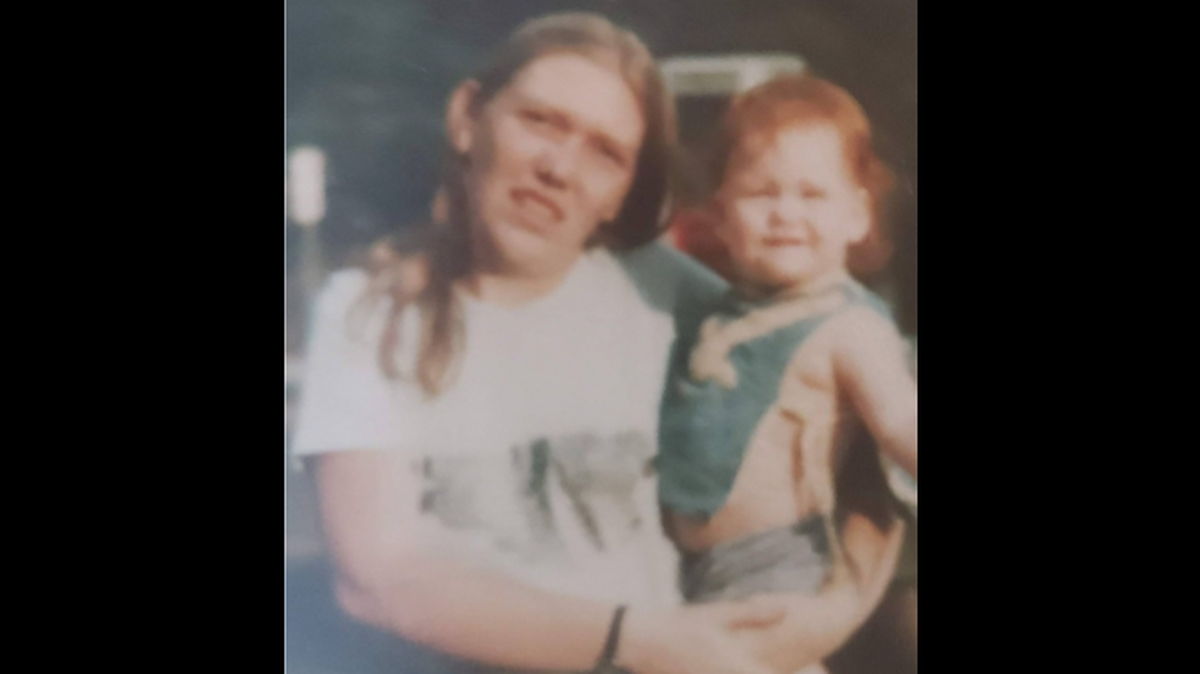
The Tarrant County Medical Examiner’s Office has released the names of five previously unidentified people, including at least two homicide victims from four decades ago, the agency said in a news release.
On July 12, 1984, the Star-Telegram reported that a severely decomposed body had been found the previous day in a Tarrant County landfill. The woman was nude, and her hands were tied behind her back. Investigators sent the victim’s description to several police departments around the state, but the case was never solved and the woman was never identified.
In 2023, the ME’s Office received a $500,000 grant from the Missing and Unidentified Human Remains Program. The money allowed the office to hire a dedicated cold case investigator and send forensic material from homicide victims to Othram, a laboratory near Houston, for possible DNA extraction and identification.
Several items from Tarrant County Jane Doe were sent to the lab for testing. In February, according to the release, Othram discovered a link between the unidentified woman and the Hinson family. Investigators identified a potential brother and reached out for more information.
The man said that his sister, Joyce Ann Hinson, had disappeared without a trace in late 1983. Hinson, whose parents lived in Tennessee, frequently hitchhiked across the country. The family’s last contact with her was a phone call saying she was in North Texas.
A DNA test confirmed the man and Tarrant County Jane Doe were full siblings, the release states. The Medical Examiner’s Office and the FBI clinched the identification by comparing partial postmortem fingerprints with an arrest record from 1981.
“This identification closes a 42-year-old mystery and restores Joyce’s name and story,” the release states.
The investigation into Hinson’s death remains active, according to the release. Anyone with information is asked to contact the Tarrant County Sheriff’s Office.
Barry Thompson
On Oct. 12, 1985, an unknown man was fatally stabbed outside a liquor store, according to Star-Telegram archives. Two suspects were arrested in connection with the crime less than a month later, but the victim’s identity remained a mystery for decades.
Othram’s DNA analysis led investigators to family members of Barry Thompson. A niece confirmed that Thompson went missing in 1985 and provided a DNA sample for comparison.
“The identification of Barry Thompson reflects years of persistent investigative work, the application of modern forensic genetic genealogy technology, and the cooperation of extended family members across multiple states,” the release states.
Tarrant County Medical Examiner spokesperson Dr. Christian Crowder said the MUHRP grant is set to expire in October, but the agency has applied for an extension. They’ve also applied for a state grant that would cover the cost of advanced DNA testing for all unsolved cases, not just suspected homicides.
According to Crowder, around 27 people have been identified since the program started in 2023. Some resulted from the partnership with Othram. Other times investigators discovered a clue that had been overlooked in the decedent’s belongings.
John Davis Webster
A man’s body was found in Fort Worth on Oct. 18, 1980. He was carrying a Social Security card and a Texas Commission Employment card showing he’d served in the military, but there wasn’t enough information to confirm his identity.
ME investigators recently took another look at his case, according to the release, and noticed faint numbers on the Social Security card that appeared to be a birthdate. The FBI Latent Print Unit used that information to find a 1961 military fingerprint card, which was compared with postmortem fingerprints taken by the Fort Worth Police Department.
The man was identified as U.S. Army veteran John Davis Webster. Officials didn’t release his cause of death.
Phillip LaRyan Jones
In June 2025, investigators got a break when they reexamined the belongings of a man who’d died in early 1997. A very small, folded piece of paper was found inside his wallet, and infrared photography showed it contained names and phone numbers.
“Multiple family members came forward, confirming key details and providing DNA reference samples,” the release states. “On November 6, 2025, the University of North Texas Center for Human Identification confirmed the match, bringing resolution to a case open for 28 years.”
The release identified the unknown man as Phillip LaRyan Jones but doesn’t give his cause of death.
Juan Francisco Magdaleno Gomez
A T-Mobile receipt with the surname Gomez and a notebook with an email address provided clues to the identity of a man whose body was found on June 28, 2022. Investigators linked those pieces of evidence to a Facebook profile that resembled the decedent, the release states.
A cousin said that Juan Francisco Magdaleno Gomez had disappeared in the summer of 2022 and helped investigators confirm his identity. Gomez’s cause of death wasn’t given.
Thanks to the advent of direct-to-consumer genetic testing, more than 20% of the general population has submitted DNA samples to private companies. When individuals opt in to sharing their DNA profiles in a public genealogy database, it gives cold case investigators trying to solve crimes or identify human remains a bigger pool to draw from.
“That’s how some of these connections are made,” Crowder said of the identifications that the ME’s Office has been able to make.
Individuals can also upload their DNA data directly to places like Othram that specialize in forensic genetic genealogy testing.
Kristen Mittelman, Othram’s chief development officer, told the Star-Telegram in 2025 that advanced DNA technology gives hope to the world.
“Every victim that’s out there nameless will get their name back,” Mittelman said. “Everyone will know where their loved one is, and every criminal will get identified.”
This story was originally published June 2, 2026 at 6:14 PM.