
Noise crackdown aims to protect downtown Fort Worth’s business climate
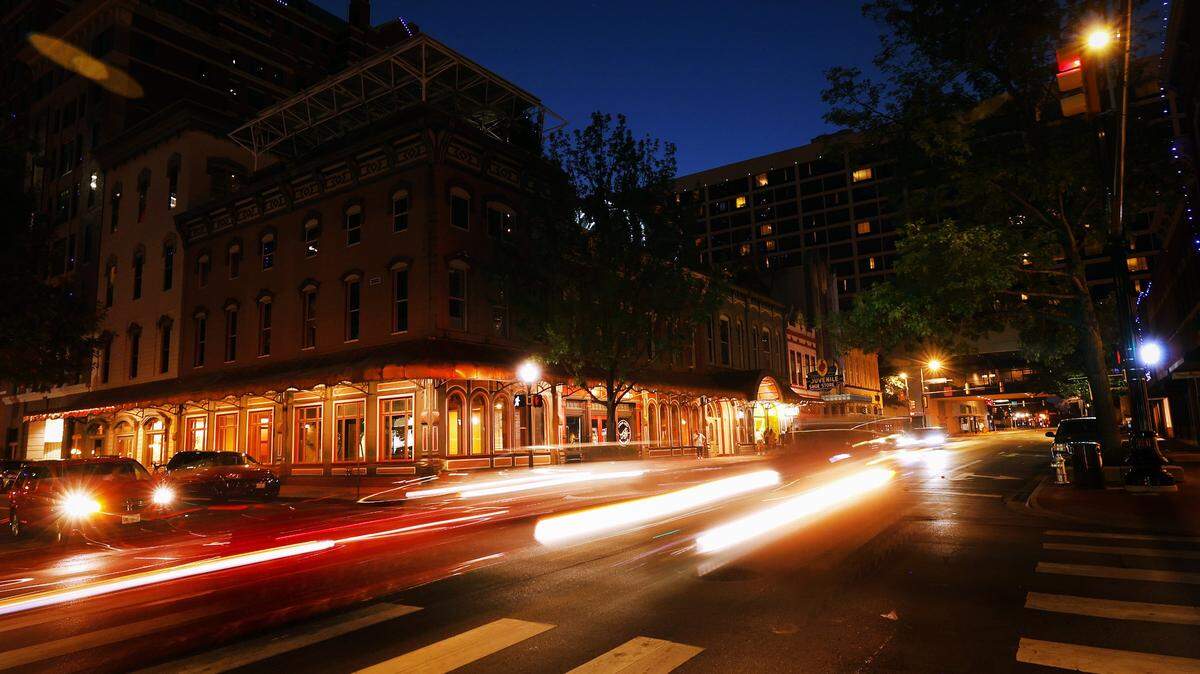
If you operate a restaurant, hotel or venue in downtown Fort Worth, you already know the problem: vehicles with modified exhausts roaring past your front door, bass-heavy music rattling windows during dinner service and guests reaching for complaint cards instead of dessert menus.
The issue has prompted a sustained enforcement campaign and a push for steeper penalties — developments that carry direct implications for the commercial viability of the district.
The business case for quieter streets
The economic stakes extend well beyond quality of life. Matt Beard, a director with Downtown Fort Worth Inc., told the Star-Telegram that loud noises are making it hard for people to sleep — both at night and during the daytime. Beard pointed out that airline pilots, for instance, often stay in downtown hotels and could be sleeping at any time of the day depending on their flight schedules. If pilots don’t get the required rest, Beard said, it can cause flight delays, disrupting interstate and international travel and commerce.
There is also a safety dimension that matters to anyone hosting events or welcoming visitors. Resident Carlos De La Torre said cars regularly speed down Houston Street past the convention center, adding he worried about the safety of convention guests staying at the nearby hotels.
Roughly 11,600 residents call the neighborhood home, according to data from Downtown Fort Worth Inc. Those residents are also your customers, your employees and your neighbors — and they have consistently cited noise as an ongoing issue, including at a downtown neighborhood alliance meeting in March.
The data: when noise peaks and how bad it gets
Downtown Fort Worth Inc. conducted a noise study in 2024 deploying a series of decibel readers at four residential locations in the core of downtown to measure the scope of the problem.
The city noise ordinance prohibits noise exceeding 80 decibels between 7 a.m. and 10 p.m. Between 10 p.m. and 7 a.m., the limit drops to 70 decibels.
For context, a vacuum cleaner creates about 70 decibels of noise. An average lawn mower creates between 80 and 90 decibels. Noises louder than 85 decibels are considered harmful to humans.
The nonprofit’s study found that Friday between 9 p.m. and 10 p.m. had the most noise violations, when levels exceeded 80 decibels 94 times. The second loudest time of the week was Saturday morning between midnight and 1 a.m. with 91 incidents. According to decibel meters monitored by Downtown Fort Worth Inc., Friday nights from 9:30 to 10:30 p.m. is the noisiest time in downtown, with the highest number of incidents of excessive noise.
For business operators planning staffing, guest communications or outdoor event programming, those windows represent the highest-risk periods.
Operation Pipe Down: enforcement and results
Downtown Fort Worth Inc. has taken aim at noisy vehicles with what it calls Operation Pipe Down, a joint effort with Fort Worth police and off-duty officers who help enforce the noise ordinance. Since August 2024, more than 160 noise citations have been issued in downtown, according to Beard.
Fort Worth police also started a campaign in June 2025 to increase patrols in downtown and began educating people about the problem of loud noise. The department put up signs to remind drivers about noise enforcement.
The results have been noticeable. Luis Galindo, a lawyer who has lived in The Tower for the past eight years, said in a September 2025 interview with the Star-Telegram there had been a change since the initiative launched.
“You can’t be everywhere at once, but there’s definitely fewer people coming downtown just to make noise,” he said.
He credited the advocacy of Downtown Fort Worth Inc. for working with the city to get the problem addressed.
“It’s good knowing someone’s going to take us seriously and get our problems addressed,” he said.
Push for steeper penalties
While the city ordinance allows fines as high as $500, fines can also be much lower depending on what the city’s municipal court sets them at. At the March neighborhood alliance meeting, Andy Taft, the president of Downtown Fort Worth Inc., said his organization had asked the court to levy more punitive fines when possible and not let people cited for noise violations off with warnings.
William Rumuly, director of the Fort Worth Municipal Court, wouldn’t say if that request is being honored. He issued a statement that said the municipal court is a “neutral form” and that adjudication is determined based on the facts of each individual case.
Challenges remain
Fort Worth police responded to 26 calls for “Loud Music/Party” in downtown in the first six months of 2025, according to police data collected through an open records request. The majority of those calls did not have a police report, and five calls reported the offensive noise was gone on arrival or not able to be located, according to the data.
The single address with the most calls was 100 Harding St., near the Huntley apartment complex on the northeastern edge of downtown. Most of the calls were concentrated along Houston and Throckmorton Streets between West Weatherford Street and West Ninth Street.
Noise calls are often lower priority for police, meaning it can take hours for an officer to show up, by which point the offensive noise has already dissipated. That enforcement gap underscores why the public-private partnership model behind Operation Pipe Down — supplementing police patrols with off-duty officers — has been central to the effort.
Downtown Fort Worth sits at the intersection of three freeways, a train yard and serves as both a central business district and entertainment spot.
Residents acknowledged there’s always going to be some noise in a dense urban area like downtown, but argued the noise from cars and motorcycles is above the normal din. The increased focus on noise ordinance enforcement has improved things to a certain degree, Beard said.
For downtown businesses, the trajectory matters. The district’s identity as both a destination and a neighborhood depends on striking a balance between entertainment vitality and the livability that sustains long-term commercial investment.
The summary points above were compiled with the help of AI tools and edited by journalists. The source reporting referenced above was written and edited entirely by journalists.