
Fort Worth’s downtown noise crackdown: What car enthusiasts need to know
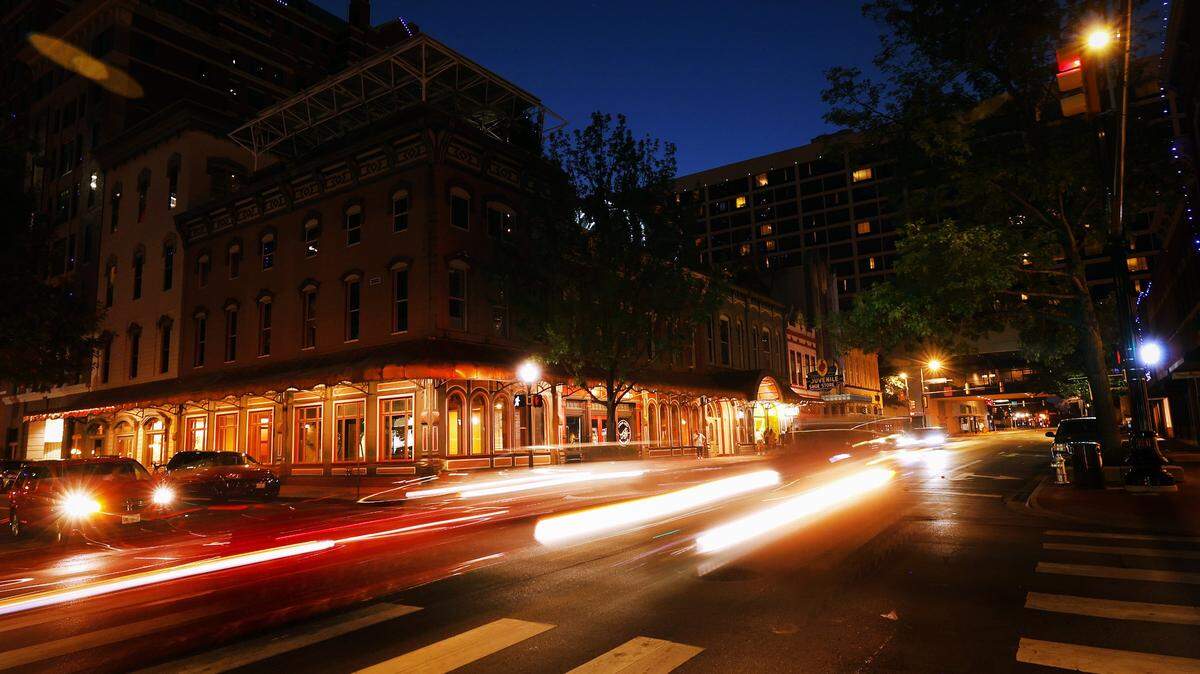
Carlos De La Torre appreciates a good sports car.
The 78-year-old retiree is the proud owner of two 1965 Chevy Corvettes and can tell from the sound of the engine whether a vehicle has been properly maintained.
But De La Torre isn’t just a car guy — he’s also a downtown Fort Worth resident who says the vehicle noise echoing through the neighborhood has gotten out of hand. His frustration illustrates a tension familiar to anyone who loves cars but also lives alongside them: there’s a line between appreciating a machine and being a nuisance to everyone within earshot.
If you drive downtown, here’s what you need to know about where that line is drawn — and what it’ll cost you if you cross it.
The rules: Decibel limits and fines
Fort Worth’s noise ordinance sets clear thresholds for downtown. Between 7 a.m. and 10 p.m., noise cannot exceed 80 decibels. Between 10 p.m. and 7 a.m., the limit drops to 70 decibels.
For context, a vacuum cleaner creates about 70 decibels of noise. An average lawn mower creates between 80 and 90 decibels. Noises louder than 85 decibels are considered harmful to humans.
If you’re caught exceeding those levels, the city can give you a ticket with a maximum penalty of $500. Fines can also be much lower, depending on what the city’s municipal court sets them at.
The ordinance targets drivers playing loud music, revving their engines and driving vehicles with modified exhaust systems — the three behaviors downtown residents say are the worst culprits.
Enforcement is ramping up
Downtown Fort Worth Inc., the neighborhood advocacy nonprofit, has taken aim at noisy vehicles with what it calls Operation Pipe Down, a joint effort with Fort Worth police and off-duty officers who help enforce the noise ordinance.
Matt Beard, a director with Downtown Fort Worth Inc., said more than 160 noise citations have been issued in downtown since August 2024.
At a downtown neighborhood alliance meeting in March, Andy Taft, the president of Downtown Fort Worth Inc., said his organization had asked the municipal court to levy more punitive fines when possible and not let people cited for noise violations off with warnings.
William Rumuly, director of the Fort Worth Municipal Court, wouldn’t say if that request is being honored. He issued a statement that said the municipal court is a “neutral form” and that adjudication is determined based on the facts of each individual case.
Fort Worth police also started a campaign in June 2025 to increase patrols in downtown and begin educating people about the problem of loud noise. The department put up signs to remind drivers about noise enforcement.
When and where citations are concentrated
Downtown Fort Worth Inc. set up a series of decibel readers in 2024 throughout downtown to count how many times the sound level exceeded the thresholds covered by the city’s noise ordinance. The study set up decibel readers at four residential locations in the core of downtown.
According to decibel meters monitored by Downtown Fort Worth Inc., Friday nights from 9:30 to 10:30 p.m. were the noisiest time in downtown, with the highest number of incidents of excessive noise.
The nonprofit’s study found that Friday between 9 p.m. and 10 p.m. had the most noise violations, when levels exceeded 80 decibels 94 times. The second loudest time of the week was Saturday morning between midnight and 1 a.m. with 91 incidents.
Fort Worth police responded to 26 calls for “Loud Music/Party” in downtown in the first six months of 2025, according to police data collected through an open records request. The majority of those calls did not have a police report, and five calls reported the offensive noise was gone on arrival or not able to be located, according to the data.
The single address with the most calls was 100 Harding St., near the Huntley apartment complex on the northeastern edge of downtown. However, most of the calls were concentrated along Houston and Throckmorton Streets between West Weatherford Street and West Ninth Street.
The challenge of enforcement timing
Noise calls are often lower priority for the police, meaning it can take hours for an officer to show up, by which point the offensive noise has already dissipated. That’s been a core frustration for residents.
Downtown Fort Worth sits at the intersection of three freeways, a train yard and serves as both a central business district and entertainment spot. Roughly 11,600 residents call the neighborhood home, according to data from Downtown Fort Worth Inc.
Residents acknowledged there’s always going to be some noise in a dense urban area like downtown but argued the noise from cars and motorcycles is above the normal din.
Car culture vs. nuisance noise
De La Torre admits the area has always had noise. Usually it’s a garbage truck, a police cruiser or an ambulance, but at least those noises serve a purpose, he said.
Luis Galindo, a lawyer who’s lived in The Tower for the past eight years, said the soundscape has changed in the past few years.
While there has been a slight uptick in foot traffic recently, downtown is still a lot quieter than it was before the COVID-19 Pandemic, Galindo said in a July 2025 interview with the Star-Telegram.
There were more restaurants, retailers and, while there was still music in Sundance Square, it never seemed to interfere with daily life, Galindo said.
Now it seems like people come downtown on the weekend to cruise in their cars and play loud music, he said. He emphasized that he didn’t have an issue with people coming downtown — only the excessive noise.
Galindo said he has to turn up his music or television in order to hear it over noise from vehicles down below.
There’s also a safety issue, De La Torre said. Cars regularly speed down Houston Street past the convention center, he said, adding he worried about the safety of convention guests staying at the nearby hotels.
Beard said the worry is that loud noises are making it hard for people to sleep — both at night and during the daytime.
Beard pointed out that airline pilots, for instance, often stay in downtown hotels, and they could be sleeping at any time of the day depending on their flight schedules. If pilots don’t get the required rest, Beard said, it can cause flight delays, disrupting interstate and international travel and commerce.
Is the crackdown working?
The increased focus on noise ordinance enforcement has improved things to a certain degree, Beard said. Still, residents cited noise as an ongoing issue at the March neighborhood alliance meeting.
Speaking to the Star-Telegram in September 2025, Galindo said there’d been noticeable change since police increased enforcement in June.
“You can’t be everywhere at once, but there’s definitely fewer people coming downtown just to make noise,” he said.
He credited the advocacy of Downtown Fort Worth Inc. for working with the city to get the problem addressed.
“It’s good knowing someone’s going to take us seriously and get our problems addressed,” he said.
Beard hopes more awareness about the issue will help. That may be wishful thinking, though, if research is any indication.
In 2024, Julie Aitken Schermer, a psychology professor at the University of Western Ontario in Canada, published a paper that showed drivers who modified their exhaust systems to be louder were more likely to have psychopathic and sadist tendencies. The argument is these individuals enjoy making others miserable.
The summary points above were compiled with the help of AI tools and edited by journalists. The source reporting referenced above was written and edited entirely by journalists.