New Southside community garden hopes to provide students a ‘safe haven’
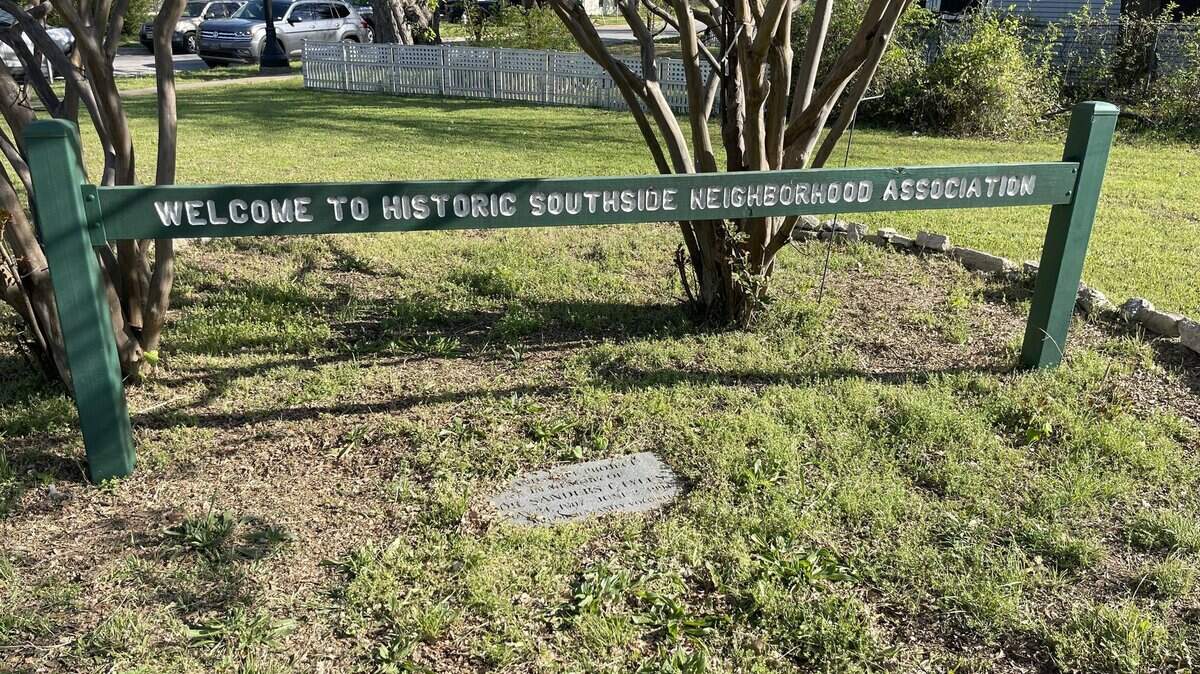
Wallace Bridges wants young people in Fort Worth to start connecting with each other in person again.
He has spent the last several months brainstorming with the Historic Southside Neighborhood Association ways to bring the area’s youth together through community events.
Earlier this year, Bridges identified a vacant lot in the neighborhood and had a vision. He wanted to create a community garden that could serve as a haven for community, and give students in the area a sense of place. Bridges and the Southside neighborhood association partnered with the Fort Worth school district’s Van Zandt-Guinn Elementary school to put plans for the project into motion.
Bridges hopes the garden can become a meeting place for youth and also teach them the importance of having healthy and accessible green space close by. He hopes students will use it as a place to learn about gardening, attend reading events and spend more time outdoors.
“A garden has a magical way of kind of bringing everybody together and working as a team,” Bridges said. “And another thing a garden does is it gives young people a sense of pride in their community and when plants are sprouting and looking really nice, they can say ‘Yeah, I was part of that. That is a project that I did.’ So we see this as an opportunity to create a meeting place where kids can come, read a book, sit down and enjoy it.”
The garden will be at 700 S Kentucky Ave., across from Van Zandt-Guinn, and it is expected to be completed later this year. The Southside neighborhood association hopes to make considerable progress on the garden this summer. A spokesperson for the Fort Worth school district told the Star-Telegram the garden’s opening is too far off to give specific details, but hopes it is open and available to students by the fall.
Bridges and fellow neighborhood association members Johnny Lewis and Patrick Banta are spending the next several weeks planning the early stages. Bridges said they hope to break ground at some point this month.
“The plan is to have this completed in time for the children who are in school and get them participating before school lets out for summer,” said Kristina Banta, president of the Historic Southside Neighborhood Association. “Once that happens, our goal is to have a monthly event or monthly project, whether that is a book day, painting, maybe bring your mom to the garden for Mother’s Day, things like that. Those are things that will allow the children of our neighborhood to stay engaged and bring a sense of togetherness to the community as well.”
Bridges and other neighborhood leaders also hope the garden can be used to help improve the mental health of children. A study by NASA Science shows green space can improve mental health by reducing stress-related emotions and boosting mood through natural environment exposure. Access to parks and nature encourages activity and fosters social connection, the study found.
Most of all, Bridges hopes the garden can create a safe space for kids who might not have one.
“I find that kids are like sponges,” Bridges said. “When they learn something new, they become more excited. And we want to get them excited about this. I think that can also carry over to other areas of their life too like school and stuff like that. But most importantly when this garden is done it will be a place for kids to come together and gather. With a community that is being redeveloped, that is what is most important to us.”
The Southside neighborhood has become one of Fort Worth’s most highly redeveloped areas in recent years. The $63 million Evans & Rosedale Urban Village project near Interstate-35 and East Rosedale Street will break ground later this year and bring hundreds of mixed-used housing units, retail locations, grocery stores and a new museum to the area.
The Historic Southside is also one of the oldest African American neighborhoods in Fort Worth. The neighborhood, just one mile southeast of downtown, began when Black people began migrating to the area in the 1910s. The neighborhood developed after William MacDonald began buying plots of land and selling them to Black families. That brought in Black professionals, including doctors, educators and religious leaders.
Van Zandt Guinn Elementary is predominantly Hispanic and African American. About 49% of students are Hispanic and 44% are African American. In total, 92% of students in the school qualify for free or reduced-lunch prices. The school enrolls about 330 students in Pre-K through fifth grade, according to data from the Mahadev Maitri Foundation.
“We’re really happy to provide a sense of place and a sense of pride for these kids,” Bridges said. “But also there is an educational piece to it. We are very fortunate to have Patrick Banta and Johnny Lewis, who are very knowledgeable about gardens and plants and how they work. So the most important piece is we know that community gardens create a safe space where kids can come and relax, have a chill moment and that can bring people together.”