You can help preserve the history of the Historic Southside in Fort Worth. Here’s how
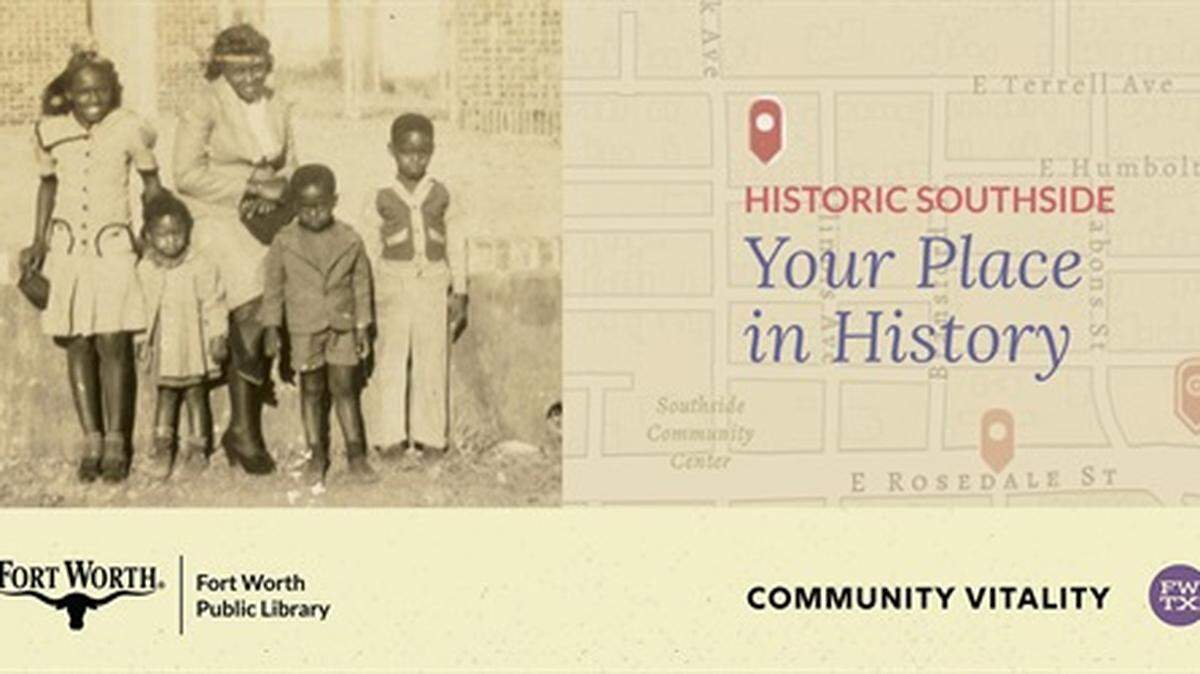
A Fort Worth Public Library project aims to encourage people to document their memories and the history of the Historic Southside neighborhood on an interactive map.
“Your Place in History: Historic Southside” is a six-week initiative to collect memories, photographs, documents and audio files about historic properties and locations, such as the Dixie Park, Drake’s Cafeteria and various other buildings, to preserve local history.
As neighborhoods slowly change and buildings are modified or demolished, it is important to have residents describe how their community used to be, says Gaby Kienitz, a librarian and archivist for the Fort Worth History Center.
“The importance of history is that it just connects us to the place where we live and the people who came before it and built it into a place where we would want to live,” Kienitz said. “And so it kind of tells us about the past, but also tells us what we want our future to be like.”
The project uses ArcGIS StoryMaps, which works similar to Google Maps. People are able to drop pins on a location in the neighborhood, upload a photo, then write a brief description.
People can continue to add submissions after the project period end date on Feb. 28. Residents of Historic Southside or others with memories of the neighborhood can submit contributions to the project through the city’s website (search “Your Place in History: Historic Southside” at fortworthtexas.gov).
Kientiz hopes other neighborhoods create their own StoryMaps to preserve their community’s history and memories.
Jayn Higgins is the neighborhood historian for the Historic Southside Neighborhood Association. She says neighborhoods like Historic Southside have lost their aesthetic integrity, landmarks, and memories due to decades of neglect.
The Historic Southside is one of the oldest African American neighborhoods in the city. Just one mile southeast of downtown, the neighborhood’s origin began when Black people began migrating to the area in the 1910s. The neighborhood developed largely due to William “Gooseneck” MacDonald, who began buying plots of land and selling them to Black families. This brought in Black professionals, including doctors, educators and religious leaders.
It was home to Black-owned businesses, barbershops, nightclubs, grocery stores and restaurants. Today, not many of those businesses remain in the neighborhood.
Projects like “Your Place in History: Historic Southside” are needed to preserve the history and photographs of people not only in the Historic Southside but for other Black people and other historically Black neighborhoods, Higgins said.
“Black history is a lesson in survival and human resilience, the obstacles that have been overcome, the way that we have managed with less and made an impact nationwide,” Higgins said.