
This Fort Worth building is empty today. But it has a rich history as a Black nightclub.
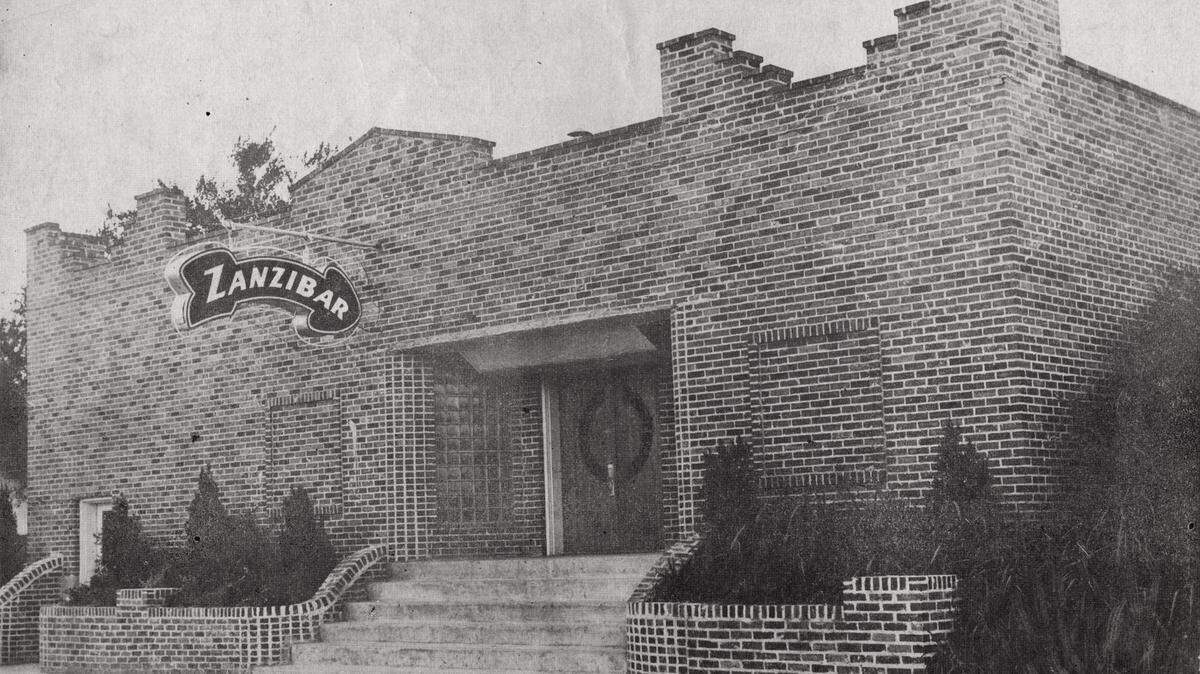
Lucyle Greene Wallis Horn Thompson was a driven woman. She began her career teaching in Dallas, but set her sights on delivering world-class entertainment.
Lucyle came to Fort Worth when she married fellow teacher Charles Wallis, who also ran the Risto-Krat Inn, a barbecue and beer joint. She took over managing the Risto-Krat and in about 1936 moved it to 951 E. Rosedale in Terrell Heights, a neighborhood where many African-American professionals lived. After a couple of years, she turned over management to John Winzelle “Squid” Sims, the grandson of the property owner.
In 1940, the Wallises purchased the lot on which the Risto-Krat Inn stood from the estate of Oscar M. Sims. Lucyle received the property as part of the settlement when she and Charles divorced in 1942, and continued to outsource the management of the Risto-Krat while she planned her next project. Her plans also included marriage to Randolph Horn, a local barber.
The end of World War II brought opportunities for many, and Lucyle Horn was ready to take advantage of them. She hired contractor Joe Peace (husband of noted educator Hazel Harvey Peace) to undertake a major renovation of the former barbecue restaurant and reopened it in mid-1946 as the Zanzibar Café and Night Club.
Applause magazine, published in Dallas, featured the Zanzibar, calling it a “show place” for Texas, inspired by the New York City night club of the same name. “The greats,” Applause said, “are always thrilled at finding such a classy spot down this way.”
The Fort Worth venue seated 350 around a dance floor lighted with chandeliers and featured a “glass bar” – it was actually covered with mirrors. The Pittsburgh Courier noted that, “One of the Zanzibar’s unique features is its disappearing roof. On balmy nights, patrons dance under the stars. Who could ask for more?”
Top-flight entertainment included the Ink Spots, fronted by Billy Kenny, dancers Clayton “Peg Leg” Bates and “Uncle Willie” Pratt, Earl Hines, Lionel Hampton, and Lucky Millinder. Bob Jackson led the house band.
The Horns divorced in 1949, but Lucyle retained control of the club and the property. She retained managers to handle the club’s day-to-day business, and it thrived. Bennie Ruth Dickens, who frequented the club as a young woman, recalls that it was a classy place with customers who dressed up to go out. During the 1950s, Zanzibar was primarily a restaurant during the week with music and dancing on the weekends.
The house was always packed, and blues guitarist Lowell Fulson (who was living in Dallas at the time and fronting his own band) was a frequent attraction and a real crowd-pleaser, Bennie Ruth recalls. She also remembers hearing Freddie King and Ray Sharpe perform. Because of Texas liquor laws at the time, Zanzibar served beer, but wine and hard liquor were BYOB. Set-ups – the mixers needed to concoct a proper cocktail – were available.
Zanzibar closed about 1959 when people had more options for places to go, and the crowds dwindled. In 1965, Lucyle sold the property to the Upper Room Temple pastored by barber and gospel musician Kirby Holmes. Music reverberated not only from the Temple’s house choir, but in special programs given by the Hardeman Singers and Dallas Academy Choir, along with other gospel groups.
The Upper Room Temple defaulted on its payments, and in 1974 Lucyle – who by now was Lucyle Thompson – bought the property back at an auction on the courthouse steps. She then sold it to Irreasa Drake in 1975, ushering in a new era for the building in which comfort food reigned supreme.

Star-Telegram columnist Bud Kennedy called Drake’s “a multicultural crossroads of Fort Worth,” where everyday folk enjoyed smothered pork chops, fried chicken, and sweet potato pie alongside downtown’s elite. Oh, and don’t forget the corn casserole and other vegetables, their flavor enhanced by “just enough sugar” to bring out the flavor.
At some point, the building’s distinctive crenelated top disappeared, replaced by a simple gabled roof that was likely installed to stop leaks from the Zanzibar’s fabled disappearing roof. Irreasa Drake died in 1990, but her family continued to run the cafeteria until about 2004. Today the building sits, stabilized but empty, awaiting its next forward thinking occupant.
Carol Roark is an archivist, historian, and author with a special interest in architectural and photographic history who has written several books on Fort Worth history.
This story was originally published February 5, 2022 at 6:00 AM.