Why has Tarrant sent more youth to juvenile prisons? It depends on who you ask
Tarrant County leads the state in the number of youth it sends to Texas juvenile prisons, which doesn’t have enough space to accommodate the influx, causing overcrowding at the county’s detention center.
But solutions to the problem are debated among Tarrant County officials and juvenile justice advocates.
The Texas Juvenile Justice Department, in a September board meeting presentation, showed that Tarrant County commits more youth to its facilities than any other county in the state. According to records from TJJD, Tarrant County nearly doubled the number of youth committed in the 2025 fiscal year from 63 to 103.
Youth between the ages of 10 and 19 who are sent to the state’s five facilities are usually those who have committed felony-level offenses, have exhausted local resources and are placed in state custody by a juvenile court judge for intensive rehabilitation. Rehabilitation services include therapy, mental health services and substance abuse treatment.
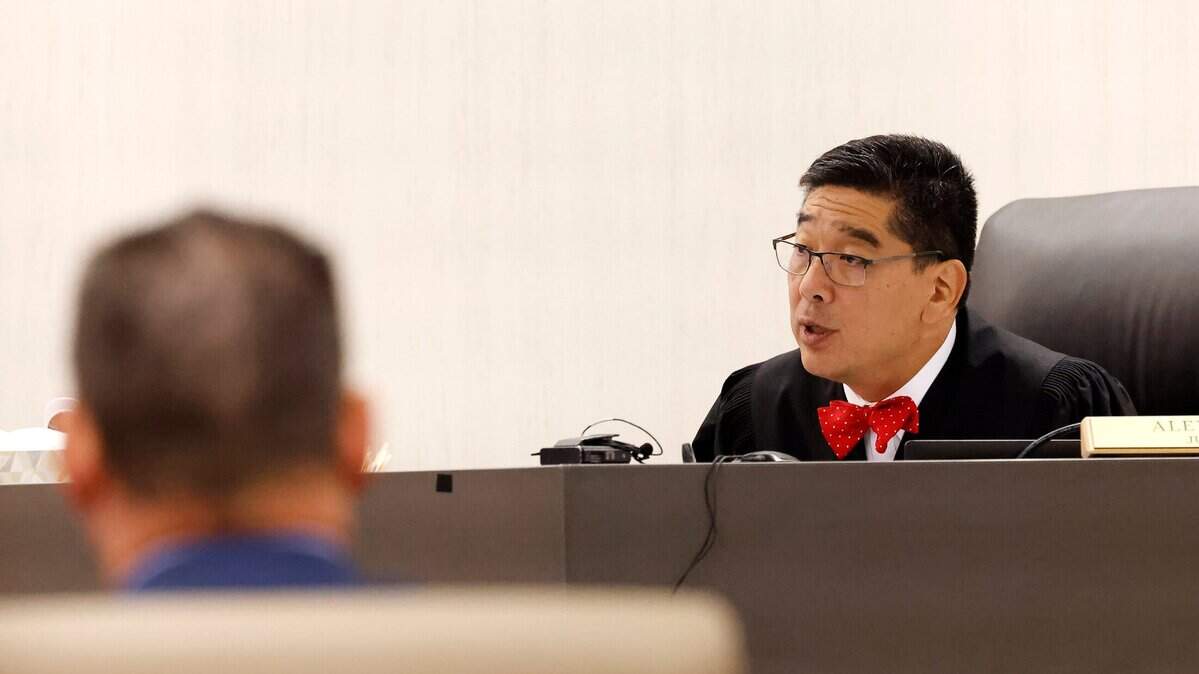
Judge Alex Kim, who runs the 323rd District Court that handles juvenile cases, says the increase was due to his court accelerating dispositions to provide youth with rehabilitation as soon as possible. This led to a surge in commitments between April and October. TJJD and Tarrant County officials also say a rise in violent crime by youth over the years has caused the surge.
Some Tarrant County officials say a solution to overcrowding Lynn W. Ross Detention Center is a post-adjudication residential facility that would provide additional bed space and services. Such a facility is a secure placement where youth are held after they have been convicted and adjudicated as delinquent. An alternative to home placement, a facility provides specialized programs and services to prevent recidivism.
Youth justice advocates, on the other hand, point to research that community-based services provide better outcomes than post-adjudication facilities. These community-based services include diversion programs, mentoring, community service and other local resources.
“Tarrant County has failed to keep up with the evidence the rest of the state relies on,” says Elizabeth Henneke, founder and chief executive officer of Lone Star Justice Alliance. She believes a post-adjudication facility is not the answer for the county’s commitment and overcrowding problems.
Benefits of a post-adjudication facility
Kim said he noticed an increase in the time it took for TJJD to take youth from Tarrant County into state custody, from about two weeks in 2019 to 90 days in November 2024. He said he did not want to delay rehabilitation, and within a six-month period he accelerated the number of case dispositions. That overlapped with older dispositions, causing a surge in commitments to the state, Kim said.
“All the studies showed that the sooner you get a child into treatment, the more effective the treatment is,” Kim said. “So it’s always been a focus of mine to get to this position as soon as possible so we can get services to the child as soon as possible.”
The state continued to delay picking up youth from Tarrant County, leading to the Lynn W. Ross Juvenile Detention Center operating over capacity for several months, a problem Kim addressed in a July Tarrant County Juvenile Board meeting. The Tarrant County detention center has a capacity of 128 beds. Kim said the numbers have since lowered and overcrowding has subsided.
The Tarrant County Juvenile Board sent a letter in September to the Texas Juvenile Justice Department, signed by 24 District Court judges and County Judge Tim O’Hare. The letter states that in the last six months, one-third of their detainees have been waiting to be transferred to the state, and many have been waiting for months. It asks for the state to pick up those on the waiting list as it will “deny them their opportunity for rehabilitation.”
An Oct. 3 letter from Shandra Carter, executive director of TJJD, sent to Tarrant County officials said they have worked on initiatives to reduce transfer times, such as priority transfers and pre-transfer processes, safely maximizing the use of state facilities, and constructing new facilities near population centers.
The letter also said TJJD admitted over 550 youth into the state’s five correctional facilities during fiscal year 2025, and “15% of these youth — the highest number among all juvenile probation departments — were from Tarrant County.” In September, 25% of admitted youth were from Tarrant County, the letter stated.
Kim said he predicted the detention center’s overcrowding as a potential issue when he first took his seat in 2019, as Tarrant County’s population was growing. He asked for a post-adjudication facility to be built, but former County Judge Glen Whitley opposed it. Tarrant County would fund and operate the post-adjudication facility. As a result, the juvenile board has outsourced contracts to other counties for its programs and services, saving money and preventing staffing issues, Kim said.
County commissioners approved two contracts in October, allowing the Tarrant County Juvenile Probation Department to use the pre-adjudication and post-adjudication programs and services in Collin County.
The level of youth criminality has risen sharply in the last decade, and with the unpredictability of population increases in the next few years, the lack of a secure post-adjudication facility to house youth can cause a public safety issue, according to Tarrant County Commissioner Manny Ramirez.

Over roughly the past two years, the leading causes of commitment in Tarrant County were violations of court orders, or youth violating their probation, aggravated robbery, and aggravated assault, according to records from Tarrant County Juvenile Services.
Most commitments are for violent offenses, and some youth re-offend for the same charges, but deciding what the proper treatment and long-term placement is a case-by-case decision, Kim said.
Data from TJJD says across the state, felony offenses, such as homicide, drugs, assault and misdemeanor assaultive offenses, have increased to levels higher than before the pandemic. From 2016 to 2025, felony homicides increased from 54 to 149, drug offenses from 1,285 to 7,107, assault from 3,228 to 4,296 and misdemeanor assault from 8,837 to 12,645.
“Tarrant County has to take a serious look at partnering with our state to build a facility that can accommodate,” Ramirez said. “We can never guarantee what the population will look like in five or 10 or 20 years.”
Pathways to treatment and support
Henneke, director of Lone Star Justice Alliance that advocates for youth in the criminal justice system, says the data for youth crime is misleading and does not represent what is happening on the ground.
She said they searched through the data and spoke with their Tarrant County partners from United Way of Tarrant County, The Rainwater Charitable Foundation and Community Frontline. They found no evidence that youth crime has risen and, in fact, Tarrant County is on track with other counties in terms of its crime and arrest patterns.
Lone Star provided data from the Texas Department of Public Safety, which shows the rate of change from 2023 to 2025 for homicide, drug, and assault for youth between the ages of 10 and 16, where Tarrant County and Texas are nearly identical.
Henneke says they found in the data a correlation, but not an exact causation, between the increase in youth committed to the state and the removal of community-based alternatives that existed in Tarrant County for decades.
Last year, the Tarrant County Juvenile Board discontinued contracts with Big Thought for Creative Solutions Summer Program, a Dallas program integrating arts and cultural performances for juvenile justice intervention, and Youth Advocate Programs Inc., which provides alternatives to incarceration. County leaders opposed equity and social justice language on their websites and had concerns that YAP used taxpayer money for lobbyists.
Henneke pointed to a study by the Council of State Governments Justice Center that found that youth admitted to community-based programs have better outcomes than those adjudicated to state prisons or post-adjudication facilities.
“It’s a real public safety risk for Tarrant County and Fort Worth if the county doesn’t learn from the evidence and from peers across Texas,” Henneke said. “Young people need pathways to treatment and support in their own communities.”
The number of Black youth committed to the state by Tarrant County is a glaring disparity. In 2024 and 2025, Black youth made up 66 percent and 70 percent, respectively, of committments, according to records from Tarrant County Juvenile Services. Black males were the most committed, with 57 percent and 62 percent in 2024 and 2025, respectively.
Bennie Medlin, former director of Tarrant County Juvenile Services, says he supports the need for a post-adjudication facility in Tarrant County. But, he said, it won’t solve every problem.
Medlin said that during his tenure, Kim leaned toward taking youth out of the community, detaining them for longer periods and committing them to the state, which he pushed back on.
Post-adjudication residential facilities are last resorts used by courts before referring a youth to the state. Dallas County, Harris County and Bexar County have facilities. Even with a post-adjudication facility, Tarrant County must determine which programs and services it will house, as each youth has individual needs, Medlin said.
He says reductions in programs and services are factors in the number of commitments, but the main reason is a philosophical issue. There is an emphasis on electronic monitoring and pulling youth back into court when they violate, instead of working with probation officers, caseworkers and community-based services as alternatives to detention.
“I would say in Tarrant County, there is less of a focus on keeping kids from going deeper into the juvenile justice system,” Medlin said.
This story was originally published December 8, 2025 at 2:00 PM.