
Aging motel blamed for crime problems in this east Fort Worth neighborhood
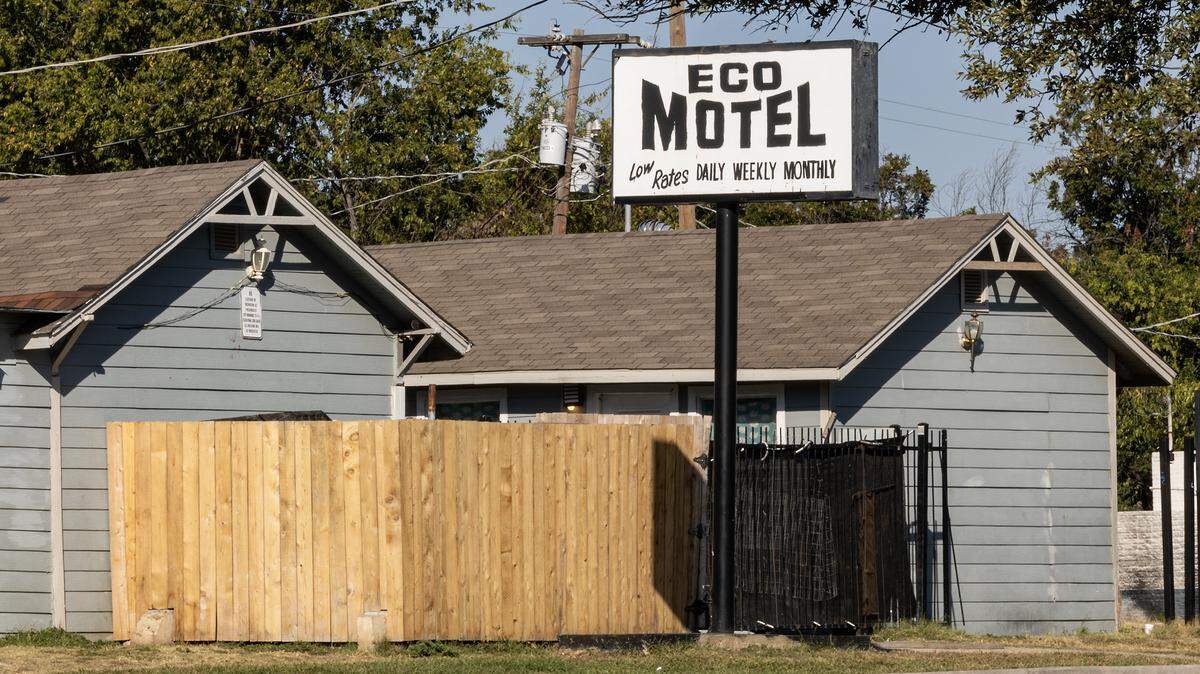
Talk to enough people who live or work in Fort Worth’s East Lancaster corridor, and inevitably you’ll hear about the Eco Motel.
The property at 3201 E. Lancaster Ave., which also does business as the Cowtown Inn, has long been seen by locals as a blight on the block. Twice in the past 10 years the city of Fort Worth has sued the owner, Shetal Patel and his company, RMP Hospitality, LLC, under nuisance abatement statutes, citing evidence of extensive criminal activity on the premises. In both cases the city dismissed its claims, and the motel remains in operation.
The last lawsuit was filed in January 2024. The city’s petition to the court in that case documented more than 800 calls to police and other emergency services that had originated at or were connected to the Eco Motel over the previous 12 years.
That court filing further referenced approximately 200 reported offenses associated with the motel, ranging from public intoxication and disorderly conduct to prostitution, narcotics violations, sexual assault and murder.
Patel did not respond to a message requesting comment
Carol Peters, president of the West Meadowbrook Neighborhood Association, said the issue of crime at the Eco Motel goes back years, far beyond the 2015 nuisance abatement lawsuit.
After all this time, Peters has seen enough, and she doesn’t see why the city hasn’t stepped in and closed the establishment.
“The Eco Motel doesn’t have one incident that stands out,” she said. “It’s a continuation of incidents that escalate.”
Why has the city dismissed its lawsuits against the Eco Motel?
Fort Worth city attorneys Christopher Mosley and Benjamin Sampract said it’s often difficult to prove that a business qualifies as a “common nuisance.”
By definition, a common nuisance is a property where people congregate for the purpose of engaging in criminal activity. Civil statutes provide a list of offenses that are considered when determining if a property meets the nuisance threshold. Those include the manufacture, distribution and use of drugs, firearm and weapons offenses, assault, murder, gambling, prostitution and human trafficking, among others.
Mosley said cities filing common nuisance suits against property owners have to first prove those types of offenses are taking place. After that, the property owners have the opportunity to remedy the problem.

In the 2015 case against the Eco Motel, Mosley said, Patel worked to curb the illegal activity, which led to the city dismissing its lawsuit.
The same thing happened in 2024. In that case, the judge issued a temporary injunction ordering Patel to “abate the common nuisance.” As part of the injunction order, Patel was required to have security on site at the Eco Motel from 6 p.m. until 2 a.m. each day and have on-site management around the clock. Additionally, Patel was told to post “No Loitering” signs, to stop renting rooms by the hour and to stop renting to people known for using the Eco Motel for criminal purposes.
Sampract said those efforts resulted in decreased crime, so the city again dismissed its lawsuit.
“It did not meet the definition of a common nuisance when time came for trial,” said Sampract.
Where does that leave residents who are worried about the Eco Motel?
Crime associated with the Eco Motel may have dropped in conjunction with the city’s lawsuits, but it hasn’t ceased.
In July, Zeinabou Banks died at the property, where she had previously been arrested on charges of prostitution and drug possession. According to Tarrant County Medical Examiner’s records, Banks died from mixed drug toxicity. Cocaine, fentanyl and methamphetamine were found in her system.
According to police reports, over the past two months there have been multiple incidents of narcotics possession at the Eco Motel, and on Aug. 25 there was a report of an assault with a deadly weapon.
Peters said she worries about nearby business owners who are trying to make a difference on East Lancaster as efforts are underway to revitalize the historic commercial strip.
“Businesses struggle because they have to fight the impact of what’s happening at the Eco Motel,” she said.
Others shared sentiments similar to Peters’. Scott Dyson, owner of Competition Music at 3136 E. Lancaster Ave., looks out his front window at the Eco Motel. In a previous conversation with the Star-Telegram, he blamed the property for many of the neighborhood’s problems.
“Police or an ambulance are there about once a week,” Dyson said. He added that he put his business up for sale because of issues related to crime and vagrancy on East Lancaster Avenue. He has since taken it off the market.
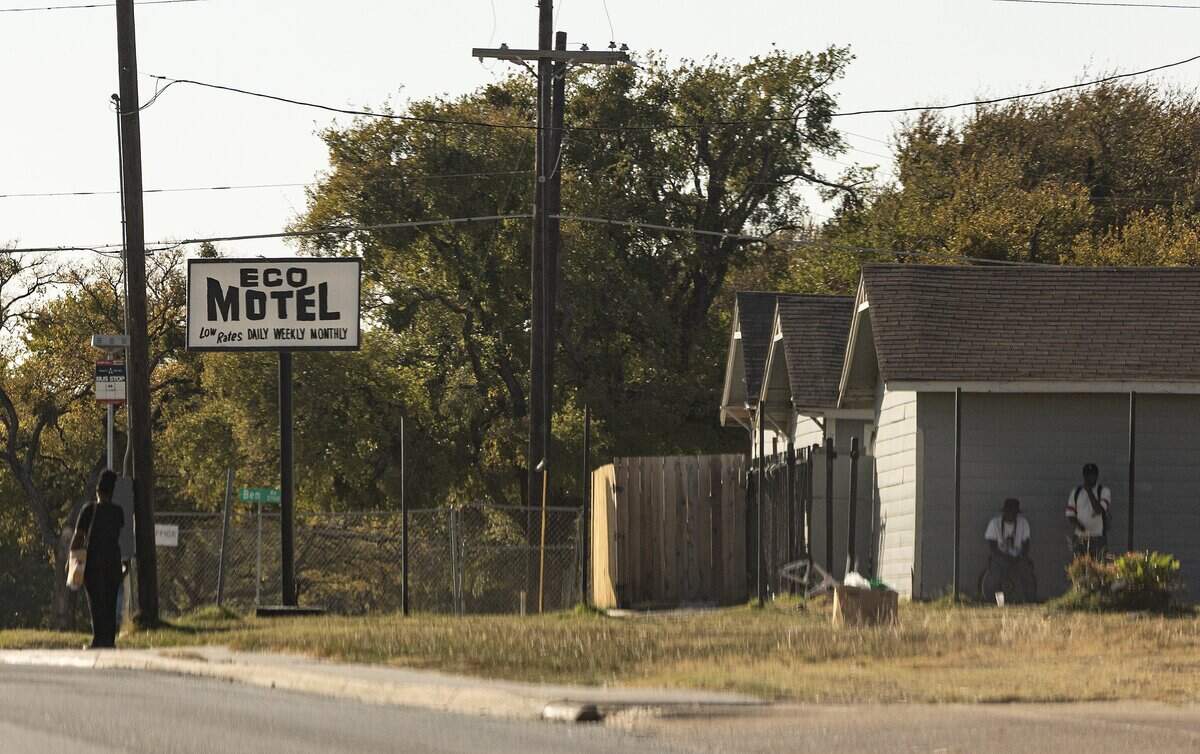
While neighboring business owners and residents are frustrated by the ongoing issues at the Eco Motel and the city’s past inability to close the property, there are things they can do.
Individuals can document and report code violations, for instance. Establishing a track record of violations could potentially help the city in future civil suits brought against the Eco Motel, or any other property considered a nuisance.
City records for a five-year period, from 2020 through 2024, showed 10 primary code complaints at the Eco Motel. In some of those cases, code enforcement officers found additional violations upon inspection. Most of the documented code violations had to do with debris and garbage on the property. In one case, though, a code inspector found multiple problems inside one of the motel rooms, including live cockroaches and lack of a smoke detector.
Fort Worth residents can report code violations using the city’s MyFW mobile app.
Another powerful tool residents have is Dallas-based Act for Justice, a faith-based nonprofit that partners with the city of Fort Worth.
Act works with some of the area’s top law firms, including Kelly, Hart and Hallman, Haynes Boone and Cantey Hanger, to pursue civil judgments against owners of nuisance properties.
Since Act-affiliated attorneys represent residents who are directly impacted by those properties, the cases are often easier to win than those brought by municipalities, according to an Act spokesperson.
The spokesperson added that Act has helped shut down nearly 300 drug houses and other problem properties in Dallas and Fort Worth over the past 16 years, and the Eco Motel has been on the organization’s radar.
The legal work is done pro bono, eliminating the financial burden for plaintiffs, but the Act spokesperson said it’s still hard in many cases to find someone to step up and file a lawsuit against a nuisance property for fear of retaliation.
“Our clients’ lives are being destroyed by these properties,” said the spokesperson.
By most standards, the Eco Motel wouldn’t be considered an attractive property. But it meets a need, some would argue a necessary one, in that it provides shelter to people who can’t afford permanent housing.
Daniel Haase, a community spokesperson who has lived just off East Lancaster Avenue for decades, said he doesn’t want to villainize people who are economically disadvantaged and living on the fringes. He’s not afraid of the people who call the Eco Motel home; he just wants to see an end to the crime there, just like Peters and Dyson and others.
Meanwhile, the Fort Worth City Attorney’s Office continues monitoring the situation at the motel. Only time will tell what will happen, but it seems like the neighbors aren’t backing down any time soon.
“With a place like the Eco Motel and its history,” said Sampract, “I can see why people would worry.”