This Fort Worth freedmen community wants to preserve its past, control its future
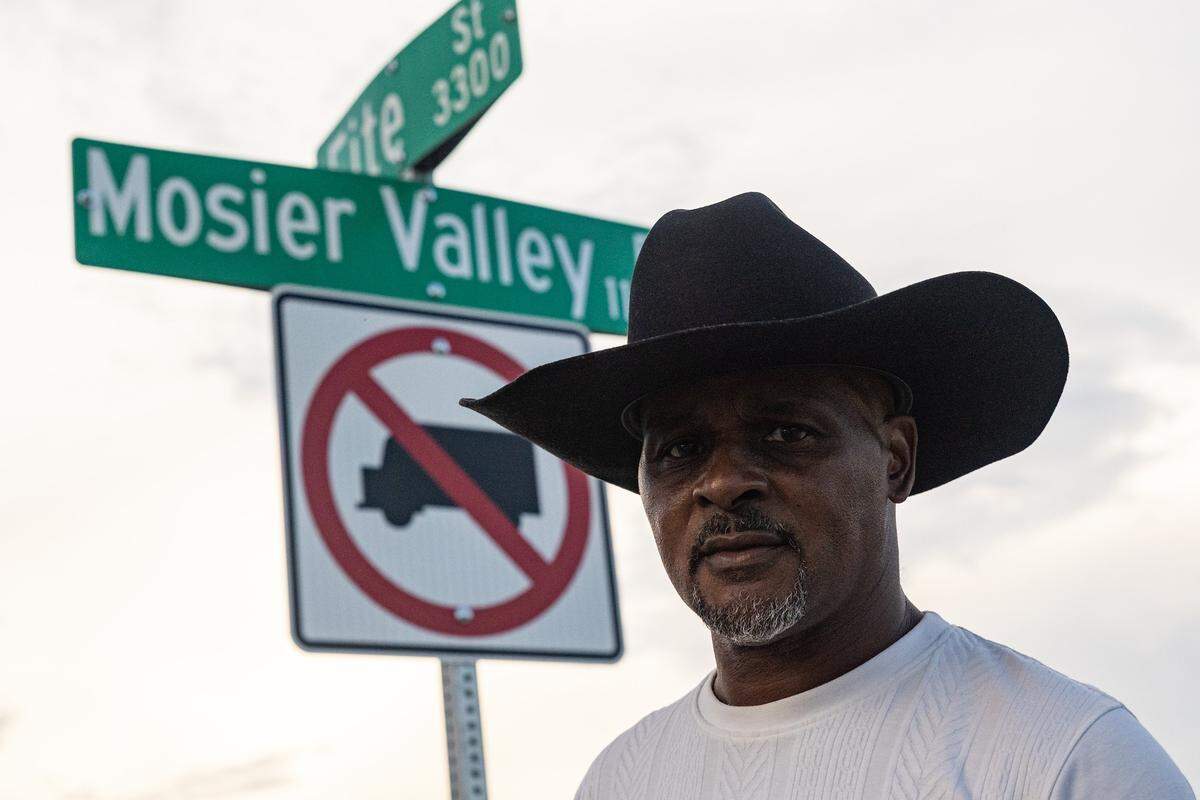
Jeff Pointer leaned against the green Mosier Valley Park sign as the afternoon sun brightened the park on the northeast side of Fort Worth. The area was once the site of a community center that was the heart of a historic Black community founded by people freed from enslavement.
Pointer, 56, recalls his childhood, spent playing in the woods and picking berries. The community had dirt roads back then. The Mosier Valley Community Center, where he and his friends gathered, defined the community.
Today, the community center is gone, as is what was a nearby schoolhouse. A large part of the community’s identity was lost with them. But Pointer looks at the park, which is largely undeveloped, and sees a place that could again be a gathering place for children and serve as a community focal point.
There are signs of resurgence in Mosier Valley. Construction on a 300-unit apartment complex at 11413 Mosier Valley Road, a 15-minute walk east from the park, is underway. Development of the park, after years of delays, is expected to be complete by May 2026. Attempts are being made to reclaim the schoolhouse, which was moved away. And new community organizations have sprung up to protect the future of Mosier Valley.
Pointer is encouraged by the attention the area is getting from city government.
“It’s going to be a sigh of relief, like wow, for the first time, they’re really paying attention to us, and they actually care about us,” Pointer said.
A freedmen settlement
Mosier Valley was founded in 1870 on the north bank of the Trinity River by Robert and Dilsie Johnson and 10 other emancipated slave families. They received 40 acres as a wedding gift from plantation owner Lucy Lee. Soon, more African-American families arrived and built their own farming community.
The area is northeast of downtown Fort Worth, just off West Euless Boulevard and south of Euless. The five-acre park has unshaded benches, a concrete wall with unfinished art panels, and a largely empty parking lot. The area is surrounded by metal fabricators, construction companies, and scattered single-family homes.
Pointer is a descendant of the Parker family, who were related to Quanah Parker, an influential Comanche leader. The Parkers were one of the first families to occupy the bottomland near the north bank of the Trinity River before the Johnson family founded Mosier Valley, according to Pointer.
The community grew cash crops such as cotton and corn and raised livestock. Residents were handymen and nannies for residents in Hurst, Euless and Bedford.
Mosier Valley peaked in the early 20th century when the population reached 300. Mosier Valley School, a one-room schoolhouse, was established in 1924. In 1949, it became part of the Euless school district.
That year, the Euless school superintendent tried to close the Mosier Valley School and bus students to Fort Worth. Mosier Valley parents opposed the plan and, with the help of the NAACP, blocked it. A federal judge ruled that Mosier Valley students had the right to be educated and to be equally funded as their white counterparts in the district.
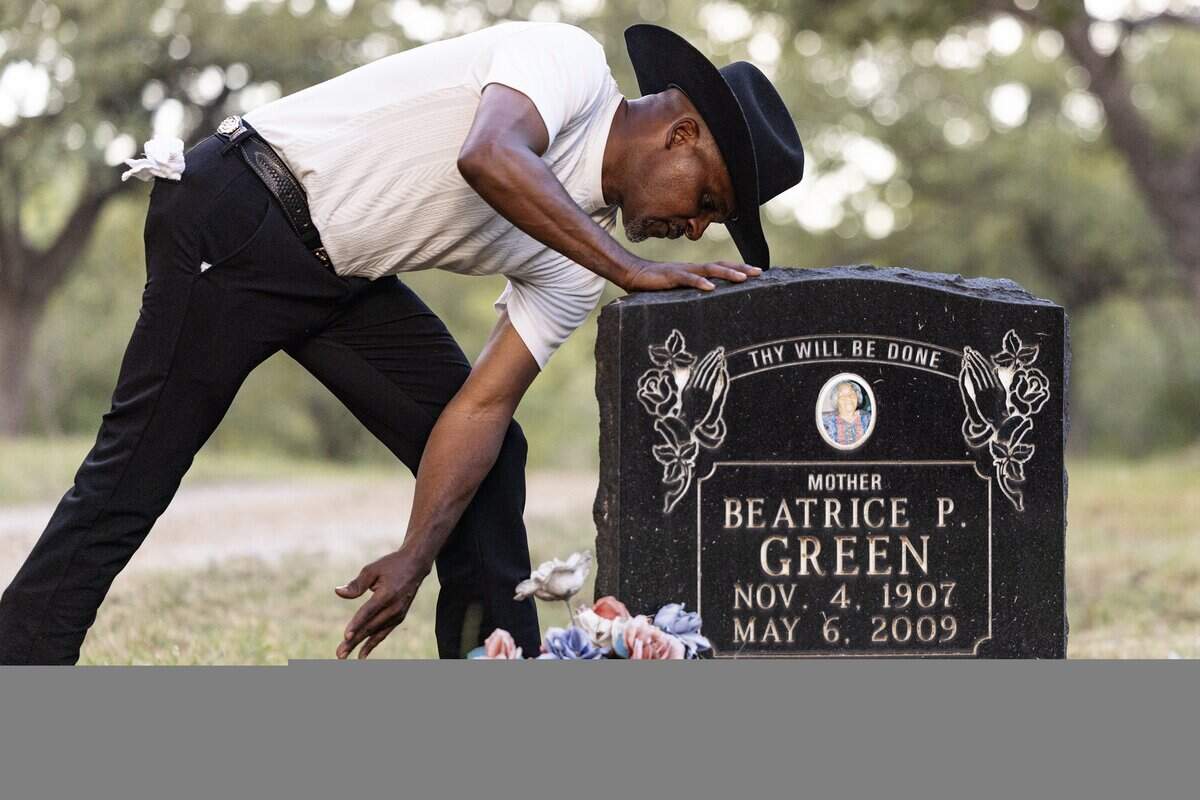
On Sept. 4, 1950, Mosier Valley parents tried enrolling their children in Euless schools but were blocked by a white crowd and segregation laws. One parent was Beatrice Parker-Green, Pointer’s great-grandmother. In 1968, the Hurst-Euless-Bedford school district was integrated 10 years after its formation, and the Mosier Valley school was closed.
Fort Worth annexed Mosier Valley in 1963. Various parts of the community lacked basic amenities, such as streetlights and sewer lines, until the late 1990s.
In 1985, Gordon and Sabra Doggett, former HEB ISD educators, moved and restored the Mosier Valley School at 2020 Bedford Road. It now operates as a hair salon.
Preserving the history of Mosier Valley
This year marks a new chapter as multiple organizations were formed in Mosier Valley to address community concerns.
The Mosier Valley Property Owners Association was formed after Pointer and residents met with Councilwoman Deborah Peoples at the park in March, where residents voiced zoning concerns and expressed their feeling that their voices were being ignored. The association now notifies members about proposed zoning changes and new development.
Residents want a residential community and will use the association’s voice to stop businesses, such as liquor stores, and other development that would strip the area of its history.
The association is applying for a grant from the Texas Historical Commission to preserve and beautify the Mosier Valley Cemetery. It is also working to enforce regulations against dumping and to apply for a historical marker at the cemetery.
The association is negotiating with the schoolhouse owners to purchase the building. They have received a donation of solar-powered lights and aim to make Mosier Valley a solar community to reduce reliance on the grid.
Tonya Jones, assistant chair of the Mosier Valley Property Owners Association, says the community wants to explore the inclusion of Mosier Valley on possible Juneteenth tours to explore its history and origins.
“We want to evolve. We’re not trying to stay the same,” Jones said. “We want to be part of that process of Mosier Valley evolving into the future.”
Mosier Valley residents and those with ties to the community want to preserve the history they grew up with.
Gail Wynn, 69, was raised in Mosier Valley and is a descendant of John Calhoun Parker, one of the first families who settled in the community. She describes the community as so small that people will unknowingly drive through it while searching for it. The history of Mosier Valley is hers and her family’s, and it needs to be preserved, she said.
“You don’t want to just erase it like it ain’t never happened,” said Wynn. “ It did happen, it was there.”
The Texas Historical Commission marked the Mosier Valley School site in 1983. In February 2014, the city acquired four acres of the old school site from the Hurst-Euless-Bedford school district to create Mosier Valley Park. In December 2017, it acquired an additional acre.
Park construction delayed
The first phase, completed in May 2019, included a parking lot, walkways, and a concrete cap on the school’s foundation, which will serve as a plaza. Cracking in the concrete cap necessitated replacement, resulting in an initial delay of the park.
Currently, the site has a wall with three holes in it, which has confused residents. Artwork commemorating the history of Mosier Valley and the school is planned for the space. A 2017 placeholder sketch by the city’s design consultant shows an image of Ollie Park Sr. and his wife, the couple who donated the land for the school, hanging on a wall in the park along with a description of the art. Construction on the park was initially scheduled to begin in January 2025, but it has not yet started. The delay is due to the city’s decision to bundle projects to attract more competitive bids from better contractors. One park project paired with Mosier Valley encountered an unforeseen engineering issue, and another park was added to the project package, pushing the schedule by two months.
The city has awarded a contract, and it was initially projected to start in October, with completion of the park now set for May 2026.
St. John Missionary Baptist Church, another cornerstone of the community, was started when a small group of formerly enslaved people met at the home of Frank Young and organized the congregation in 1874. A historical marker was erected in 1986. The red-brick church still stands at the same spot today at 3324 House Anderson Road between Trinity Boulevard and Mosier Valley Road.
Efforts to improve Mosier Valley Cemetery
Jeff Pointer walks through sticks, leaves, and mud in Mosier Valley cemetery and stops at Beatrice Parker-Green’s grave, beside her husband and son.
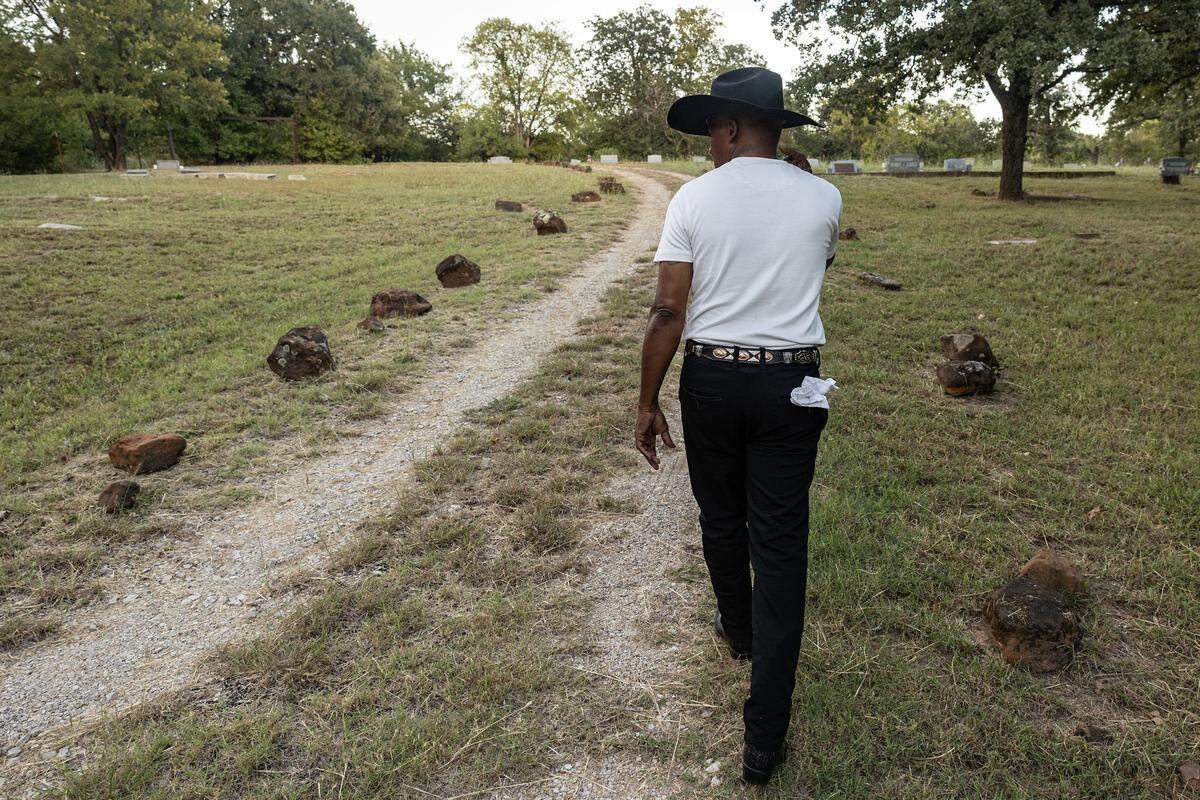
The cemetery has over 200 graves, the earliest of which are marked from 1859. Volunteers from the community, local schools and the Mosier Valley Property Owners Association have worked to clean up the cemetery. Many of the burial sites are unmarked or have rocks in place of headstones. Only descendants of original Mosier Valley families are allowed to be buried in the cemetery.
In September, dozens of trash bags filled with sticks, leaves, and grass that were cleared from the cemetery had been waiting months to be picked up by the city. People have been illegally dumping in the graveyard, and the association is working to stop it.
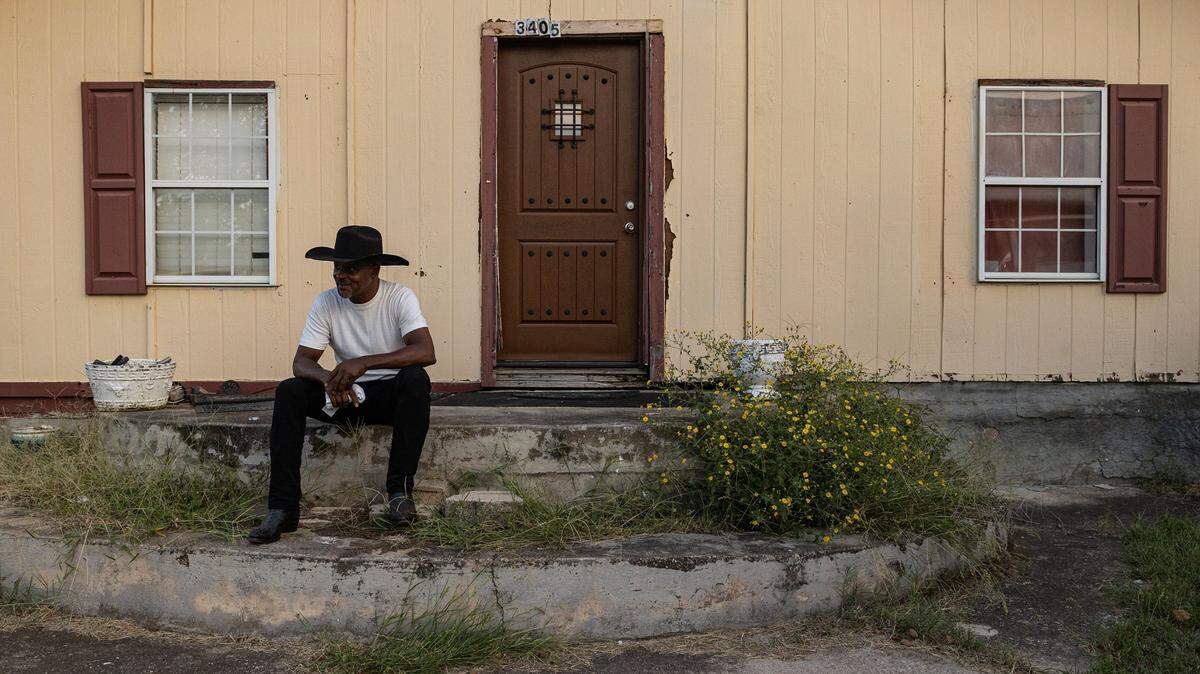
Pointer no longer lives in Mosier Valley, but takes pride in maintaining his family home that still stands but is not occupied, along with other elements of the community, such as the cemetery. He says those buried there cared for and taught their descendants to cherish and love their community and deserve respect even after death.
“It’s just the respect of our ancestors, them being here and nobody looks after them like they did us,” Pointer said.
This story was originally published December 12, 2025 at 4:24 AM.