City Council denies permit request for concrete batch plant in south Fort Worth
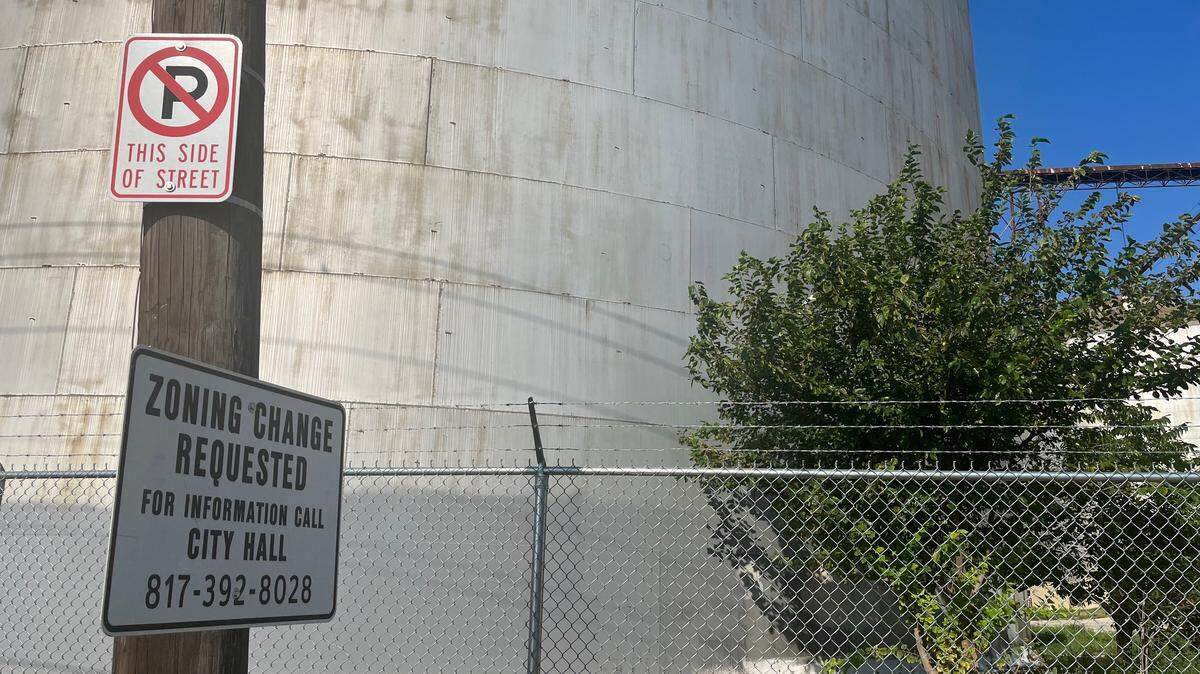
Fort Worth City Council members voted unanimously Tuesday night to deny a permit request for a concrete batch facility on the city’s south side that residents and others had raised health and safety concerns about.
2000 Main Street LLC submitted a permit request to build a concrete batch facility on an eight-acre site at 2000 S. Main St., east of Hemphill Street. The site is zoned as medium industrial and does not allow for a concrete batch plant.
The permit described how the property would use an electrically operated system that would be enclosed in a steel silo. It would have a system to remove particulate matter, like dust, from emissions, the request said.
During a Fort Worth Zoning Commission meeting on Aug. 13, Grant Palmer, co-owner of the company, said they bought the property in July 2024. The company has since placed a fence around the property, cleaned up trash and debris, helped reduce crime in the area by working with Fort Worth police, and created a mini-task force to work with neighborhoods to create a safer environment, Palmer said. Even so, the zoning commission voted unanimously against recommending approval for the permit request./
Council member Jeanette Martinez, whose district is where the concrete batch resides, said during Tuesday’s meeting that she was concerned about the increase in traffic impeding access to JPS Health Network and environmental concerns that could contribute to an increase in respiratory issues. She voted to uphold staff’s and zoning commission’s recommendation to deny the permit.
“Simply put, a concrete batch plant is not appropriate and should not be allowed so close to residential,” Martinez said.
Palmer said since the zoning commission in August they have accommodated every request and worked with residents on their concerns. The accommodations included dust mitigation by screening the property, additional EPA filtration, dual dust collection, abiding by all Texas Commission on Environmental Quality requirements and reduced truck traffic through the neighborhoods.
Multiple employees of the company such as Leroy Castillo attended to provide their support for the permit change. Castillo praised the culture that empowers workers to build a better future.
“This job has been a true game-changer for me and my family, especially after years of bouncing between unstable, low paying positions that better keep the bills paid here, the wages are competitive and reliable, enabling me to provide confidently for my household and finally feel some financial stability,” Castillo said.
Razaq Badamosi, vice president and chief quality officer at JPS Health Network, was opposed to the permit change. Badamosi questioned whether the air-filtration systems in their hospitals could withstand the dust.
“These filters are high efficiency, and when you have a batch with all of the dust generation in the area, these will lead to increase burden on the hospital and hospitals where really failure is not an option,” Badamosi said. “If this system fails it’s really consequential to our patients in the hospital.”
Angela Blochowicz is the president of Jennings-May St. Louis Neighborhood Association. She opposed the permit change because it endangers the neighborhood and risk the quality of life for residents.
“Grant Palmer has stated he is willing to work on research data with affected parties, safeguards and proper language for resubmission,” Blochowicz said. “But please understand that there is no way to prove this facility is safe without running it for months or even years, still making us the collateral damage in someone else's industrial trial, and we refuse to be the experimental test subjects and so should you. “
This story was originally published September 16, 2025 at 11:04 PM.