She was a trailblazing high school principal. Here’s how Fort Worth honors her
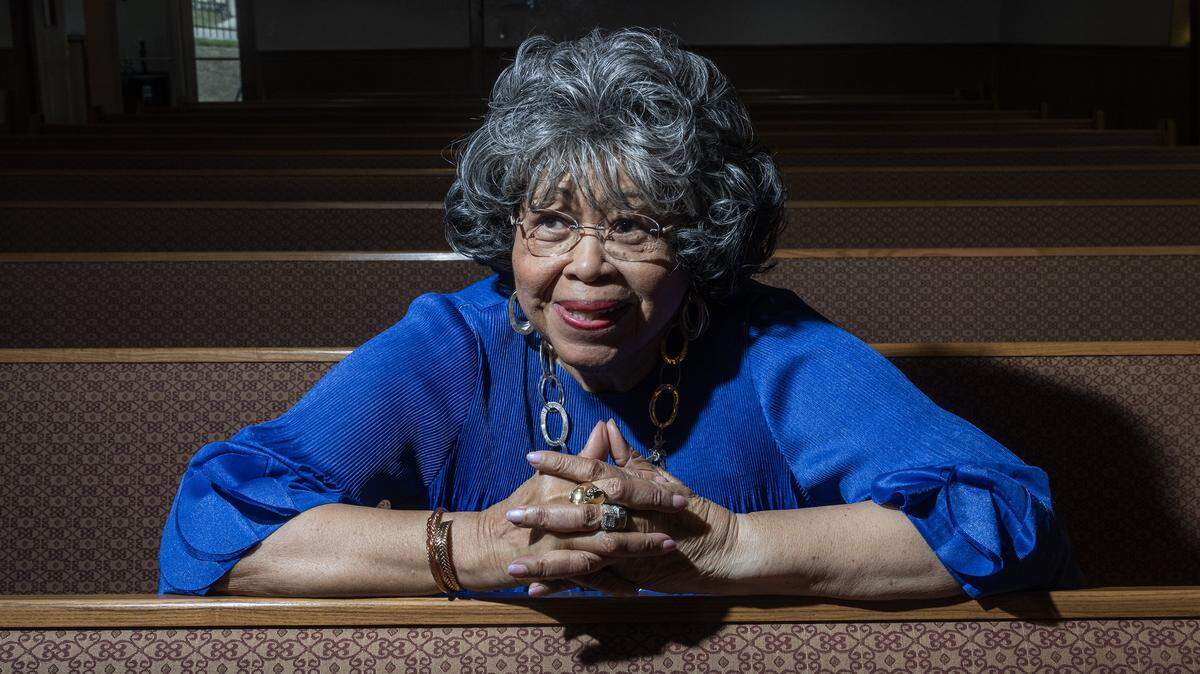
Shirley Knox Benton uses two key references when she’s asked to sum up the driving forces in her life. One is an acronym, ACOG, which stands for “A Child of God,” and the other is a Bible verse, Matthew 19:26, “With man this is impossible, but with God all things are possible.”
Both remind her that when you walk with God everything in your life will fall into place.
Benton repeated those driving forces in front of the Fort Worth City Council recently when she was recognized for her contributions to the city.
Benton spent 50 years in education in Texas and was the first African American female principal of Paul Laurence Dunbar High School in east Fort Worth and the first African-American female to hold the title of Texas’ High School Principal of the Year in 2001.
The City Council approved honoring Benton with toppers on street signs near Dunbar High School. Her family, members of her church, and former students at Dunbar were in the audience to celebrate with her.
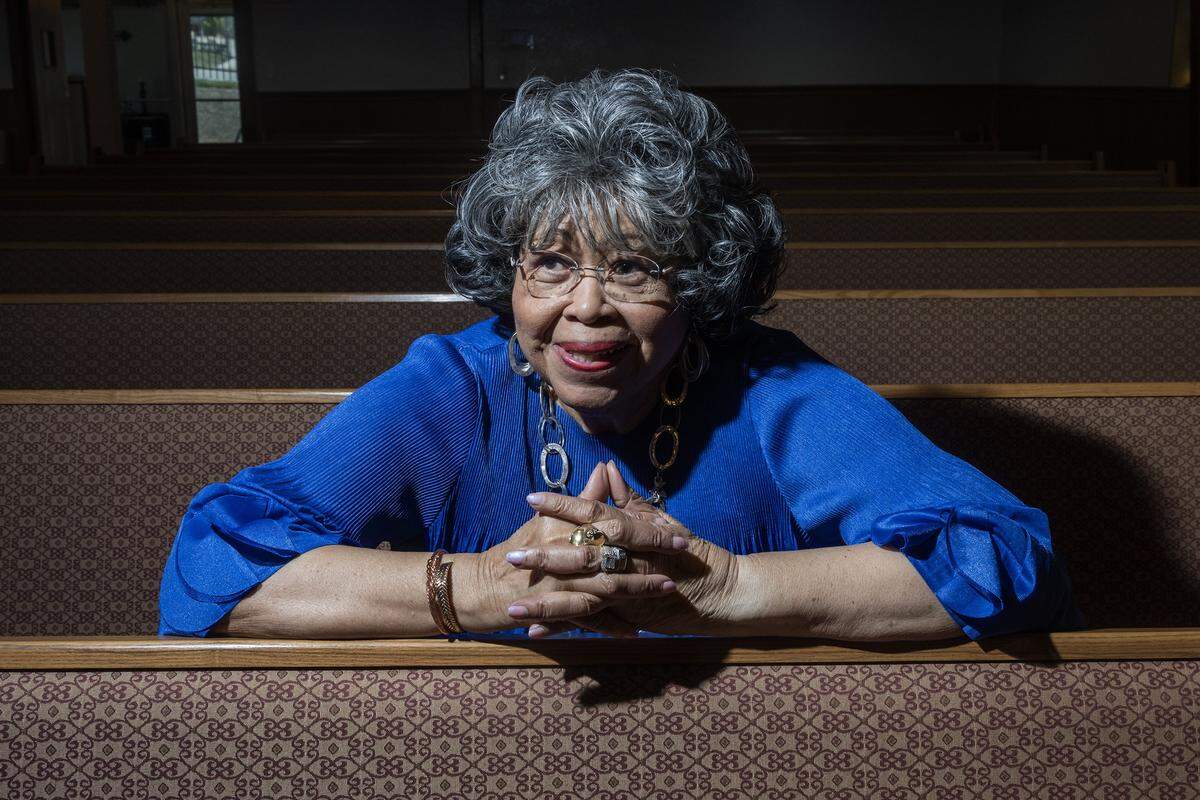
City Councilwoman Deborah Peoples pulled the item recognizing Benton from the council’s consent agenda to ensure it received the proper attention “so that we could honor an extraordinary, amazing living legend.”
Benton spent 45 years in public school education and five years as a consultant and state monitor over low-performing schools.
The street sign toppers to recognize Benton will be at the intersections of Ramey Avenue and Robert Hughes Street and Fitzhugh Avenue and Robert Hughes Street east of Dunbar High School.
A ceremonial unveiling of the sign toppers will take place at 10 a.m. Thursday, Oct. 2, at Tarrant County College Opportunity Center, 5901 Fitzhugh Ave. The signs will be installed later.
Alvin Johnson, former president of the Dunbar High School Alumni Association, said he wrote a letter to City Councilwoman Gyna Bivens earlier this year, who at the time presided over District 5, where the school is located. He asked her to name a street after Benton.
Benton taught Johnson’s son during her years at Dunbar, and Johnson sees Benton as an inspiration whose accomplishments have been overlooked.
“I was so proud to see that it has come into creation, because there’s no person I know that’s more deserving, and she’s the one person who I know that helped balance both academics with athletics,” Johnson said.
Benton read a poem at the city council meeting called, “It couldn’t be done” by Edgar Albert Guest, a poem she and her siblings had to recite during childhood when they said they couldn’t accomplish something. After the poem, she told the crowd: “This is history, somebody said it couldn’t be done, but thank God almighty that it was done and she did it.” Benton received a standing ovation.
A bullhorn and love
Benton was born in Long Branch but grew up in Longview. Her parents died seven months apart when she was 8 years old, and she was adopted by her mother’s sister and her husband in Longview. Before her mother died, she encouraged Benton to pursue music. Benton took piano lessons and graduated from Huston-Tillotson University in Austin with a bachelor of arts in music.
She bounced around a few years in Floydada and the Bryan-College Station area. She taught music until she came to Fort Worth in the early ‘60s. She was a music teacher, counselor, and assistant principal at various schools, including Kirkpatrick, Northside, Southwest, Eastern Hills, and Amon Carter-Riverside High School. She continued her academic achievements with degrees in academic counseling and guidance, supervision, mid-management, a PhD, and a fellowship to Harvard University.
When Dunbar High School was in search of a principal in the early ‘90s, the district wanted someone who lived in the community, who had a heart for the school, and who could handle the school’s athletic prominence, but the district wanted a man, Benton said. It was the hardest of two other school options she was considering, as the test scores were low and, at the time, Fort Worth was nicknamed “Murder Worth” as gangs ruled the streets especially in the nearby Stop Six neighborhood.
She wasn’t intimidated by any of it. “I like a challenge,” she said.
Her expertise, reputation as a respected educator, and care for her students helped her land the position in 1992. She held the position for 12 years.
When she started, her goal was to make sure the teachers and students all bought in to making the school great. She made sure students went to classes instead of hanging outside the school; she weeded out gang members in and outside the school; and she made sure there was a sense of belonging for everyone.
The test scores improved, students had better attendance, and they participated in after-school activities, such as ROTC. Her students compared her to Joe Clark, an educator known for carrying a bullhorn and a bat at Eastside High School in Paterson, New Jersey, who inspired the movie “Lean on Me” starring Morgan Freeman.
“I said I have the bull horn, and I have love in my heart,” Benton said. “I have tough love, and that’s the way it was.”
A legacy of giving it all
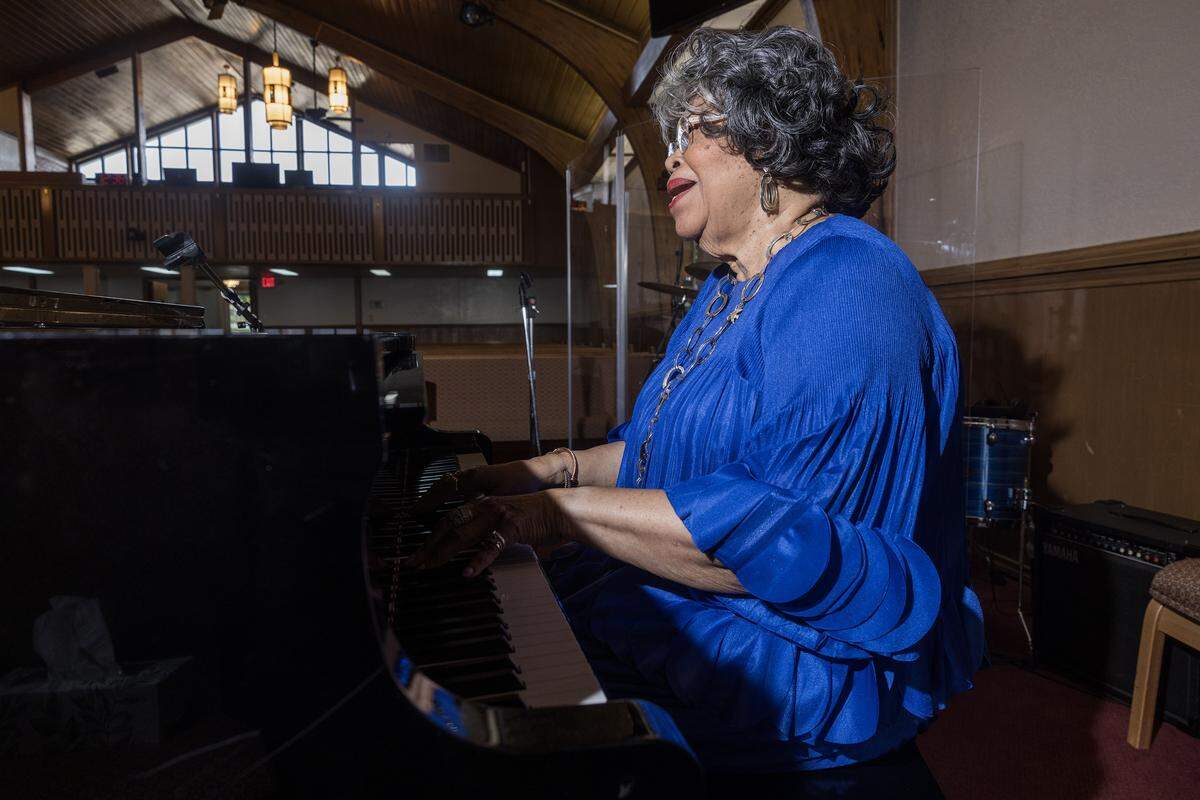
Benton sat at an electronic piano inside of Shiloh Missionary Baptist Church on a recent Tuesday morning and sang a chorus of the song “ Oh How I Love Jesus.”
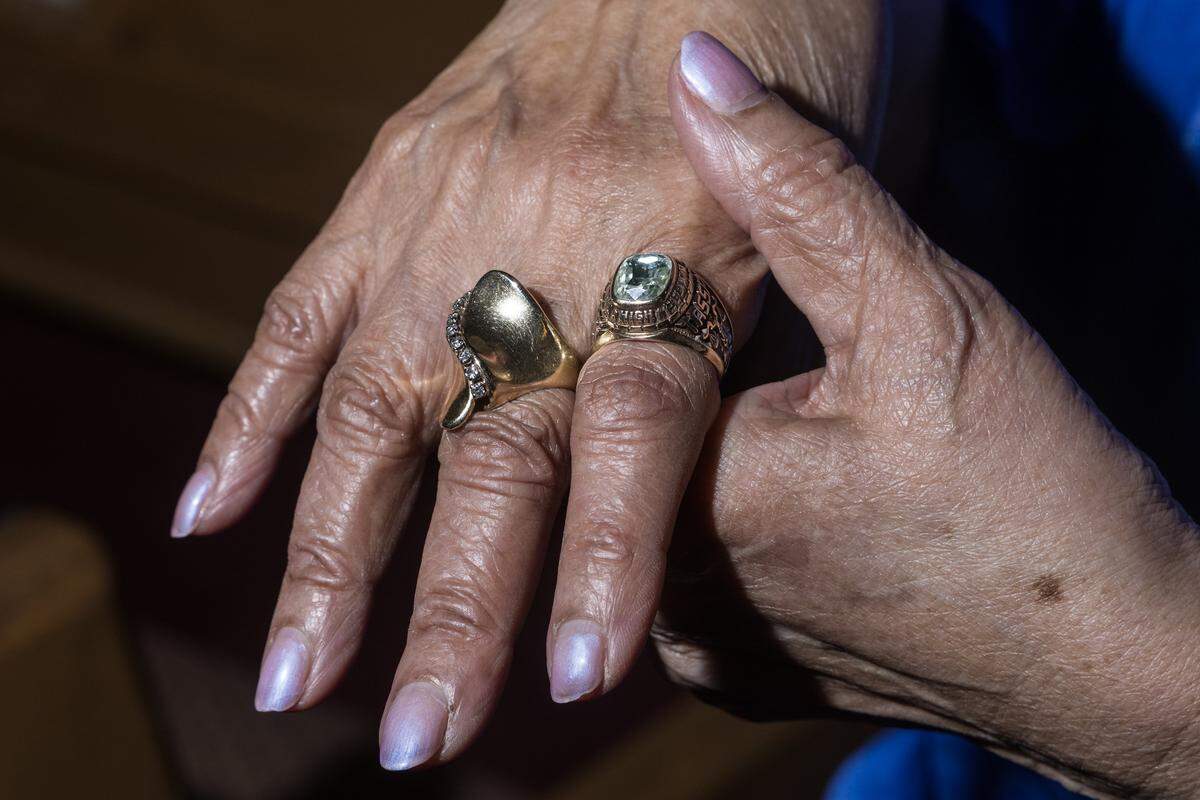
She wore a blue dress, a gold loop necklace, and gold rings. She customized one of the rings for winning High School Principal of the Year in 2001 and another for receiving the Reader’s Digest American Hero in Education Award in 1996 for “turning a troubled school around.”
She has been a member of the church for 60 of the 122 years it has served the north side neighborhood and serves as its historian.
The legacy she wants to leave is that she gave it her all — for her community, her family, and the children she taught throughout Texas.
“I took them all like they were my own children,” Benton said.
This story was originally published September 22, 2025 at 4:31 AM.