
Joining forces to support the arts in Fort Worth. Here’s how it began.
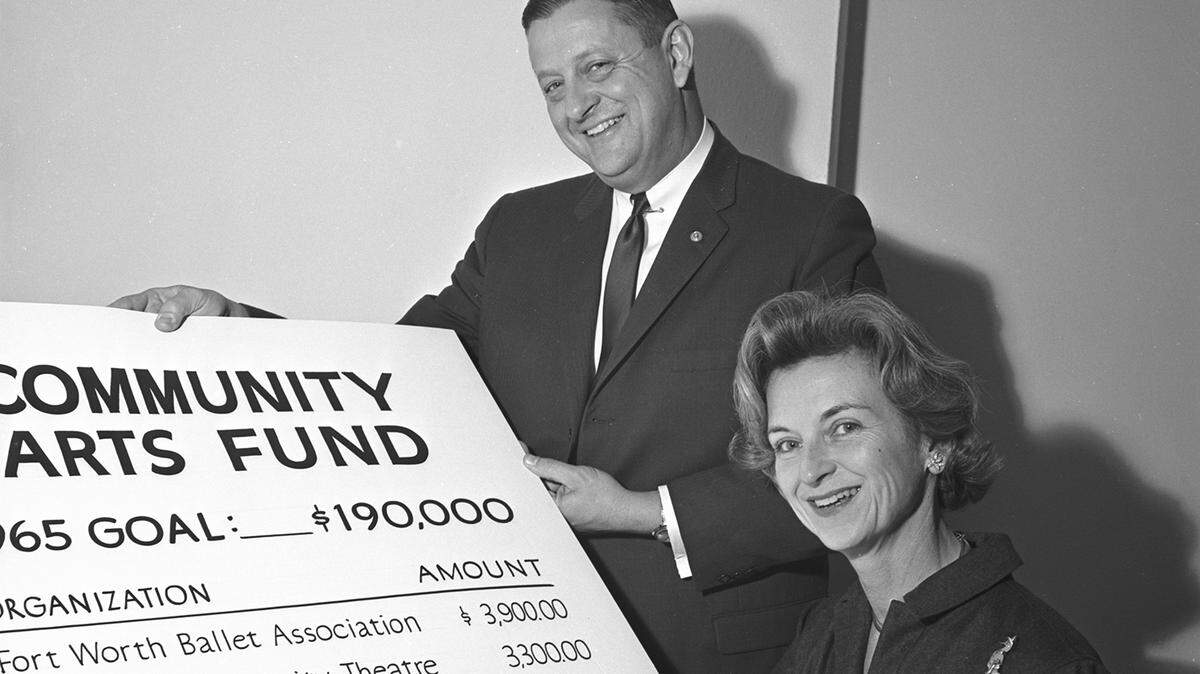
The Fort Worth Arts Council, established in 1963, served as a catalyst to the foundation of the arts and culture scene of Fort Worth.
The Council, known today as Arts Fort Worth, was formed after a survey was conducted by the Junior League of Fort Worth to “study the local arts situation.” Its members met with local businessmen, who concurred in the need for cultural growth in Fort Worth.
The formation of an arts council was proposed so that one cohesive group could work toward elevating the arts by undertaking activities it could accomplish more effectively and economically than organizations acting independently.
Fort Worth civic and cultural leader Mrs. J. Lee Johnson III (Ruth Carter Stevenson) served as the council’s first president. The council functioned as a permanent organization for the greater Fort Worth area, aiming to facilitate communication between the various groups fostering the arts, which comprised 11 performing arts groups at the time.
By consolidating and presenting a unified effort, the council also sought to streamline fundraising activities. As a result, it developed one unified fundraising campaign: The Community Arts Fund.
The first annual Community Arts Fund launched in February 1964 to benefit six of the 11 member groups of the Arts Council: the Fort Worth Ballet Association, Fort Worth Community Theater, Fort Worth Opera Association, Fort Worth Symphony Orchestra Association, Texas Boys’ Choir, and the Van Cliburn International Piano Competition.
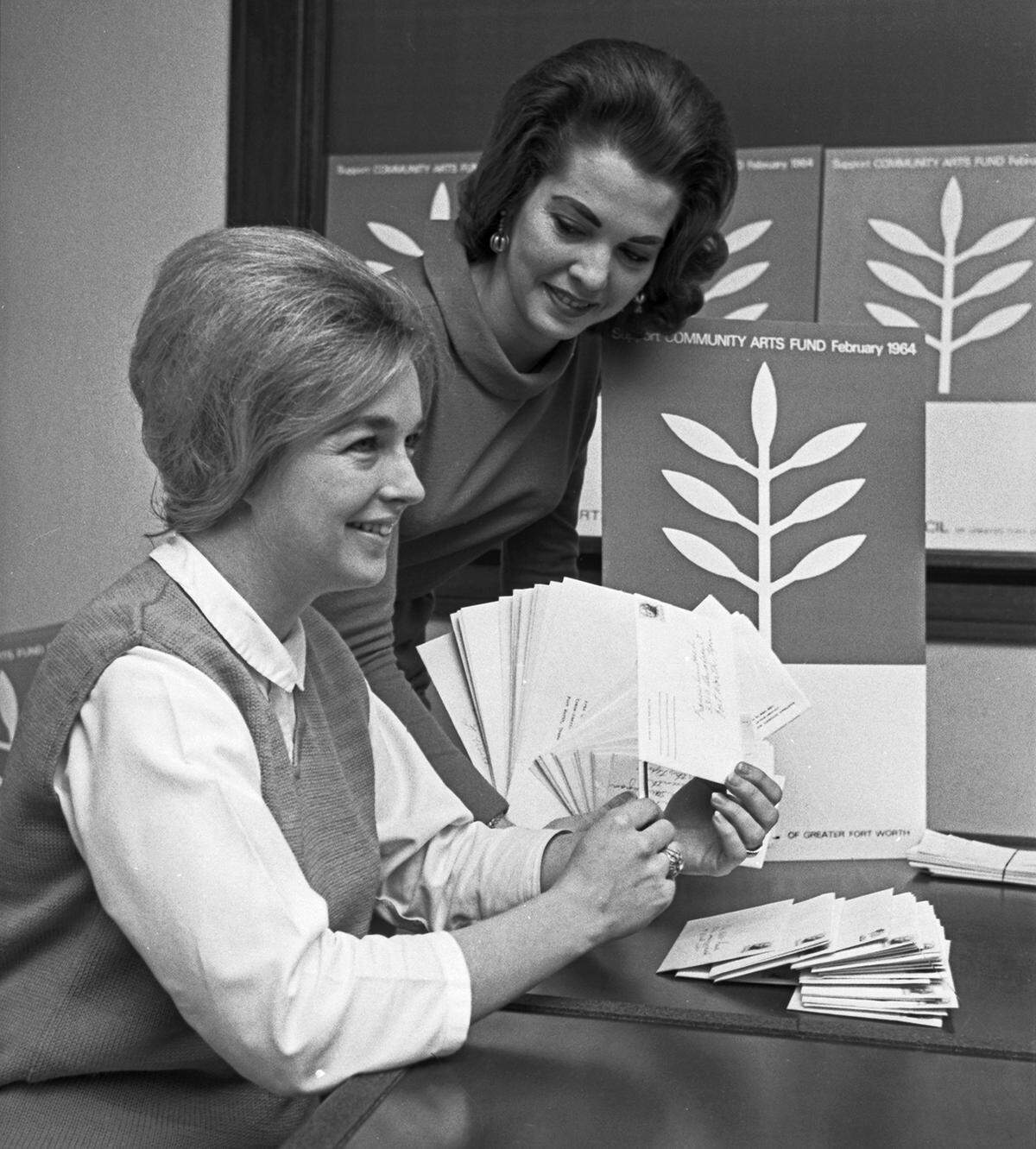
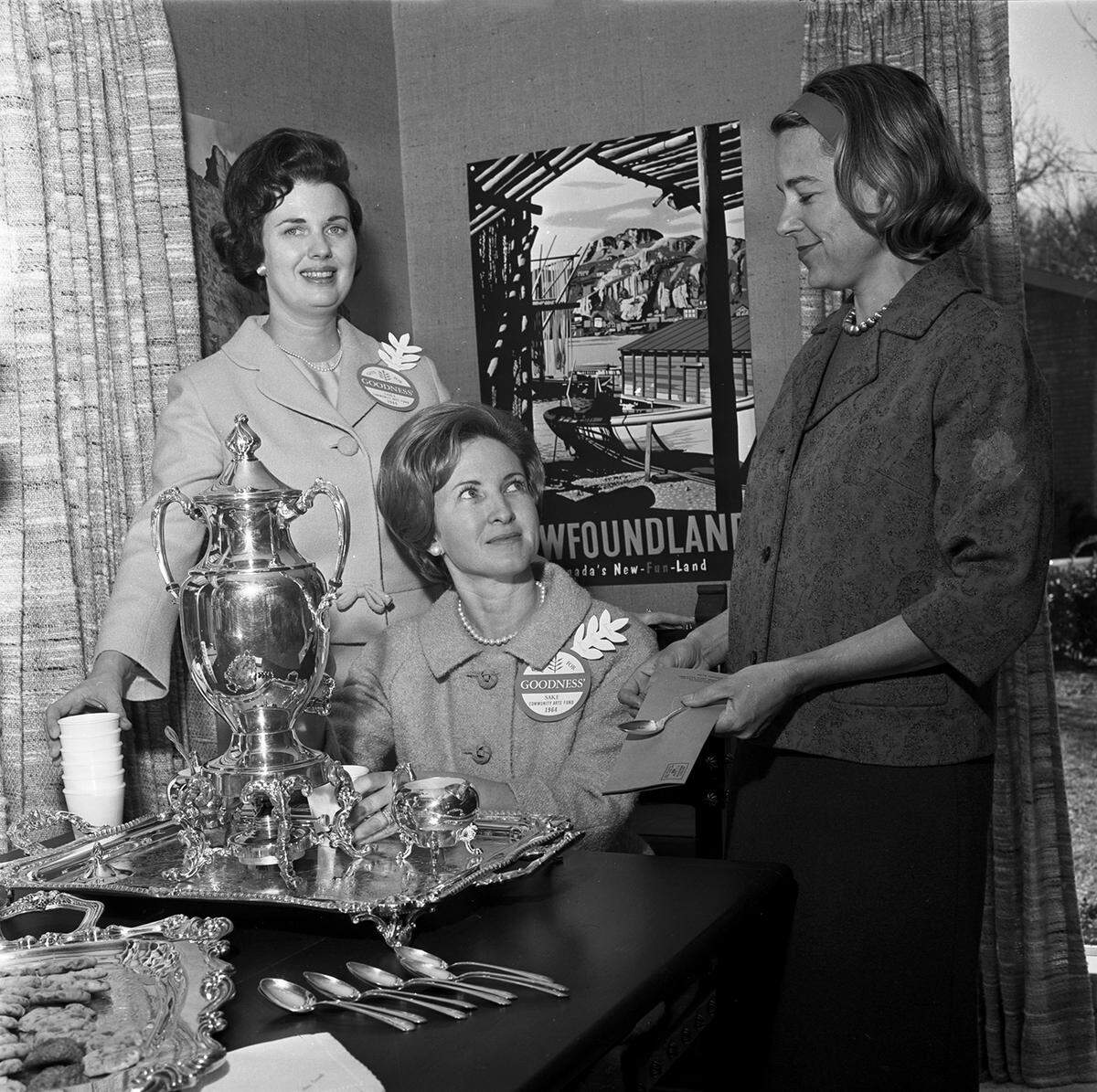
“Give, for Goodness’ Sake” was the slogan for the Community Arts Fund. An ambitious $250,000 goal was set, and the Arts Council planned to raise this amount to cover operating funds for the six organizations for 18 months, set up a reserve, and eliminate previous debts.
In support of the Community Arts Fund, a few hundred volunteers helped by hosting parties, musical benefits, fashion shows, art festivals, and “Culture Caravan” tours to different museums in Fort Worth. Fund organizers also planned events with entertainers from council-supported organizations.
The Star-Telegram published a series of viewpoints from citizens of diverse backgrounds in education, business, banking, and science, with each reflecting on how their fields benefited from the arts. Dr. W. O. Milligan, vice chancellor for research at Texas Christian University, posited that a city thriving with cultural opportunity was necessary to attract top research scientists to his program.
Dr. Law Sone, president of Texas Wesleyan College, wrote, “A community is as rich as its arts ... It is a well-known fact that a college not only enhances the cultural values of the surrounding area; it also thrives best in a city that supports, encourages and promotes a well-balanced program of performing and exhibiting arts.”
Arts foster business and development
Campaign leaders emphasized the arts as a valuable asset in attracting new business and development to any city and should be supported by the business community. Star-Telegram art critic James J. Meeker also endorsed the fund from a business perspective: “Economically speaking, a city without an active cultural program is usually a city which lacks drive and progress. Industry goes where its employees will find an ample selection of entertainment outlet as well as excellent facilities.”
Persuaded by this argument, prominent local corporations and civic groups began pledging their commitment to boost the arts in Fort Worth. The Fort Worth Chamber of Commerce pitched in and funded the installation of 48 billboards across the greater Fort Worth area to promote the Community Arts Fund.
By November 1964, only 73% of the fund’s total goal of $250,000 was raised, but that didn’t discourage organizers from restarting fundraising efforts the following year.
The Community Arts Fund continued to grow, reshaping arts and culture in Fort Worth for decades beyond its establishment in 1964. The Fort Worth Arts Council never strayed from its mission to make Fort Worth’s cultural community an internationally recognized powerhouse in the world of art.
Nationwide effort to promote the arts
In 1965, a National Foundation on the Arts and the Humanities was established, and Fort Worth was a significant contributor to this broader nationwide effort to promote progress and scholarship in the arts and humanities in the United States.
In the fund’s second year, the Fort Worth Jaycees conducted street corner solicitation and distributed contribution containers to businesses around downtown Fort Worth. A Youth March for the Arts was also organized for the fund’s final week of fundraising, which brought in $1,750. Ultimately, the fund’s goal that year of $190,000 was still unattainable, reaching 88% of its targeted amount.
In 1966, donor categories were established to help boost donations and meet the fund’s $200,000 goal for the year. Those who contributed $1,000 or more, in its highest category, were classified as “Guarantor of the Arts,” and donors at this level received all benefits from lower donor categories in addition to color portraits by Gittings Neiman-Marcus to be displayed in the lobbies of Scott Theater, Fort Worth Art Center, and Will Rogers at programs of the funded organizations.
Roger L. Stevens, art adviser to President Lyndon B. Johnson and chairman of the National Endowment for the Arts and National Council on the Arts, visited Fort Worth to help promote the 1966 Community Arts Fund. He served as a keynote speaker for the fund’s annual kickoff meeting, speaking on the meaning and purpose of the arts, the role of the United States government in support of the arts, and the need to stimulate and encourage the arts throughout the country.
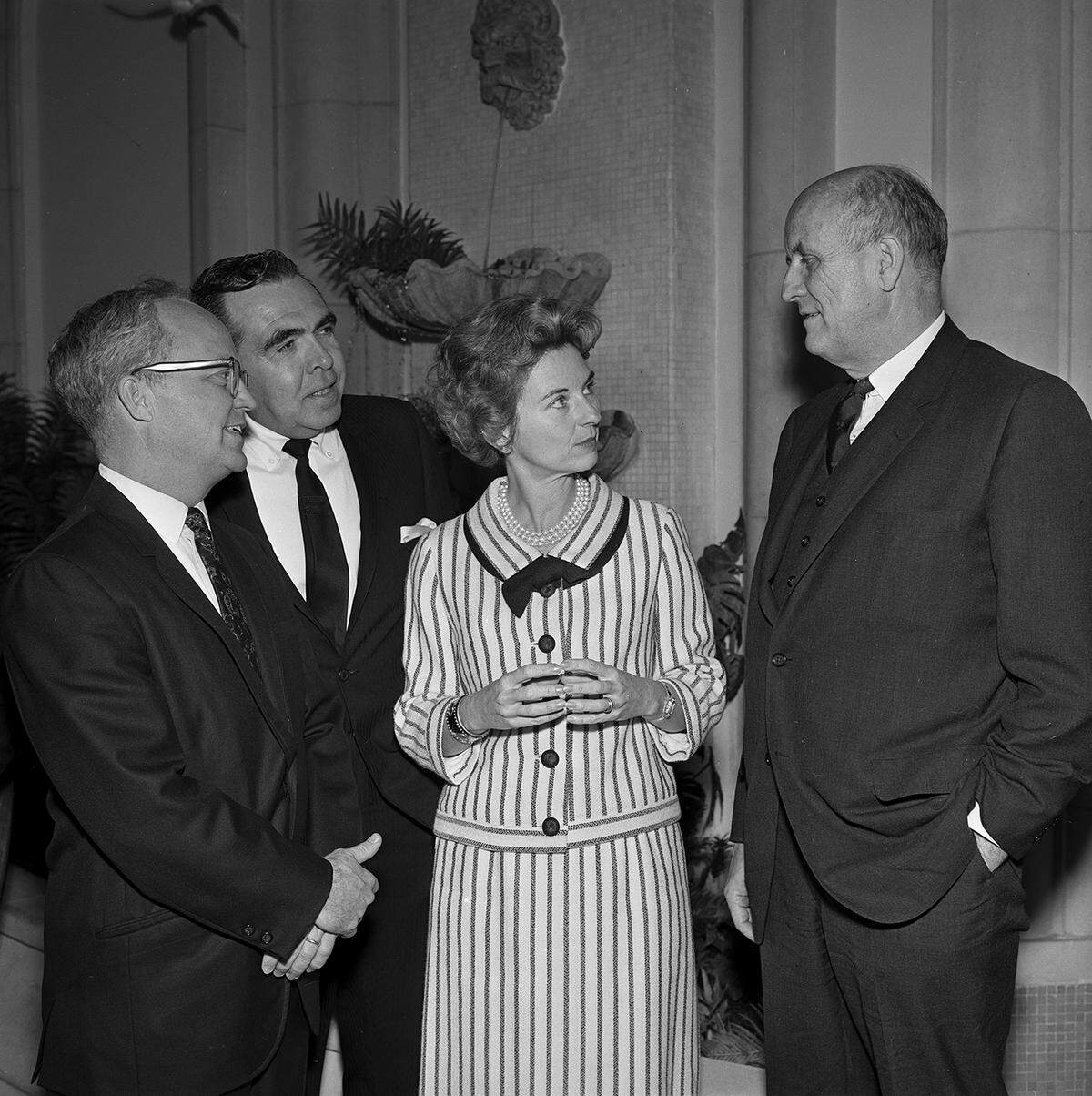
While community organizers remained committed to its mission, the fund was just shy of meeting its goal each year during its annual drive. That was until 1969 when the fund was re-branded as the “Community Pride Campaign” the year prior and had a new campaign leader. In just three weeks, an impressive $243,000 was raised in the campaign led by Ogden Kelly Shannon III. Shannon was also responsible for persuading O. C. and Elizabeth Armstrong to donate a $100,000 gift to the campaign over a five-year period, the largest single contribution ever made to the performing arts in Fort Worth until that point.
So much of Fort Worth’s arts and culture was shaped by the formative years of the Fort Worth Arts Council — and its transformational fundraising activities — and continues to thrive and contribute to the economic growth of the city to this day.
Sara Pezzoni works toward promoting greater access to Fort Worth Star-Telegram archival collection materials as a staff member of the Special Collections department at the University of Texas at Arlington Libraries.