Southeast Fort Worth community drives ‘miracle’ Masonic orphanage redevelopment
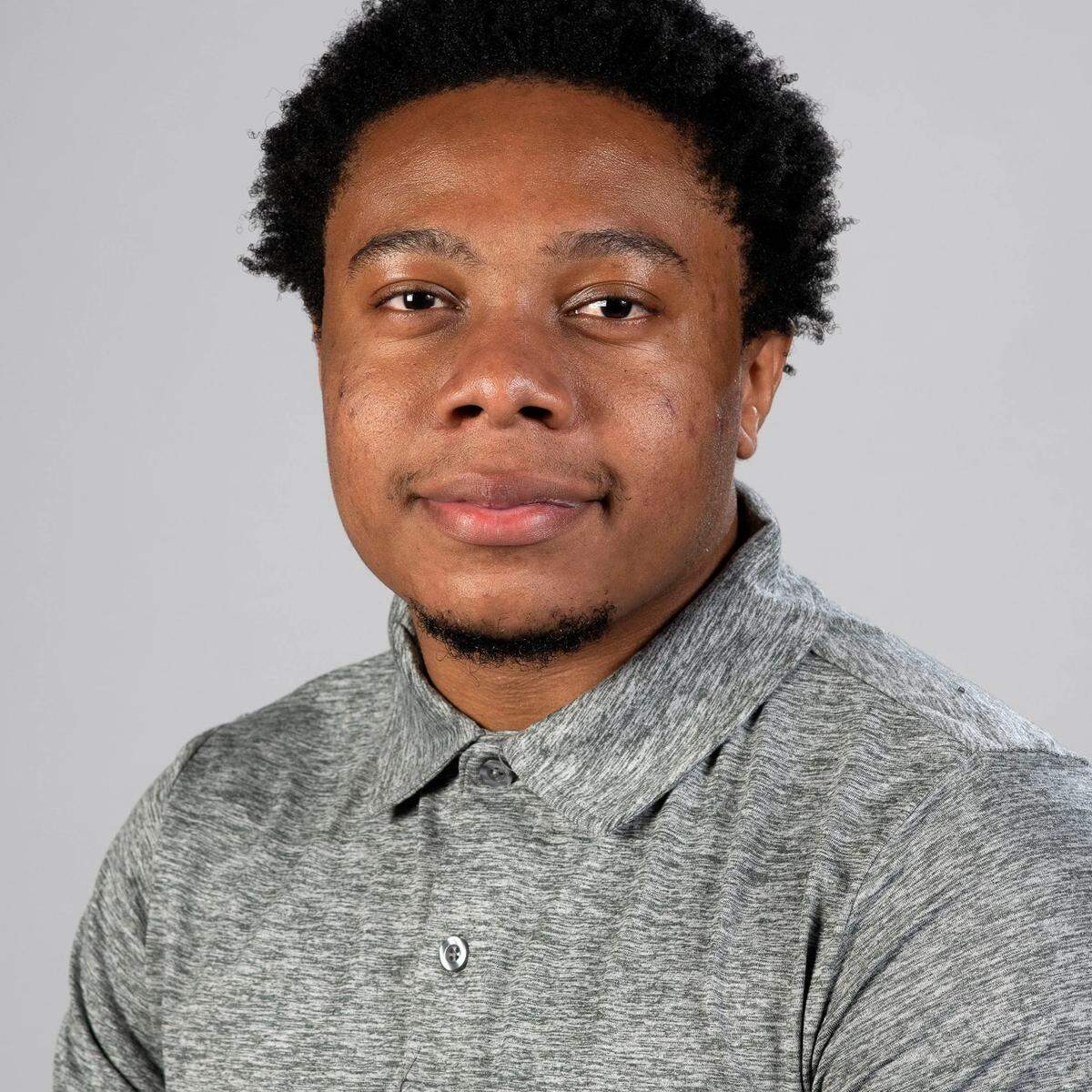
The Rev. Carl Pointer sits on a couch in the William M. McDonald YMCA as people of all ages and ethnicity work out behind him.
Pointer reminisces about how the community around him in southeast Fort Worth has emerged. The YMCA itself — which opened in 2019 at 2701 Moresby St. — is part of that development story.
The land in the area was originally owned by the Masonic Home and School of Texas, a home for widows and orphans of Masons, along U.S. 287 near East Berry Street, between Vaughn and Mitchell boulevards.
Pointer, 73, and a Rolling Hills resident since 1979, says the orphanage was in an area without a name or neighborhood to claim it. A rural area where mainly white and Hispanic people lived was separated from surrounding neighborhoods and had its own cattle and dairy, and produced its own food.
When the 200 acres of land was sold by the Masons in 2006 and developers were ready to build on it, Pointer remembers the community wanted input. There had been no supermarkets, department stores, or any major development in decades.
United Communities, a coalition of neighborhoods advocating for the area, set its sights on a Walmart as one of the first major developments. It collected 4,000 signatures, conducted a survey on median incomes and the number of people who already shopped at Walmart within a five-mile radius of the land, and sent letters to Walmart asking the company to visit. Pointer laughed, recalling when they put a full-page advertisement in an Arkansas newspaper, where Walmart headquarters is located, inviting the company to come to southeast Fort Worth.
In 2013, a Walmart opened to anchor the 67-acre Renaissance Square shopping center, which includes a Marshalls, McDonald’s, T-Mobile and other stores. More development, such as a school and the YMCA, has occurred, and affordable homes and town homes are scheduled to be built this year.
Few believed development could occur in the area, but Pointer said members of the community believed in each other. Today, a master plan exists to redevelop what was formally known as the Mason Heights neighborhood into Renaissance Heights. The narrative of an area that once would have focused on crime is being rewritten to something that can instill pride in the area for residents.
“They don’t know about the miracle of southeast Fort Worth,” Pointer said.
‘Building a future’ on former Masonic Home land
The Masonic Home and School of Texas was built in 1899. It stayed open until 2005, and the next year developer Michael Mallick bought all 200 acres from the Masonic Grand Lodge of Texas. Mallick then sold the land in 2007 to FW Mason Heights L.P., which was headed by the late developer Happy Baggett, and other investors. The plan was to have homes, offices, shopping and restaurants.
Pointer, a member of the Glencrest Civic League, met with developers and other neighborhood associations in the area, including the Mitchell Boulevard Neighborhood Association, and the groups eventually formed United Communities. It consisted of community leaders, residents, and others to provide a shared vision of the resources and infrastructure wanted by people in the area.
United Communities is pro-development but wanted deed restrictions to prevent the opening of liquor stores, pawn shops, and tattoo shops. The organization opposes gentrification and buildings that aren’t sustainable and environmentally friendly, and it wants to make sure the needs of everyone in the community are met.
In addition to the Walmart and YMCA, other development over the years has included the Uplift Mighty Preparatory School and an ACH Child and Family Services headquarters.
This increase in economic growth led the way for the creation of The Renaissance Heights Foundation, an organization that acts as the community quarterback to work with all partners and be the steward for the organizations’ shared vision of improving the quality of life for residents, community members, and businesses in southeast Fort Worth.
The coalition adopted the purpose built communities model, which relies on collaboration between the nonprofit, Renaissance Heights Foundation, and community leaders to transform neighborhoods and build upward mobility through mixed-income housing, cradle-to-college education opportunities, community health and wellness, and economic vitality, according to the Purpose Built Communities website.
Each organization or business within the 200 acres works to support the community by such things as building affordable homes, eliminating concentrations of poverty, preventing displacement, and improving health and wellness services and resources.
“We’re not just revitalizing a neighborhood, we’re building a future,” said Kenny Mosley, executive director of the Renaissance Heights Foundation.
ACH Child and Family Services finds a home
The Friday afternoon sun fell onto the backs of Wayne Carson and Mosley on the campus of ACH Child and Family Services during a recent tour of the campus. Carson is the CEO of ACH.
The 22-acre campus at 3712 Wichita St. is where the Masonic Home and School of Texas stood. The orphanage also had a school and a hospital, Carson said.
The buildings were donated to the ACH and, in most cases, only required renovation, rather than reconstruction. The original dormitories, now called the Rees-Jones Family Residential Building, are used to house women and their families who have experienced domestic violence and young men who have aged out of foster care.
The Jo and Holt Hickman Center building still has its original, wavy 100-year-old windows. Inside, a sign pointed to the main ballroom area, where a reunion was planned the next day for people who lived in the home. It’s an event held every other year. Many come back to tell stories of sneaking out of dorms and other mischievous activities they participated in as children, Carson said, laughing. The same building is where Rusty Russell, the famed coach played by Luke Wilson in the movie “12 Mighty Orphans,” stayed with his wife and children, Carson pointed out.
ACH Child and Family Services started to gradually move into its Wichita Street campus in 2010 from 1425 Summit Ave. looking for property to relocate its services. Other development, such as the Walmart, had yet to occur, but ACH was attracted to the green space and the ability to advance its mission and vision as part of a community, Carson said.
The organization served over 30,000 people last year with services ranging from crisis intervention, to foster care, to counseling, to transitional housing. ACH was one of the first organizations to settle in the area and wanted to make a lasting impact, Carson said.
“The idea that we could also help advance this idea of doing something unique with this 200 acres, and we were trying to build a place where people could not just live here, but feel like this was their place and their community,” Carson said. “It was really exciting and we thought we could be a part of that.”
Housing for families, seniors
Columbia Residential, a development company, is working on a three-phase housing development for families and senior residents. Each phase will take place on one 27-acre space out of the 200 acre site.
The first phase, a 140-unit apartment complex called Columbia Renaissance Square, was completed in 2017 at 3801 W.G. Daniels Drive, and the second phase, including 120 units of senior housing apartments named Columbia Renaissance Square Senior Residences, was completed in 2020 at 2801 Moresby St.
The final phase, which has not been named, is planned to include 100 units of affordable multi-family apartments, including 16 units dedicated to permanent supportive housing for individuals transitioning out of homelessness, at 2757 Moresby St. That phase is on track to break ground in September.
The community will include a mix of incomes, with units set aside for residents who make less than 30 percent and up to 80 percent of the area median family income.
The Renaissance Heights Foundation has also partnered with Housing Channel, a housing nonprofit organization, which purchased 27 acres of vacant land in September 2023 adjacent to Happy Park to develop over 230 single-family homes. Housing Channel will partner with the Fort Worth Community Land Trust to implement a land trust model for the homes. In such a model, a family or individual purchases a home, but the land trust retains ownership of the ground on which the home is built, effectively reducing the price of the home. Homeowners agree that if they later sell their homes, they will do so at a restricted price to keep the home affordable.
Pointer looks back at all the work United Communities has done and remembers how people didn’t think development guided by the vision of residents was possible. The land and former orphanage have become a place of possibilities guided by faith and hope, Pointer said.
“This was a blank slate,” Pointer said. “We had the chance to create what we wanted to create in this space.”
This story was originally published July 17, 2025 at 4:45 AM.