
Tireless advocate for the education of Black children is forgotten in Fort Worth history
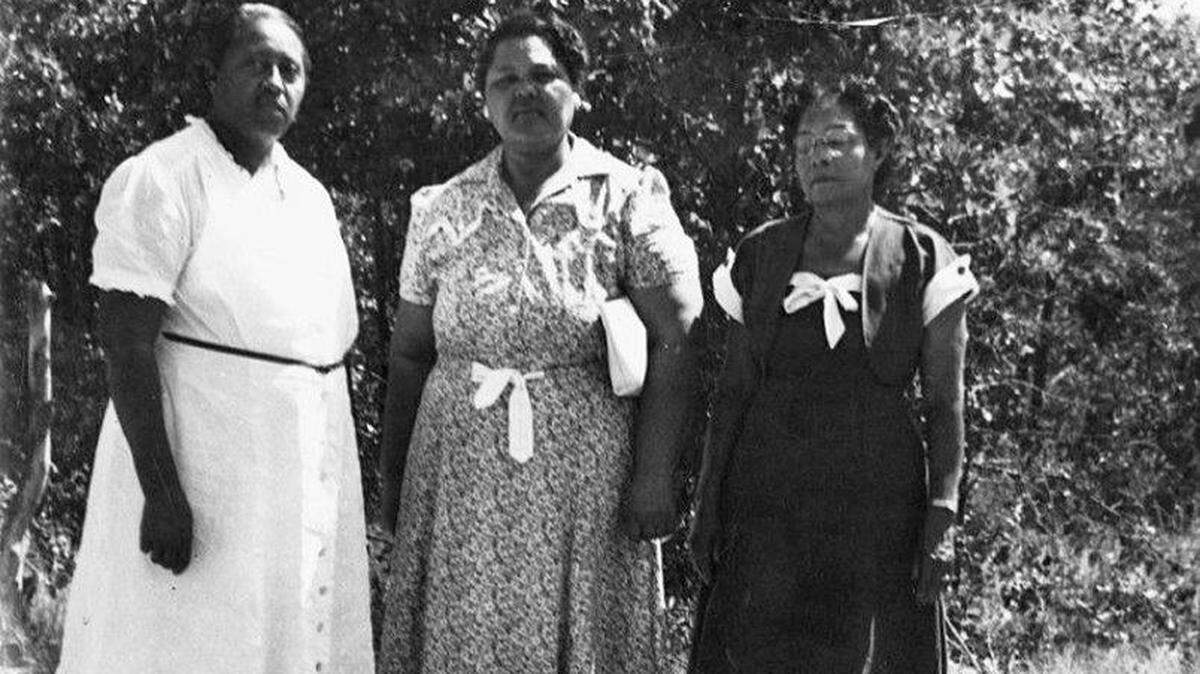
Few Black women of Fort Worth have made history. That’s not because they didn’t have what it takes but because the deck was stacked against them. Opal Lee and Hazel Harvey Peace rise to the top as exceptions. There is another name that deserves inclusion on that short list: Willa S. Benton. Her platform was education.
Her early life is largely a cipher. She was born either in 1876, 1881, 1884, 1886, or 1888 depending on what Census you consult. She was probably born in Gonzales County, Texas, but that’s also unclear. Everybody seems to agree that her parents were David and Molly Mays Polk. They named her Willa Susie.
When exactly Benton came to Fort Worth is unknown. She may have had a first marriage to someone named Clyde McKinney, but her lifetime marriage was to George Rose Benton Sr., perhaps in 1899. For the rest of her life, she went by Willa S. Benton. By 1907, she and George were living in Fort Worth at 730 White St., attending St. Andrews Methodist Church, a historically Black church on the near South Side that remained her church home for the next 59 years. Between 1900 and 1915 she bore eight children, six of whom grew to adulthood, four girls and two boys.
An advocate for Black children
It was in her public life that Benton blossomed. She was an early advocate of education for Black children, following in the footsteps of her more famous fellow teachers, H.H. Butler and I.M. Terrell. In the early 20th century, education in Fort Worth was strictly segregated, separate but hardly equal. Black children were not expected to go beyond the eighth grade, if that. A high school for Black children was not created until 1909 – what later became I.M. Terrell. Schools for Black children lacked indoor plumbing, water fountains, kitchens and lunchrooms.
In the spring of 1917, Benton made her first splash by organizing a parents-teachers organization for Black people, which she named the “Mothers’ Club.” Led by Benton, the group took on the new James E. Guinn Elementary (grades 1-9) as its project. The ladies raised the money to pay off the school’s piano, but, more importantly, they prepared “warm lunches” for the children. Since the school had no eating or preparation area, she and Ella Brooks prepared the lunches in their homes and took them to school every day.
The group also took on the high school for Black children as a project, urging the Fort Worth school board to construct a brick building, gravel the school grounds, and put in an outdoor drinking fountain. The new brick school included a lunchroom and kitchen, and the Mothers’ Club hired a woman to do the cooking. They bought the food and paid her $6 a week. Eventually the school board took over the operation of the lunchroom.
All that was just for starters. Benton organized Mothers’ Clubs for all the school for Black children in the city and brought them together in a Council. By that time, they had changed the name to “Parent-Teacher Clubs.” Benton was elected president of the Council.
The next step was to take the organization statewide. In 1920, she organized a State Congress of PTAs for Black parents, serving as its president for the next seven years. In 1938, the PTAs of Texas met in Fort Worth and held a ceremony to plant an oak tree on the I.M. Terrell campus honoring Benton.
Her commitment to education extended to all ages. In 1922, she opened Fort Worth’s first nursery school for Black children – in her home. She also found time to return to school herself, working toward a degree at North Texas State Teachers College in Denton. In May 1930, she received her bachelor of arts degree.
Her talent was bringing people together. In 1919, she and Manet Harrison Fowler convened the city’s Church Missionary Workers Council, the various PTAs and Black ministers at Mount Zion Baptist Church. Their purpose was to raise funds to create a home for delinquent girls. They succeeded, and the result opened within a year on Peter Smith Street. Because the city’s public venues like Will Rogers and the North Side Coliseum were severely restricted, most of the gatherings she organized were in church meeting halls.
In 1950, Benton got Texas Gov. Allen Shivers to proclaim George Washington Carver Day. Carver, a nationally celebrated Black scientist and educator, had died in 1943. The governor’s proclamation “called attention of all Texans to the inspiring story of Carver’s life and accomplishments.” Benton organized the Fort Worth event that day at Mt. Olive Baptist Church with a lineup of distinguished speakers and a musical program by the I.M. Terrell chorus.
Cemetery association formed
Still going strong in 1953 in her 60s, Benton organized the New Trinity Cemetery Association to maintain Fort Worth’s second burial ground for Black people. As usual, it began with a fund-raising drive to hire a full-time caretaker to keep the grounds “looking presentable.” Naturally, she was elected president of the association.
Benton had good reason for taking on the cemetery. Her husband George had died in July 1945 and was buried in New Trinity. (He got a nice obituary in the Star-Telegram and has a granite marker.) His employment with the city Sanitary Department had allowed them to purchase a better home on Stewart Street.
Benton’s proudest achievement was organizing the Achievement Club for Black people in October 1949. Its purpose was to award a $100 college scholarship every year to a worthy I.M. Terrell graduate – for boys only. The requirements were simple: good grades and good citizenship. The winner was selected by the school’s principal and teachers. Every year, she had to launch a new scholarship drive to raise the money.
Benton’s achievements and writing talent brought her national recognition. For 15 years (1940-55), she wrote a regular column for the Pittsburgh Courier, a Black newspaper that carried news from all over the country and was delivered by Black children in Fort Worth. It was the equivalent of the New York Times or Wall Street Journal for Black people, with a name that did not begin to describe its national circulation. Its motto was, “There are plenty of white people who would appreciate our side of the story ... if they knew it.” Benton’s columns represent a virtual history of Fort Worth’s Black community during those years. She recorded notable births, deaths, graduations, civic events, and many more things.
Benton also wrote for Ebony Magazine, founded by John L. Johnson in 1945 as a publication focused on Black culture and entertainment. She agreed with its mission of “mirroring the happier side” of Black life.
Fire nearly took Benton’s life
In 1955, disaster almost overtook Benton and her grandson. While they were asleep in her home at 1434 Stewart, a fire broke out. It was only thanks to the barking of her dog Blondie that they were awakened and got out of the house in time. Recognizing a public relations coup when it saw one, the Quaker Oats Ken-L Division honored Blondie in an advertising campaign.
Even the indefatigable Benton slowed down in her later years, afflicted with a heart condition. She still had the drive but not the energy to work on her favorite causes. After a lengthy illness, she died in Fort Worth on Nov. 23, 1966. She was buried beside George in New Trinity Cemetery, but her grave is unmarked. And no newspaper anywhere in the country carried her obituary. She had ceased to exist not just in life but also in the historical record in the years to follow. There was no conspiracy of silence, just the public’s short memory.
It is particularly surprising that Fort Worth has virtually forgotten her, considering all the things she accomplished and all the people she knew. During her long lifetime she was a Forrest Gump-like character, rubbing shoulders with the famous and the powerful, including Marian Anderson, Nat King Cole, Ella Fitzgerald, Gov. Allen Shivers, and Dr. Riley Ransom. And she was on a first-name basis with Marvin and Obie Leonard and Mayors H.C. Meacham (1925-27) and T.A. McCann (1957-61). She knew personally the two Tuskegee airmen from Fort Worth, and she saw Jackie Robinson and the Brooklyn Dodgers play a spring-training game against the Fort Worth Cats in 1948 when seating at LaGrave Field was still segregated.
Truly, Willa Susie Benton deserves a place in the pantheon of notable Black women — not just of Fort Worth but of America.
Author-historian Richard Selcer is a Fort Worth native and proud graduate of Paschal High and TCU.