
This Fort Worth native joined about 90 African Americans who fought in Spain’s civil war
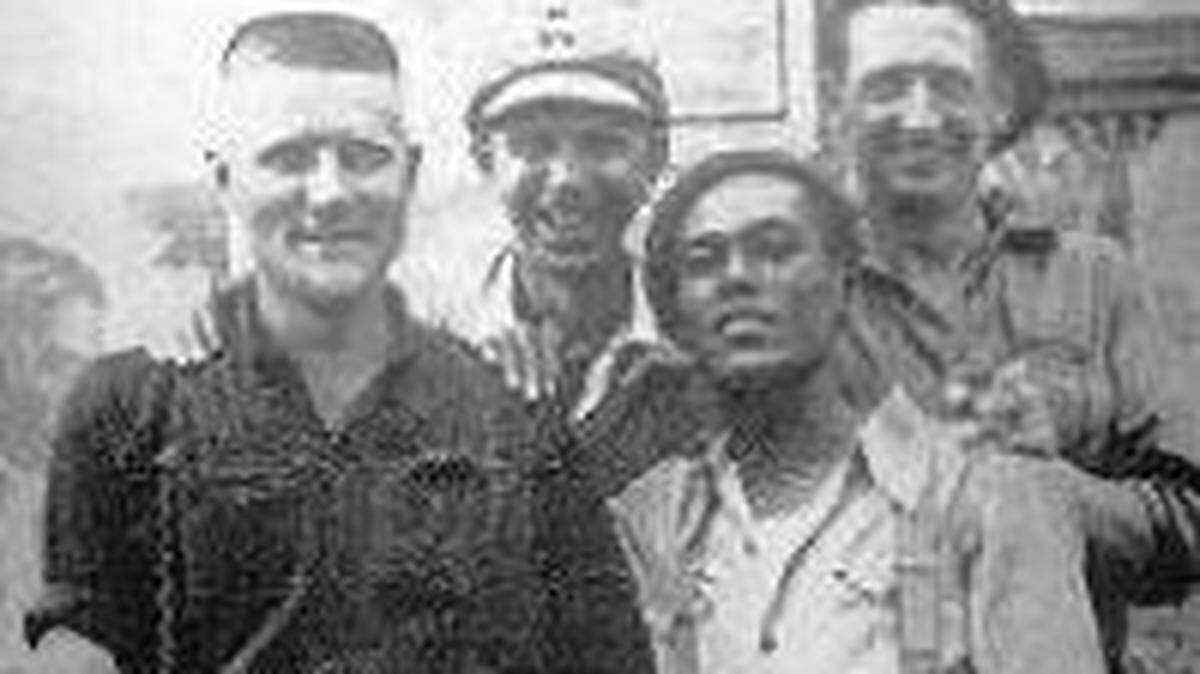
In 1936, civil war erupted in Spain between the elected Republican government and an insurrection calling themselves “Nationalists.” The Republicans were supported by the Soviet Union and Mexico while the Nationalists were supported by Nazi Germany and Fascist Italy, who treated it as a testing ground for combat tactics and training.
Out of fear of encouraging communism, the United States maintained strict neutrality. However, thousands of volunteers from all over poured into Spain to support the Republican cause, including George Orwell and Ernest Hemingway. The Americans fought as part of the Abraham Lincoln Battalion, numbering approximately 3,000 volunteers eventually. It is estimated that 681 Americans died in Spain. The war ended in 1939 with the triumph of Gen. Francisco Franco, the leader of the Nationalist forces who became dictator for life.
Approximately 90 African Americans have been identified as serving in the Abraham Lincoln Battalion. Unlike the American military at the time, the force mixed white and Black volunteers in the same units. Among the African-American volunteers was Fort Worth’s own Theodore Gibbs.
Born in 1906 to Samuel and Estelle Gibbs, Theodore Gibbs was the oldest of the couple’s four children. His father was a laborer who deserted the family when Theodore was still quite young. To support the family, his mother went to work taking in laundry, keeping house, and cooking for white families. When Theodore was 13, he witnessed her being raped by a white man for whom she did laundry. Traumatized, he left home to make his way in the world and never returned to Fort Worth.
He rode the rails, wandering across the country until he landed in Seattle, where he took a job as a stevedore on the docks. The work was hard but paid relatively well, and Seattle was less racist toward Black people than anywhere in the South. In the 1920s, Gibbs joined the Communist Party USA, which was strong in the Pacific Northwest. He rose quickly in the ranks as an organizer, and his superiors sent him to Cleveland, then to Chicago to recruit among their large African-American communities.
It was while he was in Chicago that he met his future wife, a Jewish girl named Paula Rabinowitz, who was also active in the Party. Together, as members of the Young Communist League, they fought court-ordered evictions of the city’s working poor.
When he heard of the civil war in Spain, Gibbs went to a recruitment office and signed up. He shipped out aboard the U.S.S. Manhattan on March 24, 1937. He arrived 11 days later in one of the few ports still controlled by the Republicans. As a member of the Abraham Lincoln Battalion, he served in service and transport units. The latter found him driving an ambulance transporting wounded men, a testimony to his driving skills, strong stomach, and some rudimentary medical knowledge.
The road Gibbs was on was shelled (or perhaps bombed) on April 5, 1938, a year after he arrived. He was wounded by shrapnel in the face, chest and leg and spent the next three months in a hospital. When he got out, he went back to work briefly but had to be mustered out. He was on his way home on board the Ausonia in December.
Back in Chicago and fully recovered, he took a job as a driver for Pico Tire and Auto, run by another Spanish Civil War veteran, Herman Pico. In 1941, he and Paula were married, remaining active in the Communist Party, which was not a problem during World War II when the U.S. and Soviet Union were allies against the Axis powers.
After the war the rise of McCarthyism in the 1950s made being a card-carrying communist a problem socially if not legally. Being in a racially mixed marriage and politically active also made life tougher for them and prevented traveling very far from home. In 1955, they opened a small neighborhood store serving the Black community, which gave them some financial security for the first time. Being behind the counter rather than on a picket line also saved Gibbs from a lot of the police harassment he had long endured.
In 1959, Gibbs left the Communist Party, alienated by its failure to support Algerians in their struggle for independence from France. If he had been a different color and living in a different age, Theodore Gibbs would have been a Renaissance man. He first expressed his artistic side by drawing and painting scenes he remembered from the Civil War. He continued to paint and draw for his own amusement for the rest of his life. It’s not known whether he ever publicly exhibited his work.
Theodore Gibbs died in Chicago on March 12, 1962. He didn’t live long enough to see the end of Franco’s Spain (1975) or the triumph of the Civil Rights movement in America. Whether he could have made a difference in race relations in Fort Worth had he chosen to stay here is debatable. He died in 1962, the same year Leonard’s Department Store started dismantling Jim Crow policies in Fort Worth.
Author-historian Richard Selcer is a Fort Worth native and proud graduate of Paschal High and TCU.