More apartments and another hotel may be coming to the Dickies Arena area
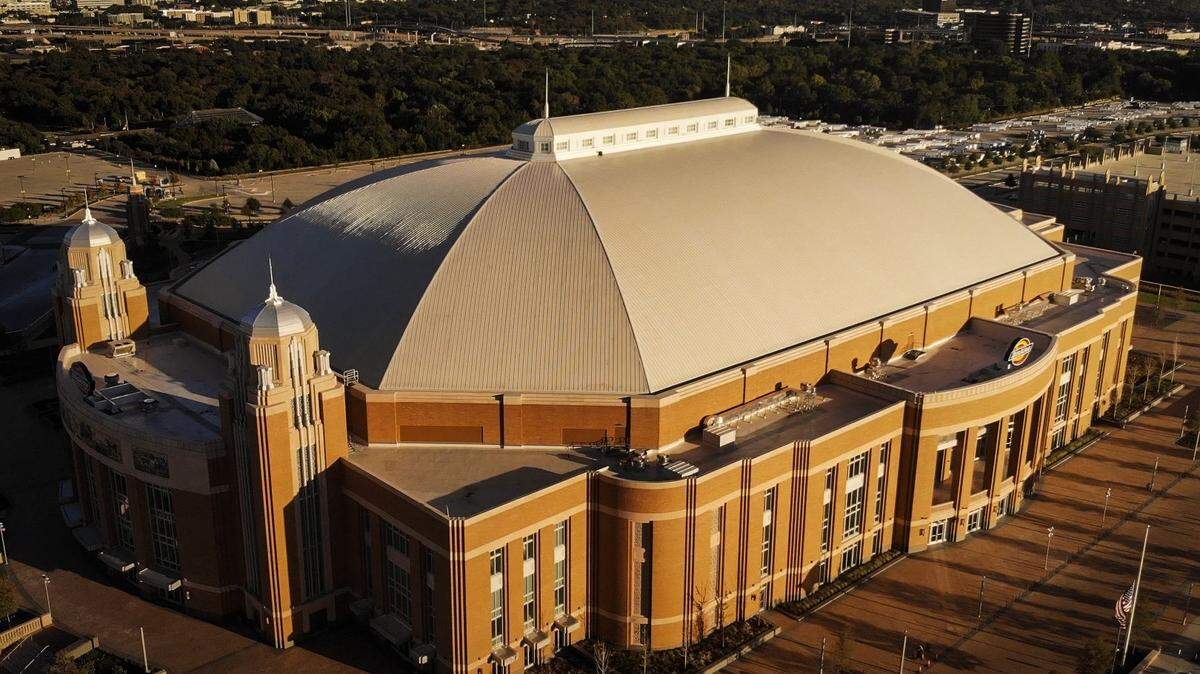
Fort Worth city leaders on Tuesday cleared a path for commercial and residential development on another parcel of land along Montgomery Street, despite the objections of some nearby homeowners.
Council members March 25 voted unanimously to rezone a vacant property on the west side of Montgomery for high-intensity mixed-use development, a designation allowing combinations of apartments, hotels and retail spaces. The green light forms part of a broader, city hall-guided push to reclassify properties along the corridor in ways that might jump start economic activity near Dickies Arena.
“After thoughtful consideration, I know that if I continue this case, the facts are not going to change,” said council member Macy Hill, whose district includes the Arlington Heights neighborhood and almost all of Montgomery. “I’d much rather have a constructive conversation on a site plan, versus kind of rehashing the same thing over and over again.”
The lopsided 3-acre lot is encased by Byers Avenue to the south, Bryce Avenue to the north, Montgomery Street to the east, and a short block of residential properties to the west, along Owasso Street. It shares a fence line with a boot store and a party supply company; the lot’s northeastern corner once hosted a Dairy Queen, demolished in 2019. The site sits just north of Hotel Dryce and just west of the Dickies Arena parking garage.
The site’s owner, Mazur Capital, has yet to finalize a layout for the property. Darin Norman, an architect hired to lobby for the zoning change, presented printouts of several possible configurations to the city council.
Arlington Heights homeowners have taken issue with the lack of clarity, raising specific concerns about how much traffic new development will generate and how tall the site’s buildings may climb.
“A hotel is generally not a good thing for people living just 50 feet away from it,” Lori Murray-Bosken, the president of the Arlington Heights Neighborhood Association, told zoning commissioners at a March 12 hearing.
Constructing residences at lower densities, Murray-Bosken said, would better suit the neighborhood.
“We’re confident that there’s a creative way to develop this property that is profitable for the owner and that does not adversely affect a thriving residential neighborhood in this process,” she said.
Murray-Bosken didn’t speak at city council on Tuesday, and she didn’t respond to a request for comment after the vote.
Zoning commissioners, pointing to the concerns raised by Murray-Bosken and other speakers, had voted unanimously to recommend council deny Mazur’s request.
Hill acknowledged the neighborhood’s concerns, but insisted that mixed-use zoning would enable the kind of development Montgomery needed to embrace.
“Low density residential has been a conversation, I do want to point that out,” she said. “But again, that’s probably not the highest and best use of this corridor that has changed dramatically over the years.”
Montgomery links Interstate 30 to Camp Bowie Boulevard and West 7th Street, stringing together Dickies Arena, the Amon Carter Museum of American Art, and the UNT Health Science Center along the way.
Hill and her colleagues, on March 11, agreed to rezone another pair of Montgomery lots for commercial and residential use farther down the street. One of the sites council rezoned is home to the beloved Montgomery Street Antique Mall, whose fate remains unclear.
A separate yet related council-initiated effort to reclassify roughly 84 acres of property along a half-mile stretch of Montgomery for commercial use stalled at the March 12 zoning meeting. Zoning commissioners, concerned that the city hadn’t adequately consulted with property owners along and around the street, voted to delay the case for 60 days, with the stated goal of affording all parties more time to discuss the potential changes.
This story was originally published March 25, 2025 at 6:25 PM.