
‘U.S. Mail is not for sale.’ Fort Worth USPS employees protest possible privatization
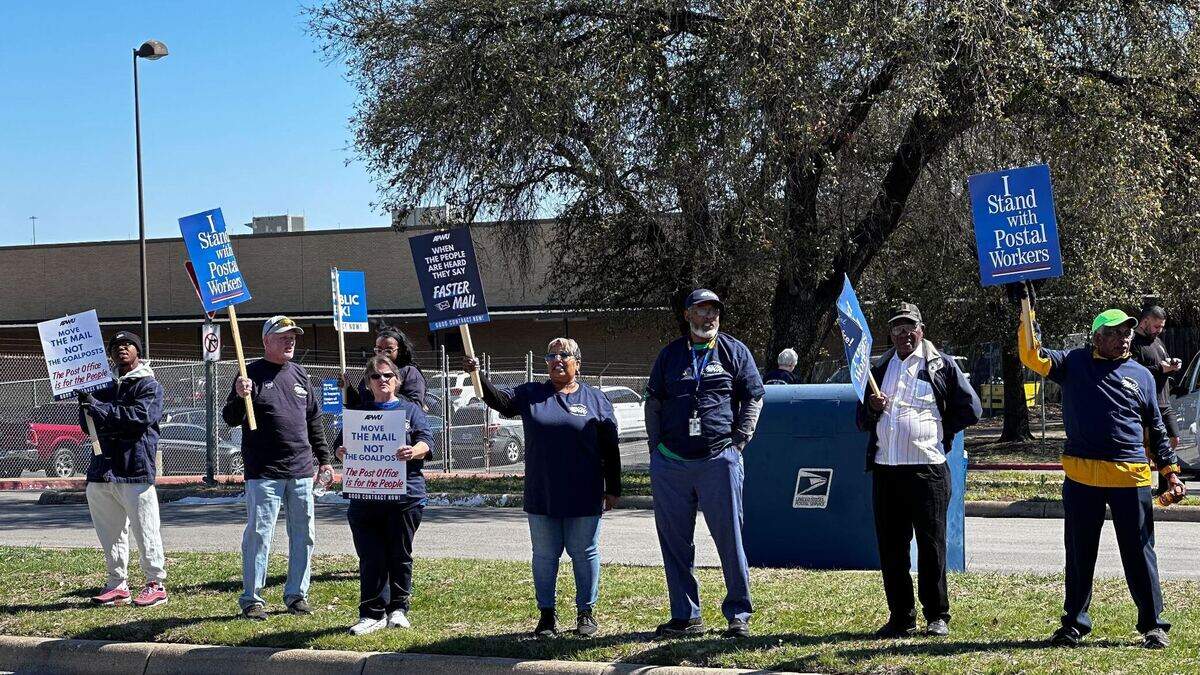
A crowd of more than 30 protesters — chanting loudly, “The U.S. Post Office is a people’s post office,” and “U.S. Mail is not for sale” — gathered outside the Jack D. Watson Post Office, at 4600 Mark IV Parkway in north Fort Worth.
On Thursday, March 20, U.S. Postal Service workers from North Texas joined others across the nation, including cities such as Charlotte, Atlanta, Orlando and Nashville, to demonstrate against the Trump administration’s desire to fold the 250-year-old agency into the Department of Commerce or privatize it. No decision has been made.
At the swearing-in of Commerce Secretary Howard Lutnick in February, President Trump said, “We want to have a post office that works well and doesn’t lose massive amounts of money. We’re thinking about doing that. And it’ll be a form of a merger, but it’ll remain the Postal Service, and I think it’ll operate a lot better.”
The USPS lost about $9.5 billion in the fiscal year that ended on Sept. 30, 2024.
The Postal Service receives no tax dollars for operating expenses and relies on the sale of postage products and services to fund its operations, Benjamin Martinez, president of the Fort Worth area branch of the American Postal Workers Union, told the Star-Telegram.
Martinez said that privatization would likely lead to higher costs to customers and reduced mail delivery, especially in rural areas.
“Those rural communities will more than likely have to drive in to pick up their mail, because it’s not gonna be any profit for the private organization that has to deliver out in those outlying rural areas,” he said.
A Wells Fargo analysis has estimated that the Postal Service would have to raise its rates as much as 140% just to match the private pricing of FedEx and UPS, Martinez said.
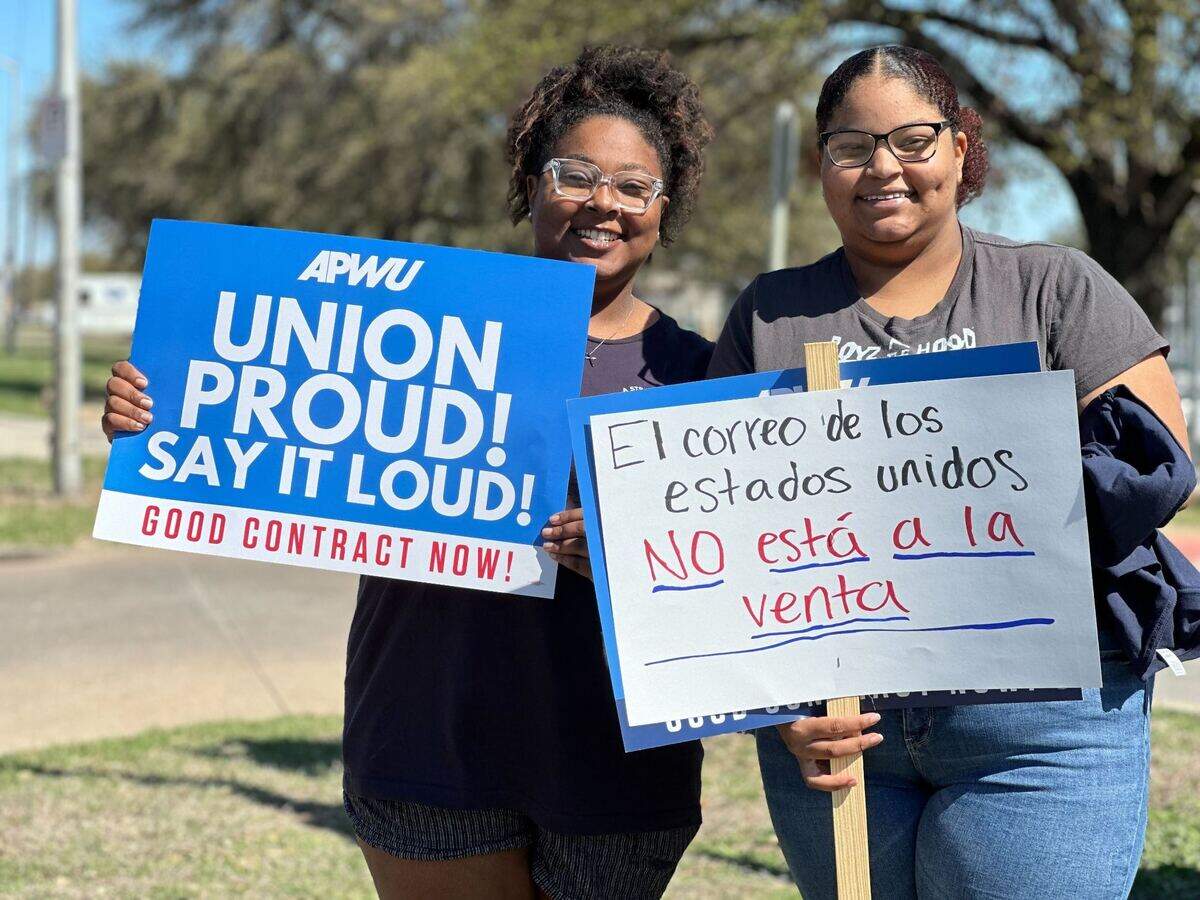
Martinez said privatization might affect the wages, hours and conditions of employment. Privatization would also increase the likelihood of “getting rid of the unions, therefore lowering the grades and the wages,” he said.
The employees enjoying the benefits negotiated by the union could be severely impacted, he said.
“It’s only gonna benefit the corporations and severely impact the public service,” he said.
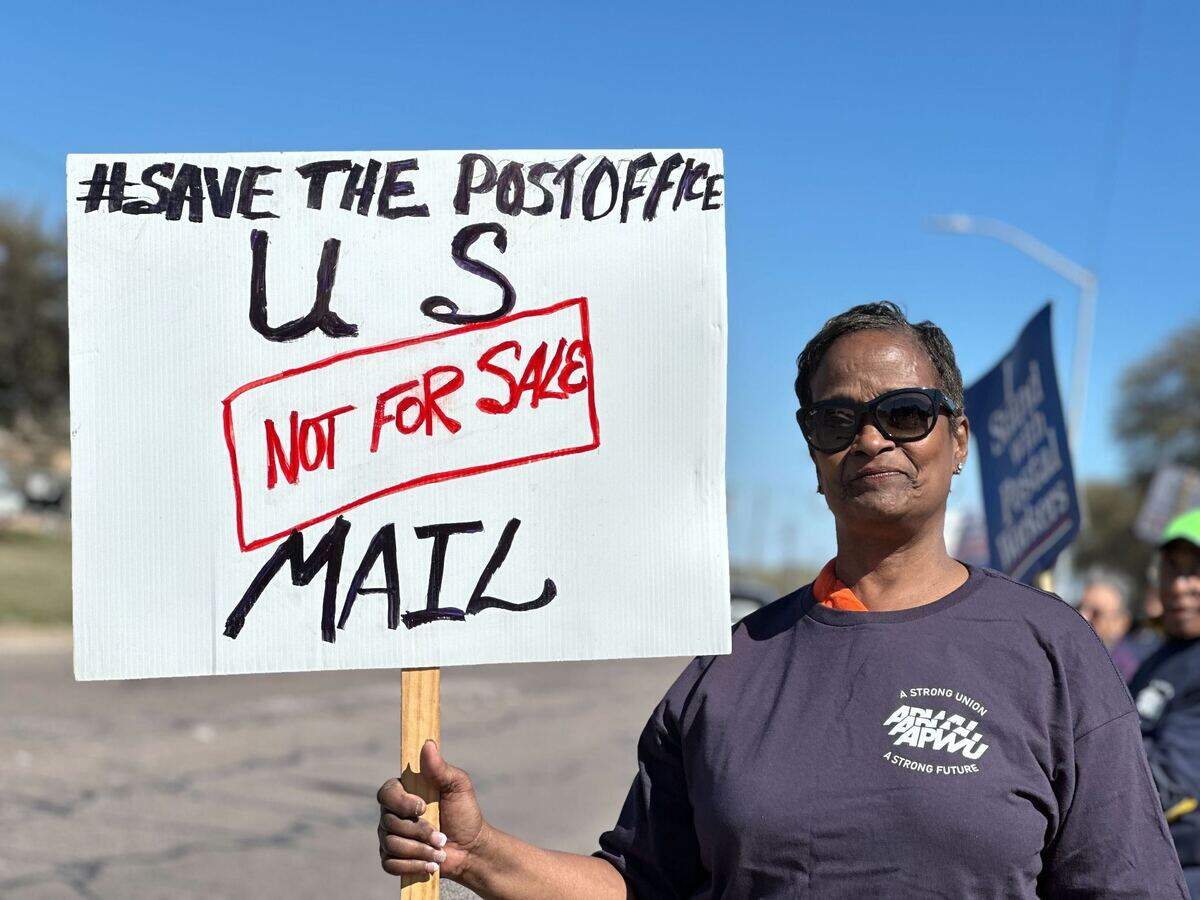
Jolly Watley, 66, who retired after working at the Fort Worth post office for 39 years, said she is worried that privatization might change the income of current employees.
“I was once a postal employee. I still love where I worked,” Watley said.
Waltley said she decided to join Thursday’s protest because it was important to represent and support the current employees.
“I don’t think it’s fair, you know, we worked so hard for so many years,” Watley said. “I don’t think that it’s a good change for the post office.”
Harold Parkey, a 75-year-old retired postal worker who worked for the service for 35 years, was also among the demonstrators on Thursday morning.
“The post office is an institution that is very important to communicate and the life blood of the country,” Parkey said. “It is something that is instituted in the country’s earliest days as a means to provide equal communication for the entire country.”
“You know, people text and email, but there’s nothing like getting that card or letter from a grandchild or from a son or a daughter or a wife,” he said.
“When I was in the military, mail played such an important part of keeping up our morale,” Parkey said.
Parkey said that USPS is one of the largest employers of veterans, “and if those jobs go away, for veterans and minorities it’s going to have a terrible effect.”
“I’m cautiously optimistic that we’ll be able to stop this if the people come out and start doing these rallies,” he said.
Derec Thomas, 57, has been working for the Postal Service since 2014. Many current employees like Thomas took part in the protest during their breaks.
Thomas said that the post office is self sufficient but privatization might change pay rates and health benefits. “It’s going to be an enormous change.”
Thomas, who has three kids including a 17-year-old who will be going to college soon, said if his pay is affected he might not be able to support them.
“My life will definitely not be the same,” Thomas said. “I’m a homeowner, and so I may not be able to be a homeowner.”
Thomas said community members should call their lawmakers and let them know that privatizing the U.S. Postal Service is a bad idea. “U.S. Mail is not for sale,” he and other protesters shouted as cars honked at them for support.
This story was originally published March 20, 2025 at 4:28 PM.