Fort Worth council OKs plans for data center in neighborhood south of Loop 820
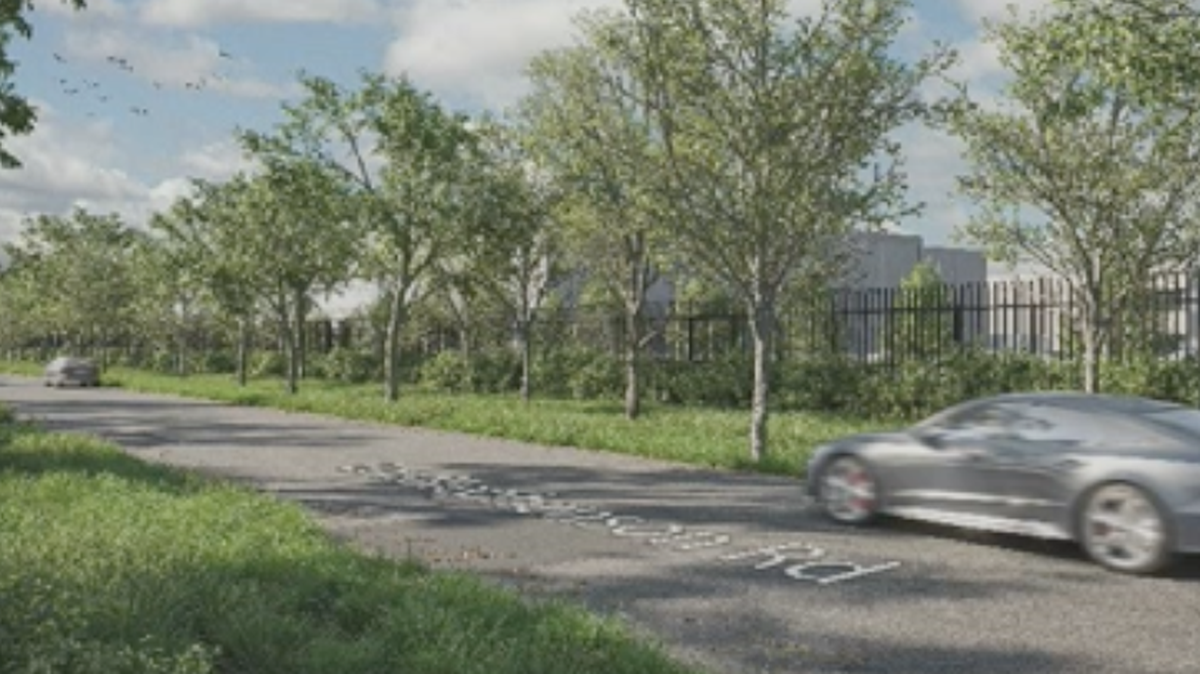
Fort Worth city council cleared the way Tuesday night for a 142-acre data center complex on ranch land spanning Lon Stephenson Road, just south of Loop 820.
The proposal is at least the second contested data storage project to receive the council’s blessing since September, as city leaders embrace the fiscal benefits of the behemoth structures and reassure residents of their comparatively small negative impacts on surrounding communities.
Representatives from Black Mountain, a Fort Worth-based consortium of fossil fuel and mining companies that will develop the site, had spent weeks attempting to rally the support of nearby property owners and local officials from Fort Worth, Everman and Forest Hill.
The stiffest public opposition came from wary homeowners and city employees from Forest Hill, the municipality just across the street from the site. They feared an influx of traffic, the possibility of more frequent and severe power outages, and the racket such a storage facility may produce.
Advocates argued their project would generate millions in tax revenue for Fort Worth and Everman Independent School District, vastly greater sums than those generated by the ranch land today. They also assured skeptics that the project would yield little more than revenue — its traffic output would be small, its campus well-groomed, and its noise production negligible.
“We would generate, we believe, about 2,000 trips a day,” Bob Riley, an advisor from an infrastructure consulting firm hired to advocate for the case, told council members Tuesday night. He tried to determine roughly how many single-family homes would generate a similar number of trips before simply telling council members: “Well, it’s very low.”
Council member Chris Nettles, whose district stretches from the Historic Southside to the edge of Burleson, encompassing the property, agreed.
“You would like something more of this type of development versus multifamily in that corridor, especially with the traffic issues that we do have,” Nettles said.
Nettles and his peers agreed to rezone the agricultural property for industrial use, specially tailored to allow data centers and a range of other uses, including: “educational uses, governmental uses (excluding correction facility and probation or parole office), health care facilities, recreation, religious uses, utilities, grocery store, office, retail sales general.”
The approval came with stipulations. The developers pledged to distance any structures at least 80 feet from Lon Stephenson Road, maintain and spruce up the property’s landscaping, route most of its traffic off Forest Hill Drive, and provide a site plan detailing the future layout of the property.
The rapid and expansive digitization of American life has made data center development one of the most profitable and popular real estate ventures in the country. Corporate sprints to develop artificial intelligence, a data-hungry endeavor, have only fueled the boom.
“I think that these are the factories of our time,” Rhett Bennett, Black Mountain’s CEO, told city council. “As digital infrastructure has a real place in society and potentially jobs of the future, I think welcoming these to Fort Worth is the right move for the city.”
The Department of Energy expects data centers will consume between 6.7% and 12% of the country’s electricity by 2028. Some experts and local officials warn the voracious energy appetites of data storage operations could test the limits of state and municipal grids if not properly managed. There was no mention of energy usage during the Tuesday night discussion at city council.
Developers have identified the Dallas-Fort Worth region, replete with flat, open expanses near developed electrical grids and well-trained employees, as an optimal region for data center development.
Fort Worth’s city council entertained a similar, if more contentious, proposal for a data center along Chisholm Trail Parkway in September. A majority of council members supported the undertaking, citing similar benefits raised by Bennett and his allies. Nettles was one of two city leaders to vote against it, citing concerns about the future building’s height.
This story was originally published January 14, 2025 at 10:40 PM.