Judge rules to dismiss wrongful death lawsuit involving Robert Miller. Widow files appeal
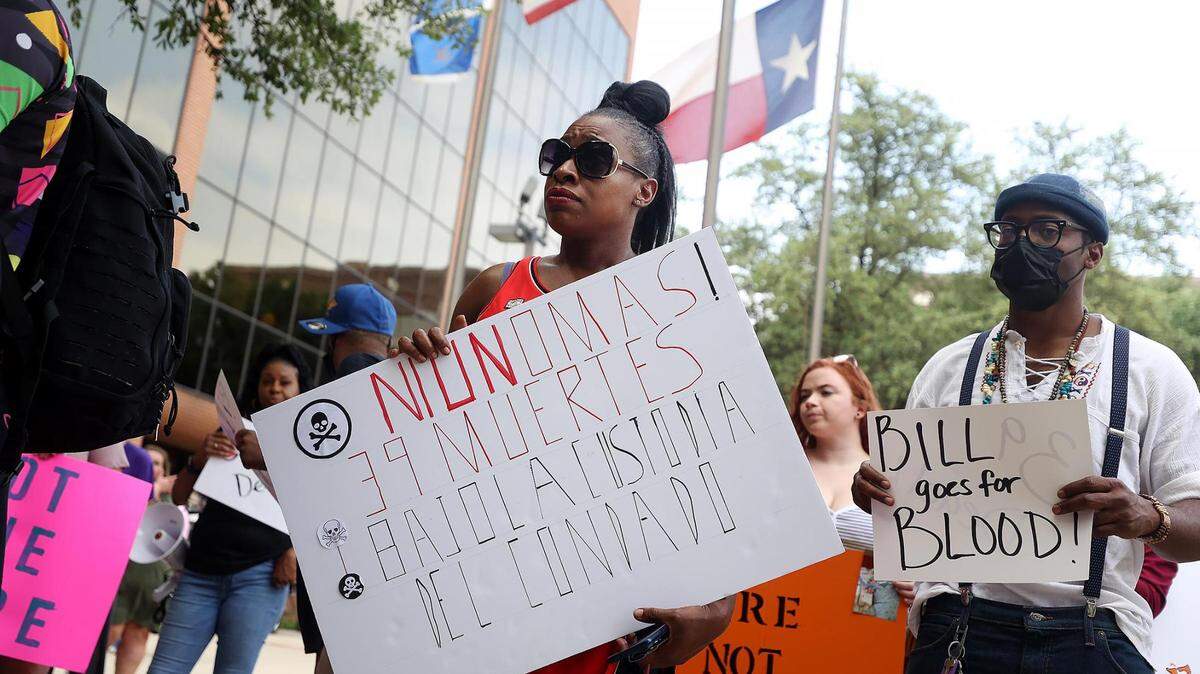
The widow of Robert Miller, a man who died after being pepper-sprayed multiple times while incarcerated at the Tarrant County Jail, is appealing a district judge’s decision last month to dismiss her wrongful death lawsuit.
Shanelle Jenkins filed her appeal Thursday with the United States Court of Appeals for the Fifth Circuit after U.S. District Judge Mark Pittman dismissed her claims, according to court records.
Miller died Aug. 1, 2019, after being pepper-sprayed at least three times at close range during his intake into the Tarrant County Jail. The 38-year-old didn’t receive medical attention when he told a nurse he couldn’t breathe, a Star-Telegram investigation reported in 2022.
A Tarrant County medical examiner originally ruled that Miller died of natural causes from a sickle cell crisis. Experts told the Star-Telegram that Miller couldn’t have died from sickle cell crisis, which can only occur in people with sickle cell disease.
In January 2023, Tarrant County reclassified Miller’s manner of death to “undetermined.” The cause of death is still listed as sickle cell crisis on the medical examiner’s website.
Jenkins filed a wrongful death lawsuit against the Tarrant County Sheriff’s Office on July 30, 2021. The county and the state’s Texas Rangers Division, which investigated Miller’s death, initially refused to release any records to Jenkins about what happened to her husband in jail. The Texas Rangers were later added as defendants to the lawsuit.
Jenkins filed her lawsuit within the two years required by law, but the original complaint lacked factual evidence and was dismissed by a judge. Jenkins’ attorneys eventually obtained the records giving more information about Miller’s death, but the courts didn’t allow Jenkins to amend the lawsuit with the new evidence.
Several employees from the Tarrant County Sheriff’s Office and two nurses who allegedly failed to provide treatment for Miller are mentioned by name in the most recent version of the lawsuit. They replaced the Sheriff’s Office and the Texas Rangers as defendants.
The district judge dismissed Jenkins’ lawsuit July 9 after reviewing motions from each of the nine current defendants to dismiss the suit due to the statute of limitations, qualified immunity or failure to state a claim against them.
According to the judge’s written opinion, the statute of limitations expired on the case two years after Miller’s 2019 death.
“The Court concludes that—at the latest—Plaintiff’s cause of action accrued ‘several days’ after Mr. Miller’s death on August 1, 2019. That is over four years and ten months ago—well past the two-year statute of limitations,” the document states.
According to court documents, Jenkins has argued “that the statute of limitations should be equitably tolled.” According to this legal principle the court can extend the statute of limitations in certain circumstances, such as if the injury isn’t discovered until after the limit has expired in spite of due diligence on the part of the plaintiff.
Jenkins has alleged that Tarrant County and the state’s Texas Rangers Division concealed pertinent information about Miller’s death and the identity of the people who were responsible.
The judge states in his opinion that this argument makes no difference, because Tarrant County and the Texas Rangers are no longer defendants in the case. Fraudulent concealment also requires evidence that the defendant was intentionally trying to deceive the plaintiff.
“Notably, however, Plaintiff does not contend that any present defendants were obliged to disclose anything, or even that any defendants fraudulently concealed information,” the opinion states.
Jenkins and her attorneys were not immediately available when the Star-Telegram reached out to them by phone Friday.