Fort Worth’s maternal, infant mortality rates are alarming. Will this plan save lives?
Jocelyn Galindo has heard the stories of women of color who felt disregarded in hospitals and did not have the support they needed during pregnancy.
In fact, as an Hispanic woman, she has experienced those things herself.
Galindo is neurodivergent, and when nurses don’t know how to speak with someone on that spectrum it can be difficult. Galindo was concerned during one of her pregnancies about a suggestion that she have a cesarean section when she didn’t feel it was necessary. She said she didn’t understand every stage of the birthing process and didn’t feel assured by nurses, who told her the pain she would feel during labor would be worse than she could handle.
Galindo is glad that late in her second pregnancy she was able to connect with a doula to help with those issues and more. A doula is a non-medical professional who provides support with information preparedness, guidance, companionship and coaching during and after a pregnancy.
Among other things, the doula worked with Galindo and her husband on exercises to help during contractions, coached Galindo on how to push during labor, and offered her encouragement that she could get through her labor even when she thought she couldn’t. After her baby was born, the doula helped her with things such as breastfeeding and the technique for wrapping her baby in a blanket. The doula also made sure Galindo got timely checkups from her medical providers.
Galindo said her doula provided the support system she needed.
“Whenever the family is supported, they’re in better health,” she said.
The United Way of Tarrant County sees doulas as an important resource to combat the county’s high infant and maternal mortality rates. Those rates are even higher for Black and Hispanic populations. The United Way was allocated $1.96 million from Tarrant County through American Rescue Plan Act funds to form a Maternal Health Initiative to train hospital staff and community-based doulas to ensure at-risk women of color have healthier pregnancies.
According to the United Way of Tarrant County, the county’s public health area has the second-highest maternal mortality rate among Black women in Texas. The program will target Fort Worth’s 76104 ZIP code, which has a population that is about 38% Black and 43% Hispanic and was identified in a 2019 study by UT Southwestern Medical Center as having the lowest life expectancy in Texas.
“I think the doula program will be very beneficial to the community because moms will be supported, families will be supported and whenever moms get support, they’re able to be better parents,” Galindo said.
Holistic approach to maternal, infant health
Regina Williams, chief impact officer of the United Way of Tarrant County, explained that the decision to start the doula program was an effort to look holistically at the problem. The program will improve maternal and infant health and will bridge the gap between people and available medical resources, she said.
The United Way had workshops to listen to people in the 76104 community, connect with families and build awareness as it developed the program. As part of that process, the United Way found that doula services were often not being used by low-income people of color.
“It wasn’t so much that Fort Worth did not have the access to the doulas or not as much interest in the doulas, it was whether or not the awareness was there to access doula services,” Williams said. “Seventy-seven percent of the women really shared that if finances weren’t a barrier, they would really be supported by having access to a doula once they learn what a doula could provide for them and their families.”
The program will be led by Yenny James, who is director of the Community Based Doula Project at Trust Her, an organization that provides support for clinic operations and reproductive justice. James is also the founder of Paradigm Doulas, which is a doula training organization. The United Way program will start the training program for doulas on Oct. 1; applications are available on the Paradigm Doulas website. The program will help mothers from any socioeconomic status once it begins.
James said giving birth is more than a physical event, it’s an emotional and spiritual journey. Doulas will work with families to address physiological and emotional wounds passed down through generations that impact the way women give birth. This trauma can lead to the increased risk of cesarean sections and postpartum depression.
“If we’re not taking care of that parent, it is inter-generational, it’s going to continue to affect the generations that come after us,” James said. “So that’s really one of the main focuses, is that if one person isn’t well, that affects the entire generation. We shouldn’t be dying at this rate. I mean, one maternal death is too high, one infant death is too high, especially with the technology that we have.”
Doula provided emotional support
Galindo worked with a Doula during her first pregnancy, but she and her husband had financial challenges during her second pregnancy, and it was difficult to find a doula until late in her pregnancy.
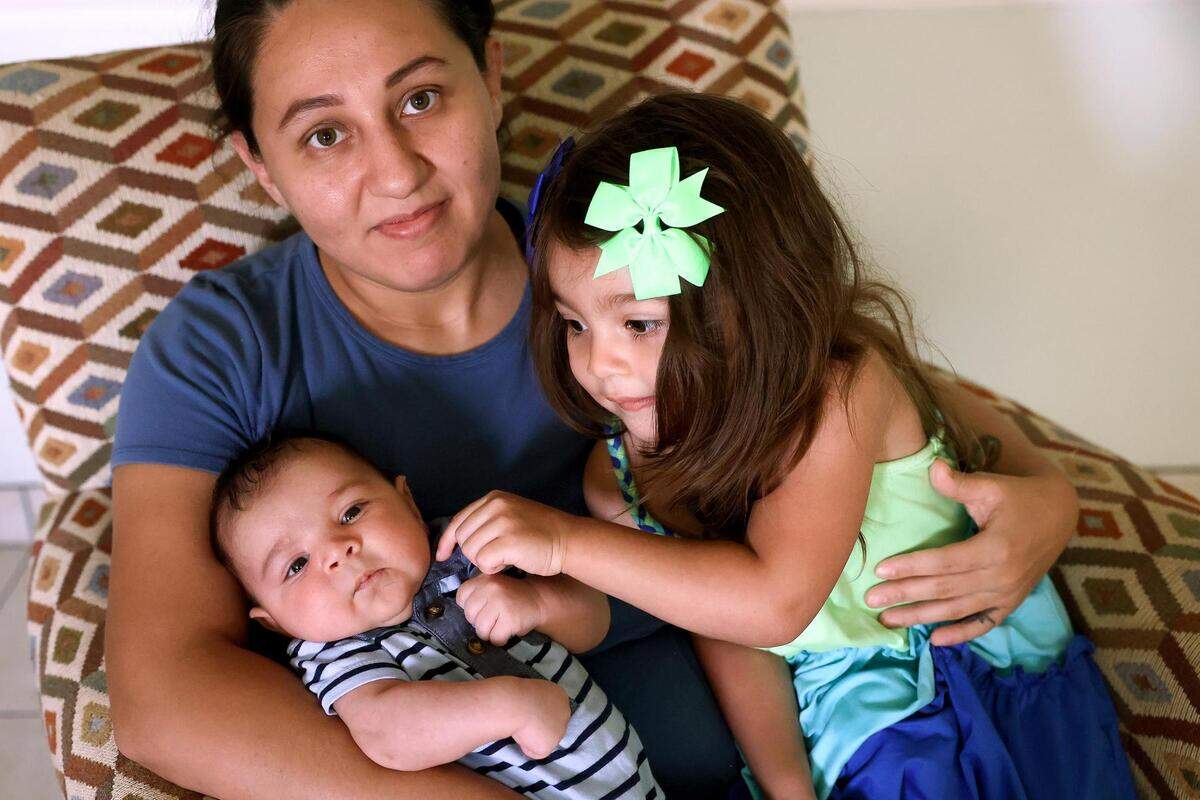
Galindo was stressed about having another child amid other challenges she was facing. Her doula, seeing the issue, gave her boxes of clothes for their child, which eased her worries. Galindo wants more mothers to experience the benefits of working with a doula.
“I hope with this doula program that they’re able to find support just like I did,” she said.
James, who will lead the doula program, emphasized that she will train doulas to support not just the mothers but their families. There will be home visits, inspections for hazards in the home and to make sure families have essentials such as running water and electricity. Families will also be connected with useful resources.
James encourages anyone who identifies with the challenges faced by those in the 76104 ZIP code to apply for free training through the doula program. The services of the doula program will be free of charge for pregnant women who cannot afford a doula.
Tarrant County Public Health released a data brief in August 2022 showing that in 2019 Tarrant County had the fourth highest infant mortality rate among all Texas counties, with a rate of 5.55 deaths per 10,000 live births.
The 2018 Texas Maternal Mortality and Morbidity Biennial Report showed the rate of maternal deaths in the Dallas-Fort Worth area, measured in terms of women dying while pregnant or within 42 days after giving birth, was the third highest of the 11 regions in Texas measured in the report. The maternal mortality rate in DFW was 25.4 deaths per 100,000 live births between 2012-15, according to the report.
Some of the leading causes of maternal deaths are obstetric hemorrhage or excessive bleeding during labor, mental health problems, and blood clots, according to the 2022 Texas Maternal Mortality and Morbidity Biennial Report, which looked into 2019 pregnancy-associated death cases. Discrimination contributed to 12 percent of pregnancy-related deaths, according to the report. The report also found that 90% of pregnancy-related deaths could have been prevented.
A study by the Natural Library of Medicine this year, says advocacy and support provided by doulas help the entire birthing process. That support can include such things as companionship and partner engagement, help with breathing techniques and changing positions of the mother during labor and better physician-patient communication. The study also says doula intervention could result in decreased expenses due to fewer procedures being performed and improved mental health benefits, with reduced rates of anxiety and depression.
Lack of access to doulas
Many women, especially low-income women of color, do not have the opportunity to work with a doula.
Alexis Bright, a Black woman, remembers being in her 20s in New Orleans and going through extremely painful births with her first two children.
She moved to Fort Worth two years ago and became pregnant again. Unfortunately, she lost her job in March and had to sign up for Medicaid, which doesn’t cover doulas.
Bright attended a workshop set up by the United Way this summer about the Maternal Health Initiative and was excited to learn about the initiative and how doulas can be advocates and provide support for women with limited resources and knowledge. She plans to sign up for the program to be a doula herself.
“Some communities, we don’t have knowledge, we don’t have access,” she said. “We don’t have any other options than to listen to the medical professionals. And, as we can see, it’s not working statistically.”
James acknowledged that doulas are often misunderstood and have tense relationships at times with medical professionals. She said she’s been told by medical professionals that doulas just give back rubs and get in the way during their time with a patient.
Galindo and Bright each said they suggested doulas to their doctors, who were hesitant about them.
James says the program will work to ease the tension by providing education to medical providers on what doulas do. Her hope is to gain respect for doulas so they can become an integral part of the team to improve maternal health.
Freya Morani, founder and CEO of RootMama, is a certified doula who is thankful for the Maternal Health Initiative. She wants to build a strong, and larger, community around mothers and pregnant women.
Morani thinks it’s important that doulas help mothers understand there is help outside of their immediate community. There are other resources and support systems, and they can find community with other pregnant women, mothers, doulas, and health professionals, she said.
Without more collaboration, programs such as the Maternal Health Initiative will not produce the expected results, she said.
“I love my profession, but I never want to oversell what we can do or over-promise what we can do, because we ourselves are working within the limitations of a flawed system,” Morani said. “So we’re doing our best.”