
The story of Harry and Harold: One WW II soldier survived, the one from Fort Worth died
Christmas Eve, 1944.
As darkness fell, a U-boat lurking in the English Channel torpedoed an Allied troop ship carrying 2,235 American soldiers, reinforcements for the Battle of the Bulge. The ship, the SS Leopoldville, was within five miles of the French coast when an explosion ripped through the starboard aft and seawater coursed into the hold.
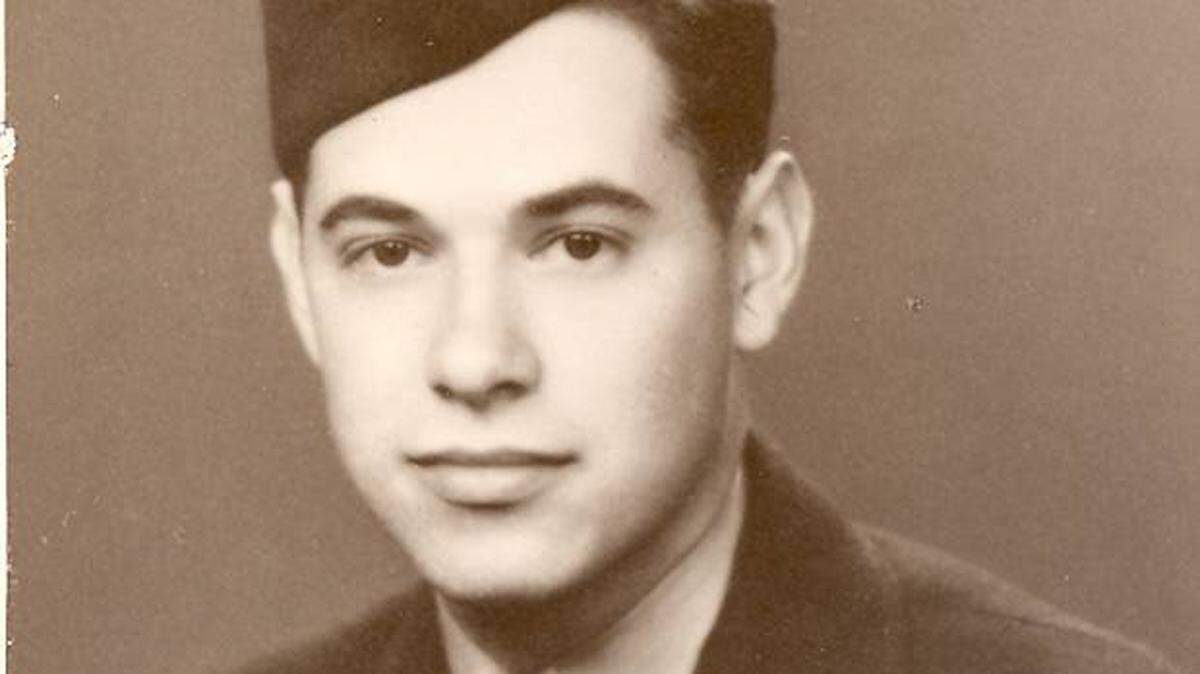
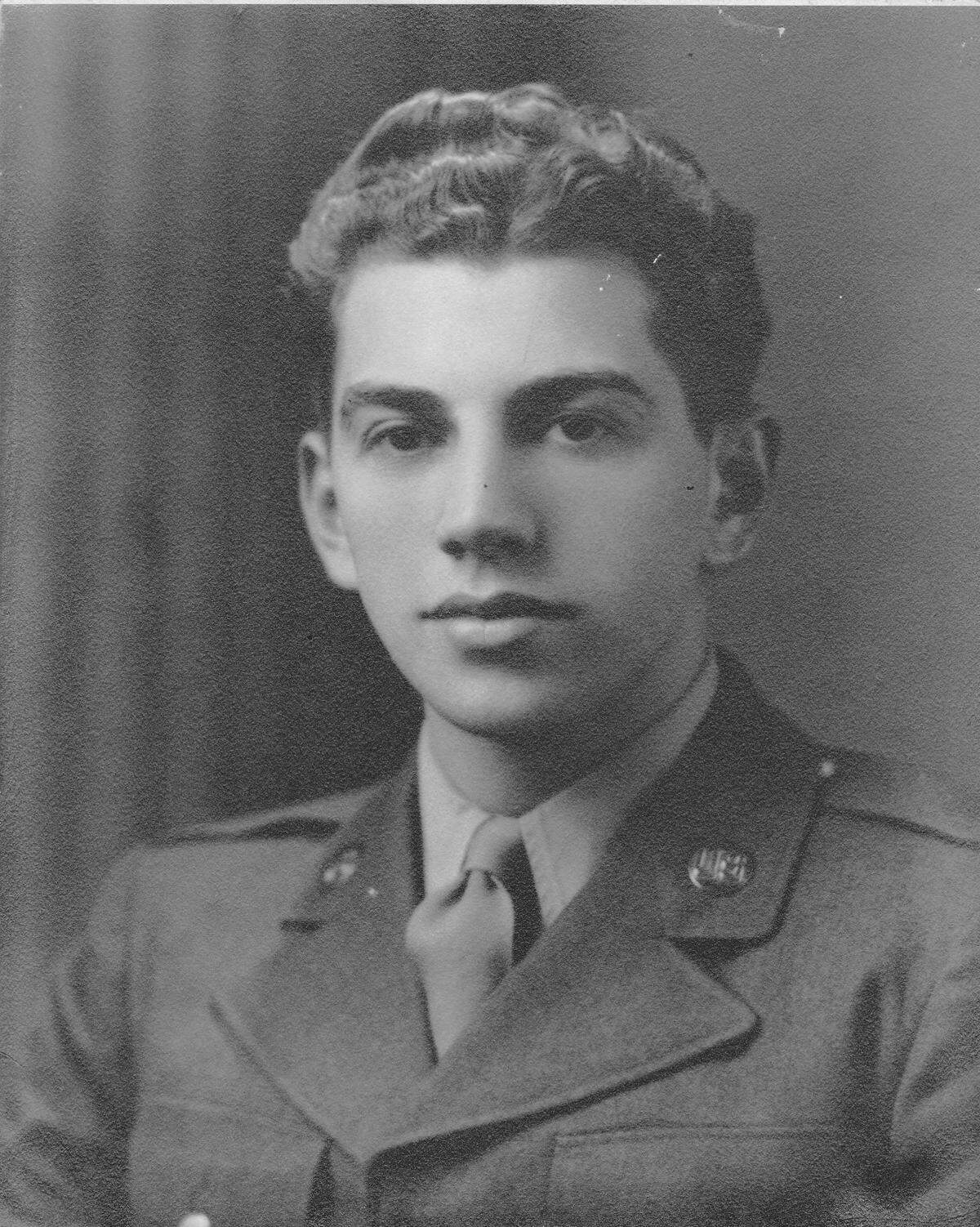
As sirens sounded and infantrymen climbed onto the deck, Pfc. Harold M. Gilbert, 22, of Fort Worth, and Pfc. Harry Goldstein, 21, of Indianapolis, searched for one another. The pair were buddies, two Jewish GIs with the 66th Infantry Division’s 264th Regiment. They had bonded during training in England, gone out on passes together, and taken British girls on double dates.
Amid the smoke, fog, darkness and debris on the deck, Harry spotted Harold and gave a shout. The Texan strode to his side, shook his hand, slapped him on the back and cracked a joke. They adjusted one another’s life jackets and concurred that a rescue boat was surely en route to tow their ship to safety.
Moments later, the SS Leopoldville split in two.
Harold Gilbert, the Texan, a 1942 graduate of Paschal High and the youngest of four brothers serving in uniform, perished in the frigid waters of the English Channel.
Harry Goldstein, from Indiana, was rescued by a Coast Guard tug after bobbing for 40 minutes in 12-foot waves. The memory of being steps away from his dead buddy lingered the rest of his life.
Little was reported in the press about the catastrophe. It cost the lives of 763 Americans — 515 who went down with the ship and 248 (including Harold) whose bodies were recovered. The Allies ordered a cover-up, lest the facts damage morale.
Among the blunders too flagrant to disclose was the fact that the ship was short on life jackets. A lifeboat drill the morning the ship sailed from Southampton was poorly attended. Instructions to abandon the sinking ship were broadcast over loud speakers in Flemish, not English.
Although a British destroyer radioed an SOS to the French coast, Americans stationed in Cherbourg used a different radio frequency. Hundreds of vessels in the harbor might have launched a Dunkirk-style rescue, but because crews were celebrating the holiday, boats were understaffed. A coordinated rescue was not underway until after the Leopoldville had sunk, two and a half hours after the attack.
The torpedoing of the SS Leopoldville led to the largest loss ever of American ground troops in a naval disaster. The blunders were first reported in the 1964 book, “A Night Before Christmas: The Sinking of the Troopship Leopoldville,” by Jacquin Sanders. The author’s research included an interview with the Gilbert family.
In 1992, when the Jewish Federation of Fort Worth and Tarrant County launched the Fort Worth Jewish Archives, a request went out for local families to donate files and photos that told the community’s history. Private Harold Gilbert’s sister-in-law, Sara Betty Label Gilbert, brought in a box filled with medals, memorabilia and condolence letters. Among the items was the American flag with 48 stars that covered the soldier’s coffin when it was brought home in April 1948. He is buried at Ahavath Sholom Cemetery alongside two other Jewish lads who gave their lives in World War II. Also in the box were a Purple Heart in a velvet-lined case and a pair of dog tags stamped with Harold’s serial number, home address (2211 Fairmount Ave.) and the letters “A” for blood type and “H” for Hebrew.
Among the correspondence was a telegram reporting his death and a dozen letters — some from strangers, some from well-known people such as Chief of Staff Gen. George C. Marshall, Secretary of War Henry L. Stimson, and Star-Telegram publisher Amon Carter, whose son had been a POW in Poland.
Last October, nearly 78 years after the sinking of the SS Leopoldville, my home phone rang one evening. On the other end was a Massachusetts man, Mark C. Goldstein. His father, 99-year-old Harry Goldstein, had just died. Years before, the father had told his family about the night the Leopoldville went down and described an unidentified buddy who perished.
During the final two months of his own life, Harry Goldstein was in and out of a coma, fighting medical complications and reliving ordeals he’d survived in the war. Among Harry’s papers, descendants found a letter from Jaquin Sanders, the author who had first exposed details of the tragedy. He mentioned the “moving letter” Harry had written Harold’s family.
By any chance, the son asked, did the Fort Worth Jewish Archives have that letter?
Yes, certainly, I remembered it well. The two-page, single-spaced, typewritten letter, mailed from Marseille on Aug. 9, 1945, is so poignant, the Archives had arranged for the University of North Texas to digitize and place it online at the Portal to Texas History. Harry wrote that he had wanted to contact the Texan’s family sooner, but “while the war was still in progress, the censor did not permit me to write to you at all ... No one on board was very worried. We all believed the ship could be towed into port. After all, we were only about three hours from Cherbourg.”
Harry Goldstein went on to lead a long, satisfying life.
“How close my father came to perishing when the Leopoldville was torpedoed,” his son reflected. “Instead he left a legacy of four children, 22 grandchildren, and 51 great-grandchildren over his 99 years. I am so very sorry that Harold did not have this chance.”
Hollace Ava Weiner, director of the Fort Worth Jewish Archives, is an author and historian. For details about the SS Leopoldville, read “Leopoldville: A Tragedy Too Long a Secret” (1997) by Allan Andrade, view the History Channel’s 1998 documentary “Cover Up: The Sinking of the SS Leopoldville,” or visit www.leopoldville.org.