
The ‘cultural Sojourner Truth’ of Fort Worth, she introduced Black kids to theater
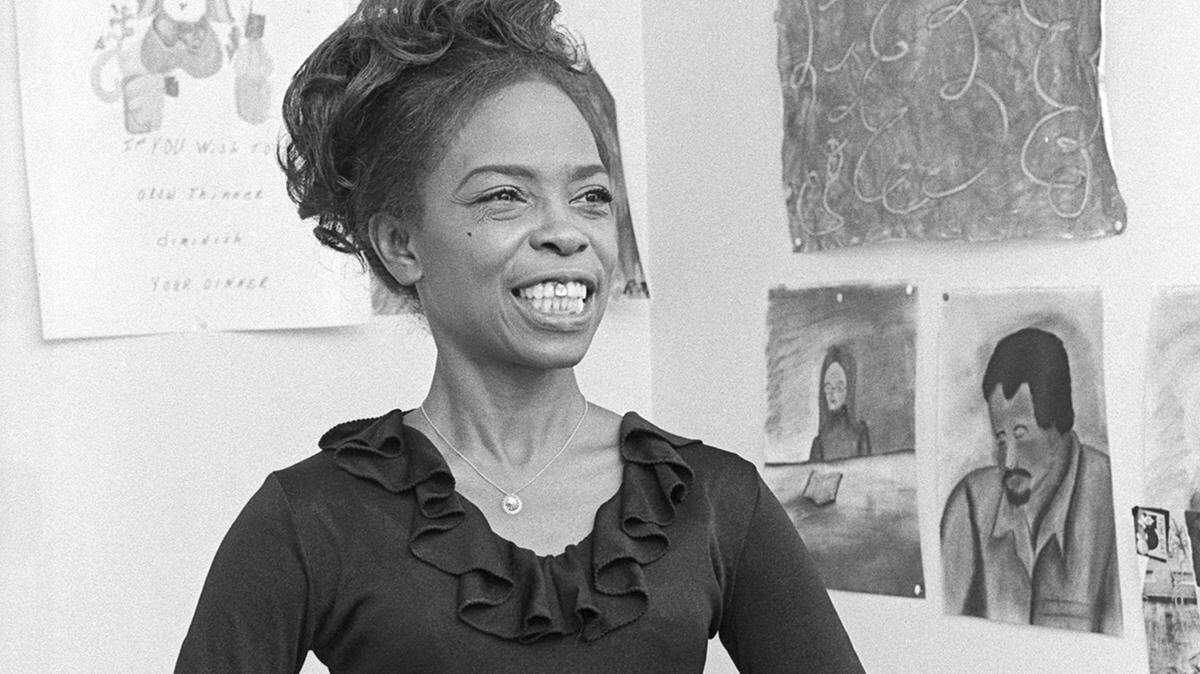
From her position in 1971 as director of teenagers at the city’s Black YWCA, Erma Duffy Lewis saw the potential for her youngsters to excel as actors, dancers, singers and directors. But in racially segregated Fort Worth, avenues to the performing arts were virtually nonexistent for Black children.
Lewis shared her vision with the Rev. Paul Sims, pastor at Community Christian Church, a Disciples of Christ congregation with a humble, 128-seat annex on its grounds at Riverside Drive and East Vickery. Envisioning its transformation into a community theater, Lewis corralled volunteers to sand floors, insulate windows, install air conditioning, paint walls, build sets, and wire footlights.
With encouragement and even fundraising from the Junior Debutantes, a club at segregated Dunbar High, Lewis launched the city’s first Black theater troupe — the Sojourner Truth Players and Cultural Arts Center, named for a slave who escaped to freedom and dramatically preached abolition.
The curtain went up Aug. 20, 1972, with “Amen Corner” by James Baldwin. The director was Rudy Eastman, a drama and history teacher at O.D. Wyatt High, who in 1981 started the still-thriving Jubilee Theatre. The next production for the Sojourner Truth Players was “Down to the Roots,” a journey through Black history created by Johnny Simons, who in 1976 opened Fort Worth’s avant-garde Hip Pocket Theatre.
In seasons to come, Sojourner Truth audiences included pre-teen Channing Godfrey Peoples, who in 2020 produced and directed the film “Miss Juneteenth,” which premiered at Sundance and won awards at Austin’s South by Southwest.
“There was great power on that cracker-box stage, ” raved longtime Star-Telegram drama critic Perry Stewart during the opening season at Sojourner Truth.
To expand the theater into a cultural arts center for the younger generation, the founder teamed up with the Fort Worth school district, which was under a court order to integrate. With a Federal grant, Lewis developed performing arts workshops where Black and Latino youths used music, mime, drama and dance to spark discussions about school busing and desegregation. These workshops became a key component at day-long community seminars at Texas Wesleyan College (now University).
Lewis also taught ballet, acting, and singing to kids from preschoolers to high-schoolers, with recitals open to the public. These performances were so entertaining that Sojourner Truth ensembles received invitations for dancing, singing, and storytelling on the children’s stage at Mayfest, at Bicentennial celebrations, at United Way campaign luncheons, at UTA’s Student Center and the Texas Christian University ballroom. During Brotherhood Month, Black History Month, and Juneteenth celebrations, they were in demand for performances at Sycamore Park and on the steps of the Amon Carter Museum.
With $10,000 in grants, some from the National Endowment for the Arts, Curtis King, who had a master’s degree from TCU’s Department of Theatre, planned a three-day Sojourner Truth National Cultural Arts Festival. Held in 1976 at the Tarrant County Convention Center over Labor Day Weekend, the festival featured 10 Black artists and intellectuals from around the nation.
Another highlight was an original musical drama directed by King and created by Bob Ray Sanders, then a public television executive at KERA/Channel 13. Titled “A Time to Build,” the musical had a cast of 75, from tots to grandparents, and dramatized the Black experience in the Civil Rights Era.
Three months later, during December, the Sojourner Truth Players produced a free Christmas pageant in the church annex. Then, on Jan. 14, 1977, tragedy struck. An electrical malfunction sparked a three-alarm fire that roared through the playhouse, causing $75,000 in damages.
“All the costumes, the stage, the piano and many, many dreams ... went up in smoke,” wrote Star-Telegram columnist Katie Sherrod, adding, “They may have lost a home, but the Players lost none of their determination.”
Stage productions ceased while the Players searched for a new home, but the touring ensembles never missed an engagement.
Meanwhile, the Junior Debutantes at Dunbar High raised money to buy the Southside’s abandoned Harrell’s grocery at 1101 Fabons Ave. Before restoration started, the city condemned the building as unsafe, threatening to tear it down unless the Players boarded it up. A call went out for volunteers with hammers, ladders and plywood to secure the premises until $100,000 was raised for restoration.
On June 11, 1980, the new Sojourner Truth playhouse reopened, with classes, recitals, and holiday performances. Its next major stage production was “The Greener Pasture,” an updated Langston Hughes musical, performed during August of 1981 with an interracial cast of more than 40 players of all ages.
During the winter of 1982, Erma Lewis, 56, who was working nonstop, collapsed from a serious stroke. She died March 8, 1982. With a froth-page headline, the Star-Telegram delivered the sad news: “Final curtain comes down on Sojourner Truth founder.”
Lewis had inspired so many thespians that the theater and cultural arts center remained open another decade.
Reflecting on Lewis’ historical impact, Sanders, who directed “Purlie” in 1984, observed, “The legacy of the Sojourner Truth Players continues through the arts groups, the actors, and the directors who got started there.”
King, whose work in Fort Worth evolved into the Dallas Black Academy of Arts and Letters, a $2 million, 45-year-old arts organization, said of his mentor, “She was THE pioneer, THE trailblazer, THE cultural Sojourner Truth in Fort Worth. She should not be forgotten.”
Hollace Ava Weiner, an author, archivist and historian, is director of the Fort Worth Jewish Archives.