Hundreds of Afghans settled in Fort Worth after Taliban takeover. Many are struggling.
John Stettler sits on a gray couch in a Fort Worth apartment, drinking tea and talking with his hosts. Every few minutes he pauses to refer to a green spiral notebook or make a call on his flip phone.
Stettler and the Afghan family he is visiting discuss job options for the husband and wife, and what to do about transportation for them.
For Stettler, the semi-retired owner of the plastic fabrication company J&M Plastics Inc., it’s another busy day trying to meet the needs of the hundreds of Afghans in Fort Worth. His green notebook is filled with names and phone numbers of refugees who have reached out to him for help.
Aug. 30 marks one year since the U.S. armed forces completed its withdrawal from Afghanistan. In those turbulent days following the Taliban takeover on Aug. 15, about 76,000 Afghans were evacuated to the United States.
Stettler worries that Americans have forgotten these men and women, many of whom risked their lives to help the U.S. military during its 20-year mission in Afghanistan. Even though Afghans in the United States no longer have to deal with the Taliban, they face other obstacles acclimating to life in a new country.
“I keep learning things I hate I have to learn,” he said. “Most Americans have no clue how tough life can be for those in the more difficult parts of America.”
Stettler knows Afghan families who are close to being evicted because they don’t have enough money to pay their rent. A man he recently helped to buy a car just had that car stolen. Another man lost his job when his work permit expired.
The Dallas resident has been involved in helping Afghans for a long time. More than a decade ago, he donated $10,000 to buy solar and hand-crank radios for villagers in Afghanistan’s Helmand Province. He also has close friends among the Afghan community in Dallas.
Several months ago, he got a call from a Virginia-based nonprofit that serves Afghans with special immigrant visas. They asked him to help a family who had just arrived in Fort Worth whose son was sick.
“I realized how lost and strange and confusing the whole situation was being dropped off in a new country,” he said.
Stettler has been helping Afghans in Fort Worth ever since. He sees that the lack of reliable transportation is an obstacle for the refugees, so he’s been teaching some of them to drive and helping them buy cars. He also lets them know about job openings.
Another obstacle is a backlogged immigration system.
Afghans who worked with the American government for a minimum of one year qualify for a special immigrant visa that gives them legal permanent resident status in the U.S. Even though many Afghans who evacuated to the United States had already applied for the visa, a years-long backlog has kept those cases from moving forward, leaving applicants in limbo.
A slow process
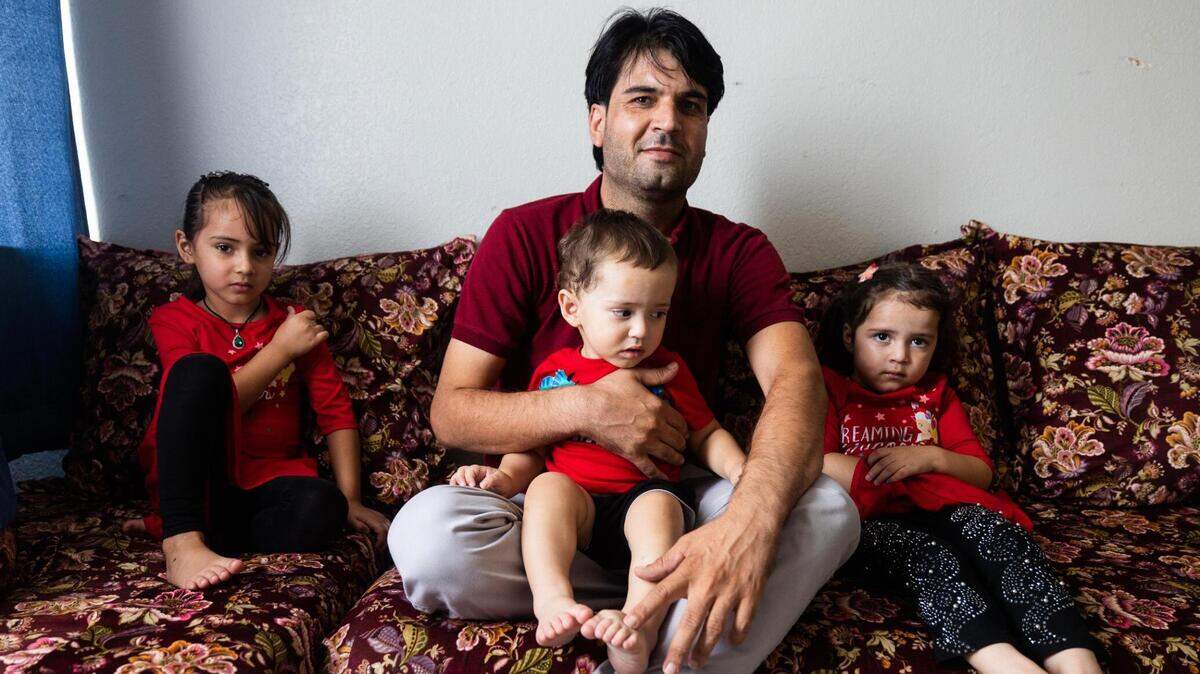
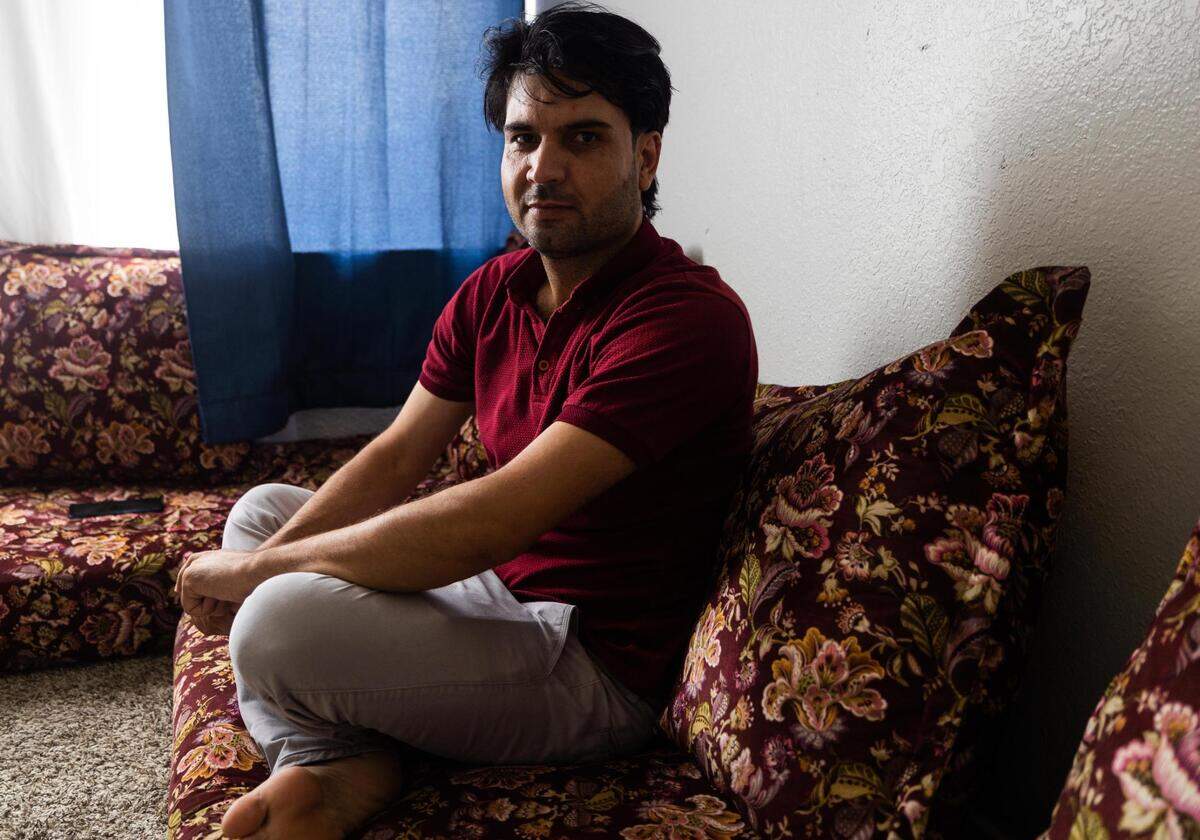
Basir Khan has been unemployed since the end of July.
Khan, who served alongside U.S. troops as a combat interpreter, applied for a special immigrant visa in 2015.
When still in Afghanistan, he dropped off his family’s passports for what was supposed to be the final step in the process, on July 6, 2021. A couple days later, he got an email from the U.S. embassy saying he and his family would be relocated to the United States.
“I went back to ... pick up our passports,” Khan said. “I got the passport back without visa.”
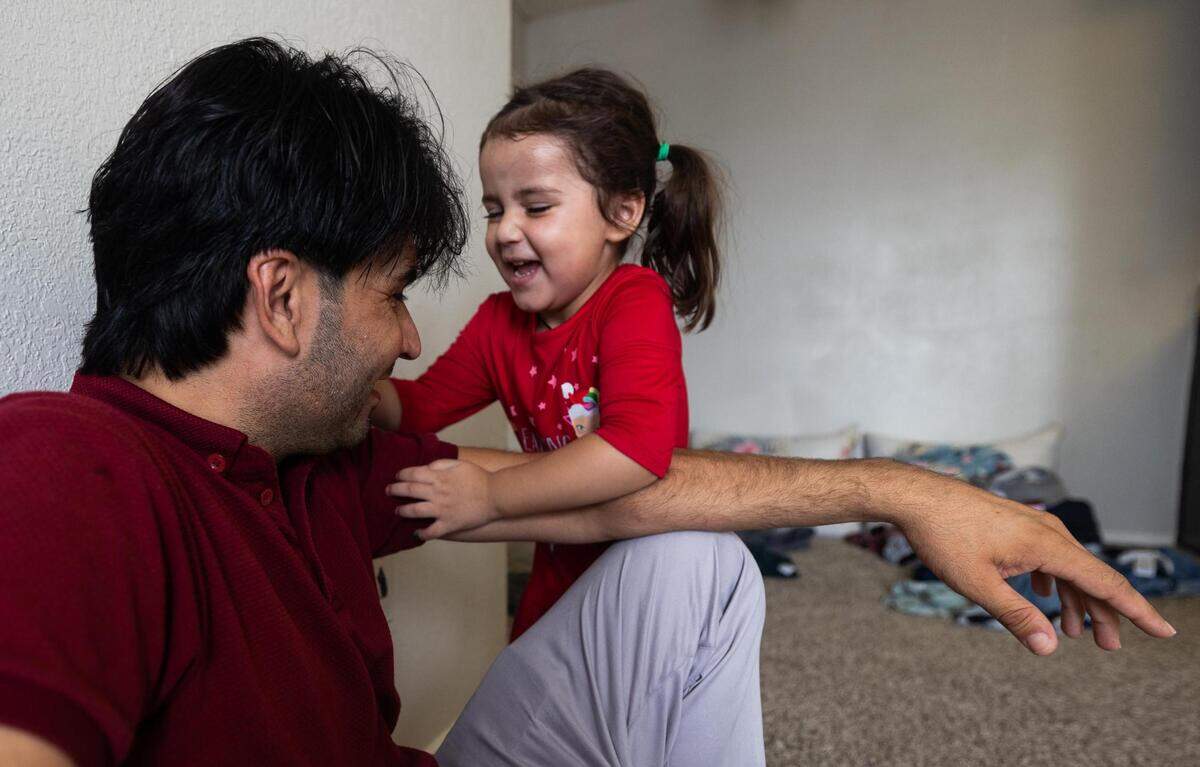
Khan said the officials never told him why the visas were not in the passports. On July 30, 2021, a little more than two weeks before the Taliban marched into the capital city of Kabul, Khan, his wife Nahida and their three small children arrived in the States.
Khan received a work permit that was valid for one year. He got a job at a warehouse but was dismissed when his work authorization expired. His caseworker told him he will receive a new work permit soon, but Khan doesn’t know when he will get his permanent residency.
His wife said it is difficult for their family right now. Her husband can’t work, and they still have to pay rent on their apartment.
“It is very hard,” Nahida said.
Another family — Bismillah Sherzad, his wife Wahida Fazli and their five children — left Kabul on Aug. 23, 2021, with just the clothes on their backs and their documents. They spent 10 months in the Netherlands before being allowed into the United States. They’ve been in Fort Worth for less than a month.
Sherzad worked for the U.S. government as a security guard and later as an administrative assistant. He applied for a special immigrant visa in 2018.
Fazli said they haven’t heard anything about her husband’s case since 2020, even after reaching out repeatedly for information.
“We followed up a lot, but we did not receive anything,” she said.
The couple were issued work permits that are valid for two years. Fazli said she’s already missed out on one job opportunity because she couldn’t get transportation.
Fazli said she has many dreams for her family — a good job for herself and her husband, and a good education for her children. She also wants a nice house like she used to have in Afghanistan.
“So we can like live a happy life,” she said.
Refugee resources
Zoe Wilkerson, area director for Refugee Services of Texas, said her organization has resettled 581 Afghans in Fort Worth since October 2021, a sharp increase from 108 the previous fiscal year. That number does not include those resettled by World Relief and Catholic Charities of Fort Worth.
Agencies like Refugee Services of Texas provide new arrivals with furnished apartments, a few months of rental assistance, cultural orientation and a case worker. Wilkerson said volunteers who spend time with the refugees also play a big role in making the newcomers feel welcome.
“They seek to be the client’s first friend in the United States,” she said.
Wilkerson said the official resettlement program only lasts for 90 days, but RST also provides additional support services that can last up to five years, depending on the situation.
Stettler is not connected with any of the resettlement agencies but sometimes partners with Nexus Neighborhood Outreach. The nonprofit primarily serves marginalized communities in northeast Dallas, but has also started to reach out to Fort Worth’s Afghan refugees.
Stettler said helping the refugees is more than one person can do. It requires a group effort.
“Hopefully we find more people willing to help,” he said.
This story was originally published August 28, 2022 at 8:00 AM.