Robert Miller’s death was ruled ‘natural.’ But Tarrant jailers’ actions suggest otherwise
The Star-Telegram investigates allegations of a cover-up by Tarrant County authorities after a pepper-sprayed inmate died.
Robert Miller was barely alive when medics rushed him to the hospital.
The call from Tarrant County Jail, where he had just been booked a few hours earlier, mentioned a possible drug overdose. Doctors urgently ran tests — his oxygen level was low, carbon dioxide level high. No drugs in his system. Lungs inflamed and filled with fluid. No brain activity.
By early the next morning, Miller’s neck was swollen and blood leaked from his ears and nose. The 38-year-old was declared dead.
The Tarrant County medical examiner would ultimately rule that Miller’s death on Aug. 1, 2019, was from natural causes — a sickle cell crisis. And a subsequent investigation by the Texas Rangers reiterated the autopsy finding of natural causes. File closed.
But a Star-Telegram investigation casts doubt on that assessment. A months-long review of the case, despite reluctance by the Sheriff’s Office and Texas Rangers to disclose records, has uncovered evidence that suggests Miller may have died as a consequence to how he was treated in Tarrant County Jail, where at least 45 other people have died since 2019.
For one thing, Miller almost certainly did not have sickle cell disease, according to the Star-Telegram’s review, which utilized outside experts in medicine and pathology to examine internal records obtained by the newspaper.
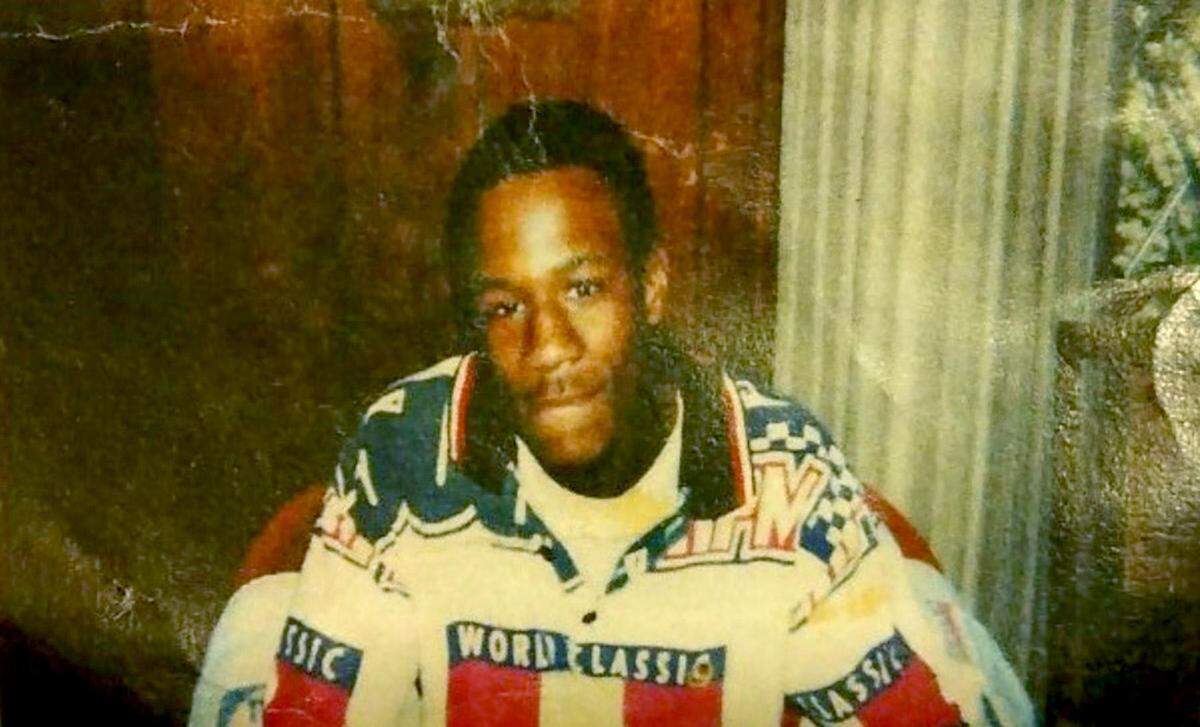
A more likely explanation of what may have led to Miller’s death, the experts say, is the fact that sheriff’s officers pepper-sprayed him at least three times at close range in jail. He was homeless and suffered mental problems most of his life, and also had asthma.
The Texas Rangers’ investigative report, obtained by the Star-Telegram, contains statements from sheriff’s officers who say Miller told a jail nurse “I can’t breathe” shortly after the officers sprayed him. There is no indication in the records that Miller was given medical care after saying he couldn’t breathe; he was found unconscious and face-down in his cell 38 minutes later. The jail’s call for an ambulance went out as a possible drug overdose. Miller was declared dead about 12 hours later at the hospital.
Hannah Lichtsinn, an internal medicine doctor and sickle cell expert in Minnesota, is one of the experts who reviewed Miller’s hospital records and other documents obtained by the Star-Telegram.
Lichtsinn said the doctors at John Peter Smith Hospital in Fort Worth tested Miller’s blood and noted his red blood cells were healthy, not anemic where they could deprive him of oxygen. Sickle cell disease is a hereditary blood disorder that can indeed cause sudden death, but it can be visibly diagnosed by doctors — almost always when someone is a child — and rarely exists in adults who don’t know they have it.
“I can tell you his kidneys were healthy until he had his cardiac arrest,” Lichtsinn told the Star-Telegram, describing her observations from the hospital records. “I can tell you that his blood counts were pretty normal until he had his cardiac arrest, and so was his liver. I can tell you that he wasn’t on drugs. And I can tell you he didn’t have sickle cell anemia.”
Miller’s widow and his father also say that he didn’t have the disease.
The Star-Telegram’s review raises questions about the thoroughness of the investigation by the state’s Texas Rangers, which examines all cases of in-custody deaths. The county medical examiner’s determination of death by natural causes, and the Ranger report that confirmed it, left no reason for the District Attorney’s Office to consider legal consequences. A natural death from a disease also makes it more difficult for Miller’s family to pursue civil action, which his widow has tried in a wrongful death lawsuit.
The Texas Ranger’s 252-page report includes inconsistencies in the statements from jail staff and law enforcement. The jail has video surveillance of Miller before and after he was pepper-sprayed, but the Ranger didn’t watch it; he asked a sheriff’s deputy to review the tape. The Sheriff’s Office has refused to release the video, with the backing of the Texas attorney general.
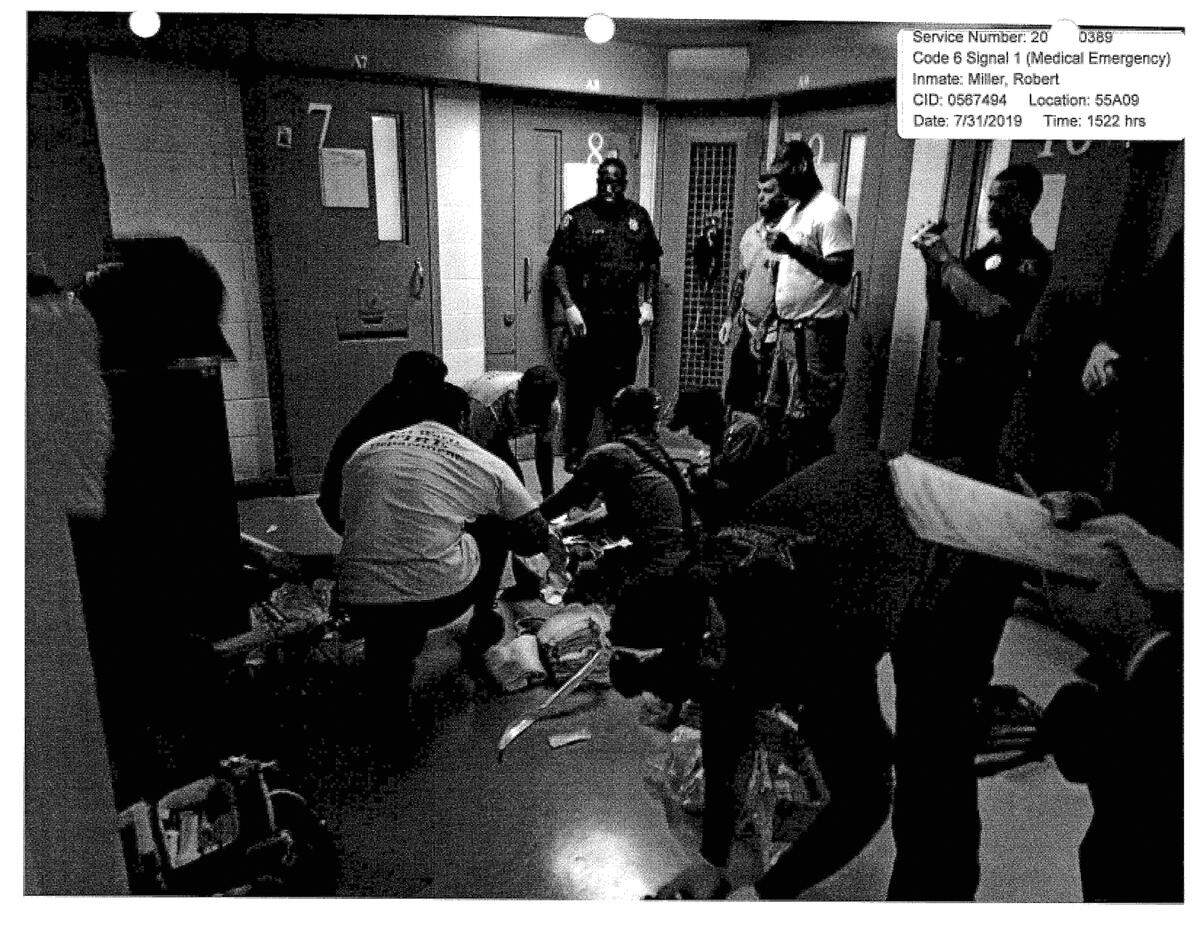
Copies of Miller’s hospital records — noting the swelling, lung damage and blood coming from his ears and nose — are included in the Ranger’s report, but there is no indication that the Ranger spoke with anyone at the hospital who treated Miller about whether a sickle cell crisis was possible.
The Star-Telegram wrote about Miller in April, describing his widow’s largely unsuccessful attempts for nearly three years to obtain information about what happened to her husband from the Sheriff’s Office and Texas Rangers.
But for the first time now, using records previously withheld by authorities, the Star-Telegram is able to piece together a clearer picture of Miller’s final hours, from when Fort Worth police officers first approached him at his makeshift campsite to when he was declared dead in the hospital less than 24 hours later, and the fateful decisions that experts say contradict the medical examiner’s findings.
[Editorial: Another death in Tarrant County jail. A dubious investigation. When will this end?]
‘A better life there in Texas’
Robert Geron Miller lived most of his 38 years as someone who fell through the cracks.
He had just married Shanelle Jenkins in Chicago in the early 2000s when he persuaded her to move with him to Texas. They had both struggled with homelessness and instability.
“I was in a similar situation and so our struggles bonded us together,” Jenkins said. “He just seemed like a really good guy, and he was telling me there was a better life there in Texas.”
Once in Fort Worth, Miller and Jenkins were again homeless.
Jenkins said she soon learned that Miller, who was sexually abused as a child, struggled with his mental health and had previous criminal charges, which made it difficult for him to find jobs and housing. Jenkins said that Miller worked mostly as a day laborer and took medication for depression and an antipsychotic to manage his aggravation, according to court records.
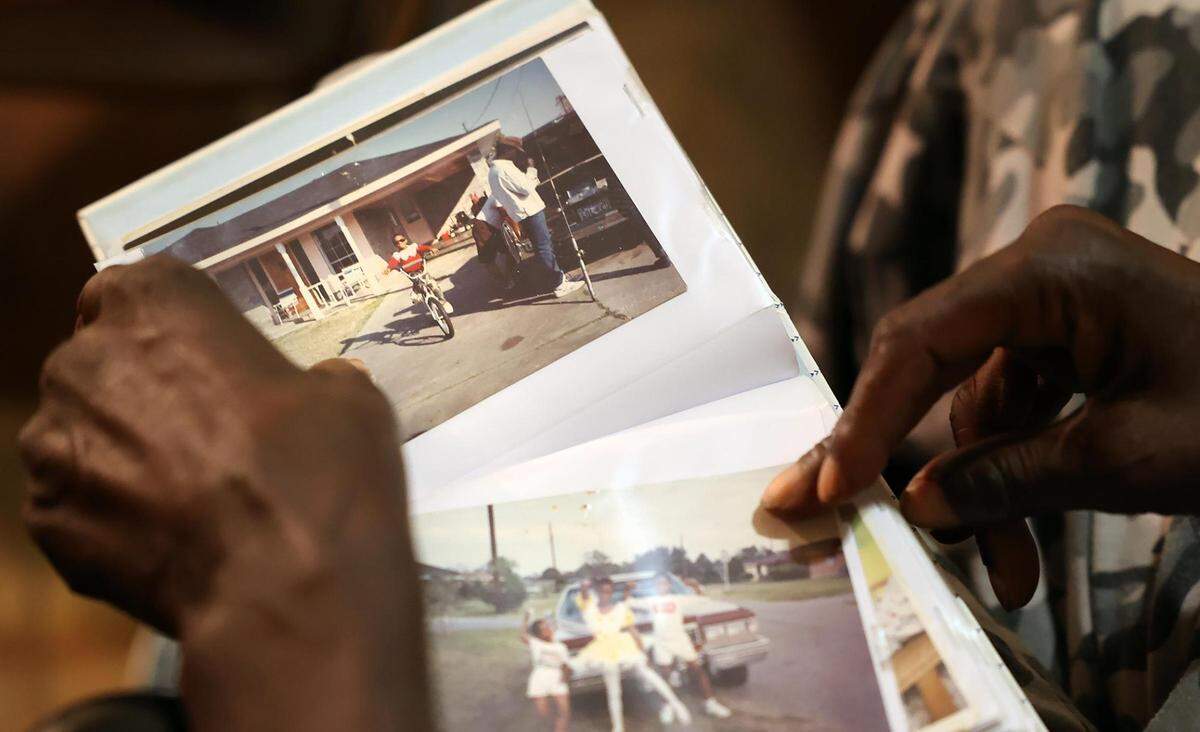
Jenkins said she looked beyond Miller’s record and saw him for the man he was: Someone who now tried to stay out of trouble and keep his wife safe.
By the time they had a baby, they found a housing program that would take a chance on someone with a record. But in 2015, the couple started to disagree over Miller’s mental health. He was ordered by the courts to get professional care but refused. Jenkins said he had PTSD from the abuse and subsequent treatments as a child and couldn’t bring himself to go back for treatment.
Miller left home in 2015. He and Jenkins stayed in touch and arranged playdates with their son. Miller’s father tried in vain to get him to stay at his south Fort Worth home when the weather was cold.
“I offered to get him food, do his laundry and he even said no to that,” Willie Miller said. “A father can only do so much.”
For three years, Miller lived on the streets and in shelters without causing trouble — he had no arrests in Tarrant County after 2016 until the morning of July 31, 2019, when Fort Worth police approached Miller at his camp on the edge of downtown. Someone had called to complain about him panhandling in the industrial area off East Lancaster Avenue, where scores of homeless people live in shadows of Interstate 35W’s overpasses.
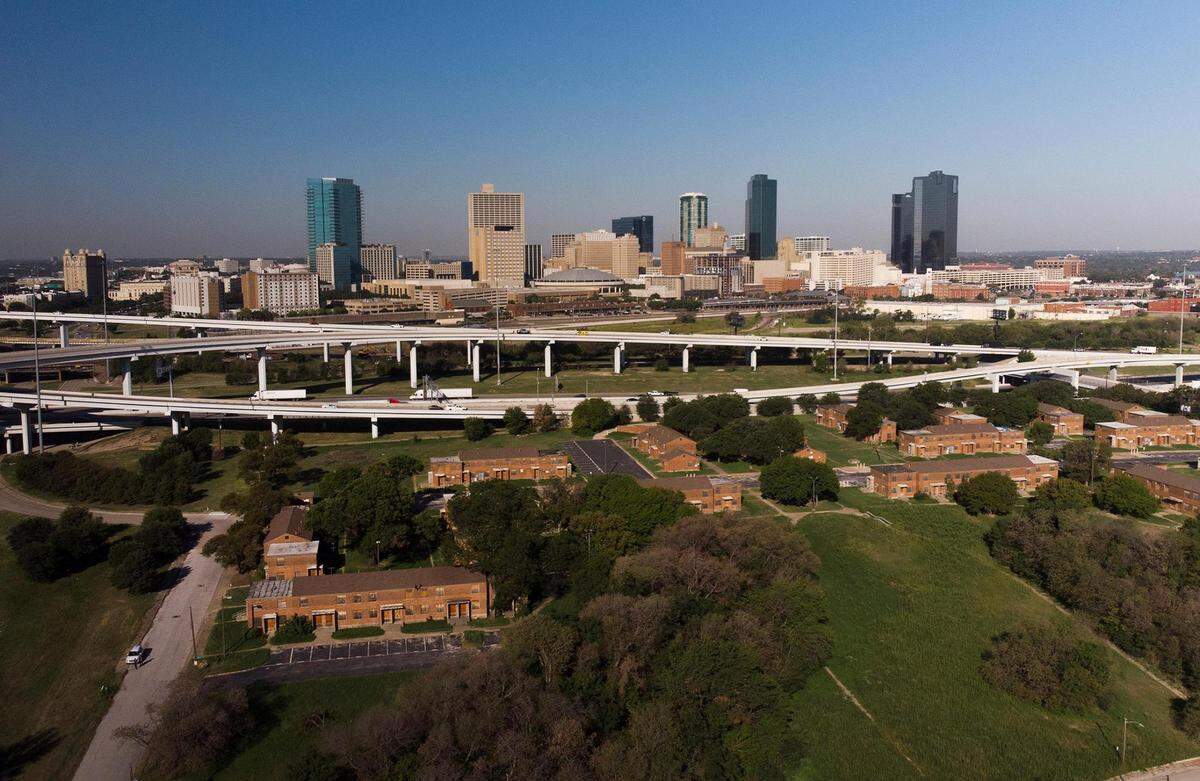
At 9:54 a.m., a Tarrant County deputy marshal approached Miller. Two Fort Worth police officers also arrived. The officers discovered that Miller had misdemeanor warrants stemming from cases prior to 2016 related to being homeless, including public intoxication and panhandling, along with $4,000 in unpaid court fines. The police planned to take him to a city jail where he’d probably be cited and released.
But Miller grew angry when the officers told him he couldn’t clean up his camp. Miller repeatedly kicked a patrol car door and said he hated the police.
After police took Miller to the city jail, an officer drove the patrol car to the city’s body shop for a damage estimate to the door. The officer obtained an estimate of $751 – $1 over the threshold to charge Miller with a higher misdemeanor and book him in the Tarrant County Jail.
Miller arrived at the county jail at 2:02 p.m. in the custody of sheriff’s Sgt. Sheldon Kelsey, who began a screening questionnaire. Kelsey and sheriff’s Officer Jason Wheeler later wrote in their notes for the Texas Ranger that Miller refused to answer questions. Kelsey confirmed on the questionnaire that Miller had mental health disabilities and PTSD due to a past incident with police.
Asked if he wanted to kill himself, Miller said no, but he said he wanted to “kill all y’all cops.” His comments were labeled as verbally combative. No physical aggression was noted.
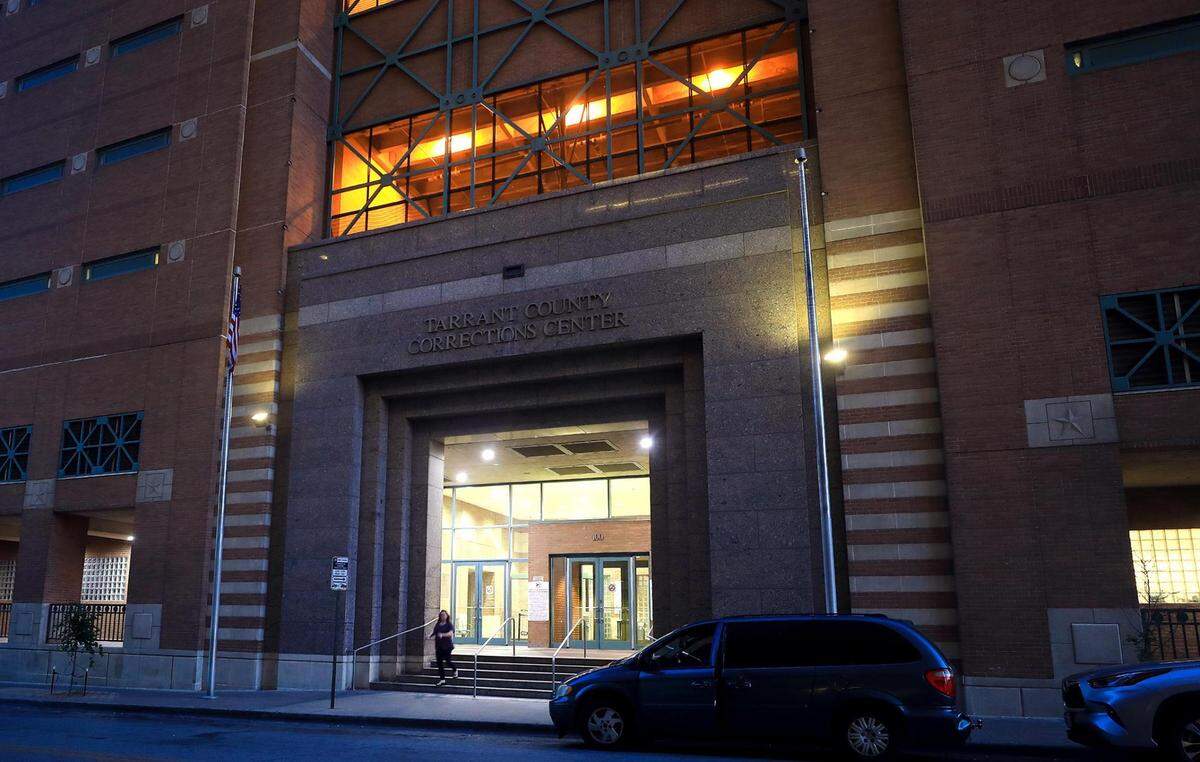
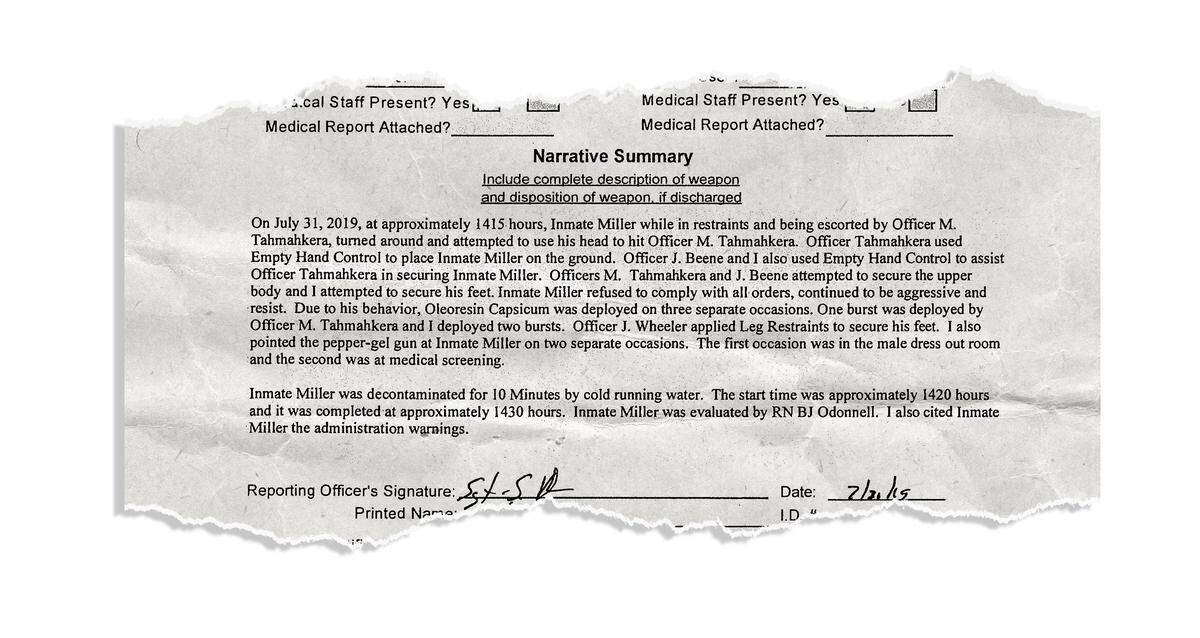
Miller was taken to another room 13 minutes later to be dressed in a jail uniform. That room isn’t equipped with cameras for privacy reasons. The accounts of what happened there come from written reports by Kelsey and two others in the room: sheriff’s officers Michael Tahmahkera and Jordan Beene.
Beene wrote that Miller was handcuffed from behind. The other two officers said Miller moved his hands from behind him to the front, which is difficult while handcuffed. A photo taken of Miller after he was pepper-sprayed shows his hands were cuffed in front of him, palms together.
A struggle began when Miller, who was 5-foot-6 and 160 pounds, made some kind of move, which is described differently between the officers. Tahmahkera wrote that when he went to place Miller face-down on the floor during a struggle, Miller “turned on me as if he was going to hit me with his head.” Kelsey wrote that Miller “tried to headbutt” Tahmahkera. Beene wrote that Miller “made an aggressive move towards” Tahmahkera.
The three officers reported Miller kept fighting them as they held him down. While on the ground, Miller was pepper-sprayed once by Tahmahkera and twice by Kelsey, they reported. They restrained his legs. He was carried to a cold shower for 10 minutes, which is a protocol after being pepper-sprayed, according to a pepper-spray expert interviewed by the Star-Telegram.
At 2:41 p.m., a screening nurse examined Miller with Kelsey in the room. Kelsey noted that Miller tried to remove a blood pressure cuff. The nurse noted that Miller was moving continuously but didn’t write about the cuff. She described him as “combative” because he wouldn’t answer questions. He said to her, “I need water, I have asthma, I can’t breathe.” The report doesn’t note whether anyone checked Miller’s lungs or gave him water. In response to his complaints, the jailers wrote that Miller was able to speak without shortness of breath.
When Miller kept refusing to answer the nurse’s questions, Kelsey aimed his pepper gel gun at him with the laser on.
At 2:58 p.m., Miller was carried face down to a cell by five jailers after he refused to walk. He was laid face down on the ground, released from his restraints and stripped of his jail uniform.
At 3:10 p.m., an officer saw Miller splash toilet water on his face. The officer said he asked Miller if he needed medical attention, and Miller shook his head. The officer signed an inspection log, writing only that he saw Miller on his back.
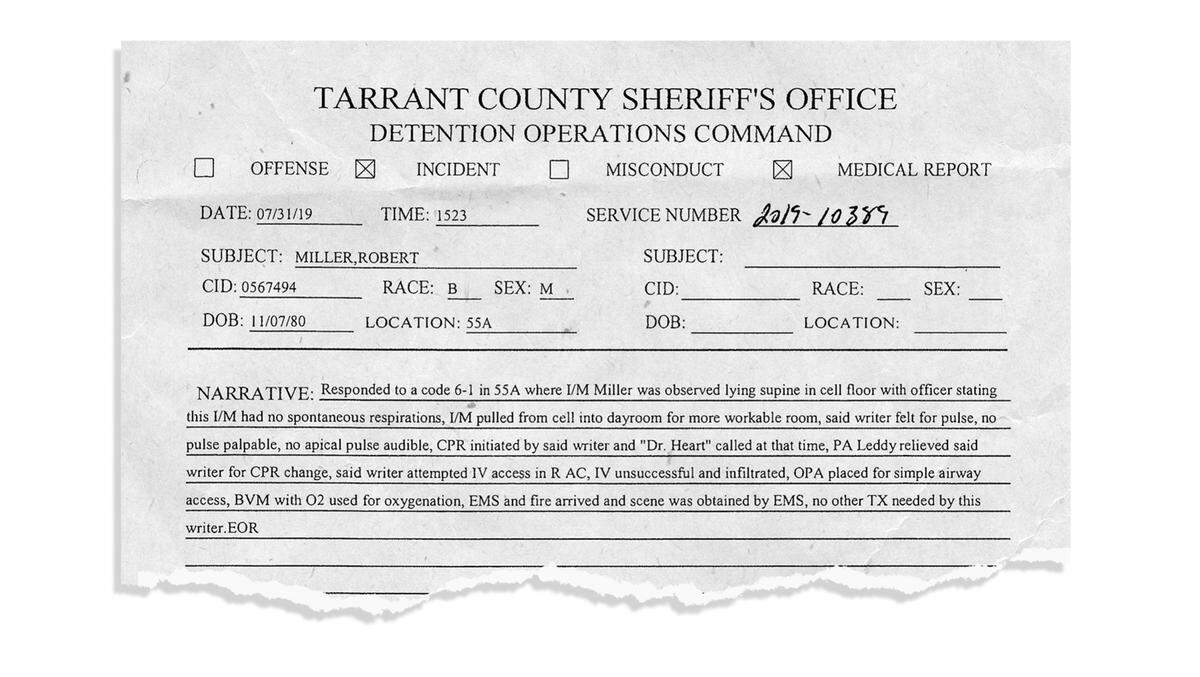
At 3:19 p.m., a nurse who checked on Miller found him unconscious. Staff called MedStar to report a possible overdose (this is the first time in the paperwork that suspected drug use is mentioned). Jail staff provided CPR for 20 minutes. Medics detected a weak pulse and took him to JPS Hospital.
MedStar’s protocol for someone who is pepper-sprayed is to rinse the eyes with copious amounts of water or saline and give breathing treatments, according to a MedStar official. None of the records obtained by the Star-Telegram indicate whether jail staff told medics that Miller had been pepper-sprayed.
JPS Hospital doctors reviewed Miller’s medical history, CT scans and test results, which found no drugs. According to an emergency room doctor’s notes, they knew at least by 4:45 p.m. that he had been pepper-sprayed. A CT scan of Miller’s chest showed injury in his lungs that indicated Miller experienced significant inflammation and/or buildup of fluid. He had two cuts on his forehead, and both of his brow bones were swollen.
Early the next morning, a doctor saw new swelling on Miller’s neck and blood in his ears and nose. Miller was declared dead at 5:45 a.m.
Dr. Richard Fries, a forensic pathologist, conducted the autopsy at the Tarrant County Medical Examiner’s Office. It was nearly a year later before the autopsy report was released publicly, listing the natural cause of death as sickle cell crisis.
The day before the report’s release, the medical examiner got a call from sheriff’s detective Mike Kline, according to Miller’s widow’s lawsuit. Kline had assisted the Texas Ranger with his investigation and had interviewed the jail officers after Miller died. It’s unknown what Kline and the medical examiner discussed.
The medical examiner’s office and JPS declined to comment for this story.
The Sheriff’s Office also would not answer Star-Telegram questions, citing litigation.
The District Attorney’s Office said only: “This office received and reviewed the Texas Rangers report and the Tarrant County Medical Examiner’s autopsy report regarding Robert Miller. The cause of death was sickle cell crisis. The manner of death was natural. No further action was taken.”
‘This person did not have sickle cell disease’
The Star-Telegram sought experts outside of Texas to review Miller’s medical records, which are included in the 252-page report by the Texas Ranger, Clarence “Trace” McDonald, who investigated Miller’s death.
One of them was Roger Mitchell, the former chief medical examiner for the District of Columbia who is now chair of pathology at Howard University. Mitchell said he was concerned that Miller’s death was attributed to a sickle cell crisis.
“The records from the hospital list active problems, yet none of those problems are sickle cell,” Mitchell said, pointing out that someone can’t die of a sickle cell crisis without having the underlying disease of sickle cell anemia or other sickling disorders.
Someone who suffers from sickle cell anemia would have lower than normal levels of hemoglobin, a protein that carries oxygen in a red blood cell. A measure of lower levels would be about six to 11 grams per deciliter, experts say. Miller’s levels were in the normal range and had tested a baseline of 14 during previous blood work noted in the Ranger’s report, said Lichtsinn, the internal medicine doctor and sickle cell expert in Minnesota.
Miller received a blood transfusion at the hospital, and doctors noted they hadn’t found the source for his bleeding, which caused a drop in hemoglobin levels.
It is not possible that someone could live to the age of 38 and not know they have the disease, said Jane Little, a sickle cell expert at UNC Health in Chapel Hill, North Carolina.
Because of the prevalence of the disease in Black Americans, babies are tested after birth and a diagnosis is noted on the birth certificate. That practice began in Texas before Miller was born.
“It’s a really devastating disease for people who have it,” Little said, adding that it causes life-long chronic pain. People with sickle cell anemia are often plagued by infections if left untreated.
Miller’s father, Willie Miller, said none of his children had sickle cell anemia. His son was not diagnosed with it when he was born.
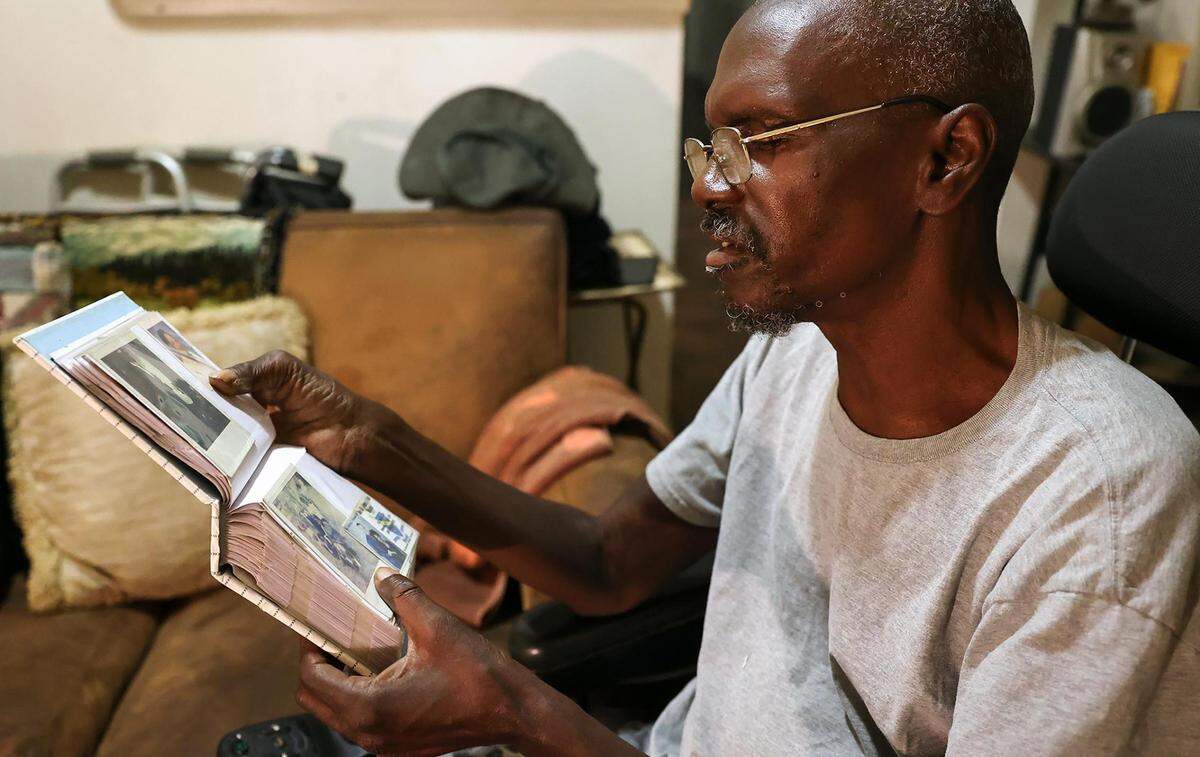
“His mom, when she was here, she took him to the doctor so much that it got me upset,” he said. “Even if he had a light cough then boom, to the doctor. So I would’ve known about it.”
Fries, the Tarrant County medical examiner, noted in the autopsy that Miller’s red blood cells had taken a sickled shape in death. Instead of being round, they were skinny, rigid and sticky, showing little to no oxygen in them.
However, Mitchell and Lichtsinn said red blood cells can take on a sickled shape after death if the person carried the trait for sickle cell anemia. When someone dies, their red blood cells naturally lose oxygen.
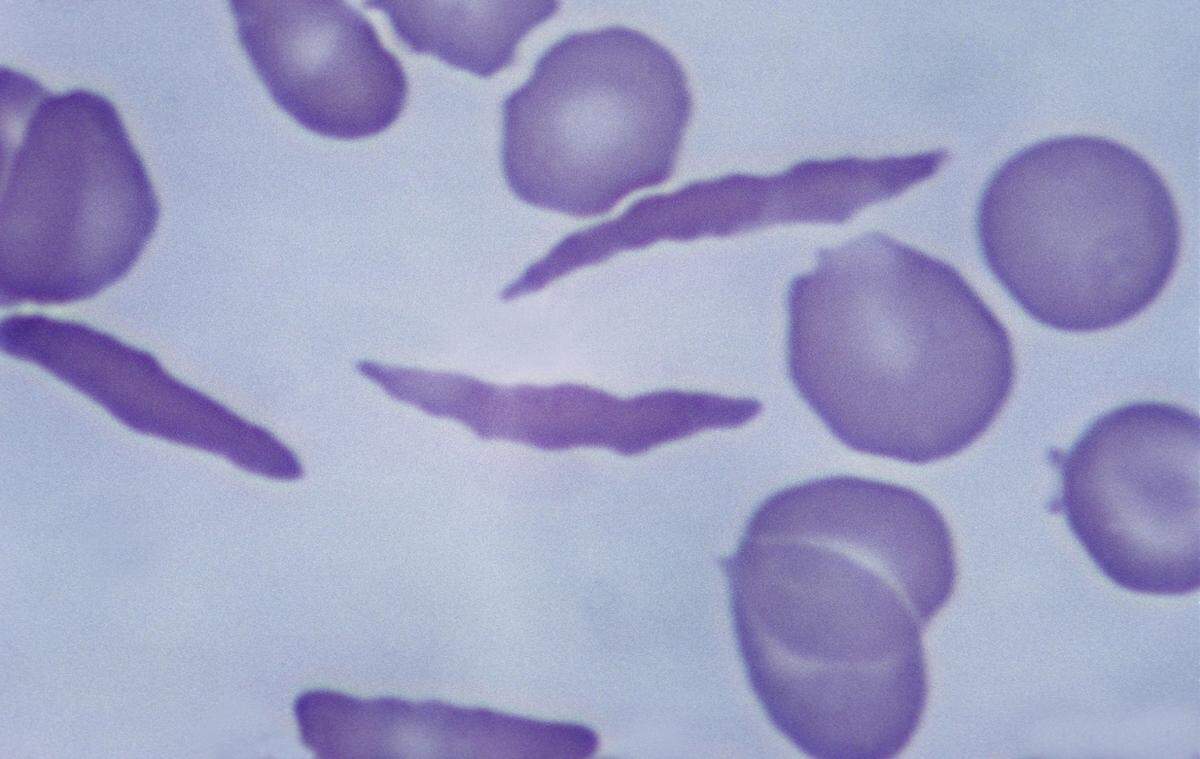
Miller likely carried the trait for sickle cell anemia and could have passed it on to a biological child, but Miller himself wasn’t afflicted with the disease, Litchtsinn said.
“When he was sick in the hospital, had already had a cardiac arrest and was on a ventilator, critically ill, even then his red blood cells did not show a sickle shape,” Litchtsinn said. “Only after he died, which tells me that this person did not have sickle cell disease. He likely had the trait as it’s incredibly common among the Black community in the United States.”
Roughly 10% of Black Americans carry the trait, which is almost always benign, according to the American Society of Hematology.
To make a proper determination of a sickle cell crisis, Mitchell said, a medical examiner should confirm that the person had a previous sickle cell diagnosis. Fries’ autopsy report doesn’t address that question, but his notes on his report do indicate that he read the hospital’s paperwork.
People who have experienced a sickle cell crisis say they suddenly feel immense pain in the back of their legs and lower back, Little said. Miller complained of a headache, knee pain and pain to his chest and lungs after he was pepper-sprayed, according to the jailer reports.
Sven-Eric Jordt, a professor of anesthesiology at Duke University who studies the effects of pepper spray on the body, said it’s not surprising that Miller would have felt chest pain, considering the amount of damage pepper spray can cause to lungs.
Pepper spray can cause chemical burns in lungs, block airways and trigger coughing and excessive mucus. It can start an asthma attack and cause bronchoconstriction, a condition that restricts the amount of air passing into and out of lungs. It can have a more serious effect on people who have asthma, as Miller did.
JPS doctors noted that Miller had signs of bronchoconstriction, and that the condition is what could have led to his cardiac arrest. Doctors also noted that Miller was in respiratory distress.
“The effects of the spray are so severe that you stop what you’re doing, and if you’re being violent, you can be subdued,” Jordt said.
That’s why pepper spray became a popular way for police to subdue suspects. But its label as a “non-lethal” form of control is misleading, Jordt said, especially when used inside a jail at close range. In small indoor spaces, the chemicals can’t disperse. And medical workers in jails and prisons often aren’t equipped to properly treat people who are sprayed, Jordt said.
“I think this is really a human rights issue and a human medical rights issue,” Jordt said. “If you basically have someone immobilized ... when they’re in handcuffs like this person, do you need to pepper spray them? I’m really concerned that this pepper spray was used indoors.”
JPS Hospital declined to answer general questions about how its doctors treat people who are pepper-sprayed, but Jordt said normal protocol would be to remove all clothing (which jailers had done) and wash out someone’s eyes with water or saline (the jailers showered him for 10 minutes), then treat any respiratory issues, which the hospital did, based on its records.
Miller’s death isn’t the first to be blamed on sickle cell anemia after a struggle with police. In a 2021 investigation by the New York Times, reporters found 47 cases involving people in custody. Nine deaths, including Miller’s, happened after police used pepper spray.
‘We absolutely believe that this is a cover-up’
Trace McDonald, the Texas Ranger who investigated Miller’s death, was hired by the sheriff’s office nearly two years after Miller died. He is now the commander over the narcotics unit. As a Ranger, he handled at least 20 in-custody deaths at the Tarrant County Jail between 2019 and 2021.
McDonald wasn’t in the building when Miller’s medical emergency was discovered, but he was immediately alerted and on his way to jail pod 55A, cell 9, as medics tried to revive Miller.
Sheriff’s Office crime scene investigators were already photographing the cell when McDonald arrived. Nothing unusual was found, McDonald noted. He and Kline, the Sheriff’s Office detective, talked to the officers involved.
“Rather than take individual written statements from the involved/witness officers, Detective Kline and I requested that each of the officers write a supplemental report,” McDonald wrote.
Each write-up was less than one page, and there were inconsistencies between them. If McDonald noticed those inconsistencies, he didn’t point them out in his final report.
Among the inconsistencies was whether Miller was handcuffed when he was pepper-sprayed, whether he was handcuffed in the front or the back, and whether he headbutted an officer or just moved his head.
McDonald didn’t watch any available jail surveillance videos himself, according to his report. He assigned Kline, the sheriff’s detective, to watch footage from Miller’s intake and report back to him. Kline told McDonald that he didn’t see anything criminal. There are no cameras in the room where inmates are changed, which is where Miller was pepper-sprayed, according to the jailers.
Dallas attorney David Henderson, who is representing Miller’s wife in her wrongful death lawsuit, said his office has requested a copy of all available footage from that afternoon. His request has been denied by the Texas Attorney General’s Office.
“We absolutely believe that this is a cover-up,” Henderson said. “He did not die of sickle cell anemia, and we know that Robert was mistreated in that jail.”
McDonald didn’t note in his final report whether he talked to anyone at the hospital who treated Miller. He also didn’t note if he contacted sickle cell experts or pursued a second opinion on Miller’s cause of death.
A Texas Rangers lieutenant, Jason Bobo, approved McDonald’s final report on July 27, 2020, nearly two months after the autopsy report was released.
The state’s Department of Public Safety, which oversees the Texas Rangers, did not respond to the Star-Telegram’s questions.
‘That’s still my child’
The Sheriff’s Office has tried to withhold nearly every detail about what happened to Miller inside the jail. Under Texas law, authorities can withhold that information by saying they consider the case to be under investigation.
After Miller died, the Sheriff’s Office did not reveal to a reporter that a struggle had occurred or that he was pepper-sprayed. A sheriff’s spokesperson at the time referred the Star-Telegram’s questions to the Texas Rangers, which declined to provide answers.
Jenkins, Miller’s widow, said she knew nothing about the circumstances of Miller’s death for nearly three years. She went back to the East Lancaster Avenue shelters where they had once lived and asked some of their friends from years ago if they saw what happened when police arrested her husband.
“He was crying as they were putting him in the police car,” she was told.

Her lawyer’s requests for Sheriff’s Office reports were repeatedly denied until this spring, when the state Attorney General’s Office ordered the release of five pages of narrative statements from jailers.
The Texas Rangers also withheld documents, though it provided a 10-page outline to two news outlets, including the Star-Telegram, in December.
In April, the Rangers released McDonald’s full 252-page investigative report to Jenkins and her lawyer after they were served with the lawsuit. It contains the witness statements, photos and other records not included in the Rangers’ earlier outline, including what JPS Hospital doctors and nurses observed when Miller was taken there unconscious; that Miller told a jail nurse he couldn’t breathe after he was pepper-sprayed; that the jail originally reported Miller’s cardiac arrest as a possible overdose; and that he was placed face-down on his cell floor after he was showered.
But those records came too late for Jenkins’ lawsuit, which she had filed in summer 2021 just ahead of a two-year cutoff for such litigation. Federal Judge Reed O’Connor dismissed Jenkins’ lawsuit in February, saying that she didn’t have enough information to claim wrongful death. Her attorneys say they didn’t have enough information because law enforcement hadn’t released it.
They have filed an appeal.
Jenkins’ slow but somewhat successful attempts to force the release of information could encourage other families who have told the Star-Telegram that they haven’t been able to obtain basic information from the jail about how and why someone died in custody.
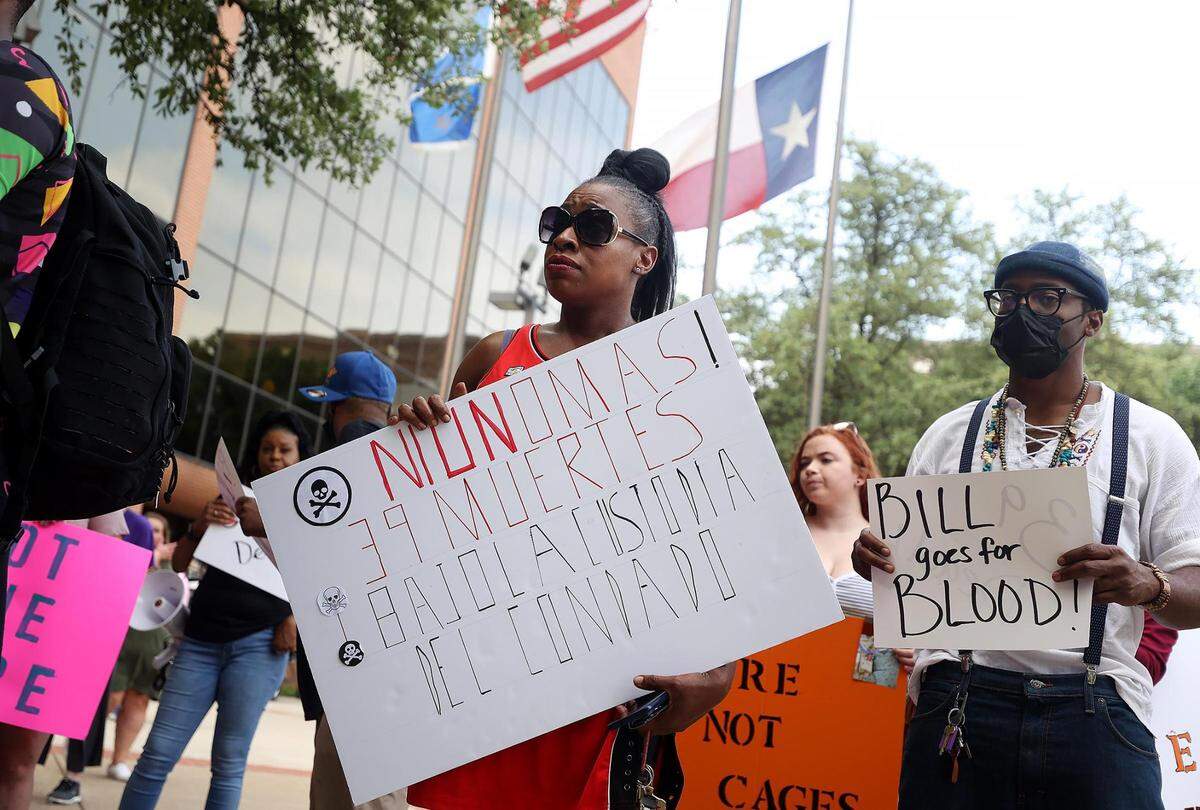
Previous Star-Telegram reporting has led to calls for more transparency and better communication with inmates’ families. There have been rallies and pressure put on Tarrant County commissioners to investigate the jail. Members of Broadway Baptist Church met in August with Sheriff Bill Waybourn to discuss improvements after reading the newspaper’s coverage.
Following the meeting, the Sheriff’s Office agreed to the church’s request to include a medical release form on a tablet that incarcerated people use.
But for Miller’s widow and his father, justice is the only thing that can bring them closure, they said.
Willie Miller didn’t know his son had been arrested until a chaplain called to say Miller was dying. Willie Miller uses a wheelchair and couldn’t immediately get to the hospital.
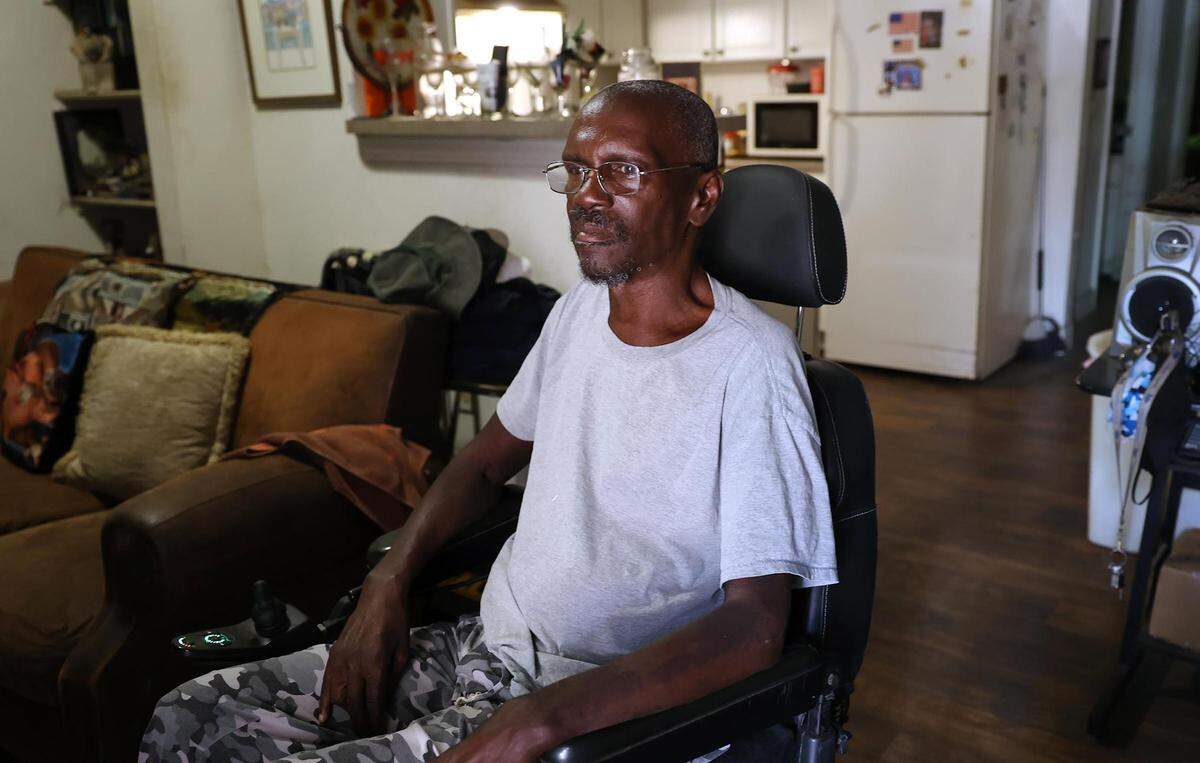
He took a bus and arrived the next morning. By then, Miller’s body had already been taken by the medical examiner. When Willie Miller was able to see the body, he noticed that his son’s face looked like he’d been in a fight, and his neck was swollen.
“Something was off about it,” he said.
When he tries to fall asleep at night, he still hears his son’s voice.
“I have to tell myself he’s not there,” he said.
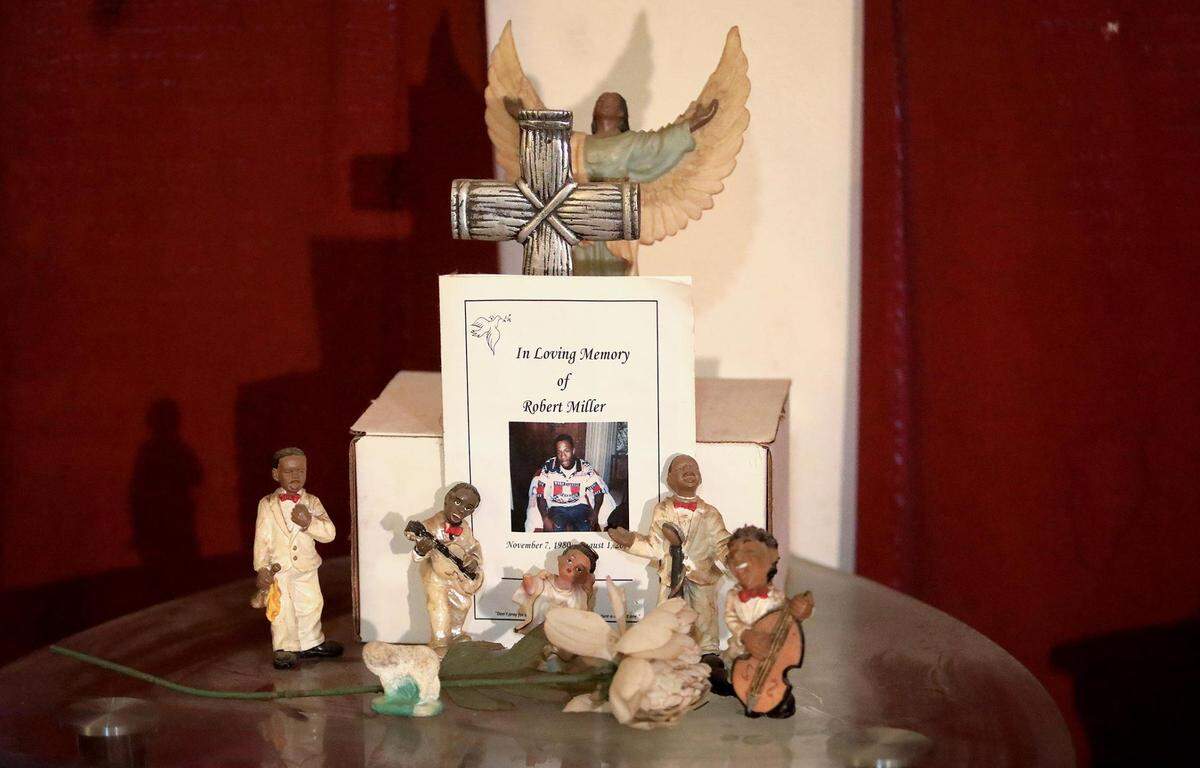
The father acknowledges that his son had struggles and wasn’t perfect. But that doesn’t mean he deserved what happened to him, he said.
“That’s still my child,” he said. “You punished my child, now who will be accountable? I just want justice. I need some closure.”
Jenkins has to now balance her fight for justice with her effort to raise their young son alone.
“I’m just doing things that Robert would have loved to do if he were here,” she said. “I’m going to the library with the kids, showing them books he would’ve loved. All we have left are our memories.”
This story was originally published October 13, 2022 at 2:12 PM.