Fort Worth community members at odds over location for proposed African American Museum
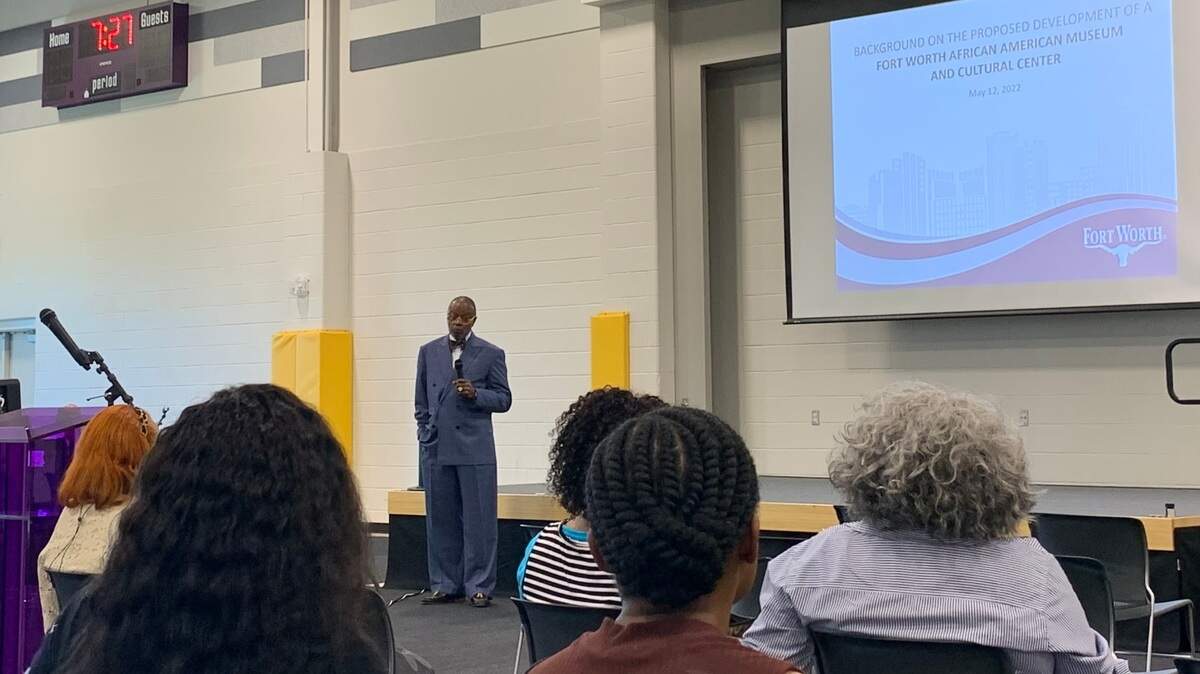
Community members Thursday evening voiced differing opinions on where the proposed African American Museum and Cultural Center in Fort Worth should be located.
Some at the public forum favored Historic Southside, while others advocated for the Cultural District.
The forum, held at the Como Community Center, was organized by a steering committee working on the project to get community feedback for where the museum and center should be located.
Steering committee co-chair John Barnett and assistant city manager Fernando Costa presented the top three site locations recommended by the committee. The committee has narrowed locations for the building using recommendations from a panel of nationally recognized museum experts, with fields focused on African American culture and art.
One location is a new build project in the Cultural District estimated to be about $35 million. Another is at Evans Avenue and Rosedale Street, also estimated to cost $35 million.
The top choice given by the panel is an adaptive re-use project in the Cultural District at 1300 Gendy St. Barnett said this building could be completed with an estimated $10 million.
Costa said he expects the city of Fort Worth to contribute at least $5 million for the project and even said about $10 million was likely. The rest would come from foundations, Barnett said.
The museum is still in the early stages of planning. Barnett said they still need to select a site, conduct a full feasibility study and get funding before the project can break ground.
Barnett, an art collector, spoke in favor of the Cultural District because of its accessibility to residents who need to learn African American history the most.
“This museum is not for Black people,” he said. “We know our own history. We’re building this museum for the ethnicities that don’t get to a chance to see our story unfiltered, unaltered, to come in and let the story be told.”
If located in Historic Southside, the African American Museum and Cultural Center would not be the only museum in the area. The National Juneteenth Museum will be there as part of a mixed-use development in the neighborhood.
Fort Worth resident Darryl Brewer spoke in favor of the Southside neighborhood, which has a greater Black population. Brewer said having the museum in Southside could bring economic advantages to the neighborhood and encourage people to come into a part of town they wouldn’t normally visit.
Brewer served as the economic development manager for the Fort Worth Black Chamber of Commerce until January. He said he has known about this project since its inception.
Brewer also said the demographic makeup of the steering committe should reflect the local community and its needs. He said it’s important to get a variety of age groups involved in the project, especially younger people.
The idea that non-Black residents won’t come to Southside to visit the museum is not entirely true, Brewer said, because there are examples of predominantly Black cities across the nation, such as Harlem, New York, that have attracted a diverse group of visitors.
Brewer said a museum in Southside would also help build the community and make it more attractive for visitors, rather than adding to an area that already has many museums.
“It’s not segregating because I just want to be by myself,” he said. “It is building yourself up first and then people will want to join because we feel like you’re worthy, you’re on equal footing instead of always building and looking for us.”
Kim Agoro, president of the Fort Worth Association of Federated Women’s Clubs, also spoke in favor of the Historic Southside location and pushed for more community representation within the steering committee.
Having the museum in Southside would also benefit the neighborhood youth, giving them access to a new building in their community, Agoro said.
“When will those kids get to see construction happening, a nice new building, something really awesome in their area?” Agoro said. “Why does everything have to be public clinics and liquor stores and Popeyes chicken?”