Tarrant County will ‘triage’ its crowded juvenile detention center. What that means.
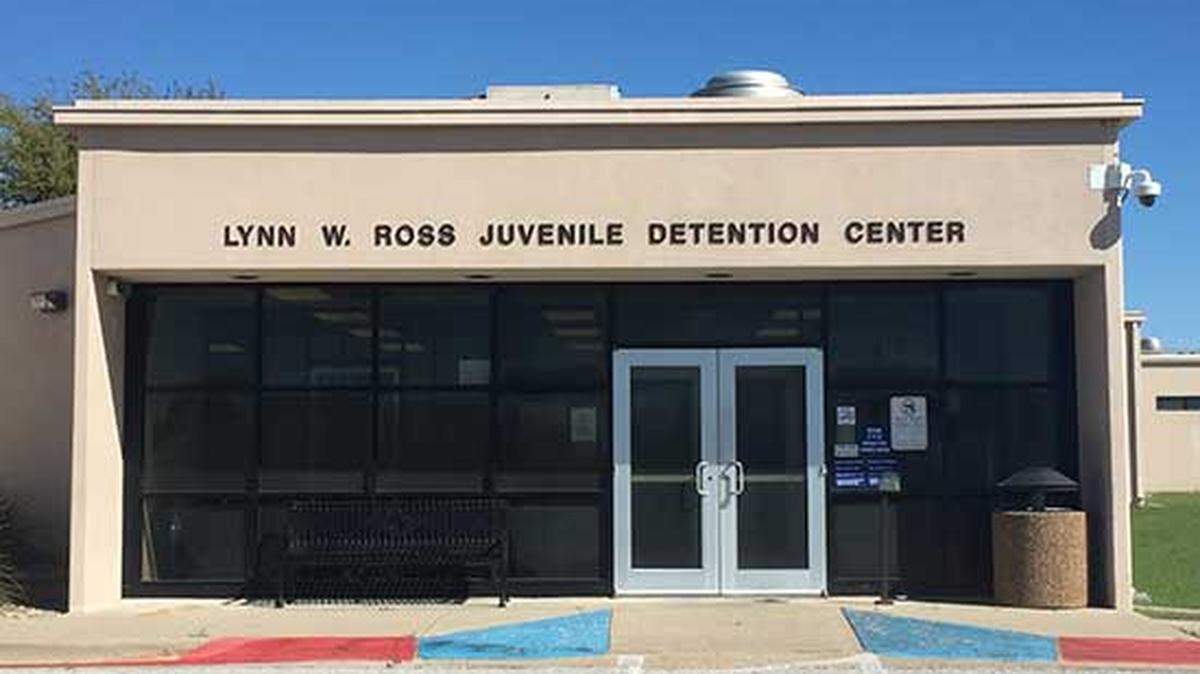
Overcrowding at Tarrant County’s Juvenile Detention Center has forced the Juvenile Detention Board to explore solutions and county Judge Glen Whitley to order an audit of the problem.
Some juveniles have slept on cots in the facility’s library and other common spaces because there aren’t enough beds. The county’s chief probation officer, Bennie Medlin, said those children have supervision, though the staff-to-juvenile ratio is not at state standards. There are 12 vacant positions including supervision, security and other support staff. Current staff have been working overtime to fill as many gaps as possible.
While the center has a capacity to house 120 juveniles, it’s only staffed for 104.
According to data released by Medlin, the average daily population rate has grown consistently since 2015 with a single drop from 2018 to 2019. This year, the average daily population is 118. At its highest, the center held 138 juveniles.
As of noon Wednesday, while the Juvenile Justice Board — made up of Tarrant County judges — met to discuss solutions, the juvenile center reported a population of 108. On Tuesday, 128 juveniles were housed there with 130 recorded on Monday.
Judge Robb Catalano, of Criminal District Court No. 3, suggested the group form a triage committee. If the population rises above 104 between noon Monday and Friday, the group would meet to give suggestions to Juvenile Judge Alex Kim, who is the only authority who can implement changes in the courtroom.
Kim would have to invite the committee to the 323rd court.
“These kids being held, I’m confident the vast majority of you would hold, too,” Kim said during the meeting. “I also recognize as parents or as educators or whatever background you may have, perspectives that I just don’t know ... at end of the day it’s still the 323rd’s decision to make. I think there’s a presumption that there’s kids being detained who shouldn’t be.”
Kim said he’d like to hear different perspectives and invited the judges to sit in on detention hearings to get a better understanding of why juveniles are being detained.
Before voting to form the triage committee, several judges voiced concern that the committee would have no power, and creating it only gives the illusion that something is being done to solve the problem.
“We’ve got to do something to manage it,” said Judge Ruben Gonzalez of the 432nd District Court. “This motion, although good in nature, has no teeth to it.”
Six judges voted against forming the triage team, and 11 voted for it.
Judge Glen Whitley was absent from Wednesday’s meeting due to a scheduling conflict but sent the board a letter, which Catalano read. It said the Commissioners Court would consider approving a contract next week with Carey Cockerell, who was Tarrant County’s director of juvenile services for 20 years, “to look more closely at the situation and potential remedies.”
Whitley said the board will await Cockerell’s audit and will support other solutions in the meantime.
“Let’s be clear,” Whitley wrote. “These are likely only temporary Band-Aids until we get a completed report. We need long-term, systemic solutions to the overcrowding.”
What is causing overcrowding?
The average length of stay per juvenile has increased every year since at least 2017, according to data. At the same time, detention admissions have dropped consistently since 2019, with 1,445 in 2020 and 1,174 in 2021.
In comparison, the juvenile detention center in Travis County — which also has a capacity of 120 beds — is 16% full, even with a similar uptick in violent crime.
During the board’s April 20 meeting, Medlin was asked how overcrowding could be up while admissions are down. Medlin said that’s something the board needs to investigate.
Medlin suggested short-term solutions, including the release of 50 juveniles who were being held on misdemeanor offenses or probation violations. He suggested they be managed through electronic monitoring or the Community Based Detention Program, which provides supervision.
The practice of detaining children until they reach a number of days with perfect behavior creates a situation where they’re held longer, Medlin said. He suggested suspending that practice until the population is under control. Medlin said behavior has been monitored and used as incentives in the juvenile center before, but the practice of detaining children based on those metrics only began under Kim, who later denied that accusation.
It wasn’t clear Wednesday whether either of those recommendations had been taken. Kim said some of the juveniles facing misdemeanor charges don’t have a place to be released to yet.
There were 14 juveniles who were awaiting transfer to the Texas Juvenile Justice Department. Catalano said he called TJJD to request they be picked up immediately. He said he also unsuccessfully tried to see if some juveniles could be housed in Collin and Dallas counties.
Kim said his solution would be to add more beds.
He pulled state data and found that of the larger Texas counties, Tarrant has the fewest beds per capita. Dallas County has 22 beds per 100,000 residents, Bexar has 14 and Travis has almost 10. Tarrant and Harris counties each have fewer than six beds per 100,000 residents.