Juveniles sleep in library as Tarrant County’s detention center is over capacity
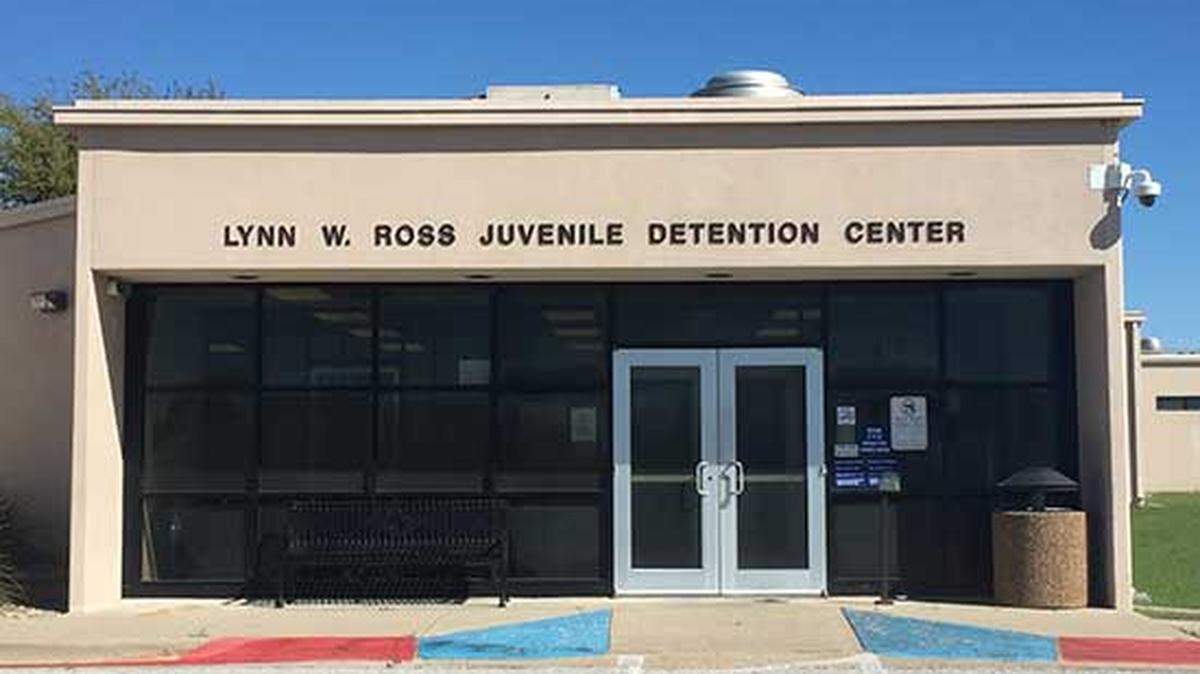
Overcrowding at Tarrant County’s Juvenile Detention Center has created an unhealthy and unsafe environment for youth and staff members over the last few months, according to the county’s chief probation officer.
Bennie Medlin spoke to the county’s Juvenile Detention Board last week. He made recommendations, though the reasons for the overcrowding and how to resolve it seemed to divide a few of the board’s judges.
In the meantime, the overcrowding has forced some juveniles to sleep on cots in the facility’s library and other common spaces. Medlin said those children have supervision, though the staff-to-juvenile ratio is not at state standards — there are 12 vacant positions including supervision, security and other support staff. Current staff have been working overtime to fill as many gaps as possible.
How to fix detention overcrowding
The average daily population rate has grown consistently since 2015 with a single drop from 2018 to 2019, according to county data. This year, the average daily population is 118 in a center with the capacity to hold 120 juveniles. At its highest peak, the center held 138 juveniles.
It’s staffed for a capacity of 108.
The average length of stay per juvenile has also increased every year since at least 2017, according to Medlin’s data.
At the same time, detention admissions have dropped consistently since 2019, with 1,445 in 2020 and 1,174 in 2021.
In comparison, officials in Travis County, which also has a capacity of 120 at its juvenile detention center and is similarly facing an uptick of violent crime, told Medlin their center is 16% full.
Asked how overcrowding can be up while admissions are down, Medlin said that’s something the board needs to investigate.
“I say that this is a systems issue and that requires us as a system to look at the policies and practices that are contributing to who gets retained and how long,” Medlin told the board. “This is a complex issue.”
Medlin suggested several short-term solutions, including the release of 50 juveniles who were being held on misdemeanor offenses or probation violations. He suggested they be managed through electronic monitoring or the Community Based Detention Program, which provides supervision.
The practice of detaining children until they reach a number of days with perfect behavior creates a situation where they’re held longer, Medlin said. He suggested suspending that practice until the population is under control. Medlin said behavior has been monitored and used as incentives in the juvenile center before, but the practice of detaining children based on those metrics only began under Judge Alex Kim, who later denied that accusation.
When asked by Judge George Gallagher to explain why Kim has ordered certain juveniles to be detained, Kim said the law prohibits him from speaking about his decision-making during detention hearings at a public meeting.
Gallagher didn’t return a request for comment seeking clarification of his in-meeting remarks.
Kim said his solution would be more beds.
He pulled state data and found that of the larger Texas counties, Tarrant has the fewest beds per capita. Dallas County has 22 beds per 100,000 residents, Bexar has 14 and Travis has almost 10. Tarrant and Harris counties each have fewer than six beds per 100,000 residents.
“We don’t have the beds that other counties do based on population,” Kim said. “We don’t have the bed space that other counties do, so when you’re being told that these other counties are at half capacity, well naturally we should be at full capacity because we don’t have the beds.”
The board will reconvene on May 4 to talk about solutions, including the possible addition of court referees.