‘Broken system’ sends North Texas students with disabilities from classroom to courtroom
READ MORE
From classrooms to courtrooms
A Star-Telegram investigation found that Dallas-Fort Worth schools push some children who need special education services out of the school and into the criminal justice system.
Expand All
A Fort Worth mother of two had been waiting in the assistant principal’s office for two hours to pick up her son when, from down the hallway at the Northwest district elementary school, she heard her 6-year-old scream.
The woman, who the Star-Telegram is referring to by her initials to protect her son’s identity, was out of the office in an instant, following the sound of her son yelling to the closed door of his classroom. The mother, H.H., audio-recorded the interaction on her phone.
“That’s my son,” H.H. yells in the recording, made in December 2019. “Open up the door now, or I’m calling the cops.” In the background, a child’s guttural scream can be heard.
Inside her son’s classroom, three staff members had cornered H.H.’s son, she said. The first-grader, who is on the autism spectrum and has anxiety disorders, had red marks all over his body and had urinated on himself. In the audio, the child is heard crying. He hits a staff member, a slap that can be heard on the recording.
“This is what we do when a child is upset like this,” a man says about restraining the child. “This is what we’re trained to do. But when he’s hitting us and yelling at us, that’s how we transport him.”
The staff member told H.H. they had been trying to move the boy after he refused to leave the room because he wanted chocolate from the classroom’s advent calendar, H.H. said.
She left the building and held her child in her arms, both of them crying. He looked up at her.
“They hurt me,” he cries in the audio recording. “They grabbed my arms.”
H.H. took her son to Cook Children’s Medical Center, where staff examined him, and then she went to the Roanoke Police Department to report her son was being abused. But her son was afraid to talk to the officers, she said.
“He said, ‘Please don’t let them arrest me,’” H.H. said. “I said, why would (they)? And he told me the school resource officer told him, ‘If I kept acting bad, he will arrest me.’”
H.H. and her attorney filed a lawsuit against the Northwest school district in 2021, alleging the district violated the Individuals with Disabilities Education Act by not approving services for her son, even after a private psychologist diagnosed symptoms associated with autism. Based on school staff evaluations, the district determined he did not meet the criteria for special education services. H.H. requested an independent evaluation, which the district denied and subsequently requested a due process hearing through the Texas Education Agency in April 2019.
In court documents, the district said its panel of specialists conducted a series of tests that found the child “did not qualify for special education and related services as a student with autism, a speech impairment, or a specific learning disability, or any other special education eligibility.” A hearing officer sided with the school.
H.H. appealed that decision through the lawsuit, and a federal district judge ruled in 2021 that the school did not violate IDEA. H.H. appealed to the 5th Circuit Court of Appeals. The appeal was ongoing as of March.
Under federal privacy laws, districts cannot address a specific student’s affairs, and Northwest district spokesman Anthony Tosie said the district cannot comment on pending litigation. Tosie referred the Star-Telegram to Northwest ISD’s restraint policy, which says restraints are used in rare emergency situations and in accordance with school policies. Northwest follows federal and state laws and regulations in regards to special education services, Tosie said.
Because of his perceived misbehavior at school, according to his mother, the 6-year-old child at Northwest ISD was threatened with arrest. Other children with disabilities face more than a threat — they face criminal charges.
‘Broken’ system
Through interviews with parents, advocates, teachers and administrators, the Star-Telegram found that Dallas-Fort Worth schools push some children who need special education services out of school and into the criminal justice system for perceived misbehavior. Due to a lack of accountability at the state level and a lack of resources in schools, experts say, vulnerable students do not receive the services they need — which can cause behavioral problems — and wind up in a courtroom instead of a classroom.
Across the country, children with disabilities are disproportionately incarcerated.
Up to 85% of youth in juvenile detention facilities have disabilities that make them eligible for special education services, yet only 37% receive those services while in school, according to the National Council on Disability.
Since 2017, Fort Worth-area schools have referred a total of 3,443 students to the Tarrant County Juvenile Detention Center. Students are considered to be referred by a school if they were charged or arrested for a school-related incident. Data from the juvenile detention center does not specify whether students have disabilities.
But Bennie Medlin, director of Juvenile Services in Tarrant County, estimated about half of the children held at the Tarrant County Juvenile Detention Center have some form of mental health or developmental diagnosis. This includes students with mental health conditions as well as children with developmental or learning disabilities, such as dyslexia, attention-deficit/hyperactivity disorder or autism; and those with behavioral disorders.
“They might be struggling with school or be behind in school and struggling to catch up,” Medlin said. “They’re struggling academically and they act out, and that ends up getting them called out and pushed into the alternative program. And they continue to act out, and that ends up getting them pushed into the juvenile justice system.”
The more often children are suspended or sent to an alternative discipline program, the more likely they are to be pushed into the juvenile justice system, according to a School to Prison pipeline study by Texas Appleseed, a Texas nonprofit that “works to change unjust laws and policies.”
One former school administrator, who is now a disability advocate in Dallas-Fort Worth, has seen students criminally charged over everything from throwing Chapstick to trying to break a pencil in half.
“It’s so disheartening to see all of these children needlessly be denied services to the point that it is causing emotional and physical harm,” attorney and former school district administrator Elizabeth Angelone said. “In a system that is so broken, I don’t know if it can be fixed.”
Texas’ problems in special education are well documented. Investigations such as the Houston Chronicle’s series “Denied” have uncovered policies that left thousands of children without special education services. The federal Office of Special Education Programs laid out a corrective action plan for Texas’ special education program in 2018. Through subsequent evaluations, the federal government found while Texas implemented some of the initial requirements, the state was still non-compliant with the Individuals with Disabilities Education Act as of September 2021.
In response to questions from the Star-Telegram, the Texas Education Agency said in an email that the TEA “has long since completed every activity in the original plan and continues to complete ongoing requests from (the Office of Special Education Programs) expeditiously.”
The TEA said the Office of Special Education Programs “has provided little to no support or resources throughout most of the process.”
Escalation at school
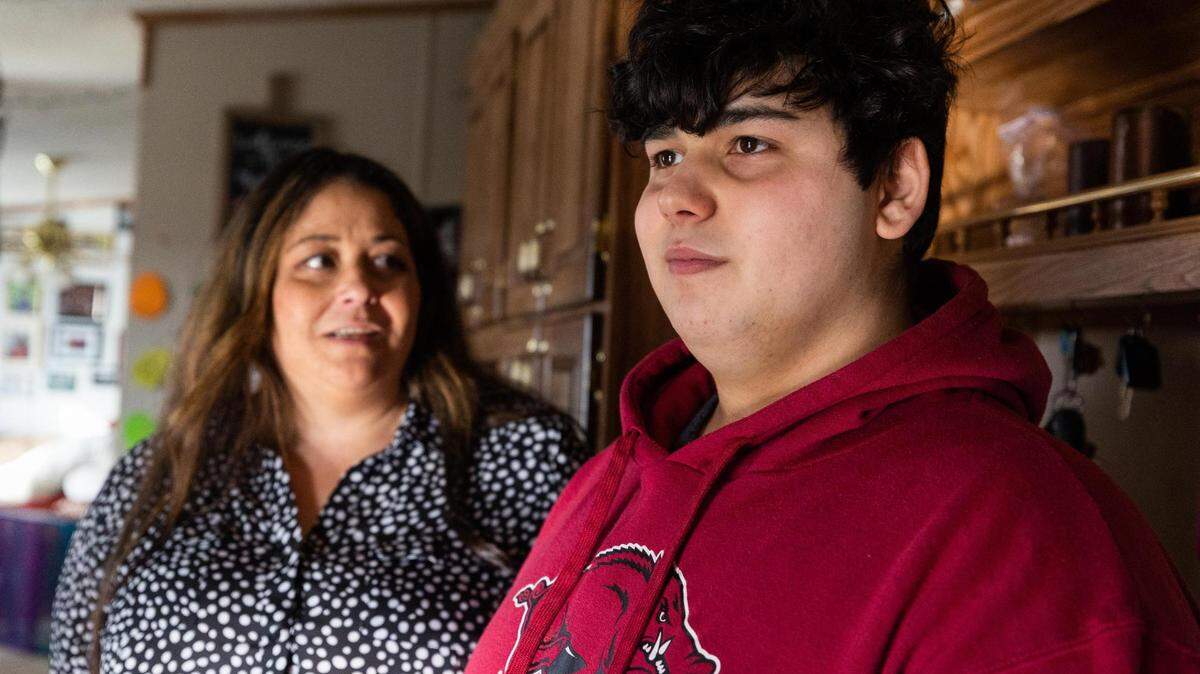
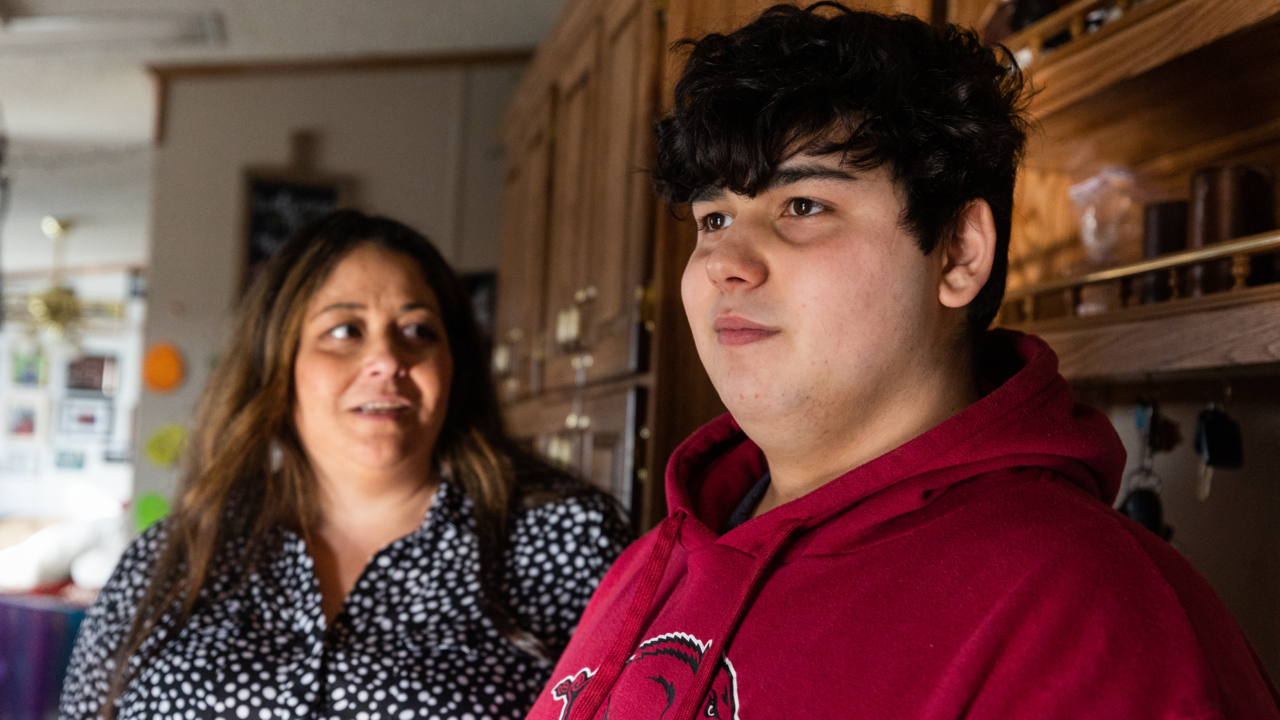
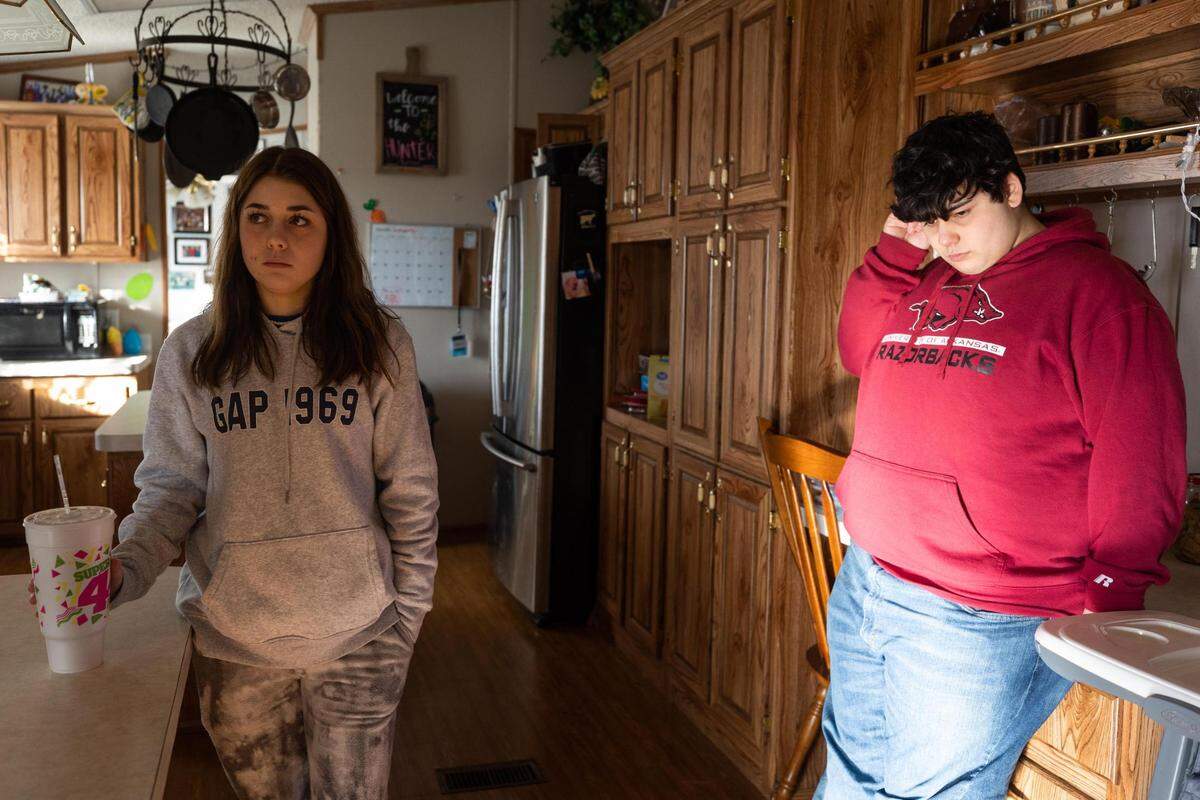
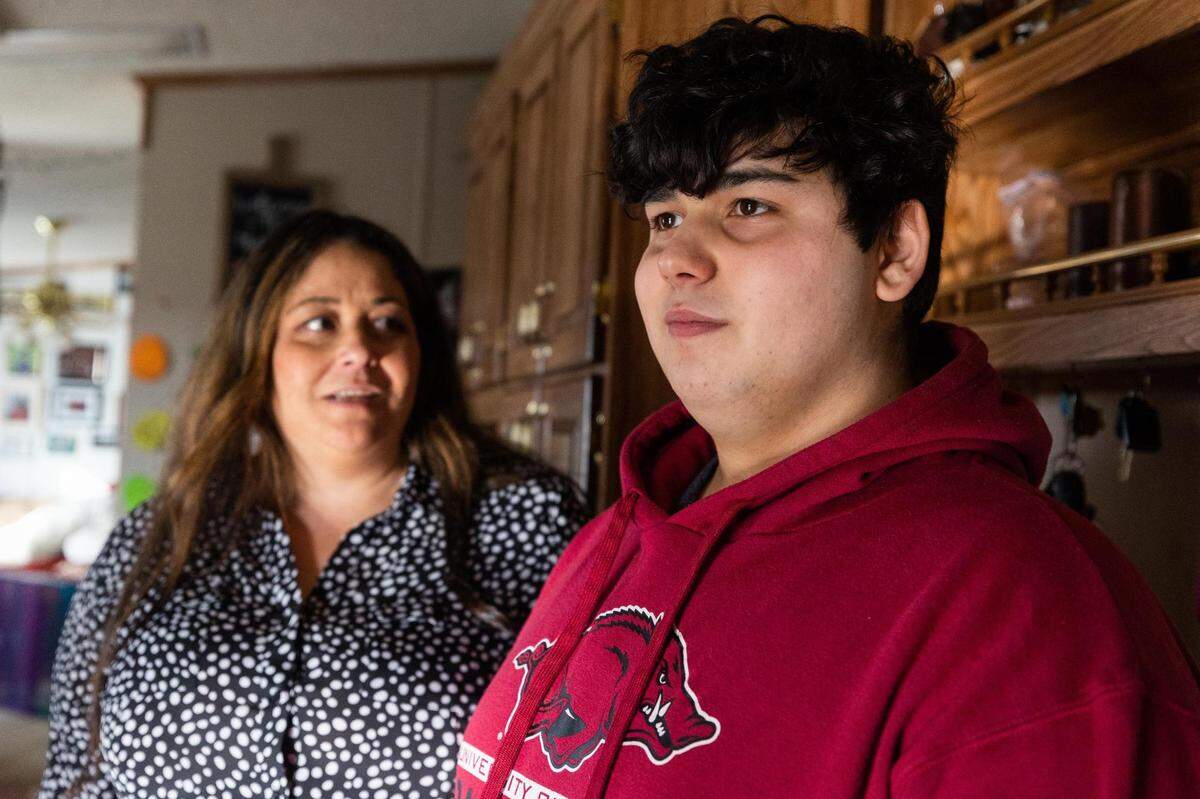
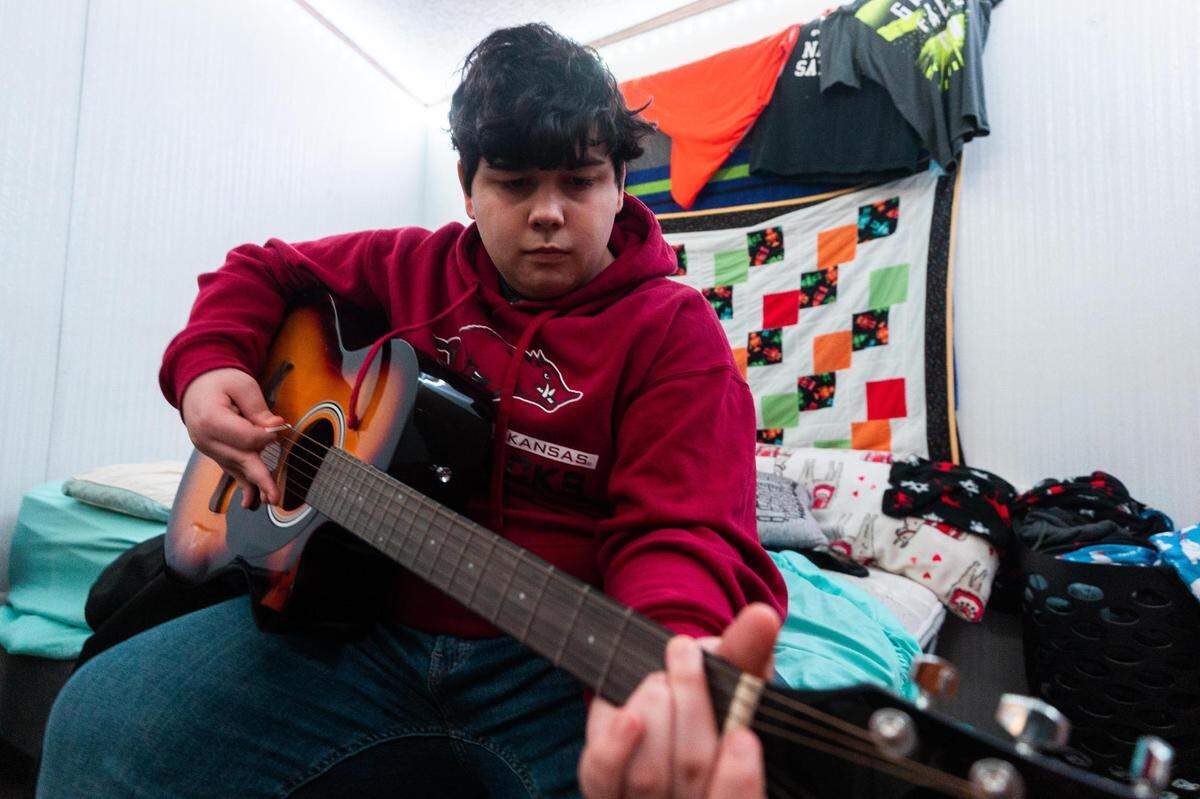
Aden Stasney, 15, likes to play chess, talk with friends on Xbox and figure out how to fix electronics, including his family’s car headlights and lamps. Aden, who is on the autism spectrum, also has specific things he does not like, such as being touched or having his possessions taken away. Sometimes people, noises and certain situations overstimulate him.
Those sensory challenges are part of the reason Aden’s mother, Angelita Hunter, has worked with his school in the Van Alstyne school district — a small school district north of McKinney — to create an Individualized Education Program that works best for Aden and his teachers.
Some people might picture special education as a room at the end of a school hallway. But in the past decade, most special education services have shifted to take place inside general education classrooms, said Jolene Sanders, an advocate with the Coalition of Texans with Disabilities. Staff use modifications — which can include more time allotted on tests, behavioral support, quiet time and more — to help each child learn successfully.
The modifications and accommodations are outlined in an Individualized Education Program or Plan, known as an IEP. IEPs, which are legally required for students who qualify for special services at school, are written education plans to address students’ learning needs.
Aden’s IEP, for example, included instructions that his teachers and teacher’s aides give him additional time and help on reading assignments, and gave Aden the ability to ask for quiet time alone if he felt overwhelmed.
But staff at Aden’s school in Van Alstyne ISD often deviated from the plan the school created and agreed to follow, Hunter said. Instead, a pattern of escalation led to the 15-year-old facing criminal charges, she said.
Aden’s school documents show how relatively small problems escalated quickly. For example, in October 2017, Aden did not want to go to P.E. and kicked a chair, according to a document from Van Alstyne Middle School. Staff classified the action as “property destruction” and restrained him. He reacted by kicking the teacher repeatedly.
“They were attacking the behaviors, but not examining why the behaviors were happening,” Hunter said.
Van Alstyne Middle School said the district cannot comment on specific students due to privacy laws. In response to questions about special education services, a district spokesman referred the Star-Telegram to the district’s policies and procedures.
“The District diligently complies with all state and federal laws and provides students with disabilities a free, appropriate public education at all times,” the spokesman said via email.
In fifth grade, Aden started to go blind in his right eye, which intensified some of his triggers. Bright lights hurt his head, and he had a headache all the time. Three months later, an MRI revealed three lesions inside Aden’s brain. In February 2020, doctors diagnosed a central nervous system demyelinating disease, in which one’s immune system attacks optic nerves and causes inflammation.
On Sept. 25, 2019, Aden requested to go to his “calm down” room. He went into an unused classroom with a blanket and turned off the lights.
A teacher’s aide walked in and turned on the lights and told Aden it was time to get up, Hunter said. Aden said no; his head hurt and he wanted more time.
According to Aden and documents from the school, a scuffle started between the two. Aden turned off the lights; the teacher’s aide turned them back on. Aden tried to get around the aide, and she tried to put him in a restraint — Aden described the restraint as the teacher choking him with his hoodie. Aden pulled away, grabbed an umbrella and brandished it at the teacher’s aide, documents say. Aden hit the teacher’s aide with the umbrella, according to the aide’s report and an email labeled “witness statement” from another teacher.
The next day, the aide went to the local police department and filed felony assault charges against the seventh-grader. On Sept. 30, 2019, the Van Alstyne police chief emailed Van Alstyne school administrators a formal notice that Aden was charged with aggravated assault with a deadly weapon and assault of a public servant, according to school documents. In charging documents, officials say Aden hit the teacher’s aide with an umbrella, threatened her and shoved her. Aden’s case was ongoing at the time of publication.
Hunter said the altercation never should have happened. If staff had followed her son’s IEP and worked with him instead of constantly prodding him, she said, the 15-year-old would not be facing felony charges.
Hunter, who is a court supervisor at the McKinney Municipal Court, said she has watched juveniles be shuffled through the court system without law enforcement or attorneys understanding some of the diagnoses that may have landed them there.
“A lot of school districts want to use courts as the disciplinary course,” Hunter said. “There are too many intercepts that fail that lead our children into the criminal justice system. Once they’re in there, they’re labeled with that.”
Hunter has coordinated with other officials to create the Texas Juvenile Mental Health and Intellectual and Developmental Disabilities Law Bench Book. She travels to other counties to talk with police departments, judges and attorneys about special education law and why disabilities matter in juveniles’ cases.
Crisis mode
Van Alstyne is not the only district that, according to parents, failed to give their children appropriate services. Advocates like Sanders said parents rarely know the services their child is legally entitled to, and districts don’t always implement education plans that help the child. Even if the plan is written out well, teachers and staff might not follow the IEP.
In an email, the TEA answered questions from the Star-Telegram about special education services in Texas. The agency said each school system is monitored annually to ensure it is complying with requirements. The monitoring system, according to the TEA, is “comprehensive and is accompanied with extensive training and technical assistance to school systems.”
However, advocates say the TEA does not effectively monitor each district. Sonja Kerr, an attorney who specializes in special education, said a continued lack of resources and leadership exacerbates the problem.
“I can tell you that it’s all about leadership on the state level,” said Kerr, who practices law in more than a dozen states. “And we in Texas do not have the state department of education leaders who will get done what needs to get done. And that means telling staff at the top levels in the district what needs to happen.”
Christy Balraj was a teacher and an administrator in several Fort Worth schools over the course of 30 years. When she retired, she became the director of Parents Resource Network — a nonprofit group that helps parents and schools coordinate services for and supports children with disabilities. She hears from parents across Dallas-Fort Worth who do not know where to turn to get help for their child in school.
“We get two types of phone calls from parents,” Balraj said. “Either they are looking for information, or they are in crisis mode.”
Parents might be in crisis mode if the child is not getting the services they need, the parent does not feel like the district is listening to them or “they are new parents who have no idea where to start,” Balraj said. Since the pandemic, the number of “crisis calls” from parents has skyrocketed.
“The percentage of calls that everyone is getting that people are in crisis mode has jumped from 20% to 80%. That’s a guess,” said Shannon Rosson, the project coordinator at Parents Resource Network. “But it’s more than doubled. And probably tripled by now.”
Anne Henshaw, a Dallas-Fort Worth mother and member of the Council of Parent Attorneys and Advocates, comes from a family of educators and works with families to help them advocate for what their children are legally allotted in schools. She frequently sees students who do not receive the services they need — and that lack of services manifests itself in what’s seen as misbehavior at school.
Children with dyslexia, ADHD, autism and other conditions who require services in schools are not predisposed to bad behavior. When a child with a learning difference or disability misbehaves in school, that’s usually indicative of an environmental problem, multiple sources said.
“Students with disabilities are vulnerable for many reasons,” said Henshaw, who chose to homeschool her son, who has Down syndrome, due to COVID and concerns about the lack of equity and inclusion in TEA guidelines and policies. “But when it comes to students with behaviors who are not coping, when we don’t serve those students, we leave them vulnerable to being funneled into the criminal justice system unfairly. We need to intervene now.”
Disproportionate discipline
Students, such as H.H.’s son and Aden, are disciplined repeatedly for behaviors that are directly caused by their schools’ failure to help them, advocates say. In the moments a student with disabilities most needs help, the student instead often faces discipline.
Texas is split into 20 educational regions. Region 11 covers 10 counties in North Texas and includes the metropolitan districts in Fort Worth as well as rural districts with as few as 80 students. In the 2019-20 school year, 13 school districts in Region 11 disciplined students with disabilities at double the rate of other students, according to data from the Texas Education Agency.
Of the 77 districts in the region, 44 districts — including Fort Worth — disciplined students in special education at a higher rate than the state average in the 2020-21 school year.
That discipline includes in-school suspensions, out-of-school suspensions or enrollment at Disciplinary Alternative Education Programs. Children sent to alternative programs are placed into a separate classroom or an entirely separate building from the rest of the school.
Black and Hispanic children, whether they receive special education services or not, are disproportionately criminalized and impacted by the school to prison pipeline, said Andrew Hairston, the School-to-Prison Pipeline Project director of Texas Appleseed. A 2012 study by Texas Appleseed found Black students as a whole were 31% more likely to receive disciplinary action.
In response to questions from the Star-Telegram, the TEA said the federal government requires states to report areas of “significant disproportionality.” For example, states must identify and report if certain groups of students are being disciplined at a higher rate than others.
According to the TEA, the agency provides support to schools with unequal discipline and disproportionate special education identification or placement through the federal monitoring system and “through technical assistance projects specifically designed to support schools in this area.”
Studies such as Texas Appleseed’s found a direct correlation between children being repeatedly disciplined at school and those children ending up in the criminal justice system.
Children incarcerated
Data on how many children with disabilities are incarcerated or criminally charged in Texas is difficult to pin down. While the TEA collects and publishes a substantial amount of public data on its website, that data does not include stats on incarcerated youth. In a 2017 report, the Department of Education estimated that nationwide, about 30% to 60% of incarcerated youth have disabilities that make them eligible for special education services.
No agency publicly tracks incarceration rates for juveniles with disabilities, and figures instead have to be compiled through multiple sources. Some students with disabilities might not show up in any data. For example, if a police officer handcuffs a student on campus but no charges are filed, the student would likely not show up in public data at all.
The Fort Worth school district provides curriculum for all juveniles at the Tarrant County Juvenile Detention Center, including curriculum for special education students. In 2019, at least 82 of the 1,113 juveniles, or about 7%, booked into the detention center qualified for special education services. In the Fort Worth school district, about 10.4% of the student population qualified for special education in the 2020-21 school year, according to data from the Texas Tribune.
From August 2017 to December 2021, at least 231 students who qualify for special education services were booked into the Tarrant County Juvenile Detention Center. The students may come from any school district. However, this data does not fully capture the extent of the problem.
Some children with disabilities may not be included in those numbers if they are not identified at school or at the detention center as needing special education services. Data from the Fort Worth school district does not include students who were charged with a crime but not booked into the detention center.
“I am inclined to think these numbers are much higher because of under-identification,” Sanders said. “Especially for students of color.”
In 2019, according to Tarrant County Juvenile Services, 44% of the juveniles referred to the center were Black, even though Black people make up 17% of Tarrant County’s population, according to U. S. Census data.
From the start of this school year to November, according to data from Tarrant County Juvenile Services, schools in the county referred students to law enforcement 296 times for in-school incidents. The data does not specify how many of those students had disabilities.
Medlin said most kids with autism or a serious developmental disorder are usually placed on probation rather than being booked into the Juvenile Detention Center, but “we do have our share of those kids.”
13-year-old charged with assault
Whether a student with a disability receives an education or a jail sentence at times comes down to individual staff members’ actions.
Tiffany Fuller’s daughter, Delilah, had bipolar disorder diagnosed at the age of 3, and has an emotional disturbance disorder — an umbrella term that encapsulates various developmental delays. Fuller knows her daughter can be difficult and, at times, aggressive. That’s why Delilah’s IEP — worked out between Fuller and her daughter’s administrators — is so detailed; its 42 pages explain the 13-year-old’s triggers and ways to de-escalate situations with her.
For three years, the 13-year-old had minimal issues at her school in the Keller school district.
But on Oct. 6, 2021, Delilah got into an argument with her eighth-grade teacher. Delilah’s IEP directs staff not to engage in arguments with her. But, Fuller said, the teacher argued with Delilah, emotionally “poking” at her and creating an unnecessary power struggle.
The teacher got into Delilah’s face, according to Fuller, and dared Delilah to hit her. The teacher told Delilah if she hit her, the teacher would press charges. In response, Fuller said, Delilah “allegedly assaulted the teacher in response to the taunt.
“It’s mind-blowing that an adult can have a personal vendetta against a 13-year-old,” Fuller said.
Delilah was suspended for three days. When she went back to school, the teacher went to the classroom where Delilah was, Fuller said, “and told Delilah she was going down, and she was pressing charges.”
The next day, a detective called Fuller and said her daughter had been charged with misdemeanor assault. Fuller took her 13-year-old daughter to the Tarrant County Juvenile Detention Center, where the girl was fingerprinted and asked to give an official statement of what happened. While giving her statement, Delilah could not remember the name of her teacher she is charged with assaulting, her mom said.
“It’s paralyzing,” said Fuller, who also has a son on the autism spectrum. “I didn’t have anxiety before I was a special needs parent.”
In response to questions about special education services in general, the Keller school district said in a statement that Texas’ programs are effective in most cases. However, districts face a lack of resources, the district said.
The district faces challenges in time constraints, human and financial resources “and the fact that (the Individuals with Disabilities Education Act) promises more to meet the needs of students with disabilities than federal and state departments budgets allocate to districts.”
“Specifically, a shortage of certified and licensed evaluation and related services staff working in the public school system and funding from the state and federal level to support continually increasing legislative requirements,” the statement said.
In response to questions about services, the TEA said in an email the agency has “made significant improvements to special education in the last five years.”
In the 2019-20 school year, the TEA said, the agency provided nearly $1.2 billion more per year in foundation school program funding for special education than the amount provided in 2015-2016.
‘Putting out fires’
H.H. and her family moved three hours away from the Northwest school district to attend a small school in Marietta. H.H. was terrified her son would face the same trauma she says Northwest ISD put him through, but the Marietta elementary school principal went above and beyond for her son. Now in third grade, he is on the honor roll.
“We’re out $50,000. We had to sell our business, sell our home and move out to the middle of nowhere,” she said. “But I wake up every morning, and I know my kids are going to go to a school where they are going to get taken care of and not be assaulted.”
In her decades as a Fort Worth school district administrator, Balraj saw up close the challenges schools in Texas face when providing effective special education services.
Some districts have a lack of staffing, and teachers are left to deal with large classes and limited resources. Teachers do not always receive training for recognizing and de-escalating situations with students. Balraj works with some schools where the number of staff in a department has been cut in half. COVID has exacerbated those problems.
“When you’re in crisis mode, that’s when the behavior comes into place,” she said. “If you have six to eight kids, and one is having a meltdown, and you only have two staff members, that’s not a safe situation for anybody. The staff starts to get stressed out, it stresses out the student and that escalates that even further.”
On March 10, the Texas Education Agency created a Teacher Vacancy Task Force to address the increasing staff shortages in Texas schools.
“Teachers are the single most important school-based factor affecting student outcomes,” Texas Education Commissioner Mike Morath said in the press release about the task force.
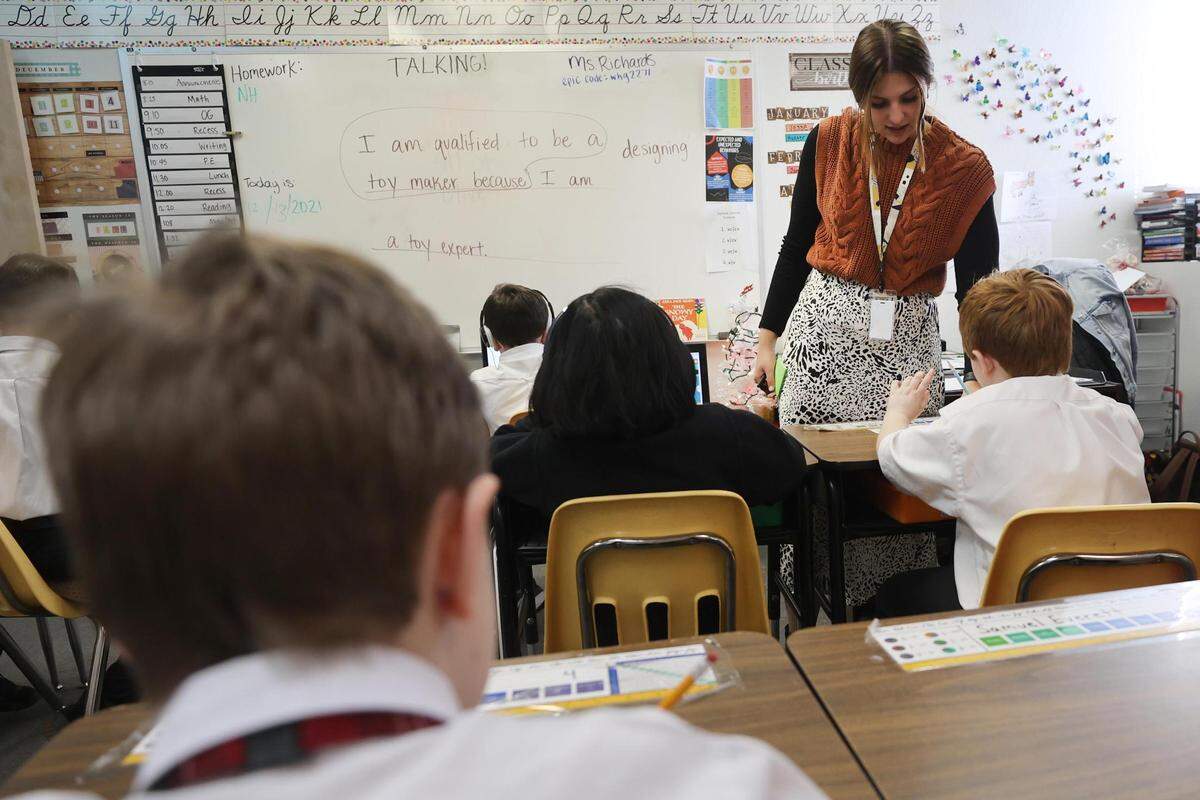
With more teachers and resources, schools might be better able to help students with disabilities, experts say. Roxann Breyer has been the head of Hill School in Fort Worth for 16 years. The private school — where tuition ranges from about $18,000 to $22,000 per year— serves children with learning differences such as dyslexia, Asperger’s and autism. Hill School has 104 students and an average teacher-to-student ratio of 1-to-4. Hill School staff have the time and resources to work one-on-one with parents to figure out how each child learns best, Breyer said.
“That’s the misconception with those kids, that they’re dumb and stupid. They’re not,” Breyer said. “They have a little tweak that they need to be as successful as any neurotypical kid. If we can find the right key, these kids can be as successful as they want to be.”
Christen LaChance, a former special education teacher in the Hurst Euless Bedford school district, said there “is a big gap between what services public schools are able to offer and what kids need.”
“Some days, I would walk in and they were like, ‘You need to teach this class and that class,’” she said. “I was just putting out fires wherever we could.”
Rosson, the project coordinator at the Parents Resource Network, has a 19-year-old who went through the special education system in a Dallas-Fort Worth school. The shortcomings in education, she said, are multifaceted.
“You can find fault on all sides of the picture,” she said. “And the only one who really suffers is the kids.”
This story was originally published March 24, 2022 at 5:00 AM.