Dead body lay in Tarrant County Jail for 6 hours. Lawsuit alleges jailers told to lie.
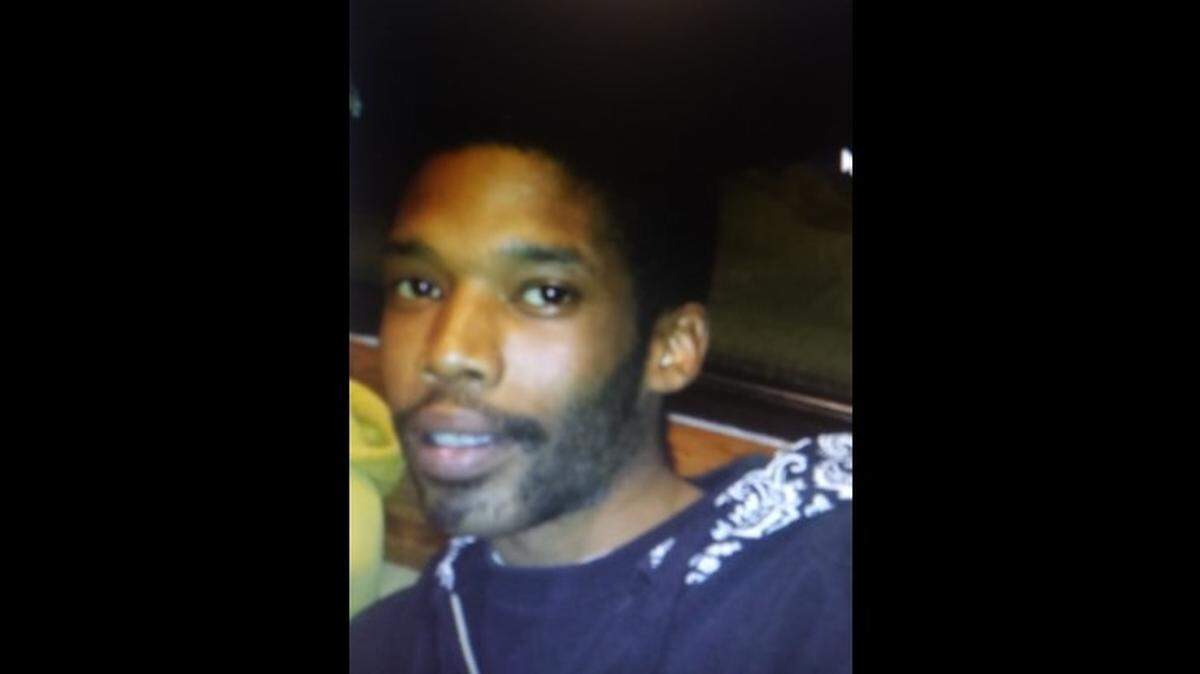
A 28-year-old man lay dead on the floor of his Tarrant County Jail cell for six hours before his body was discovered in 2020, and a jailer charged with falsifying records in the case told an investigator that his managers regularly encouraged staff to lie about checking on inmates.
Those allegations are part of a federal wrongful death lawsuit filed against the Tarrant County Jail and two jailers by the family of Javonte Myers.
Myers died of an untreated seizure disorder on June 19, 2020. He was one of three inmates who died that week.
The lawsuit filed by his mother, Shondrea Miller, with attorney Dean Malone, describes a culture in the jail of not performing inmate checks correctly. The two jailers, Erik Gay and Darien Kirk, lied about checking on Myers more than 20 times; they were charged with tampering with a government record after Sheriff Bill Waybourn requested they be investigated, his office said in March 2021.
About two months before Myers died, jail employees had missed three of their checks on another inmate, leaving him alone for nearly an hour, according to documents obtained by the Fort Worth Star-Telegram. He died by suicide. The jail lost its state certification for six days in summer 2020.
‘It goes all the way up’
Texas Ranger Trace McDonald, who has investigated at least 20 other deaths at the jail since 2019 and has an office in the jail, interviewed Gay, one of the jailers named in the suit, after Myers’ death. A transcript of their conversation was provided to the lawyer for Myers’ mother.
Gay said supervisors encouraged jailers to lie on their paperwork that checks were being conducted properly. Even during a surge of jail deaths in 2020, a baby being born in secret in the jail and multiple deaths by suicide, Gay said supervisors were only concerned about “making the computer look good.”
“They tell you if you’re feeding (inmates), you stop what you’re doing, go put another block in (to the electronic observation log), and then go back to feeding. So, I mean you’re openly wanting to get it done,” he said.
Gay’s lawyer, who was at the interview, asked him, ”Openly wanting what done?”
“Falsifying a government document,” Gay said. “It goes all the way up to memos. I mean, there’s memos that they put out about it as well.”
Gay said he brought up this issue to a supervisor and alleged that Waybourn had known about the issues of inmates not being checked.
A sheriff’s office spokesperson said the agency cannot comment on pending litigation.
Other jailers who were interviewed by McDonald admitted to seeing this practice occur often, according to the lawsuit.
The process of checking on inmates is often not done correctly as well, the lawsuit says.
It is common practice at jails to specifically check for the rise and fall of someone’s chest while they’re asleep. If a jailer can’t see that because of a blanket or other reasons, they’re supposed to wake the person to make sure they’re OK.
That was not happening at the jail, according to the lawsuit. Jailers were not required by policy to look for the rise and fall of chests, which violated state jail standards, the lawsuit says.

“It has been brought to many people’s attention that the inmates cover their lights, preventing you from seeing their chest rising,” Gay said. “It’s also their face. You can’t see their face, because a lot of them have their faces covered. So I mean, a lot of times there is no ... You know, you observe a body.”
The lawsuit said that McDonald appeared to be frustrated by the lack of adherence to procedures and at one point admonished Kirk, the second jailer who later faced charges.
“If somebody that said that they were doing those checks, would have done them and realized that he was incapacitated, he might have survived,” McDonald said, according to the lawsuit. “I think that will probably bring home the importance of really doing those checks. Because like I told the last guy, I mean, whenever those guys are in that single cell like that … it’s like having a dog in a cage, he don’t eat, he don’t drink, he don’t pee, he don’t do anything without you giving him the ability. Right? ... And you’re the only one that can get him medical attention.”
Witness statements
When Myers was booked two days before his death, intake noted he had been diagnosed with a seizure disorder, insomnia, schizophrenia, bipolar disorder and anxiety. The jail’s intake form also indicated that Myers had been hospitalized the prior 90 days because of seizures.
Despite the jail having the medical records, Kirk said he was unaware of Myers having health issues.
“And I ain’t know nothing about the guy, because I ain’t even know if he had any medical problems or anything, so,” Kirk said, according to the lawsuit.
While Myers was at the jail, a total of 78 cells had to be checked every 20 minutes, and two jailers would often split up the checks.
All of the interviewed jailers spoke about the difficulty of checking on that many people that often. McDonald said it would be difficult to find time to sit down.
McDonald also interviewed Troy Schuppert, who checked on Myers but didn’t notice that he was dead until he Myers didn’t grab his food tray.

“Nothing really stood out when I came to inmate Myers,” Schuppert said. “Really, the only thing that I noticed is his head. He was laying back on his mattress; he has a mattress on his floor and he was just laying back.”
During each check, Myers was in the same position. Schuppert admitted that he didn’t look for the rise and fall of Myers’ chest.
Myers was last seen alive at 10:44 a.m.
MedStar wasn’t called to his cell until 4:49 p.m.
A MedStar report obtained by the family’s lawyer said that Myers had obvious signs of rigor mortis to both arms, hands, fingers and jaw. Myers had been dead in his cell for hours, according to the lawsuit.
The lawsuit says that an emergency medical technician wrote into the medical record that they were told by Tarrant County Sheriff’s Office staff that there were “routine visual checks done on (Myers) every 15 minutes.”
“This was clearly false and designed to make jailers and the Sheriff’s Office appear that they had done nothing wrong,” the lawsuit says.
Policies and procedures
The lawsuit pointed out multiple failures in jail policy that it says contributed to Myers’ death.
▪ Because jailers rotated throughout the jail, they were trained to observe only things that were off about an inmate. They were not required by written policy to look for the rise and fall of chests of inmates who might appear to be sleeping.
▪ The jail had a practice of allowing jailers to decide on a shift-by-shift basis how to split duties. This could lead to one jailer making 78 observations on a check. Not accounting for walking time, if a jailer took the entire 20 minutes to make a check of all cells, the jailers would have no more than about 15 seconds to observe each cell.
▪ There was a practice of allowing jailers to record only “unusual” occurrences on a shift, so jailers could make no notes of what actually occurred. “This results in jailers becoming numb to things such as watching the rise and fall of an inmate’s chest, if the inmate otherwise appears to be sleeping.”
▪ The jail had a practice of creating false observation records.
▪ There was a practice of rotating jailers in special medical and mental health observation pods. This resulted in jailers not getting to know specific inmates and their needs.
The lawsuit does not state how much in damages the family is seeking.
“It appears that the Tarrant County jail is a mess, and that mess is unfortunately leading to significant suffering and unnecessary deaths in the jail,” said Malone, the family’s lawyer, said in an emailed statement. “No pre-trial detainee should die of a seizure disorder, with no medical treatment at all, and have his body lay on a cold cell floor for hours before being discovered ... . Our Texas jails are being used to incarcerate people with serious mental health and medical issues, and they are dying as a result.”
This story was originally published May 4, 2022 at 5:30 AM.