Survivor tells her story of brutal attack on Trinity Trails, aims to make Fort Worth safer
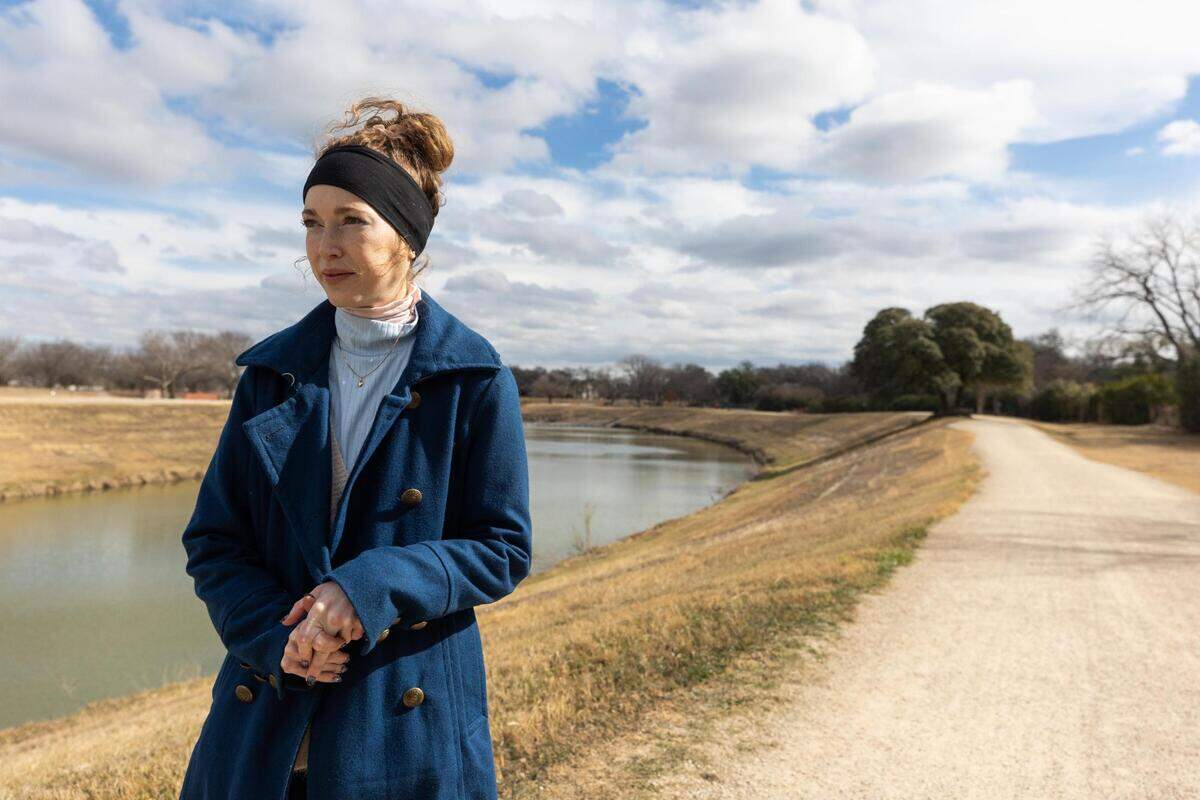
Jesca Arnold finally found herself back on the trail she hadn’t seen in months, a part of the Trinity Trails that was just down the road from her old apartment.
She passed an older woman, the same woman who sat with her dog in her usual spot by the river, who used to stop and chat with Arnold every day. When the woman saw Arnold, her eyes widened.
“Was it you?” the woman asked her. Arnold was confused as she responded, “Was what me?”
“The girl that was attacked. It was you, wasn’t it?”
Arnold nodded, as the woman broke into tears.
“I knew it was you. I told the police it was you. I told them, ‘That’s my friend! That was my friend!’”
A random, brutal attack by a naked man in 2017 left Arnold, 35, with chronic injuries that still affect her. What may have been the worst day of her life has also given her purpose and a vision to make Fort Worth’s trails safer by sharing her story.
The day of the attack
It was supposed to be a normal Saturday, Arnold said. She was stressed from work and knew she had to go for her daily walk — walk, not run — because her body wasn’t cut out for running, she added, laughing.
But she had a gut feeling.
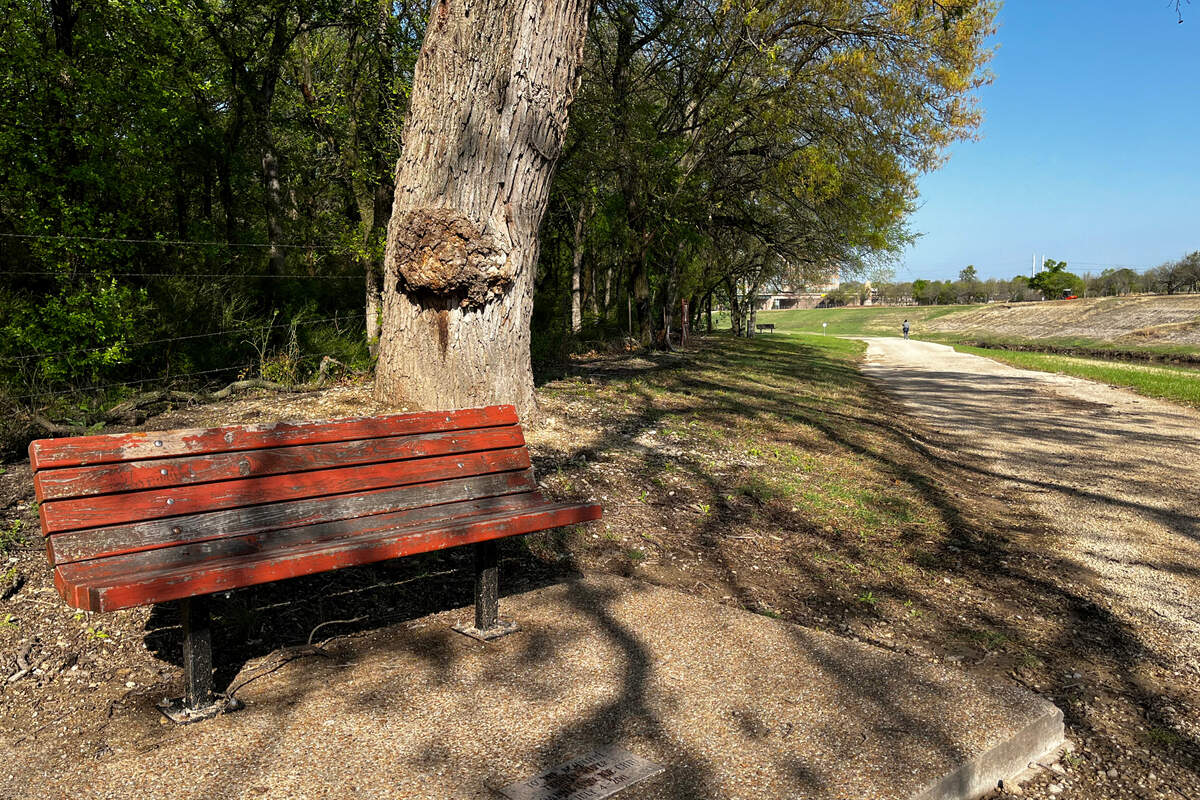
The week prior, during one of her walks, she noticed that although she liked her hiking trail because it had more trees that made it cooler, and gravel instead of concrete, she had a feeling that maybe this wasn’t the best trail to follow. But although it was more isolated, it was in a good area — near the Clearfork Trailhead off Edwards Ranch Road — and it was close to home, so it would be fine, she reassured herself.
That September day was hot. The typical summer Texas heat type of hot. And she was really tired, she said.
“I normally (walked) in the morning, but I was so tired, I kept pushing it out,” Arnold said. “And finally I was like, ‘I need to go on a walk. You need to go on a walk.’ So I just go. ... It was one of those really hot days where I probably shouldn’t have but I think I was really stressed out with work at the time and where you feel you need to do something or you freak out.”
She got on the trail with her phone in hand, talking with one of her friends. She cut through a neighborhood where it was nice and shady, and then walked back onto the trail. Around 6 p.m., she was passing a little spot she liked.
“All of the sudden this guy rides by me, naked, on a bike,” Arnold said. “I just kind of stopped (talking on the phone and my friend) was like, ‘Are you OK?’ And I turned around and started going the other way.”
Arnold began explaining to her friend what happened and quickly hung up, calling 911 to report the incident as she got another gut feeling.
“I was like, ‘This isn’t good,’” she said. “He kind of looked back, over his shoulder, when he rode by and it was like, you knew it was not a good thing. He wasn’t just riding by.”
Within seconds, the man turned around, riding toward Arnold and kicking her as he rode near her before he jumped off the bike.
The 911 dispatcher hadn’t picked up yet.
The man charged toward Arnold on foot, naked, as she screamed at him to leave her alone. She began thinking quickly, in all those videos online and in school they said to tell the attacker you were speaking to 911. She screamed that she had 911 on the line, hoping it would scare him away.
“As soon as I said that, he got livid and lunged at me, grabbed my phone and threw it in the river,” Arnold said.
She noticed that 911 had answered and she was able to tell the operator she was on the Trinity Trails being attacked, but it didn’t matter, because 911 was unable to ping her location before her phone was in the river, she said.
“I took off running, but I’m not a fast person. He caught me quickly. He grabbed me by the hair and yanked me down and I was trying to fight him,” Arnold said. “I either was strangled until I passed out or hit, punched in the face, until I was knocked out multiple times.”
She came in and out of consciousness during the attack, finding herself at a different spot on the trail every time. She was sexually assaulted while she was unconscious.
Going in and out of consciousness “happened at least seven times that I can remember,” Arnold said. “(I remember) trying to … he was naked, you know? You’re criss-crossing your legs together, trying to fight, but his arms are really long. So once he got my neck, I couldn’t reach him at all. (He had) me pinned to the ground. … I passed out, probably pretty quickly, then I’d wake up to him punching me in the face until I blacked out.”
At one point during the attack, Arnold woke up positioned on her stomach as she felt her head continuously being slammed into the ground. She said she had a lump in her throat, unable to say anything as the man choked her, but when he finally loosened his grip on her neck, she began sobbing, asking him one question.
“Why?”
He replied: “Because you called 911.”
As the attack continued, Arnold said, she continued to pray “not like this.”
“I could be OK with dying, but dying that way would have been so awful for my family as we are so close,” Arnold said.
She continued to cry and repeat to the man that he didn’t need to do this. He finally stopped. He turned and asked her, “Do you promise not to scream?”
She grew confused. He repeated his question, adding that he would let her go if she said she wouldn’t scream any longer. She made the promise, and moments later the man threw her body to the side and took off.
“It’s silly because I remember I woke up and I saw my shoes sitting there, and I was like, ‘How did my shoes end up there?’ It’s the funny little stupid things that pop up into your head when you’re in a crisis,” Arnold said. “I picked up my shoes and ran. I was like, ‘Why do you even bother picking up a shoe?’ Then as I’m running, I’m thinking, ‘I’m running on gravel and it’s not hurting my foot right now,’ because I was barefoot. It was so silly, but I just ran. I was terrified because I was sure he was going to change his mind and come back after me.”
Arnold kept running although her lungs were on fire and she didn’t know where she was going. She ended up in a nearby residential area, where she said she banged on door after door, all of which had no answer. It wasn’t until she saw a passing car and made the decision to run in front of it that she would finally get help.
“This little older couple was driving and I literally jumped in front of their car and was like, ‘Help! I need help!’ They stopped right away, I’m sure I looked terrifying, I’m sure already because when I finally saw myself in the mirror, several hours later at the hospital, I looked like a purple alien. I probably scared this poor little couple,” she said with a small laugh.
As the couple called 911, Arnold said, she finally collapsed, falling to the ground on a driveway as she bawled. She refused to get in the couple’s car, scared of getting blood in their vehicle. She sat in a ball on the road before other bystanders were finally able to convince her to get in a vehicle as they called her dad.
Finally, help had arrived.
Feeling stuck, guilty and tired
The adrenaline from the attack stuck with Arnold while she was taken to a nearby hospital. It stuck with her overnight until her discharge the following day, when she found herself back at the hospital receiving help after feeling her “brain was going to explode in so much pain.”
Arnold kept repeating she looked like a “purple alien,” without any “spot on my head that didn’t have a knot.” From her chest up, she was covered in dark bruises.
“For (the next) month, I just lived under ice. I did a lot of crying,” Arnold said. “I could barely stand.”
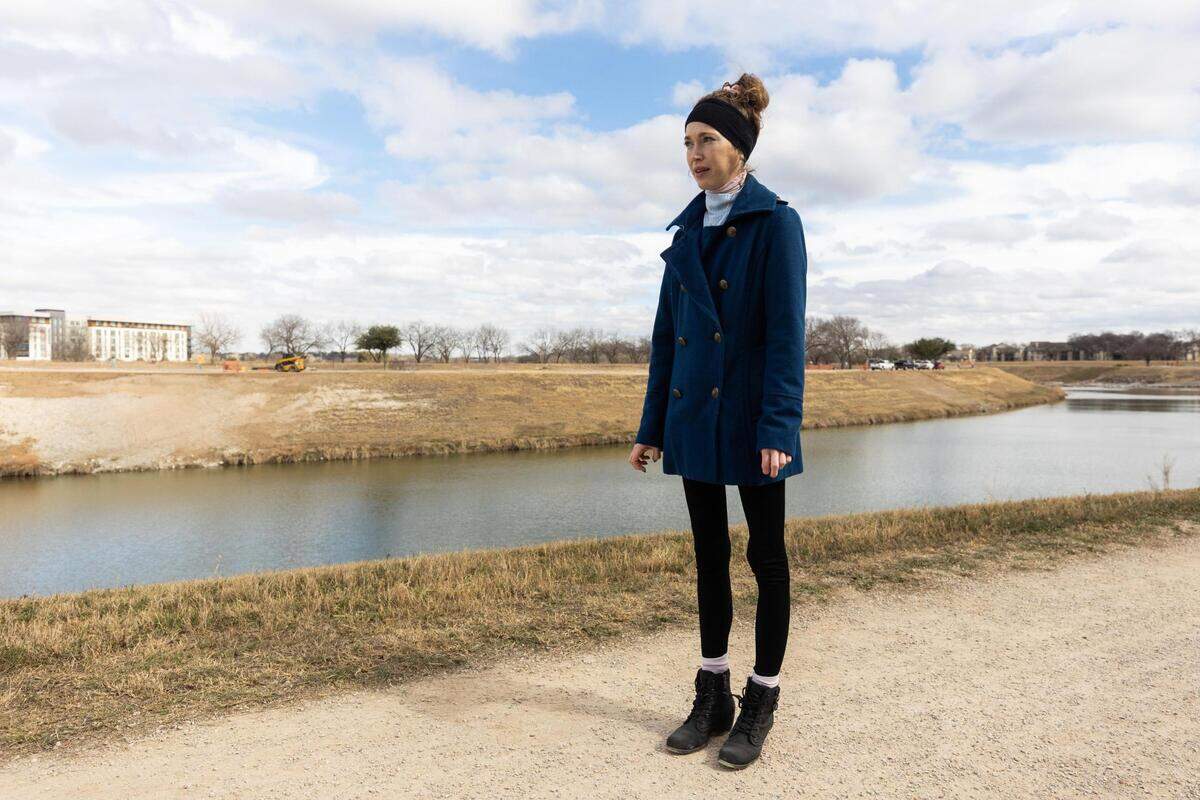
Although the swelling eventually went down and the bruises faded away, the attack left Arnold with long-term emotional, mental and physical injuries. To this day, coming up on five years later, she said she struggles with memory loss, tremors, fatigue and other pain.
“I don’t think I’ll ever be completely like what I was before. I have a horrible memory now. … Sometimes I remember things, sometimes I don’t, but it’s like literally someone is pulling things out of my brain. I’ll go to sleep at night and all of the sudden Monday, Tuesday and Wednesday are gone and I’ll think it’s Monday again,” Arnold said. “I used to remember faces and names so well and now, I’ll have to meet someone five times before I remember them. If you see me on the street tomorrow, and I act like I don’t know you, it’s because I literally can’t remember what you looked like.”
Arnold still feels physical pain from the attack, including terrible migraines and chronic neck pain, to the point that she can only tilt her head back so far, and when it goes past a certain limit, she needs to use her hand to push her head back to an upright position. She still gets tired quickly and needs to rest often.
“It’s just a lot of daily pain and struggle. When it’s really bad, my hands will shake, and I’m an artist, so it’s hard on those days,” Arnold said. “You’re a designer and you lose focus and can’t figure it out. Literally some days, I can’t get done, or do things, because I don’t remember what I’m doing as I’m doing it. I don’t remember where I’m going when I’m driving somewhere, so I always have to have my GPS on. … I’d call my mom and be on the way somewhere that I’ve been 100 times and I can’t remember how to get to Grandma’s house.”
And understandably, Arnold struggles with post-traumatic stress disorder, triggered at random times when someone walks behind her, or if she’s touched in a certain spot on her back during a hug.
“You don’t know when it’s going to happen,” she said. “It’s just because someone approached you a certain way and they had nothing, no malice, but it’s in your head. It’s in your body almost. Your body reacts, even though your brain is telling you ‘You’re fine. This is fine. This person is fine,’ your body is like ‘No, it’s not.’”
The aftermath of the attack later developed into guilt when she would forget someone or react negatively.
“You don’t want to be that person playing (the head injury) card all the time, but you don’t want them to be insulted,” Arnold said. “When these things happen, you feel guilty, but you just keep trying. … I try to do my best. You have to have grace for yourself because you can’t do better. You can’t fix it. You have to make the best of it.”
Hope moving forward
Following her attack, Arnold lived a different life — one in fear, one in pain and one where she couldn’t understand the purpose or reason it needed to occur.
She feared sharing her story, at first worried about retaliation as it took nearly a year for police to locate her attacker, who was found in a different state and later sentenced to 50 years in prison. But her fear also was that no one would listen. She didn’t want to relive her experience and be ignored — that was until she heard another woman had endured a similar attack in March 2021 at a Fort Worth park.
Arnold was at her chiropractor’s office when she heard what happened. “I got in my car and I just cried,” she said. “I was so angry. I cried all the way home and was like, ‘We’ve got to figure out how to do something.’”
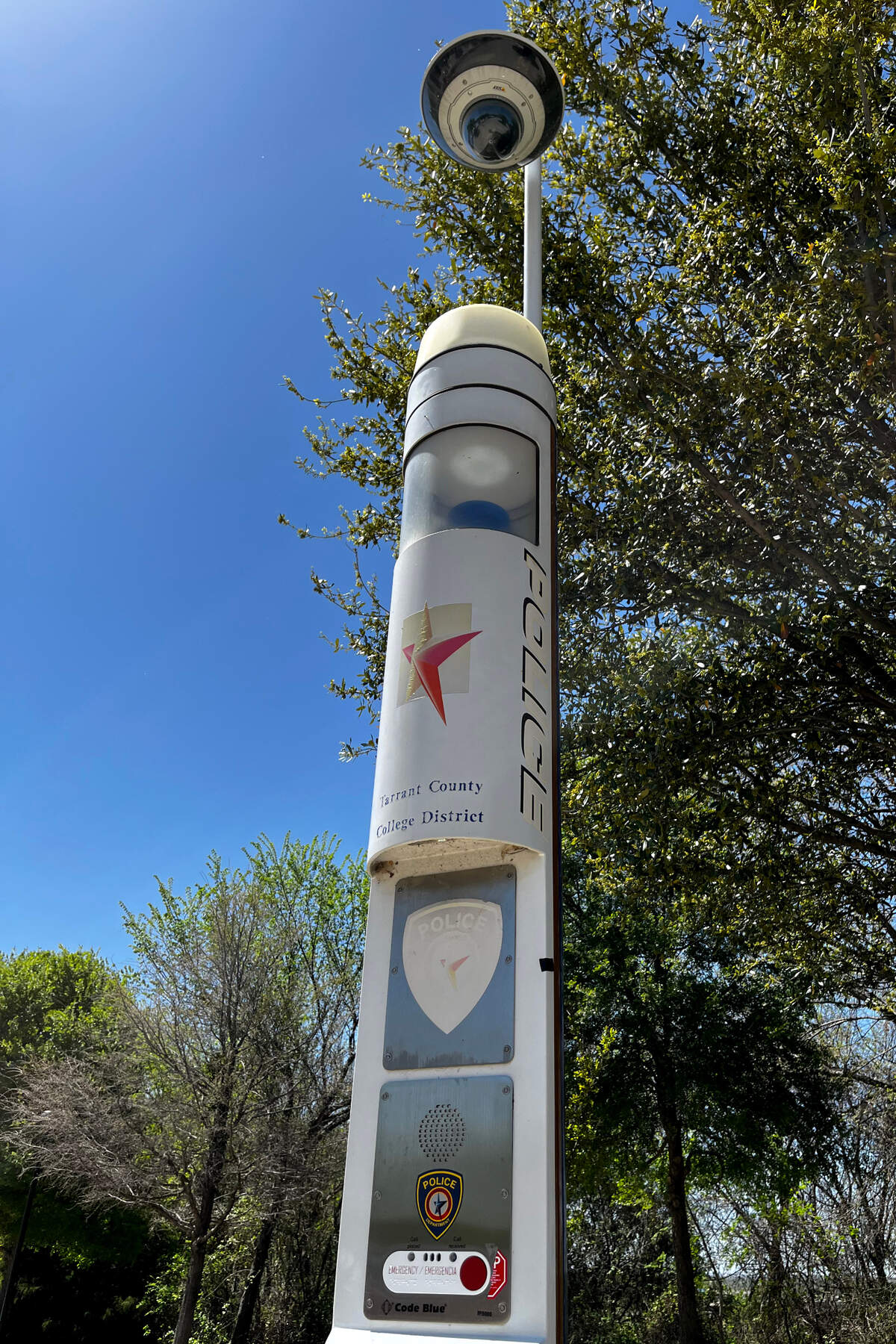
Years prior, her father suggested a plan to create a nonprofit inspired by Arnold’s story. The nonprofit would be called Safe and Happy Trails and would aim to put emergency posts, within a quarter mile of each other or less, on every trail and park in the area to protect women, children, the elderly and any vulnerable population.
When Arnold first heard the idea, she didn’t want to pursue it. Her dad didn’t push her — he wanted the idea to be on her timing.
Finally, four years later, she was ready.
“I was like, ‘Dad, we need to start doing this,’ and he was like, ‘I’m so happy because I’ve been wanting to do this, but I wasn’t going to do it until you wanted to,’” Arnold said, adding that her dad first suggested drones, but too many factors like the weather could be a complication.
“I was thinking, well, those posts they have on college campuses, the emergency posts, why don’t they have them all down on the trails?” Arnold added.
She began researching and it became more and more possible. New technology put into emergency posts allowed cameras to be installed in them, a good security measure that could help police as well. A press of a button would call 911, and ping your location, something that could have been life-changing during Arnold’s attack. The machines don’t require much maintenance and could last for years. And although the price per post ranges upwards of $8,000, local businesses could get involved with advertising or sponsorships on the exterior.
More information about the project and a link to donate are online at safeandhappytrails.org.
“I’d like every trail in America to have it at some point,” Arnold said. “I think that would make me happy because it’s not just going to be helpful for people getting attacked, but it could help if someone got hurt, if someone got lost.”
In the last year or so, Arnold, with the help of her family, has raised nearly $3,000 on a GoFundMe campaign to put toward installation of the first post. They met before Christmas with Fort Worth Mayor Mattie Parker, who seemed supportive and “really on board” with the project.
“They said there were a lot of entities that needed to be herded and rounded up to all work together,” Arnold said. “They said they’d get back to me. … I have to wait and see in the moment, but I think it’d be really great for Fort Worth … I feel like it would give people a lot of respect for the city and then it would maybe make other cities follow suit.”
On Friday, Arnold said, she heard back from Fort Worth police, who sent her a grant application to seek funding for the project.
Where the project stands now
Mayor Parker said in late February that the project was on “the staff level,” and the City of Fort Worth’s Real Time Crime Center was looking at the best technology going forward.
“We have a lot of trail systems to support, so the question is, do we use a combination of technology that people use on their phones as well as software, or hardware, that are on the trail systems like you see on colleges campuses?” Parker said. “What I hope we do is kind of come forward with multiple partners and work together for what we think is the best, and probably start with some of our highest traffic areas like where (Arnold) was attacked.”
The Trinity Trails — popular with hikers, bikers, runners and horseback riders — run throughout the city along the Trinity River and connect major areas such as downtown, the TCU/Fort Worth Zoo area and Clearfork.
In a report to the city council in 2017 after Arnold’s attack, Fort Worth police said crime along the trails is relatively rare but they encourage residents to stay aware of their surroundings. Police logged 49 offenses from Sept. 25, 2016, to Sept. 27, 2017, along the Trinity Trails. The most frequent locations were in the parking lots along East Northside Drive and in Trinity Park.
Of the 49 offenses, police reported 21 vehicle burglaries, nine vandalisms, five robberies, five narcotics violations, three assaults, three alcohol violations and three crimes listed as “other.”
A Star-Telegram review, which covered the busiest portion of the trails — from Main Street in downtown Fort Worth to near The Shops at Clearfork — showed 24 to 47 crimes reported per year along that segment between 2013 and 2016. Disturbances and burglaries were the most commonly reported crimes.
Alongside the crime center team, the police department’s assistant director over fiscal command, Keith Morris, has begun to search for funding options for Arnold’s project. Partners, including Westworth Village, the Tarrant Regional Water District — which oversees the 100-plus miles of the Trinity Trails system — and River Oaks are also involved in discussions for the project.
Morris, when asked about updates regarding Arnold’s idea, said on Wednesday that the police department “welcomes the opportunity to add a layer of complimentary technology to our park trails that supplements the police department’s other robust camera and emergency response initiatives.”
“As such, we feel this project is a candidate to be considered by the Crime Control and Prevention District Board of Directors for Community Based Program funding,” Morris added.
TRWD officials also noted that they’ve worked to improve safety efforts.
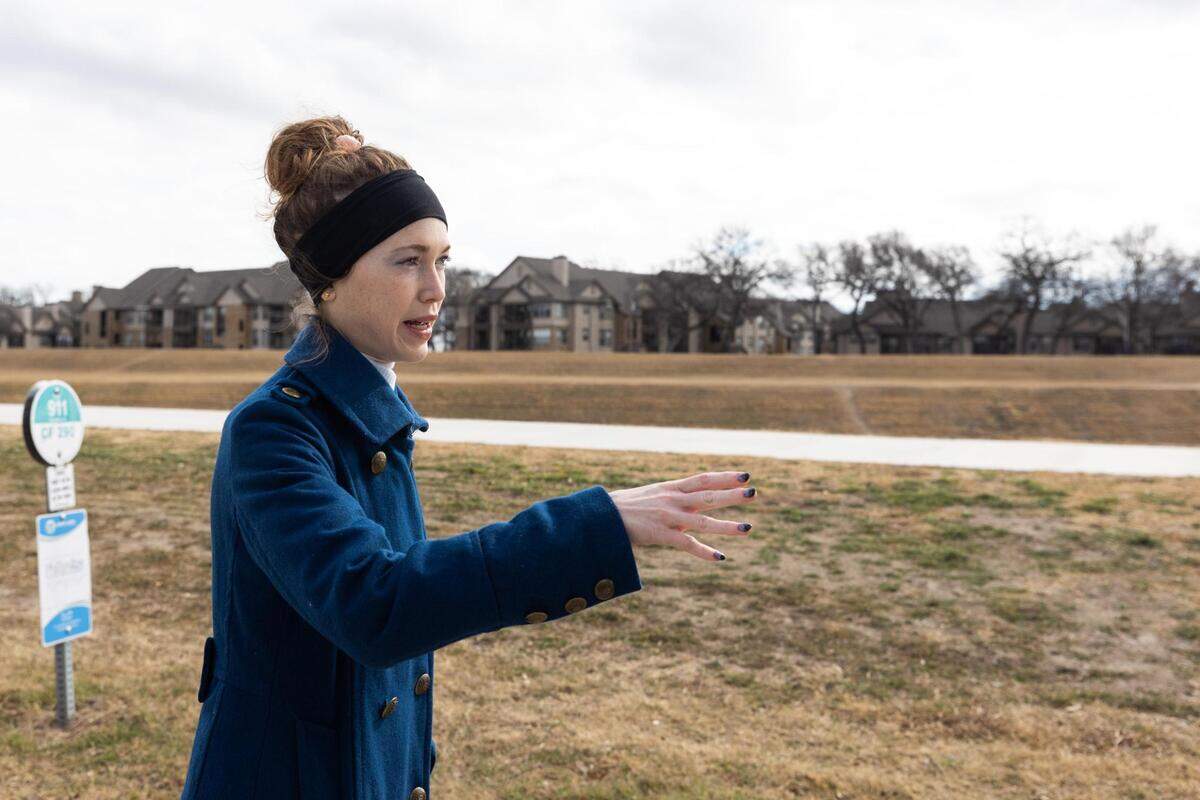
“Many years ago TRWD placed 911 location signs along the trails we maintain, including much of the Trinity Trail system. These allow the caller to reference a specific location when speaking to 911 operators,” said Chad Lorance, a public affairs officer for the water district. “We aren’t involved in the emergency response aspect of it. We maintain the levees and trails, (but) we work closely with 911 and emergency personnel to make sure they know how to access the location where the 911 trail sign is located.”
Lorance also added that at one point, the water district donated off-road motorcycles to the police department for patrolling on the trail system.
In regards to the effectiveness of the emergency posts, according to a U.S. Bureau of Justice Statistics report, as of 2015, about 92% of college campuses across the country had adopted some type of emergency call system for students.
Locally, TCU has nearly 200 emergency phones active on its campus, TCU Chief of Police Robert Rangel said, adding that though the call boxes may not always be used to stop a crime, “they have a deterrent effect and have been utilized to assist individuals with non-emergency matters.”
From Jan. 1, 2021, through April 6, 2022, TCU police “responded to 86 activations from our emergency, blue light, phone towers,” Rangel said. “The majority of the calls were non-emergencies, with only one event resulting in the reporting and interruption of a crime in progress. The phones help provide security for our campus as part of a broader, multi-layered crime prevention and response strategy.”
The mission
For the first time since her attack, Arnold said, she finally let herself be angry. For so long, she was just confused. She was stuck. The attack didn’t make sense to her, why she was the victim didn’t make sense to her and what she was supposed to take from it didn’t make sense for years.
“Everyone goes on about, ‘Everything happens for a reason. … There’s a bigger plan for all this.’ … But those years in between, it was just struggling to believe that there’s a reason for everything,” Arnold said, tearing up. “I knew I wanted to do something with this, but I didn’t know how. I just felt really lost, then when that happened to the other girl, I got so angry. I think I finally let myself get angry.”
She was angry before, but her anger was directed toward her pain. For the first time, she let herself be angry at her attacker and at the pattern of male abusers and told herself it was OK to feel that way.
“It wasn’t a bad thing to be angry. You can use it to do good. I feel like this is finally figuring out what I’m supposed to do with this. If I just take this horrible thing that happened to me, I can do this much good with it, even to just save one other person or give people a peace of mind so they don’t have to be afraid when they go for a walk,” Arnold said. “It can make what happened to me be worth it, even though it is still a struggle every day. … I just want people to be safe. I don’t want anyone to ever, ever, have to go through what I went through.”
This story was originally published April 10, 2022 at 5:00 AM.