When Hollywood liked Fort Worth as much as Fort Worth liked Hollywood
.jpg)
READ MORE
Everything you need to know about “Yellowstone”
Whether you’re a new fan or you’ve been with the Dutton family from the beginning, here’s your one-stop shop for everything “Yellowstone,” “1883” and “1923.”
Expand All
The Fort Worth Film Commission has existed since 2015 to bring big-time filmmaking to our town, but they are not Cowtown’s first foray into the movie business. City fathers took a paternalistic interest in 1911 when they created a “board of censors” to monitor what Fort Worth movie houses were showing. The board was given the power to shut down any film deemed “indecent, low, vulgar, or calculated to provoke racial prejudice or disorder.” It was placed under the Health Department in 1925 and operated quietly for the next 40 years until finally dissolving itself.
The first Fort Worther to jump into moviemaking was J.S. Philips, manager of the Odeon theater, who in 1913 produced and directed the first homegrown entry in the nascent film industry. It was “a motion picture history” of Fort Worth itself, what we call a documentary today. It took him four days to shoot, motoring about town in L.J. Palmer’s automobile with Palmer at the wheel and Henry Clogensen in back operating the camera. The result included some fanciful shots, such as one of “the tree under which General Worth made peace with the Indians” and closed with the 1913 Labor Day parade. Fort Worth was on its way to becoming the Hollywood of Texas!
Big-time production certainly seemed to be heading to Fort Worth in 1920 when Lone Star Pictures Corp. announced plans to relocate here from California. Like southern California, North Texas offered the promise of good weather for outdoor filming almost year-round. Their first picture was to be a “romance of the Texas oil fields,” but the studio never came, and their oil-field love story was never filmed.
Hollywood liked Fort Worth as much as Fort Worth liked Hollywood, reflected in how many films opened here. In the fall of 1940 Warner Brothers opened “The Westerner” starring Gary Cooper here. The decision to premier it in Fort Worth was easy since this was “the city where the West begins” as Amon Carter often said. At its Sept. 19 opening, with World War II already raging in Europe, a Star-Telegram headline screamed, “Everybody but Hitler here for Premier.” The city rolled out the red carpet for Cooper, director William Wyler, and producer Samuel Goldwyn, and Warner Brothers booked the film into all three first-run theaters (the Hollywood, Worth, and Palace). The opening pushed news of the war off the front page of the Star-Telegram. Amon Carter joined in the spirit of things by throwing a party for distinguished visitors at his Shady Oak Farm. Everyone agreed, Fort Worth hospitality was unmatched, or as Samuel Goldwyn said, “It is doubtful such an event would have been held anywhere else outside Hollywood.”
“The Westerner” may have been the biggest to date, but it was not Fort Worth’s first “world premier” as Hollywood modestly described film openings. On March 31, 1939, “The Vernon & Irene Castle Story” opened in Fort Worth (the Worth Theater) because British aviator Vernon Castle had died here in 1918, and he and Irene had been America’s dance king and queen before World War I. The city rolled out the red carpet for stars Fred Astaire and Ginger Rogers. Seventh Street was roped off and a dais erected in front of the theater, and spotlights swept the downtown sky.
The year 1951 proved a banner year for movies about Fort Worth. “Follow the Sun” was 20th Century Fox’s “inspiring true story of America’s greatest athlete,” which for the movie’s purpose meant Fort Worth golf legend Ben Hogan. It opened on March 23 simultaneously in all three first-run theaters, and the city proclaimed, “Ben Hogan Day!” One Star-Telegram columnist called the premier “the biggest thing to hit this town since Amon Carter put on a cowboy hat and climbed up on a horse.” After the premier Mrs. Hogan told the Fort Worth Press “they got all the facts exactly right,” and Amon Carter pronounced star Glenn Ford worthy of an Oscar.
Horses and Fort Worth just naturally went together. A 1951 Warner Brothers movie starring Randolph Scott used the city’s name for its title though there was little connection to actual historical events in the script. In “Fort Worth” Scott played peace-loving newspaperman Ned Britt trying to tame the town through the power of the press, but of course in the end it took a six-gun. The only bow to history was a passing reference in Britt’s newspaper to a panther spotted sleeping on Belknap Street. The movie’s opening (June 13) reportedly broke “all known world premier records” with 7,000 flocking to all four downtown theaters (the Big 3 plus the Majestic). The city also provided an “Official World Premier Hostess” to escort Scott around town. Applicants for the job had to supply a photo of themselves in a bathing suit.
At the premier Scott gave a shout-out to the Fort Worth-built B-36 bomber, which he called “the biggest and best airplane in the world.” He wasn’t the only Hollywood bigshot to think so. The year 1951 was supposed to be the year of “High Frontier,” a Howard Hughes RKO film about the massive intercontinental B-36. With a budget of $2 million and Richard Widmark reportedly signed to star, it seemed a sure thing. The studio even started location shooting at Carswell Air Force base, but unlike the plane, the movie never got off the ground. The mercurial Hughes lost interest.
Fort Worth finally got its Air Force movie in 1955 with Paramount’s “Strategic Air Command” starring Jimmy Stewart and June Allison. Surprisingly, the movie’s biggest draw was not giant bombers but the always reliable Jimmy Stewart. Scenes were filmed at Carswell involving hundreds of servicemen as extras. Unfortunately, Fort Worth did not get the world premier. That took place on May 25 at Omaha, Nebraska.
Stewart was back in town in 1965 for the opening of “Shenandoah” at the Palace Theater though it was not a world premier either. That came the following year with Universal’s “The Rare Breed” starring Stewart, Maureen O’Hara, and a lot of cows, which also opened at the Palace, on Feb. 2, timed to coincide with the Fat Stock Show. The front of the theater was decked out with klieg lights and a red carpet.
HBO came to Fort Worth in 1987 to film Fort Worth author Dan Jenkins’ novel “Baha Oklahoma” with Lesley Ann Warren and Peter Coyote. The film was destined for the small screen, but the world premier was on the big screen at the Ridglea Theater on Jan. 21, 1988. More than 1,800 showed up to see the film and meet the stars that included a young Julia Roberts.
The biggest movie in living memory to hit Fort Worth was 2021’s “Twelve Mighty Orphans” about the Masonic Home football team that made history by knocking off the big boys in the 1930s and ‘40s. It had a first-rate cast and was both financed and filmed locally. The excitement was high enough to generate headline stories for two years before it premiered at the New Isis Theater in June 2021 because all the grand old downtown movie palaces were gone.
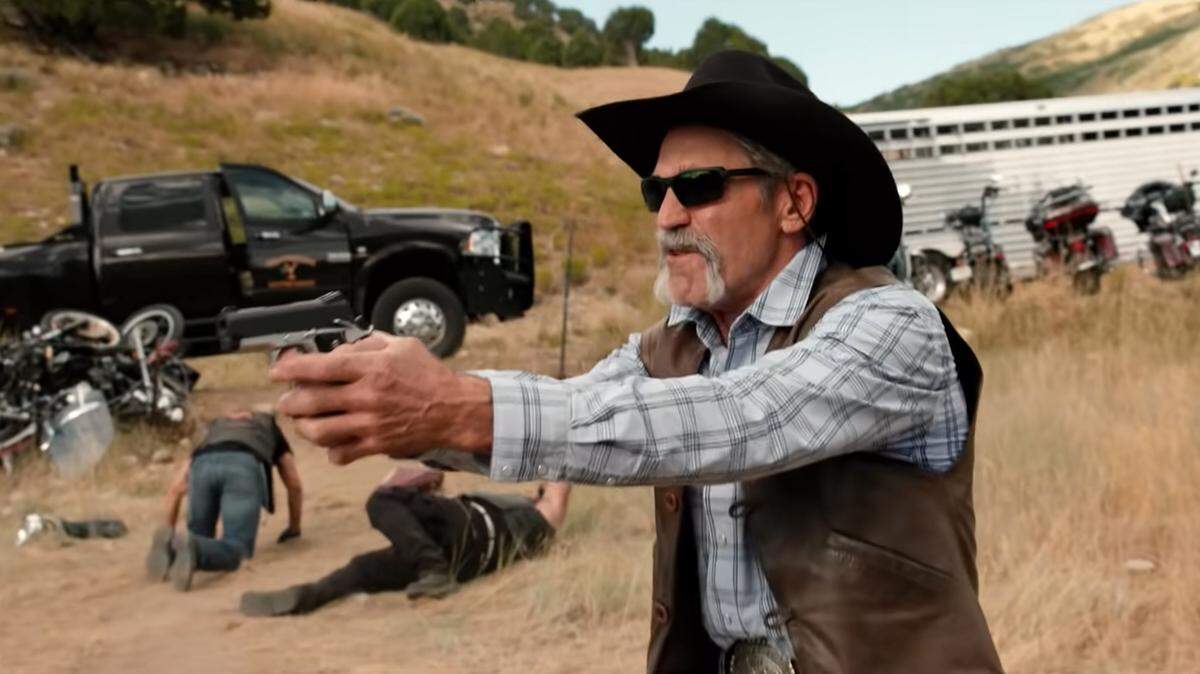
The latest excitement for movie lovers was the filming of extensive scenes for “1883,” the Taylor Sheridan prequel to his hit TV series “Yellowstone.” The production had the clout — with the help of the Fort Worth Film Commission — to get Exchange Avenue shut down and transformed into a historic street with dirt covering the paving and fake fronts covering the buildings. However, for those who know the real story of Hell’s Half-acre and Longhair Jim Courtright, there is little connection to reality.
With all the natural attractions of Cowtown, and the hard work of the Fort Worth Film Commission there is a good chance Fort Worth will attract future productions. They will need financial inducements, location settings, and plenty of extras. Fort Worth is open for business.
This story was originally published March 26, 2022 at 8:00 AM.